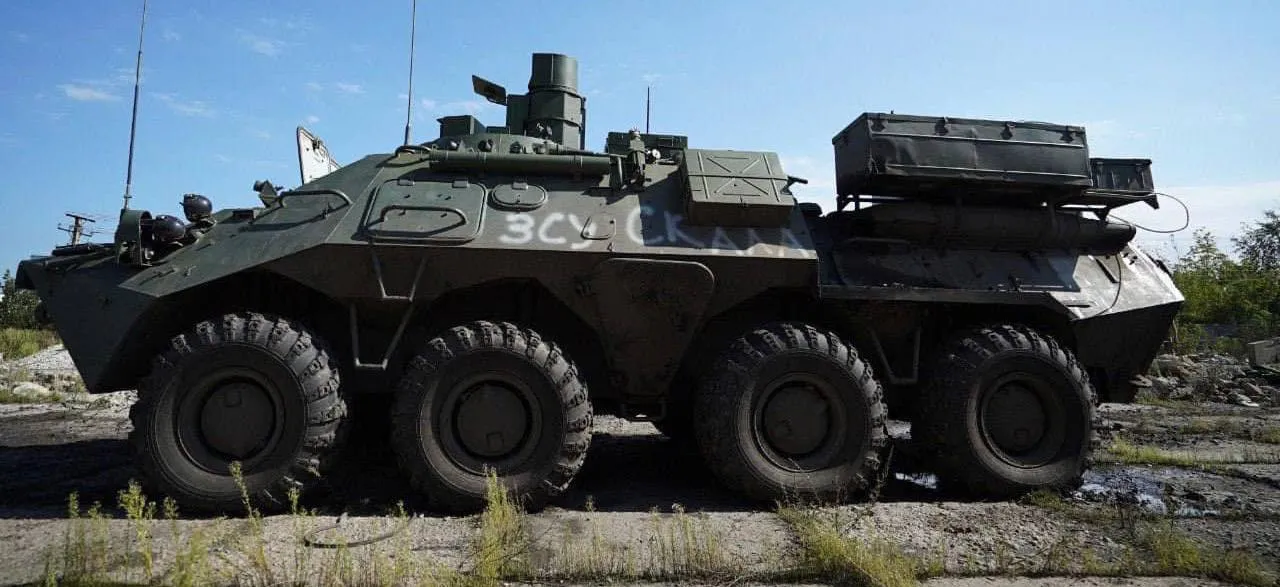


Oryx lists one Russian 1V1003 command-observation vehicle for the 1V198 artillery fire-control system as captured. Ukrainian reporting placed the captured vehicle in Kharkiv Oblast during the September 2022 counteroffensive period, and Censor.NET's account of the Butusov review described it as an intact Russian artillery fire-correction vehicle captured by the Skala battalion. Sources support Russian deployment and battlefield capture, not confirmed Ukrainian operational reuse.
Role detailsSupport Equipment
1V1003 command-observation vehicle
Also known as
- 1V1003
- 1V1003 KNM
- 1V1003 Kanonada
- 1V198 Kanonada command-observation vehicle
- 1V198 Kanonada command and observation vehicle
- 1В1003
- 1В1003 КНМ
- 1В1003 Канонада
- 1В198 Канонада
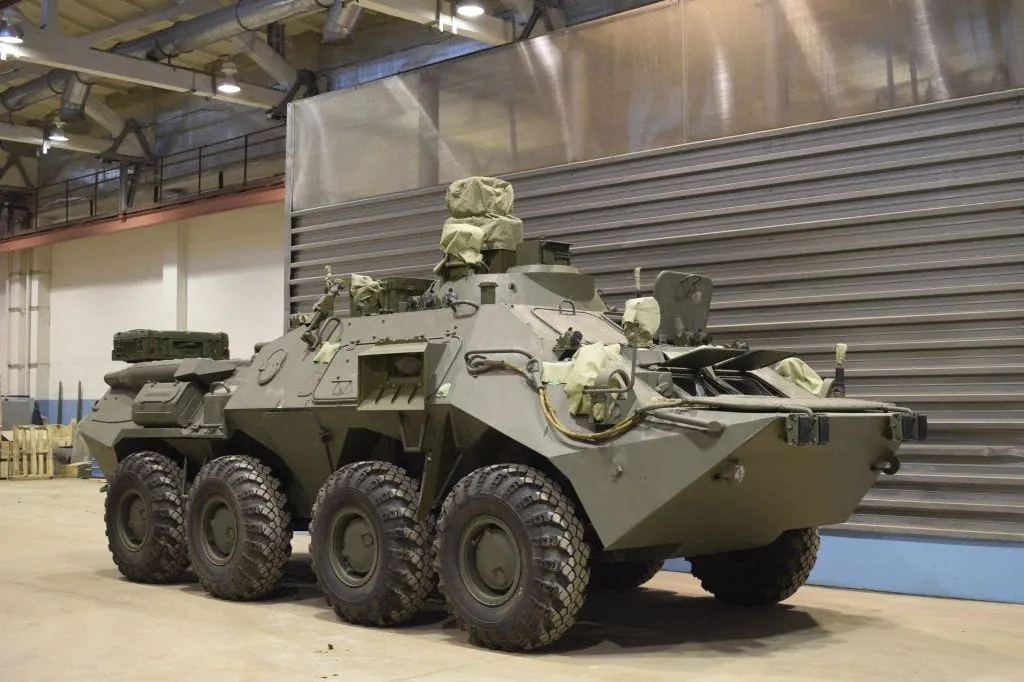
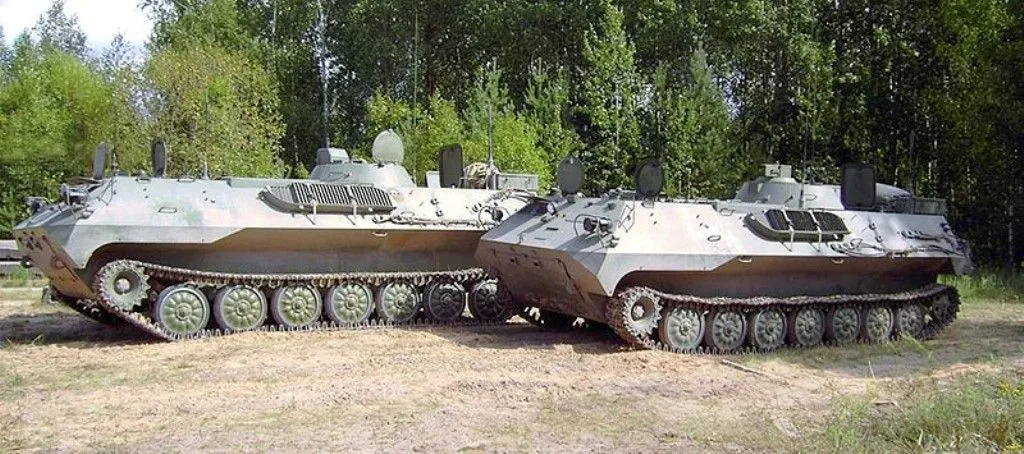
The 1V1003 is the BTR-80-based command-observation vehicle in Russia's 1V198 Kanonada automated artillery fire-control system, used to help detect targets and automate fire missions for artillery batteries. Rostec says the 1V198 package was developed and produced by VNII Signal and includes 1V1003 vehicles with 1V1004 command-staff vehicles; open-source loss tracking and Ukrainian reporting documented at least one Russian 1V1003 captured during the 2022 phase of the Russia-Ukraine War.
Role in Conflicts
Captured Electronics Analysis
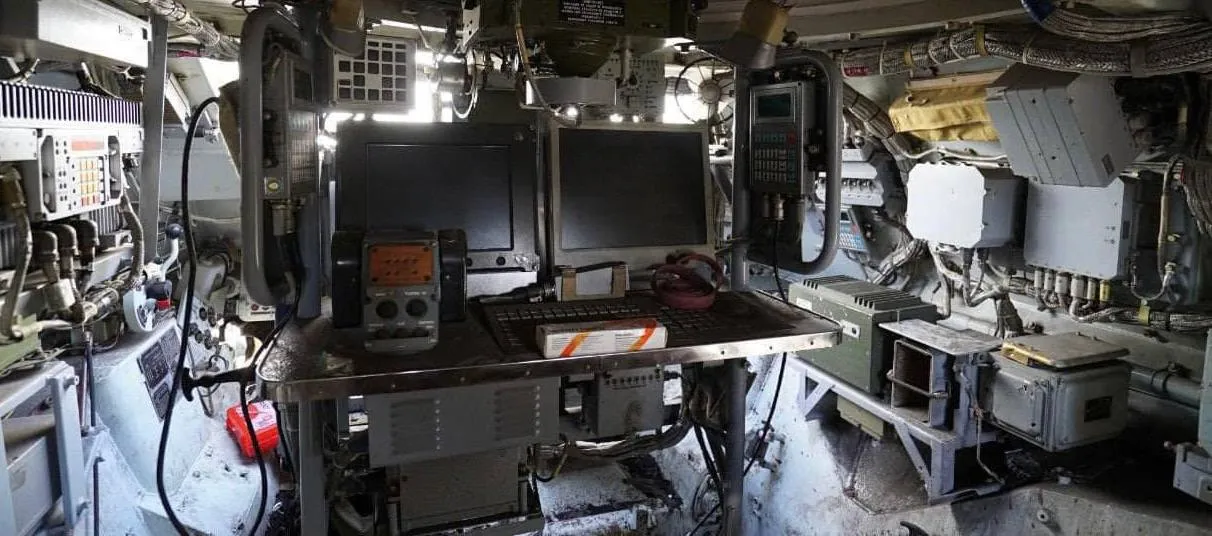
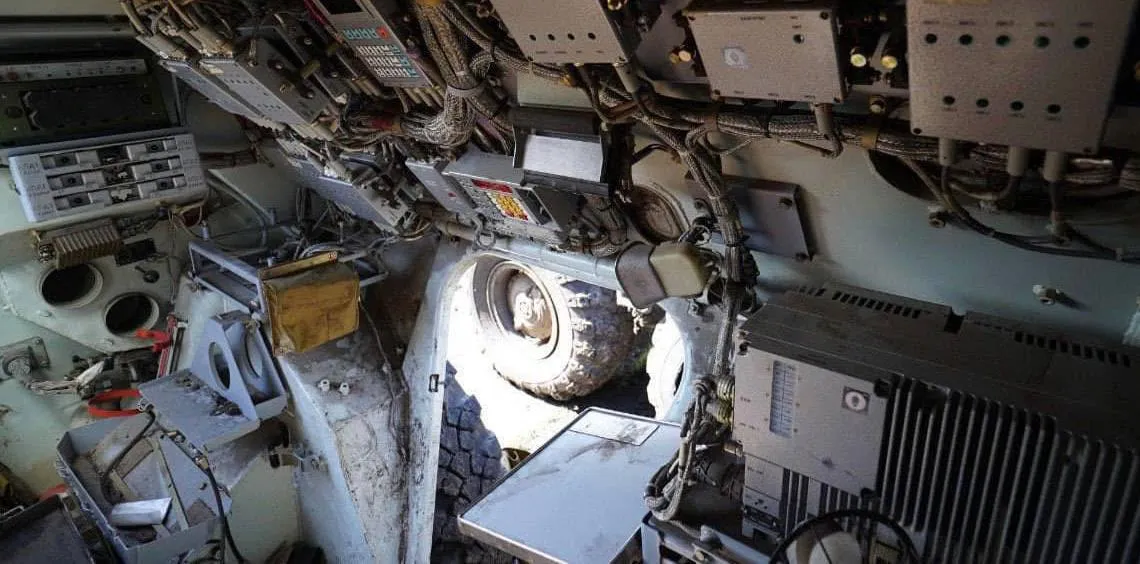
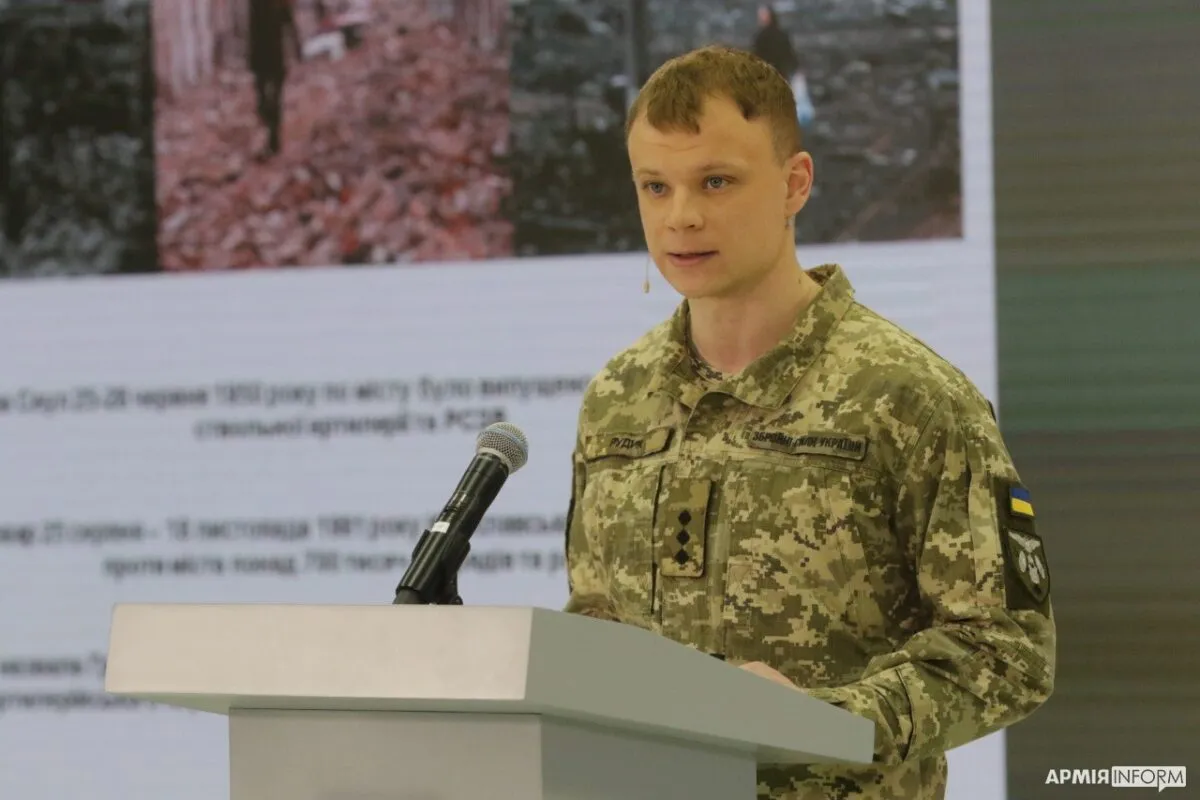
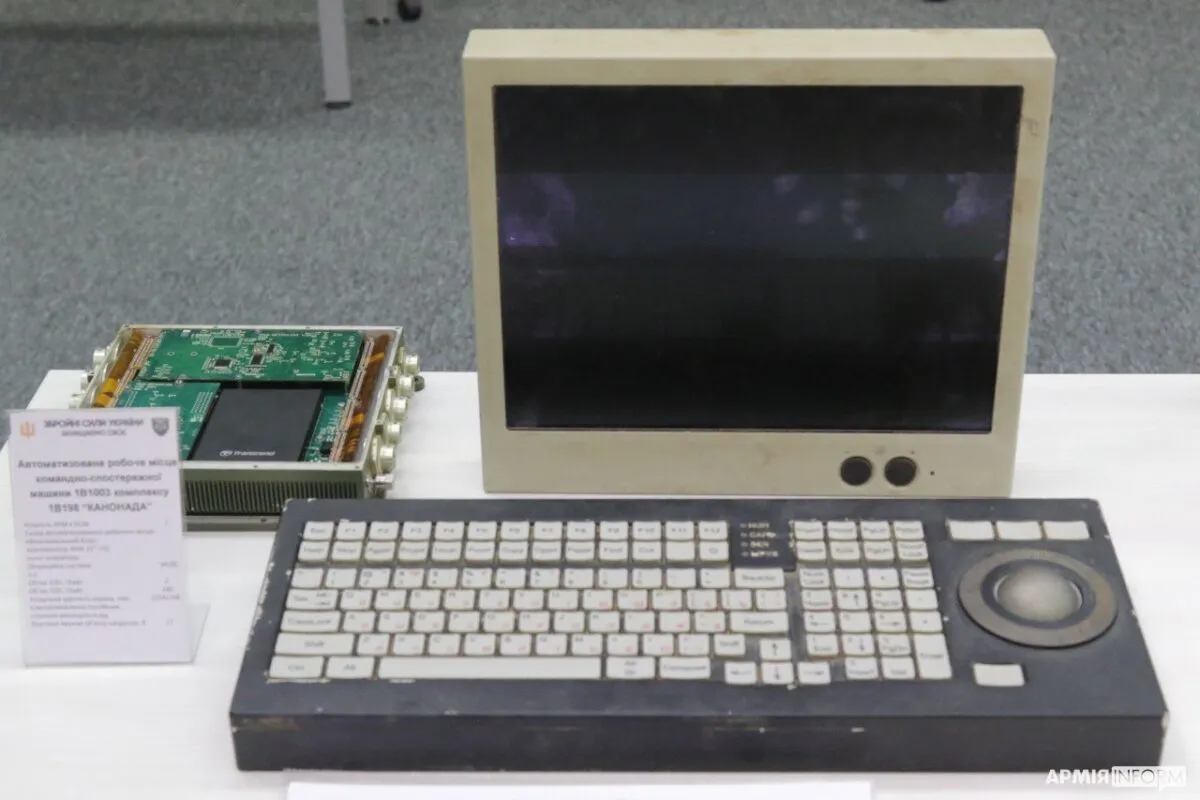
Ukrainian reporting on the captured 1V1003 treated the vehicle as an intelligence-relevant artillery fire-control node as well as a battlefield trophy. ArmyInform and Defense Express described a Military Media Center briefing in which Ukrainian specialists presented the vehicle's computing equipment as an example of Russian artillery electronics relying on imported components.
Inspection context
The source material links the examined equipment to a captured 1V1003 from the 1V198 Kanonada system.
What the analysis adds
The electronics discussion explains why captured command-observation vehicles can matter beyond their chassis: they expose fire-control computers, navigation equipment, and component supply dependencies.
Profile / Specs
Profile
- Origin
- Russia
- Type
- Artillery command-observation vehicle
- Service note
- 2010s-present Russian artillery fire-control system
- Designer
- VNII Signal
- Designed
- Kanonada development work from 2007
- Unit cost
- BMPD reported 2015 contract pricing of about 133 million rubles for one 1V1003 vehicle
- Produced
- Serial production contracts reported for 2016-2017; documented 2020 and 2021 state-defense-order deliveries
- Developed from
- BTR-80 armored vehicle chassis
Specifications
- System role
- Command-observation vehicle in the 1V198 Kanonada automated artillery fire-control complex
- Base chassis
- BTR-80 8x8 armored vehicle
- Gross vehicle weight
- 13,800 kg
- Maximum road speed
- 80 km/h
- Data channels
- 4
- Radio communication range
- Up to 30 km
- Wired communication range
- Up to 1.5 km
- Complex composition
- ArmyInform describes a 1V198 set as four 1V1003 command-observation vehicles and four 1V1004 command-staff vehicles
- Companion vehicle
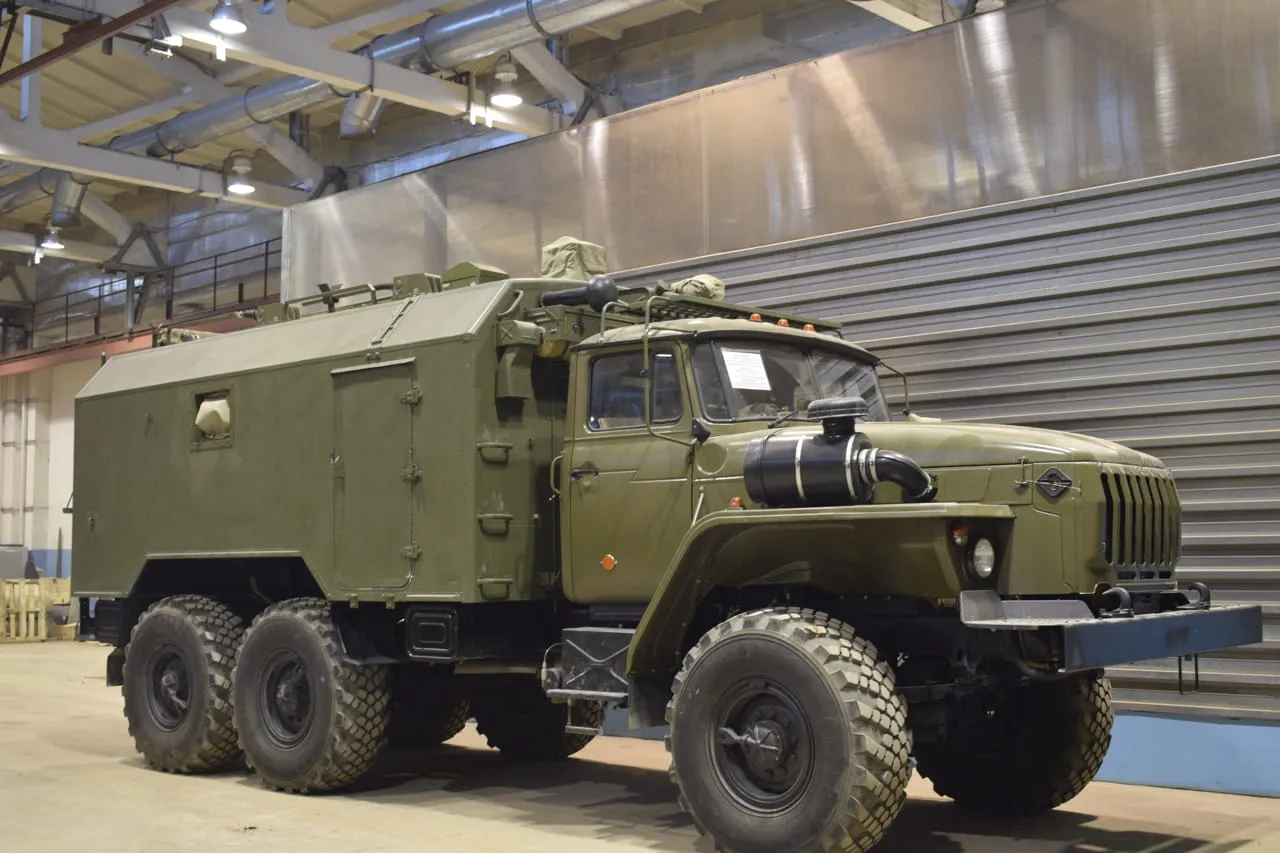
- 1V1004 command-staff vehicle on Ural truck chassis
- Fire-control scope
- Automation for up to four artillery batteries
- Fire-opening times
- Reported as 3-4 minutes from march order against a detected target, or 40-60 seconds from prepared firing positions
- Observation channels
- Censor.NET listed television and thermal-imaging observation channels in its report on the captured vehicle
- Reported observation ranges
- Television channel up to 6,500 m and thermal-imaging channel up to 5,000 m in the captured-vehicle report
- Laser rangefinder limits
- Reported as 100-10,000 m in the captured-vehicle report
- Crew and workstations
- Reported crew of four, with six workstations and two automated workstations
- Supported artillery
- Msta-S, Msta-B, Tornado-G, and Grad systems are identified in Rostec and other available reporting
- Reported accuracy figure
- Rostec reported target engagement from two or more firing positions with accuracy up to 10 m for the 1V198 complex
Fire-Control Role
The 1V1003 is best understood as a mobile artillery command and observation node inside the wider 1V198 Kanonada system. Rostec describes the 1V198 as automating fire control for as many as four artillery batteries, with the 1V1003 paired with Ural-based 1V1004 command-staff vehicles.
System family
1V198 Kanonada automated artillery fire-control complex.
Vehicle role
Command-observation vehicle for target detection, fire-mission automation, and artillery command support.
Control scope
Rostec says the 1V198 equipment automates fire control for up to four artillery batteries.
Variants
The 1V1003 is one vehicle type inside the 1V198 automated artillery fire-control complex rather than a standalone artillery weapon.
| Variant | Configuration | Designation notes |
|---|---|---|
| 1V1004 | Command-staff vehicle | Rostec describes the 1V1004 as the companion Ural-based command-staff vehicle in the same 1V198 package. Sources: Rostec 1V198 delivery |
Artillery Systems Supported
The 1V198 complex is documented as an artillery fire-control system for tube and rocket artillery batteries rather than as a firing platform.
| Compatible item | Item type | Compatibility evidence |
|---|---|---|
 | Self-propelled howitzer | Russian defense reporting lists Msta-S among the artillery systems served by the 1V181 and 1V198 fire-control complexes. Sources: Army Recognition captured 1V1003, Rostec 2020 1V181 and 1V198 delivery |
 | Towed howitzer | The same reporting identifies Msta-B as a compatible artillery system for the 1V198 fire-control complex. Sources: Army Recognition captured 1V1003, Rostec 2020 1V181 and 1V198 delivery |
 | Multiple rocket launcher | Rostec highlighted 1V198 support for Tornado-G fire-control work when announcing the 2021 delivery. Sources: Rostec 1V198 delivery |
 | Multiple rocket launcher | Defense reporting lists Grad alongside Tornado-G as a rocket-artillery system supported by the 1V198 complex. Sources: Army Recognition captured 1V1003, Rostec 2020 1V181 and 1V198 delivery |
Base Vehicle
| Compatible item | Item type | Compatibility evidence |
|---|---|---|
 | 8x8 armored vehicle chassis | Rostec states that the 1V1003 command-observation vehicle is based on the BTR-80. Sources: Rostec 1V198 delivery |
Timeline
1V1003 command-observation vehicle Key Events
Kanonada development work begins
Specialist reporting tied 1V198 development to a 2007 Russian Ministry of Defence contract under the Kanonada development program.
Sources: BMPD 1V198 procurement background
Kanonada completion reported
RIA Novosti reported VNII Signal's statement that the 1V197 and 1V198 automated artillery fire-control complexes were nearing completion under the Kanonada program.
Sources: RIA Signal Kanonada development report
2020 state-defense-order delivery completed
Rostec reported that VNII Signal delivered 1V181 and 1V198 automated artillery fire-control complexes to Russia's Ministry of Defence under the 2020 state defense order.
Sources: Rostec 2020 1V181 and 1V198 delivery
Rostec reports 1V198 delivery
Rostec announced delivery of another 1V198 automated artillery fire-control complex to Russia's Ministry of Defence under the 2021 state defense order.
Sources: Rostec 1V198 delivery
Captured vehicle reported in Ukraine
ArmyInform reported that Ukrainian forces in Kharkiv Oblast had captured a 1V1003 command-observation vehicle from the 1V198 system.
Sources: ArmyInform Kanonada captured 1V1003
Captured electronics briefed publicly
ArmyInform and Defense Express covered a Ukrainian briefing that examined electronics from the captured 1V1003 and discussed imported component dependencies in the Kanonada fire-control system.
Sources: ArmyInform Kanonada electronics briefing, Defense Express Russian artillery electronics analysis
Development And Procurement Context
The available public record points to a staged Russian procurement path rather than a single one-off vehicle. Specialist reporting linked the 1V198 to Kanonada development work beginning in 2007, state tests and revised documentation in 2013, and a 2015 serial-production contract covering complete 1V198 complexes plus separate 1V1003 and 1V1004 vehicles. Rostec later reported 2020 and 2021 state-defense-order deliveries of 1V181/1V198 or 1V198 fire-control complexes.
Development lane
Kanonada development work is reported from 2007, with public reporting by 2016 describing VNII Signal as completing the 1V197 and 1V198 fire-control complexes.
Serial production
BMPD reported a 2015 contract for two 1V198 complexes due in 2016, plus separate 1V1003 and 1V1004 deliveries in 2017.
Later deliveries
Rostec reports document 2020 and 2021 state-defense-order deliveries of 1V181/1V198 or 1V198 fire-control complexes.
Media
1V1003 command-observation vehicle Videos
1V1003 command-observation vehicle Images
Related Weapon Systems


Sources
Rostec 1V198 deliveryPublisher: Rostec | Note: Supports the 1V198 identity, VNII Signal developer/manufacturer claim, 2021 delivery, BTR-80-based 1V1003 composition, 1V1004 companion vehicle, battery-control scope, and manufacturer/background context. | Accessed: 2026-07-02ArmyInform Kanonada captured 1V1003Publisher: ArmyInform / Ministry of Defence of Ukraine | Note: Supports 2014 Russia-Ukraine War direct conflict use by reporting that Ukrainian forces captured a Russian 1V1003 in Kharkiv Oblast; also supports vehicle-level specifications, 1V198 composition, production attribution to V. A. Degtyarev Plant, and image provenance under ArmyInform's CC BY 4.0 site notice unless otherwise stated. | Accessed: 2026-07-02ArmyInform Kanonada electronics briefingPublisher: ArmyInform / Ministry of Defence of Ukraine | Note: Supports gallery context for a trophy 1V1003 from the 1V198 Kanonada artillery fire-control system and documents Ukrainian analysis of its electronics. | Accessed: 2026-07-02ArmyInform terms of usePublisher: ArmyInform / Ministry of Defence of Ukraine | Note: Supports ArmyInform reuse terms for photographic images and other site content under Creative Commons Attribution 4.0 unless otherwise stated. | Accessed: 2026-07-02Defense Express Russian artillery electronics analysisPublisher: Defense Express | Note: Supports background on the captured 1V1003 electronics briefing, including the Ukrainian assessment that the Kanonada fire-control vehicle's computing equipment relied on imported components. | Accessed: 2026-07-02Oryx Russian equipment lossesPublisher: Oryx | Note: Supports 2014 Russia-Ukraine War direct conflict-use context by listing one Russian 1V1003 command-observation vehicle for the 1V198 artillery fire-control system as captured. | Accessed: 2026-07-02Censor.NET Butusov Kanonada reviewPublisher: Censor.NET | Note: Supports 2014 Russia-Ukraine War direct conflict-use context by describing a captured Russian 1V1003 from the 1V198 Kanonada system in Kharkiv Oblast, and supports captured-vehicle specifications for observation channels, rangefinder limits, crew, workstations, and communication channels. | Accessed: 2026-07-02Kyiv Independent Kharkiv captured vehiclesPublisher: The Kyiv Independent | Note: Supports 2014 Russia-Ukraine War direct conflict-use context by reporting that Ukraine captured one rare 1V1003 among command, observation, and fire-control vehicles during the September 2022 Kharkiv counteroffensive period. | Accessed: 2026-07-02RIA Signal Kanonada development reportPublisher: RIA Novosti | Note: Supports Kanonada development context, VNII Signal's development role, intended automated fire-control role for tube and rocket artillery, and reported fire-opening timelines. | Accessed: 2026-07-02Rostec 2020 1V181 and 1V198 deliveryPublisher: Rostec | Note: Supports the 2020 state-defense-order delivery by VNII Signal, High Precision Systems/Rostec industrial context, compatibility claims for Msta-S, Msta-B, Tornado-G, and Grad artillery systems, and fire-control scope for up to four batteries with up to eight guns per battery. | Accessed: 2026-07-02BMPD 1V198 procurement backgroundPublisher: BMPD / LiveJournal | Note: Supports development and procurement background for the 1V198 family, including reported 2007 Kanonada development work, 2013 testing/documentation milestones, 2015 serial-production contracting, and reported 1V1003 pricing. | Accessed: 2026-07-02Army Recognition captured 1V1003Publisher: Army Recognition | Note: Supports 2014 Russia-Ukraine War direct conflict-use context and background on the 1V1003 as the BTR-80-based command-observation vehicle in the 1V198 system. | Accessed: 2026-07-02