Armored Vehicles

1Zh3 PRP-3 Val

Also known as
  • PRP-3
  • PRP-3 Val
  • 1Zh3
  • 1Ж3
  • Object 767
  • Объект 767
  • Podvizhny Razvedyvatelny Punkt PRP-3
  • Mobile reconnaissance post PRP-3

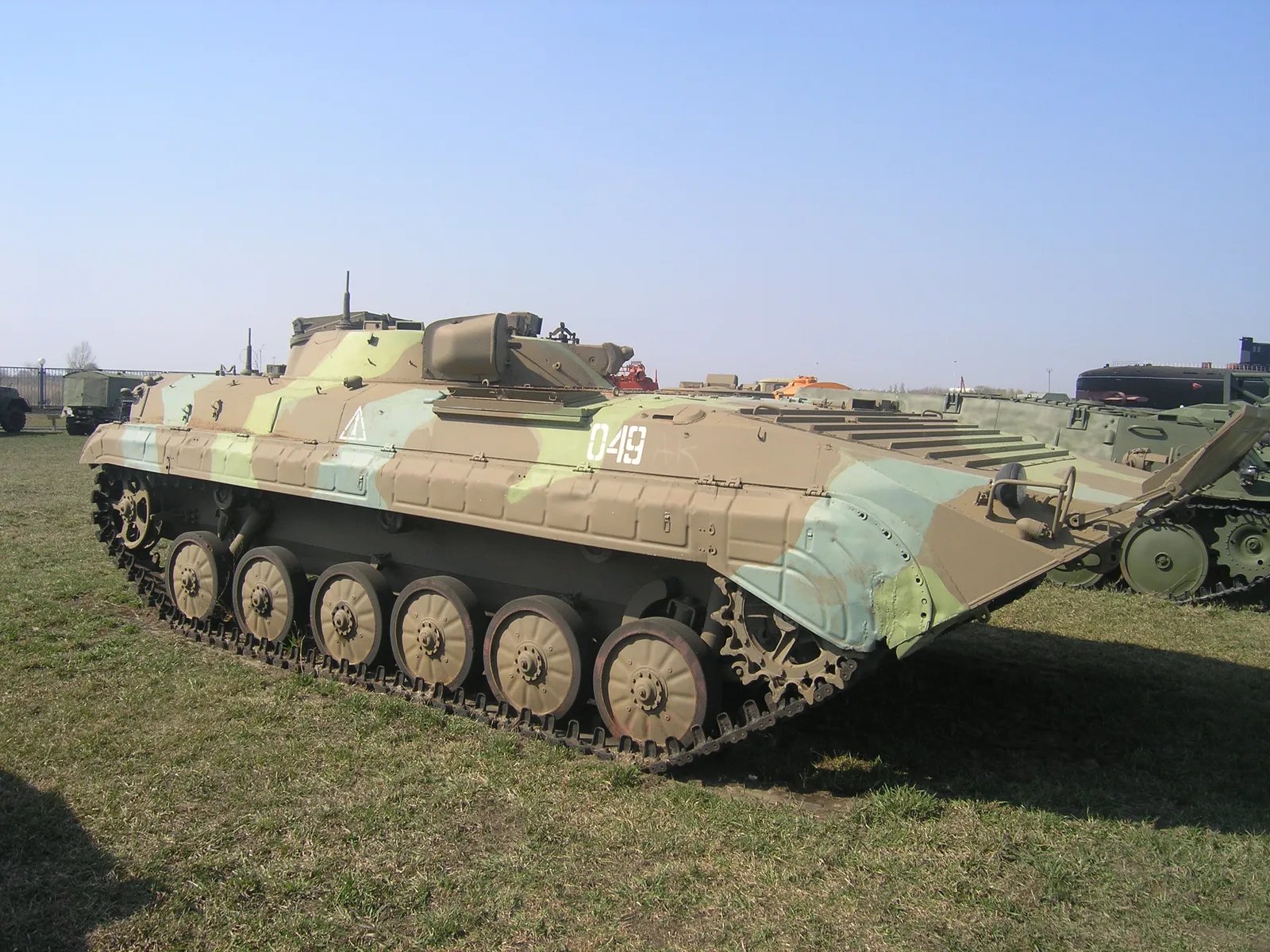
The 1Zh3 PRP-3 Val is a Soviet BMP-1-based artillery reconnaissance vehicle built to find targets, determine coordinates, and support artillery or anti-tank guided missile fire from an amphibious tracked platform. It replaced the BMP-1 infantry turret with observation, navigation, communications, laser-ranging, and 1RL126 radar equipment, while retaining only light self-defense armament and a 90 mm illumination-rocket launcher.

Role in Conflicts

Profile / Specs

Profile

Origin
Soviet Union
Type
Artillery reconnaissance vehicle
Service note
Cold War design with post-Soviet battlefield use
Designer
Chelyabinsk Tractor Plant design bureau
Designed
Development began after a July 1963 Soviet decision; accepted into service in 1970
Produced
Production from the early 1970s; Rubtsovsk Machine-Building Plant production is documented from 1979

Specifications

Crew
5
Chassis
BMP-1 amphibious tracked chassis
Combat weight
13,200 kg
Engine
300 hp UTD-20 diesel
Mobility
65 km/h road speed; 7 km/h swimming speed; 550 km fuel range
Armor
6-26 mm rolled steel armor
Armament
1 x 7.62 mm PKT machine gun with 1,000 rounds
Illumination launcher
2P130-1 launcher for 90 mm illumination rockets; 20 rockets carried
Reconnaissance equipment
1RL126 radar, 1D6M1 laser rangefinder, 1PN29 night observation device, 1OP79 periscopic sight, PAB-2M artillery compass, DS-1 stereoscopic rangefinder
Maximum target detection
8,000 m by optical devices; 10,000 m by radar
Reconnaissance Fit

The PRP-3's battlefield value came from its sensor, navigation, communications, and illumination equipment rather than from direct-fire armament.

Target acquisition

Armforc lists the 1RL126 moving-target radar, 1D6M1 laser periscope rangefinder, 1PN29 night observation device, 1OP79 periscopic sight, PAB-2M artillery compass, and DS-1 stereoscopic rangefinder among the reconnaissance and observation fit.

Fire-control support

The vehicle was intended to locate targets, establish coordinates, support artillery or anti-tank guided missile fire, illuminate target areas at night, observe friendly and enemy action, and support topographic-geodetic positioning of artillery units.

Self defense

Published specifications list a single 7.62 mm PKT machine gun with 1,000 rounds, plus a 2P130-1 launcher and 20 illumination rockets rather than a BMP-1-style cannon and anti-tank missile armament.
Variants

The PRP-3 belongs to the BMP-1-derived Soviet artillery reconnaissance line. Later PRP-4 vehicles retained the same broad mission but added newer reconnaissance and fire-control equipment.

VariantConfigurationDesignation notes
PRP-4 Nard / PRP-4M Deyteriy, Artillery reconnaissance vehicle, Armored VehiclesPRP-4 Nard / PRP-4M DeyteriyFollow-on artillery reconnaissance family

Russian reference material identifies PRP-4 Nard as a vehicle based on the PRP-3 line, while the cataloged PRP-4 record covers the later Nard/Deyteriy family separately.

Sources: Russian Wikipedia PRP-3

Vehicle Family

The PRP-3 is best understood as a mission conversion of the BMP-1 hull rather than as an infantry fighting vehicle.

Compatible itemItem typeCompatibility evidence
BMP-1, Infantry fighting vehicle, Armored VehiclesBMP-1Base tracked chassis

Russian reference material identifies the PRP-3 as a BMP-1-based mobile reconnaissance post; the PRP-3 retained the amphibious tracked chassis while replacing the standard infantry-fighting role with artillery reconnaissance equipment.

Sources: Russian Wikipedia PRP-3, Armforc PRP-3 Val

PRP-4 Nard / PRP-4M Deyteriy, Artillery reconnaissance vehicle, Armored VehiclesPRP-4 Nard / PRP-4M DeyteriyLater family member

The PRP-4 Nard family followed the PRP-3 in the Soviet artillery reconnaissance line and is cataloged separately because it uses distinct designations and later sensor/fire-control equipment.

Sources: Russian Wikipedia PRP-3

Timeline

1Zh3 PRP-3 Val Key Events

  1. Development work authorized

    Russian reference material states that work on the vehicle began after a Soviet decision dated 15 July 1963, using the BMP-1 infantry fighting vehicle as the base.

    Sources: Russian Wikipedia PRP-3

  2. Accepted into Soviet service

    The PRP-3 was accepted into service in 1970 as a mobile artillery reconnaissance post with the GRAU index 1Zh3 and GBTU Object 767 designation.

    Sources: Russian Wikipedia PRP-3

  3. Rubtsovsk production documented

    GlobalSecurity.org records Rubtsovsk Machine-Building Plant beginning PRP-3 armored reconnaissance vehicle production in 1979 after earlier BMP-1 and BRM-1K work.

    Sources: Rubtsovsk Machine-building Plant

  4. Russian PRP-3 losses tracked in Ukraine

    Oryx's full-scale invasion equipment-loss list records Russian 1Zh3 PRP-3 Val artillery reconnaissance vehicles destroyed in Ukraine from photo or video evidence.

    Sources: Oryx Russian Equipment Losses

Related Weapon Systems
PRP-4 Nard / PRP-4M Deyteriy, Artillery reconnaissance vehicle, Armored VehiclesArmored VehiclesPRP-4 Nard / PRP-4M DeyteriyArtillery reconnaissance vehicleThe PRP-4 Nard and PRP-4M Deyteriy are BMP-1-derived Soviet artillery reconnaissance vehicles built to find targets, determine coordinates, and support artillery fire direction from a protected tracked platform. The family trades the BMP-1 infantry role for radar, optical, night-vision, navigation, data-link, and laser ranging equipment, with later PRP-4A Argus vehicles continuing the same artillery-observation line in Russian service.
1K148 Yastreb-AV, Self-propelled counter-battery artillery reconnaissance radar complex, Electronic WarfareElectronic Warfare1K148 Yastreb-AVSelf-propelled counter-battery artillery reconnaissance radar complexThe 1K148 Yastreb-AV is a Russian self-propelled counter-battery radar complex attributed to the Almaz-Antey industrial group and Tula-based NPO Strela. Open reporting describes it as a phased-array artillery reconnaissance system on a BAZ-6910-025 8x8 chassis, built to track incoming shells or rockets and calculate artillery firing positions for counter-battery fire. Russian state-linked reporting announced its use with Russian artillery units in Ukraine in January 2024, while Ukrainian military, government-linked, and independent news coverage later documented the destruction of multiple Russian Yastreb-AV systems.
1L125 Niobium-SV, Mobile VHF three-coordinate air-defense surveillance radar, Air DefenseAir Defense1L125 Niobium-SVMobile VHF three-coordinate air-defense surveillance radarThe 1L125 Niobium-SV is a Russian mobile VHF/meter-band, three-coordinate radar built for ground-forces air defense and developed by NNIIRT within the Almaz-Antey group. Rosoboronexport's 1L125E export profile describes a 5-500 km, 360-degree surveillance radar for detecting, tracking, identifying, and reporting aerodynamic and ballistic targets, including low-observable aircraft; Ukrainian and sanctions-derived records identify Niobium-SV radars in Russian service during the Russia-Ukraine war.
1L13-3 Nebo-SV, Mobile VHF two-coordinate air-surveillance radar, Air DefenseAir Defense1L13-3 Nebo-SVMobile VHF two-coordinate air-surveillance radarThe 1L13-3 Nebo-SV is a Soviet/Russian mobile meter-band radar for ground-forces air defense, built to search for aircraft, helicopters, UAVs, and other air targets and pass range-and-bearing data to command posts or missile batteries. It is a two-coordinate predecessor to the 1L119 Nebo-SVU: sources describe it with a 72-element VHF antenna array, separate IFF interrogator, six-person crew, and fighter-target detection figures reaching roughly 350 km at high altitude.
1L271 Aistyonok, Portable mortar locating reconnaissance radar, Electronic WarfareElectronic Warfare1L271 AistyonokPortable mortar locating reconnaissance radarThe 1L271 Aistyonok is a Russian portable mortar-locating and artillery-reconnaissance radar built for battalion-to-brigade fire support. Rosoboronexport describes the export system as a modular radar for detecting 81-120 mm mortar positions, tracking shell bursts for artillery correction, and observing moving ground targets out to 20 km; specialist radar references describe a 135 kg J-band set, while open-source conflict reporting documents Russian-linked use in Syria and Ukraine plus Armenian/Artsakh wartime fielding problems in the 2020 Nagorno-Karabakh conflict.

Sources