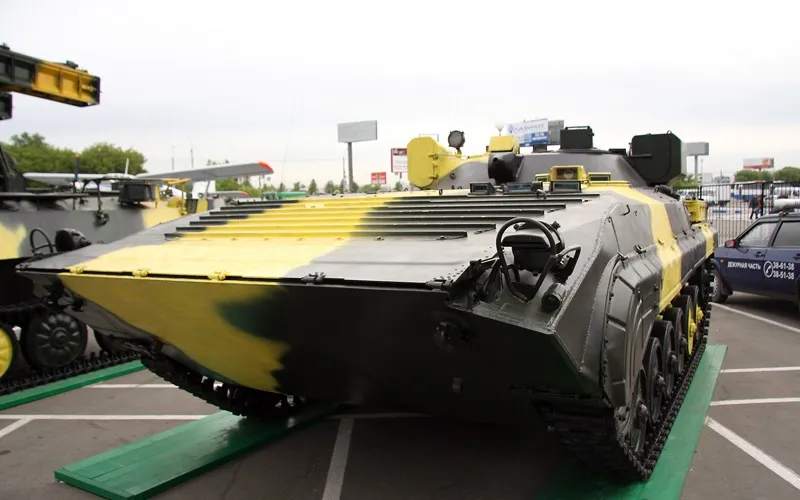


Ukrainian official memory material describes a PRP-4 Nard crew supporting the July 2014 Popasna fighting, while open-source loss trackers document Russian 1V125/145 PRP-4(M) Nard/Deyteriy vehicles destroyed during the full-scale invasion, including two near Razine in November 2025.
Role detailsArmored Vehicles
PRP-4 Nard / PRP-4M Deyteriy
Also known as
- PRP-4
- PRP-4M
- Nard
- Deyteriy
- Deuteriy
- Deyterium
- 1V121
- 1V125
- 1V145
- Object 779
- Object 779M
- Podvizhny Razvedyvatelny Punkt PRP-4
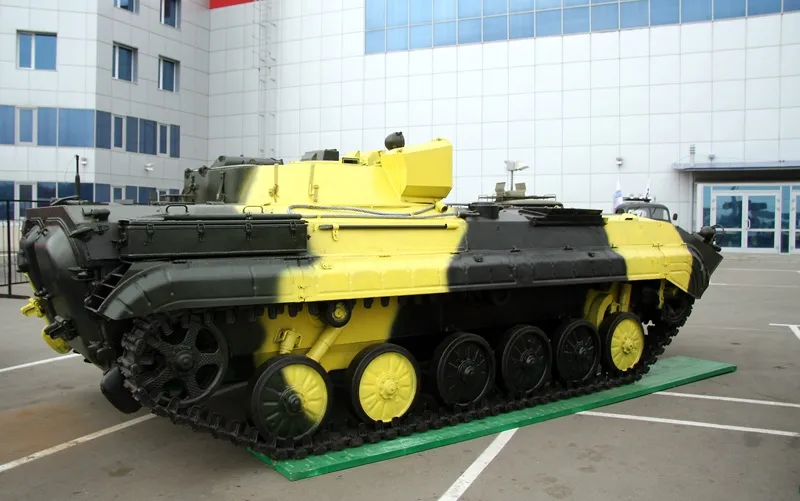
The PRP-4 Nard and PRP-4M Deyteriy are BMP-1-derived Soviet artillery reconnaissance vehicles built to find targets, determine coordinates, and support artillery fire direction from a protected tracked platform. The family trades the BMP-1 infantry role for radar, optical, night-vision, navigation, data-link, and laser ranging equipment, with later PRP-4A Argus vehicles continuing the same artillery-observation line in Russian service.
Role in Conflicts
Profile / Specs
Profile
- Origin
- Soviet Union / Russia
- Built by
- Rubtsovsk Machine-Building Plant
- Type
- Artillery reconnaissance vehicle
- Service note
- Late Cold War and post-Soviet service
- Designer
- Rubtsovsk Machine-Building Plant
- Designed
- PRP-4 development began in 1980; PRP-4 accepted in 1984; PRP-4M modernization appeared in 1988
- Produced
- PRP-4 serial production from the mid-1980s at Rubtsovsk Machine-Building Plant; PRP-4M followed from 1988; PRP-4MU and PRP-4A were later upgrades or follow-ons with limited public production evidence
Specifications
- Crew
- 5 on PRP-4, PRP-4M, and PRP-4MU in detailed PRP-family comparison data; PRP-4A references commonly list a crew of 4
- Chassis
- BMP-1-derived tracked amphibious chassis for PRP-4 and PRP-4M; PRP-4A chassis reporting is inconsistent between open sources
- Combat weight
- PRP-4: about 13,200 kg; PRP-4M/PRP-4MU: about 13,150 kg; PRP-4A: 13,800 kg in PRP-4A references
- Engine and mobility
- UTD-20-family 300 hp diesel; 65 km/h road speed; about 7 km/h swimming speed; 550-600 km fuel range depending on variant
- Armament
- One 7.62 mm PKT or PKTM machine gun for self-defense, with 1,000 rounds listed for PRP-4/PRP-4M/PRP-4MU
- Protection
- BMP-family welded armored hull with about 6-26 mm armor cited for PRP-4/PRP-4M/PRP-4MU; later Argus references add camouflage, smoke, and protection aids
- Sensors
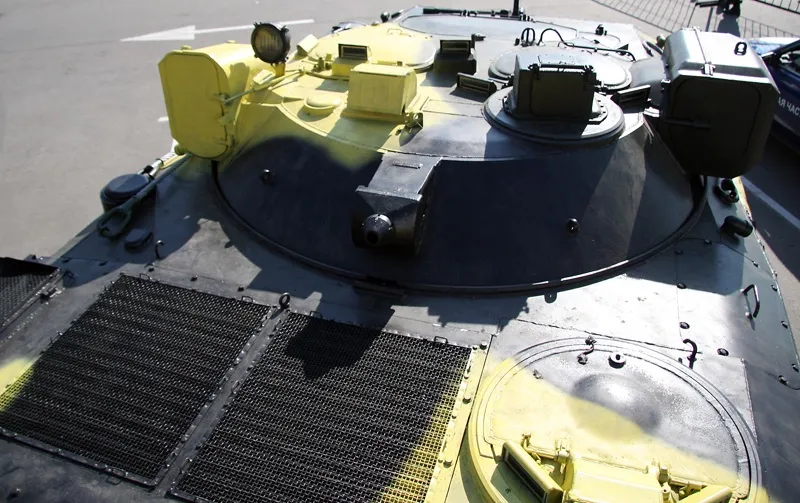
- PRP-4/PRP-4M equipment includes PSNR-5K/1RL133-1 Kredo battlefield-surveillance radar, optical/night observation devices, laser rangefinders, navigation equipment, and artillery command/data-transmission equipment depending on variant
- PRP-4M detection and targeting
- Technical comparison data lists PRP-4M target recognition up to 3,000 m by day or night, tank-type radar detection up to 12,000 m, target fixing up to 10,000 m, and equipment readiness within 5 minutes
- PRP-4MU distinction
- PRP-4MU is described as replacing the PRP-4/PRP-4M 1RL133-1 radar with the 1RL133-3 radar
- PRP-4A Argus distinction
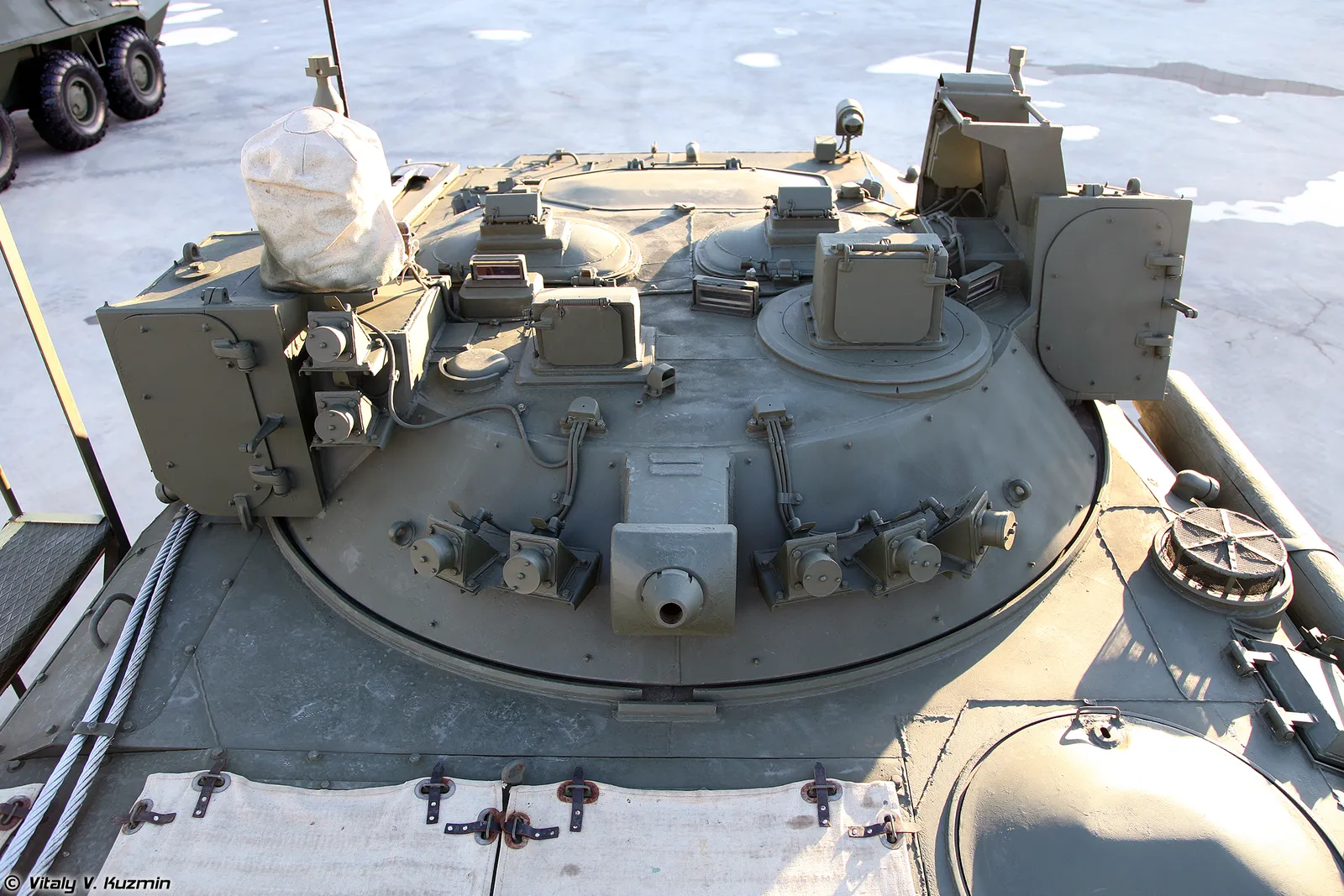
- Later Argus references describe thermal imaging, laser rangefinding, radar, range-gated imaging, optoelectronic suppression, smoke equipment, and faster readiness than PRP-4M
Reconnaissance Fit
The PRP-4 family replaced the BMP-1's infantry-carrying role with an artillery observation package. Open references describe radar, optical and night-vision devices, navigation aids, data-transmission equipment, laser rangefinders, and a small defensive machine gun as the core of the vehicle's battlefield role.
Battlefield role
Locate ground targets, determine coordinates, and help artillery units correct or direct fire from a tracked armored observation post.
Vehicle lineage
BMP-1-derived hull with specialist reconnaissance systems instead of the standard infantry fighting vehicle mission package; Rubtsovsk records and reference sources tie PRP modernization work to the same tracked-vehicle industrial line.
Designation caution
PRP-4 Nard is most often identified as 1V121, PRP-4M Deyteriy as 1V145, and Ukraine-war loss trackers as 1V125/145 PRP-4(M).
Variants
The family uses both GRAU-style equipment indexes and factory/object names: PRP-4 Nard is identified as 1V121/Object 779, PRP-4M Deyteriy as 1V145/Object 779M, PRP-4A Argus as 1V166, while Ukraine-war loss trackers often group observed vehicles under the 1V125/145 PRP-4(M) label.
| Variant | Configuration | Designation notes |
|---|---|---|
| PRP-4MU | Late PRP-4M upgrade | Described as a late-1990s improved PRP-4M standard that replaced the 1RL133-1 radar with 1RL133-3; open sources suggest upgrades may have been applied during overhaul rather than large new-build production. |
| PRP-4A Argus | Later Russian follow-on | Identified as 1V166 and associated with Rubtsovsk/Uralvagonzavod; sources describe improved reconnaissance and observation equipment, thermal imaging, optoelectronic suppression, and Russian district-service introduction as a replacement for older PRP-4 vehicles. Sources: Army Recognition PRP-4A Argus, VPK TSAMTO PRP-4A Demonstration, Voprosy Oboronnoy Tekhniki Fire-Control Vehicles |
Vehicle Family
The PRP-4 family is a specialist artillery-observation branch of the BMP-1 tracked vehicle family rather than a troop-carrying infantry fighting vehicle.
| Compatible item | Item type | Compatibility evidence |
|---|---|---|
 | Base tracked vehicle family | Army Recognition describes the PRP-4A Argus as BMP-1-based, and reference material groups PRP-4/PRP-4M among BMP-1-derived specialist variants. Sources: Army Recognition PRP-4A Argus, List of BMP-1 variants |
Timeline
PRP-4 Nard / PRP-4M Deyteriy Key Events
PRP-4 enters Soviet service
Armforc describes PRP-4 Nard development beginning in 1980 as a deep modernization of the PRP-3, with acceptance in 1984 as the 1V121 PRP-4 Nard.
Sources: Armforc PRP-4 Nard and PRP-4M Deyteriy
PRP-4M modernization appears
Armforc identifies PRP-4M Deyteriy/Object 779M/1V145 as a 1988 modernization with improved radar, optical reconnaissance, and communications equipment.
Sources: Armforc PRP-4 Nard and PRP-4M Deyteriy, Soviet GRAU Index Archive
PRP-4A Argus reported in Russian district service
Army Recognition reported Russian Central and Southern Military District artillery units mastering PRP-4A Argus vehicles as replacements for legacy PRP-4 Nard fire-control vehicles.
Sources: Army Recognition PRP-4A Argus
Central Military District demonstrates PRP-4A Argus
TSAMTO reporting republished by VPK.name said a PRP-4A Argus was shown to Central Military District artillery commanders and described the vehicle's thermal imaging, target search, and fire-support role.
Sources: VPK TSAMTO PRP-4A Demonstration
Russian PRP-4(M) losses tracked in Ukraine
Oryx's full-scale invasion loss list separately records Russian 1V125/145 PRP-4(M) Nard/Deyteriy artillery reconnaissance vehicle losses and a PRP-4A Argus captured item.
Sources: Oryx Russian Equipment Losses
Two PRP-4 vehicles reported destroyed near Myrnohrad
UNITED24 Media reported that Ukraine's 503rd Separate Marine Battalion published video from a failed Russian assault near Myrnohrad in which two PRP-4 reconnaissance vehicles were destroyed; WarSpotting records two Russian PRP-4(M) losses at nearby Razine on 5 November 2025.
Sources: UNITED24 Myrnohrad PRP-4 Losses, WarSpotting PRP-4M 40578, WarSpotting PRP-4M 40579
WarSpotting records a destroyed PRP-4(M)
WarSpotting entry #43094 identifies a destroyed Russian 1V125/145 PRP-4(M) Nard/Deyteriy artillery reconnaissance vehicle on 25 February 2026.
Sources: WarSpotting PRP-4M 43094
Media
PRP-4 Nard / PRP-4M Deyteriy Images
Related Weapon Systems


Sources
List of BMP-1 variantsPublisher: Wikipedia | Note: Starting reference for PRP-4 and PRP-4M designation logic, BMP-1 family placement, variant equipment, and source leads. | Accessed: 2026-07-01Soviet GRAU Index ArchivePublisher: Archive.today mirror of Russian GRAU index list | Note: Supports the 1V121 PRP-4 Nard, 1V145 PRP-4M Deyteriy, and 1V166 PRP-4A Argus designation mapping; used cautiously as an archived index reference. | Accessed: 2026-07-01Army Recognition PRP-4A ArgusPublisher: Army Recognition | Note: Supports PRP-4A Argus specifications, BMP-1 base vehicle, Rubtsovsk design lineage, Russian district service context, and replacement relationship to PRP-4 Nard. | Accessed: 2026-07-01GlobalSecurity Rubtsovsk PlantPublisher: GlobalSecurity.org | Note: Supports Rubtsovsk Machine-Building Plant tracked-vehicle background, BMP-1 cooperation, PRP-3 production, and PRP modernization article sequence from 1984 to 1999. | Accessed: 2026-07-01Armforc PRP-4 Nard and PRP-4M DeyteriyPublisher: Armforc.su | Note: Detailed Russian-language reference supporting PRP-4/PRP-4M designation logic, development chronology, Rubtsovsk serial production, PRP-4MU radar distinction, equipment fit, and PRP-4/4M/4MU comparison specifications. | Accessed: 2026-07-02Voprosy Oboronnoy Tekhniki Fire-Control VehiclesPublisher: Voprosy Oboronnoy Tekhniki | Note: 2022 technical journal article comparing artillery fire-control command and reconnaissance vehicles; supports 1V145 Deyteriy and 1V166 Argus designations, PRP organizational role, and PRP-4M/PRP-4A technical comparison data. | Accessed: 2026-07-02VPK TSAMTO PRP-4A DemonstrationPublisher: VPK.name / TSAMTO | Note: Supports PRP-4A Argus Central Military District demonstration context, target-search role, thermal imaging and optoelectronic fit, and artillery targeting support. | Accessed: 2026-07-01UINP Popasna PRP-4 Nard AccountPublisher: Ukrainian Institute of National Memory | Note: Supports direct 2014 Russia-Ukraine War use of a Ukrainian PRP-4 Nard crew during the July 2014 Popasna fighting. | Accessed: 2026-07-02Oryx Russian Equipment LossesPublisher: Oryx | Note: Supports direct 2014 Russia-Ukraine War documentation of Russian 1V125/145 PRP-4(M) Nard/Deyteriy artillery reconnaissance vehicle losses during the full-scale invasion. | Accessed: 2026-07-01UNITED24 Myrnohrad PRP-4 LossesPublisher: UNITED24 Media | Note: Supports direct 2014 Russia-Ukraine War documentation of two Russian PRP-4 reconnaissance vehicles destroyed near Myrnohrad after a 503rd Separate Marine Battalion video. | Accessed: 2026-07-01WarSpotting PRP-4M 40578Publisher: WarSpotting | Note: Supports direct 2014 Russia-Ukraine War documentation of a destroyed Russian 1V125/145 PRP-4(M) Nard/Deyteriy artillery reconnaissance vehicle at Razine on 5 November 2025. | Accessed: 2026-07-02WarSpotting PRP-4M 40579Publisher: WarSpotting | Note: Supports direct 2014 Russia-Ukraine War documentation of a second destroyed Russian 1V125/145 PRP-4(M) Nard/Deyteriy artillery reconnaissance vehicle at Razine on 5 November 2025. | Accessed: 2026-07-02WarSpotting PRP-4M 43094Publisher: WarSpotting | Note: Supports direct 2014 Russia-Ukraine War documentation of a destroyed Russian 1V125/145 PRP-4(M) Nard/Deyteriy artillery reconnaissance vehicle on 25 February 2026. | Accessed: 2026-07-01Wikimedia Commons PRP-4A Argus 514Publisher: Wikimedia Commons | Note: Supports PRP-4A Argus gallery image provenance and CC BY-SA 4.0 licensing by Vitaly V. Kuzmin with VRT confirmation. | Accessed: 2026-07-02Wikimedia Commons PRP-4M 1Publisher: Wikimedia Commons | Note: Supports the primary PRP-4M image provenance and CC BY-SA 4.0 licensing by Vitaly V. Kuzmin with VRT confirmation. | Accessed: 2026-07-01Wikimedia Commons PRP-4M 2Publisher: Wikimedia Commons | Note: Supports additional PRP-4M gallery image provenance and CC BY-SA 4.0 licensing. | Accessed: 2026-07-01Wikimedia Commons PRP-4M 3Publisher: Wikimedia Commons | Note: Supports additional PRP-4M gallery image provenance and CC BY-SA 4.0 licensing. | Accessed: 2026-07-01