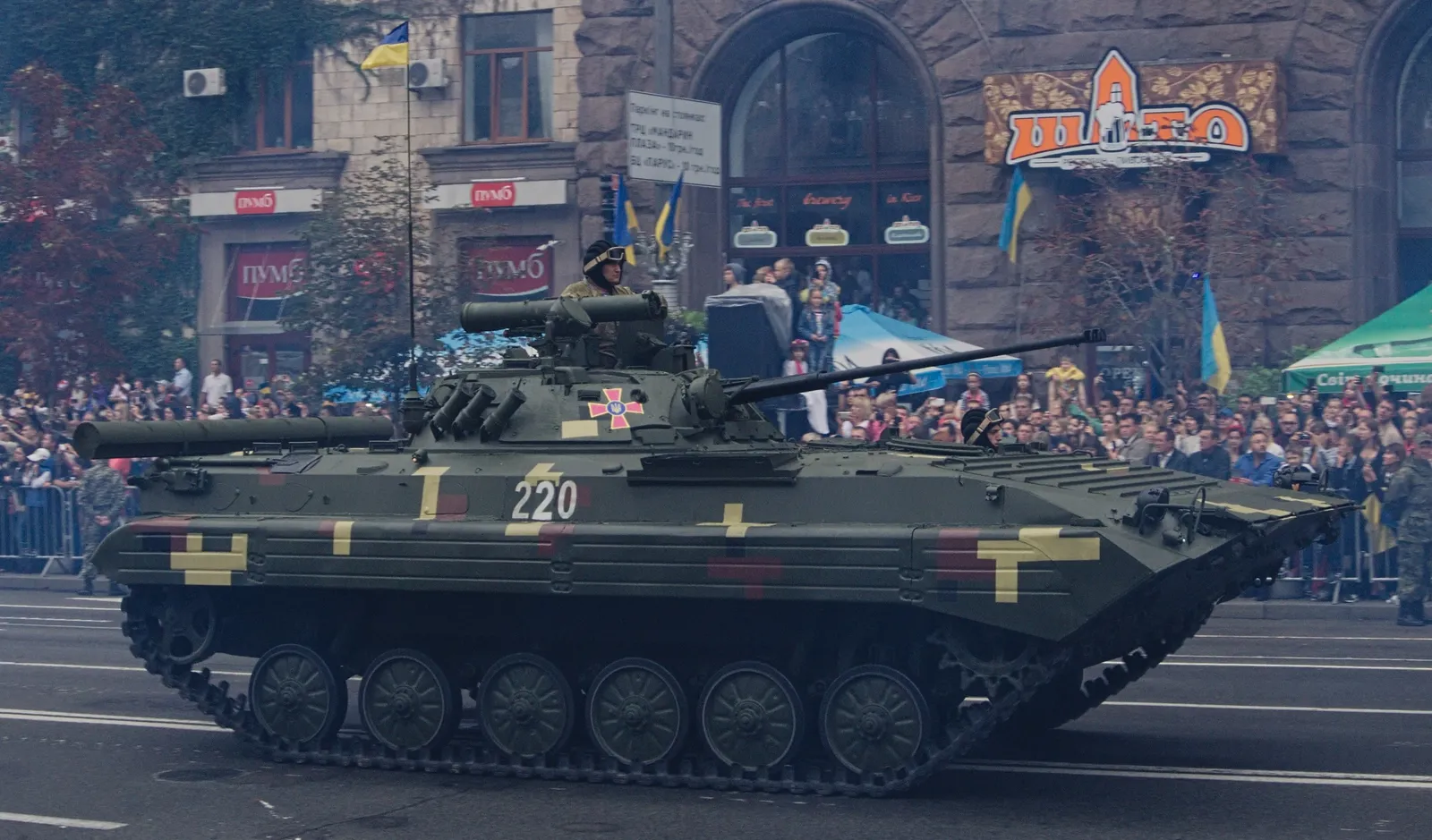
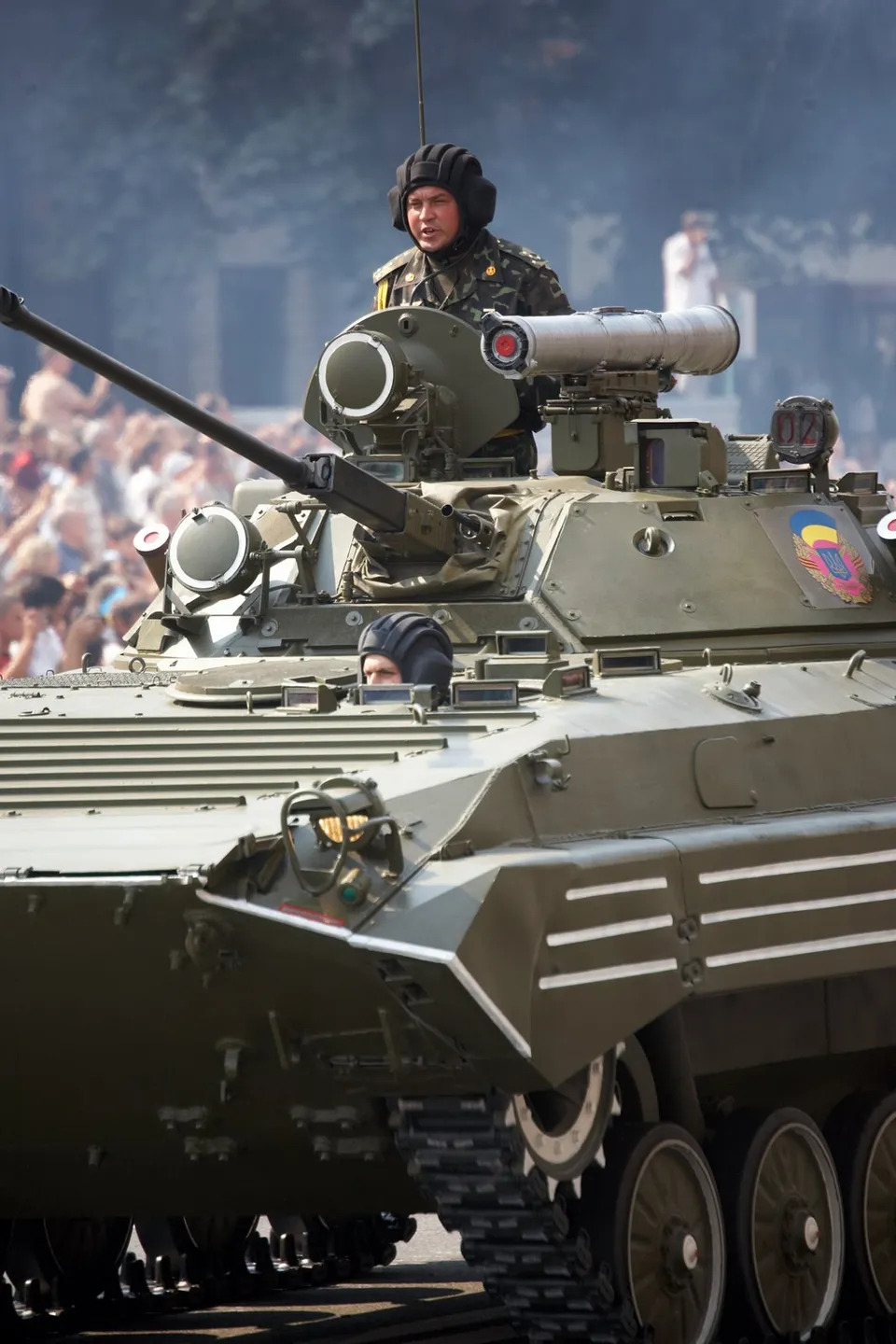
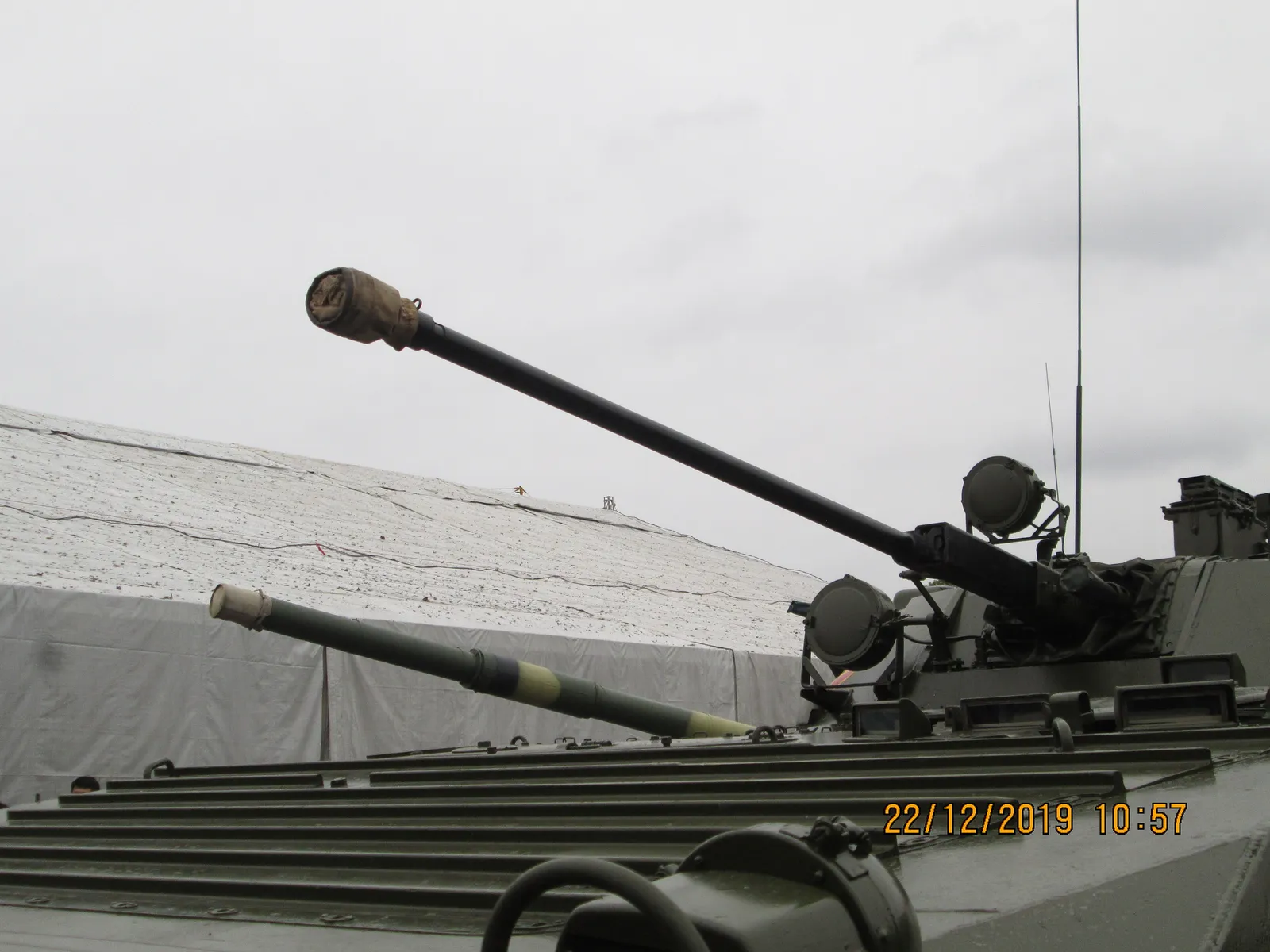
The BMP-2 is a Soviet tracked infantry fighting vehicle that replaced the BMP-1's low-velocity gun with a stabilized 30 mm 2A42 autocannon while retaining an anti-tank missile launcher and amphibious mobility. Its troop carriage, direct-fire, and ATGM roles were documented in Afghanistan and remain visible in post-Soviet and export armored units, with later documented use in Ukraine, Syria, Nagorno-Karabakh, and Yemen.
Soviet motorized rifle subunits fielded BMP-1 and BMP-2 infantry fighting vehicles during the 1979 Soviet-Afghan War; a Russian General Staff study says the BMP-2's 30 mm gun, higher elevation, and redesigned crew arrangement made it useful on flat ground and in the mountains, while Afghanistan experience also drove the armor-improved BMP-2D variant.
Both Russian and Ukrainian forces field BMP-2 family infantry fighting vehicles in the 2014 Russia-Ukraine War; Oryx has visually documented Russian BMP-2 variants and Ukrainian BMP-2(K) losses, including destroyed, damaged, abandoned, and captured vehicles.
Syrian government forces fielded BMP-2s during the 2011 Syrian Civil War; Oryx documented Russian-delivered vehicles in Syrian Arab Army service and described their use alongside T-62M tanks in northeastern Hama fighting.
Used by both Armenian/Artsakh and Azerbaijani forces during the 2020 Nagorno-Karabakh fighting; Oryx visually documented 40 Armenian BMP-2 losses and Azerbaijani BMP-2 and BMP-2K losses.
Fielded by forces loyal to Yemen's Saudi-backed government during February 2021 clashes with Houthi fighters in the al-Jadaan area northwest of Marib, where AFP photographed a BMP-2 moving into position.
Afghanistan-driven armor-improved BMP-2 variant with spaced side armor, steel undercarriage screens, added underfloor protection for front crew positions, and reduced mobility; the added weight removed swim capability.
Russian reporting on the Afghanistan-adapted BMP-1D and BMP-2D says the D-series vehicles were adopted in 1982 after Soviet combat experience exposed survivability limits in Afghanistan.
Sources: The Afghan BMP-2D Is Still In Service With 4 States
Russian-delivered BMP-2s documented in Syria
Oryx documented a Russian delivery stream of BMP-2s to Syrian government forces and described their battlefield use with Syrian Arab Army armored units.
Sources: Syria Rearms: Russian Deliveries Of BMP-2s
AFP photographs a BMP-2 near Marib
AFP imagery republished by TRT World identified a BMP-2 used by forces loyal to Yemen's Saudi-backed government during clashes northwest of Marib.
Sources: Deadly clashes in northern Yemen as Houthis ramp up attacks
Large-scale Ukraine loss tracking begins
Oryx's visual loss lists for the full-scale invasion include BMP-2 family vehicles on both Russian and Ukrainian sides.
Sources: Attack On Europe: Documenting Russian Equipment Losses During The Russian Invasion Of Ukraine, Attack On Europe: Documenting Ukrainian Equipment Losses During The Russian Invasion Of Ukraine