- Side
- Georgia

Georgia fielded the 2A65 Msta-B during the 2008 Russo-Georgian War, with Oryx listing one Georgian 152 mm 2A65 Msta-B howitzer destroyed among visually confirmed Georgian towed-artillery losses.
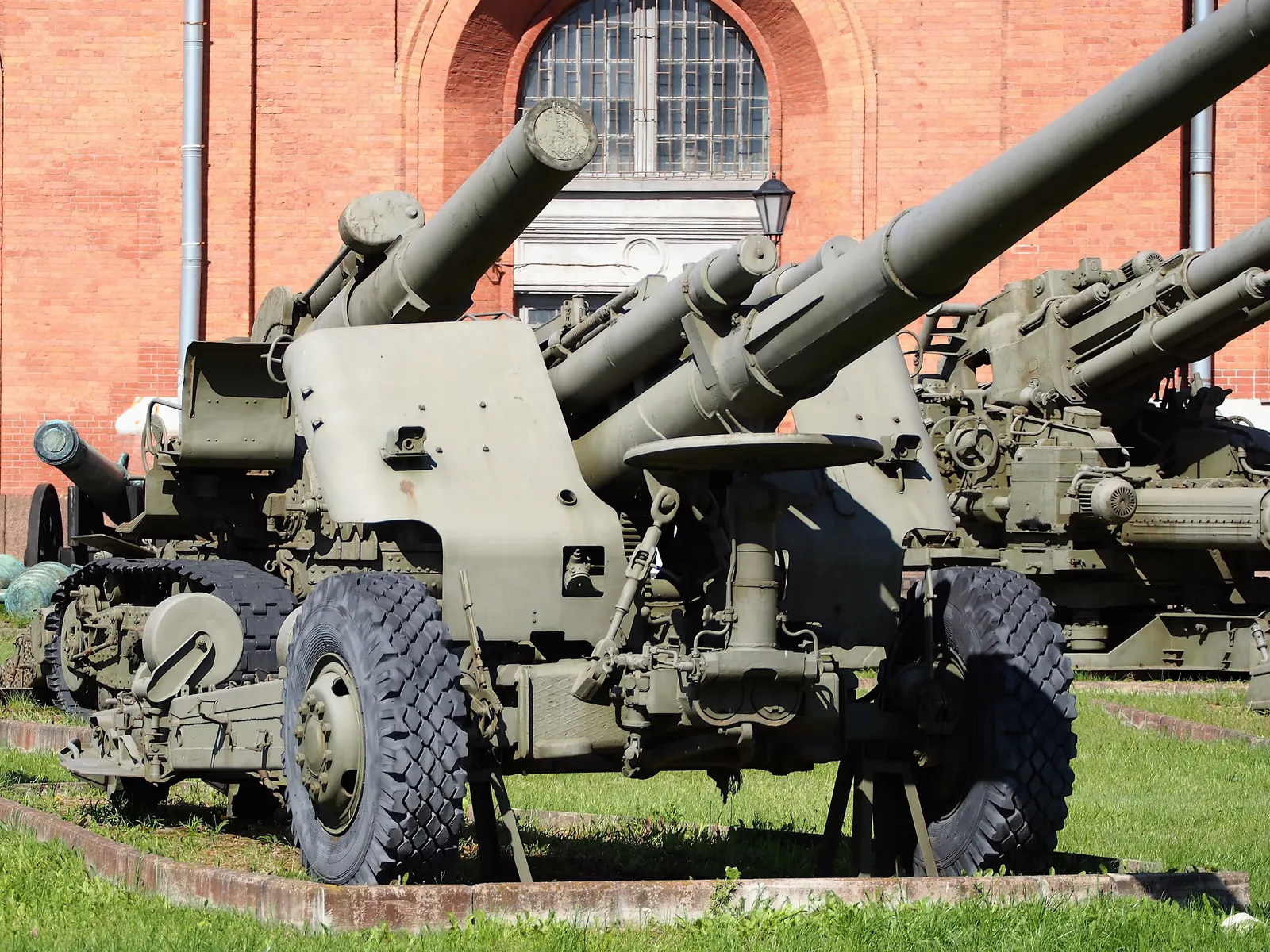
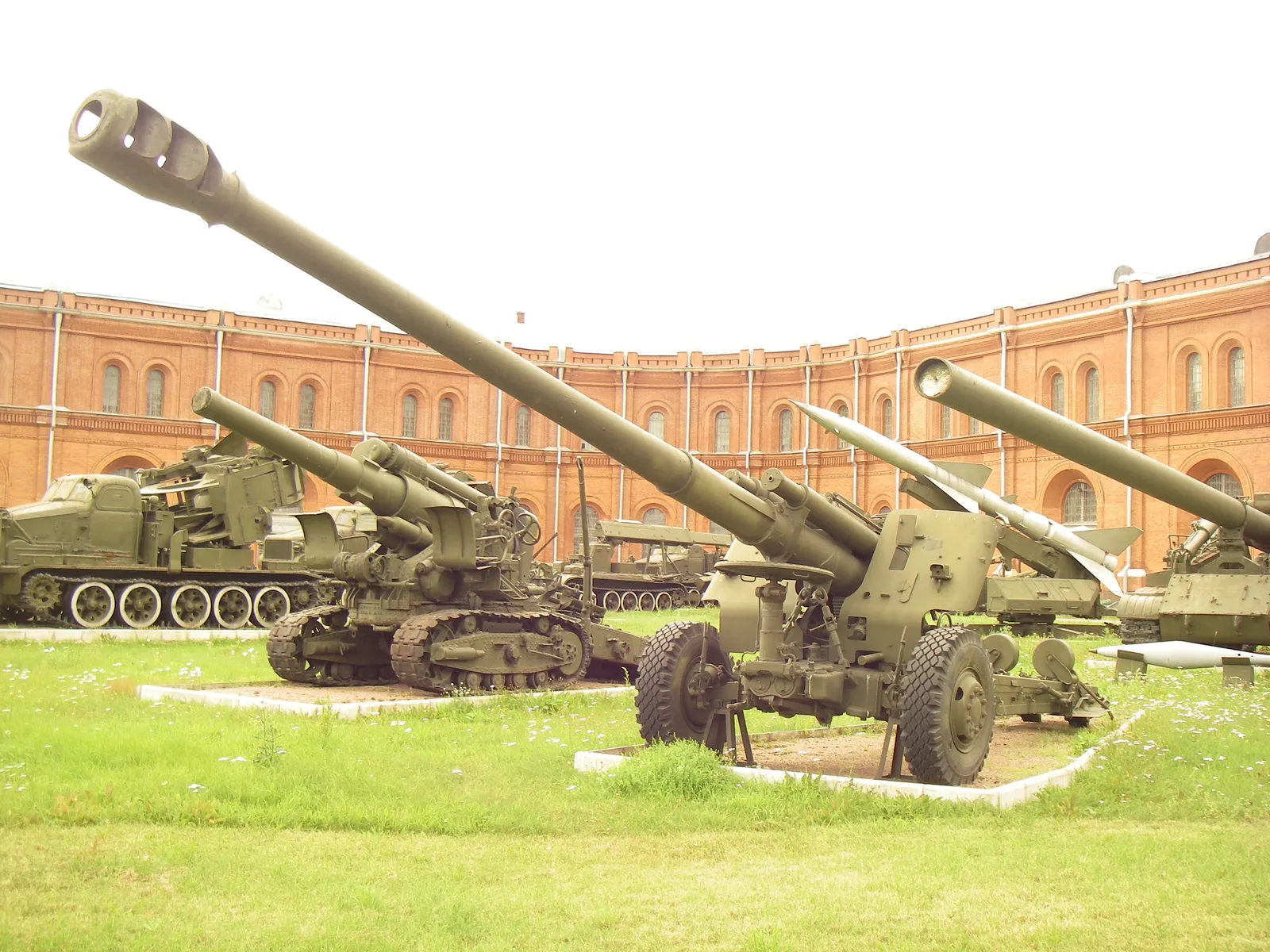
The 2A65 Msta-B is a Soviet 152 mm towed howitzer built around the artillery family shared with the 2S19 Msta-S. Its split-trail carriage, shielded crew position, 24.7 km standard-shell range, and compatibility with Msta-family 152 mm projectiles kept it in post-Soviet heavy-artillery inventories, with documented Georgian loss evidence in 2008, Russian-aligned use in Syria, and both Russian and Ukrainian use in the 2014 Russia-Ukraine War.
Georgia fielded the 2A65 Msta-B during the 2008 Russo-Georgian War, with Oryx listing one Georgian 152 mm 2A65 Msta-B howitzer destroyed among visually confirmed Georgian towed-artillery losses.
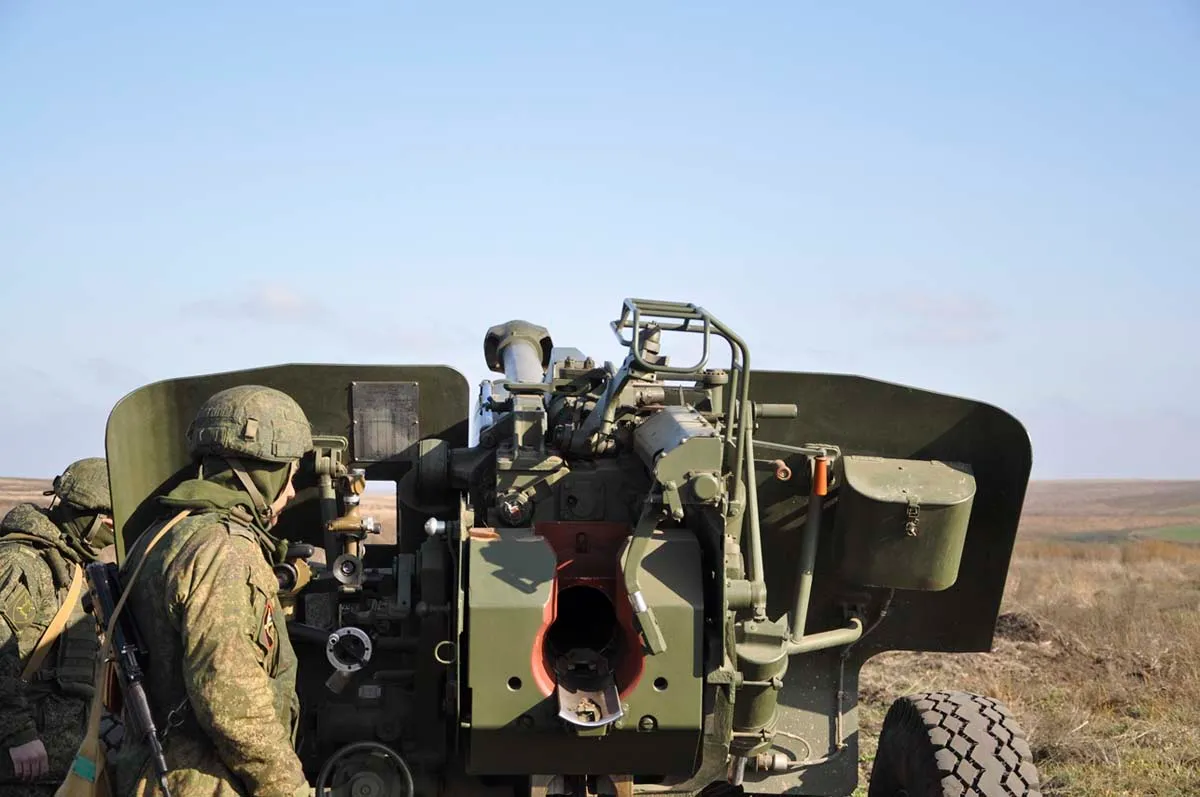
Both sides have fielded 2A65 Msta-B howitzers in the 2014 Russia-Ukraine War: Ukrainian crews are documented firing Msta-B guns near Zaporizhzhia and Bakhmut in 2023, while Russian Msta-B losses and a 2025 Lyman-sector strike show continued Russian use.
Role detailsRUSI's force assessment listed Russian 2A65 Msta-B batteries among deployed artillery assets in Syria and assessed signs that Russian artillery was providing ad hoc fire support for Syrian army operations near Aleppo, with reports of fire near Homs and Hama.
Role detailsThe 2A65's public specification set shows why the gun is a heavy towed system rather than a crew-portable field piece. WeaponSystems.net describes a two-wheel split-trail carriage, gun shield, PG-1M and OP4M-97K sights, and truck towing at road and off-road speeds.
The gun shield gives the crew partial protection while the weapon remains exposed compared with the armored 2S19 Msta-S.
WeaponSystems.net lists PG-1M and OP4M-97K sights, matching the page's distinction between indirect and direct-fire use.
At about seven tonnes, the Msta-B depends on trucks for tactical movement and is not practical to move over distance by crew effort alone.
Sources: 152mm 2A65 Msta-B.
Published references treat the base 2A65 as the Soviet/Russian 152 mm towed member of the Msta artillery family, with 155 mm export-oriented versions described but not known to have entered broad export service.
| Variant | Configuration | Designation notes |
|---|---|---|
| M-390 | 155 mm export version | Wikipedia describes the M-390 as a 155 mm export version of the 2A65 developed by Factory No. 9 in Yekaterinburg. Sources: 152 mm howitzer 2A65 Msta-B |
| MZ-146-1 | 155 mm export version with fume extractor | Wikipedia describes the MZ-146-1 as another 155 mm export version, publicly shown in 2008 and fitted with a fume extractor unlike the original 152 mm gun. Sources: 152 mm howitzer 2A65 Msta-B |
Public ammunition references list standard HE-fragmentation, base-bleed, cargo, electronic-warfare, and laser-guided 152 mm projectiles in the 2A65 Msta-B ammunition set.
| Ammunition | Ammunition type | Firing evidence |
|---|---|---|
 | 152 mm HE-fragmentation projectile | The 2A65 Msta-B reference identifies OF45 as the standard high-explosive projectile and lists its 43.56 kg mass, 823 m/s muzzle velocity, and 24.7 km range. Sources: 152 mm howitzer 2A65 Msta-B |
| 152 mm base-bleed projectile | Army Guide lists the OF61 base-bleed projectile among the rounds the 2A65 Msta-B can fire and gives it an about 29 km range. Sources: Army Guide 2A65 MSTA-B |
| 152 mm cargo projectile | WeaponSystems.net lists the OF23 cargo projectile in the 2A65 Msta-B ammunition table. Sources: 152mm 2A65 Msta-B |
 | 152 mm electronic-warfare round | Army Guide's 2A65 ammunition listing names the HS30 jamming round among projectiles the howitzer can fire. Sources: Army Guide 2A65 MSTA-B |
 | 152 mm laser-guided projectile | FMSO says the 152 mm Krasnopol projectile is designed to operate with the 2A65 Msta-B. Sources: Threat Update Krasnopol--A Laser-Guided Projectile for Tube Artillery |
The 2A65 Msta-B sits in the same Soviet/Russian 152 mm artillery family as the 2S19 Msta-S: public references describe the 2A65 as the towed Msta-B and connect its ammunition set to the Msta-S self-propelled system.
2A65 Msta-B is the split-trail, truck-towed 152 mm member of the family.
2S19 Msta-S carries the family into a tracked armored self-propelled howitzer.
The sourced ammunition set includes OF45, OF61, OF23, HS30, and Krasnopol-family projectiles, with FMSO distinguishing baseline Krasnopol compatibility from Krasnopol-M autoloader compatibility.
Sources: 152mm 2A65 Msta-B; Army Guide 2A65 MSTA-B; Threat Update Krasnopol--A Laser-Guided Projectile for Tube Artillery.
Published references describe the 2A65 program as starting in 1976, with the towed Msta-B developed as a newer Soviet 152 mm howitzer.
Sources: 152mm 2A65 Msta-B, 152 mm howitzer 2A65 Msta-B
References list 1987 as the beginning of service and production for the 2A65 Msta-B, later known to NATO as M1987.
Sources: 2A65 MSTA-B 152mm Towed Howitzer, 152 mm howitzer 2A65 Msta-B
Oryx listed one Georgian 152 mm 2A65 Msta-B howitzer destroyed among visually confirmed Georgian towed-artillery losses in the 2008 Russo-Georgian War.
Sources: Russia's Wars: Listing Equipment Losses During The 2008 Russo-Georgian War
RUSI listed 2A65 Msta-B batteries in the Russian land component in Syria and assessed signs that Russian artillery assets were already supporting Syrian army operations.
Sources: Detailing Russian Forces in Syria
Open-source loss tracking later documented Russian 2A65 Msta-B losses and captures during the full-scale invasion, while Ukrainian use was separately documented by frontline reporting.
Sources: Attack On Europe: Documenting Russian Equipment Losses During The Russian Invasion Of Ukraine, Ukrainian servicemen fire with a 2A65 Msta-B howitzer towards Russian troops in a frontline in Zaporizhzhia region
Voice of America identified members of Ukraine's 3rd Separate Assault Brigade firing a 152 mm 2A65 Msta-B near Bakhmut.
Sources: Battles Rage in Eastern Ukraine Amid Rumors of Military Leadership Changes
Ukrinform reported a Russian Msta-B howitzer destroyed by a Ukrainian FPV drone in the Lyman sector, illustrating continuing Russian use of the system.
Sources: Ukrainian Forces Destroy Russian MSTA-B Howitzer In Lyman Sector