Artillery

2S5 Giatsint-S

Also known as
  • 2S5
  • Giatsint-S
  • Hyacinth-S
  • M1981
  • 152 TELAK 91
  • 2A37 Giatsint-S

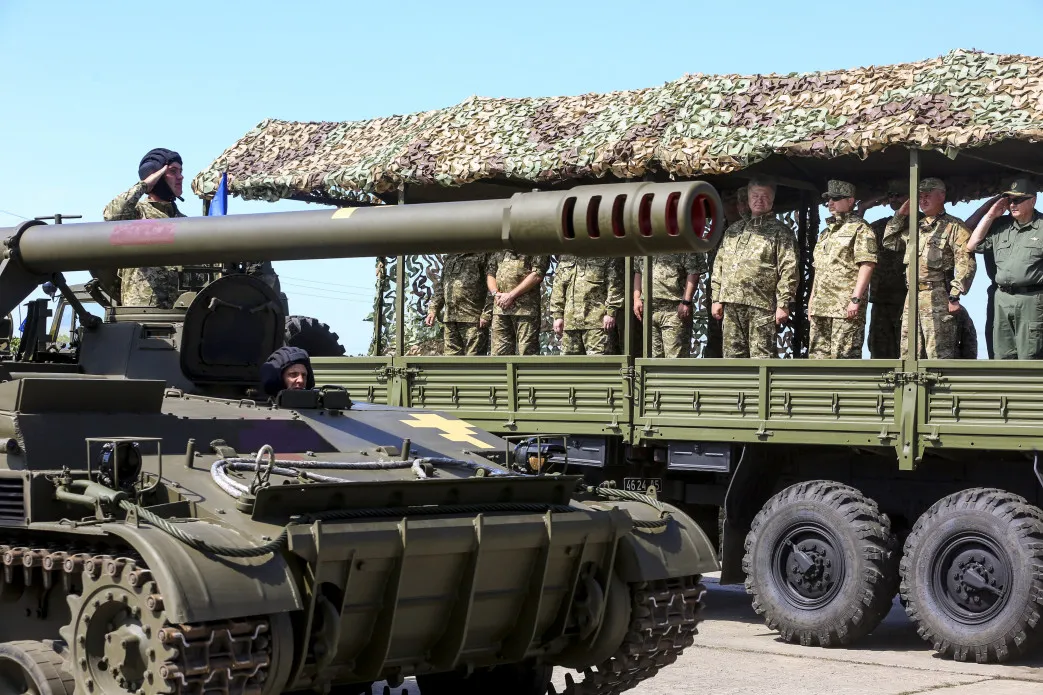
The 2S5 Giatsint-S is a Soviet 152 mm tracked self-propelled gun built for long-range corps- and army-level fire support. Its open rear-mounted 2A37 gun gives it greater reach than many older Soviet 152 mm systems, while its tracked chassis and stabilizing rear spade support shoot-and-move artillery work. Sources document 2S5 use or fielding context from Afghanistan and Chechnya through the 2014 Russia-Ukraine War, with additional wartime transfer evidence for Ethiopia during the Eritrean-Ethiopian War.

Role in Conflicts

Side
Soviet Union and Afghan government forces

A Russian General Staff study translated and edited by Lester W. Grau states that the 152 mm 2S5 Giatsint self-propelled cannon was used in Afghanistan for especially difficult fire missions, while also noting reduced effectiveness in mountainous terrain against small mobile groups.

Side
Russia

Canadian Army Line of Sight reporting on the 1995 battle for Grozny cites Russian maintenance records identifying the 2S5 SP 152 mm gun among complex systems that required factory-representative repair support during the fighting.

Side
Russia

Secondary armor references state that Russian forces used the 2S5 Giatsint-S during the Second Chechen War; the available open sourcing supports conflict inclusion but does not identify a specific unit or fire mission.

SIPRI's arms-transfer register records Ethiopia ordering about ten 2S5 self-propelled guns in 1998 and receiving them in 1999, during the Eritrean-Ethiopian War; the source supports wartime transfer context rather than confirmed battlefield firing.

Profile / Specs

Profile

Origin
Soviet Union
Type
152 mm tracked self-propelled gun
Service note
Entered Soviet service in the late 1970s; still used in the 2014 Russia-Ukraine War
Designer
Uraltransmash; Petrov Design Bureau / Perm Machine-Building Plant
Designed
1968-1975
Unit cost
Not publicly reported
Produced
1976-1991
Number built
About 2,000

Specifications

Crew
5
Caliber
152.4 mm
Main armament
2A37 gun, related to the 2A36 Giatsint-B ordnance
Ammunition
Separate-loading 152 mm ammunition; 30 rounds carried
Combat weight
28.2 tonnes
Maximum range
28.4 km with standard shells; up to 37 km with rocket-assisted projectiles
Rate of fire
5-6 rounds per minute maximum
Gun layout
Rear-mounted open gun position with lowered spade and firing platform
Mobility
Tracked chassis with 520 hp V-59 diesel engine; about 63 km/h road speed and 500 km road range
Protection
Steel armor against small-arms fire and shell splinters while moving; gun crew exposed when firing
Open Gun Layout

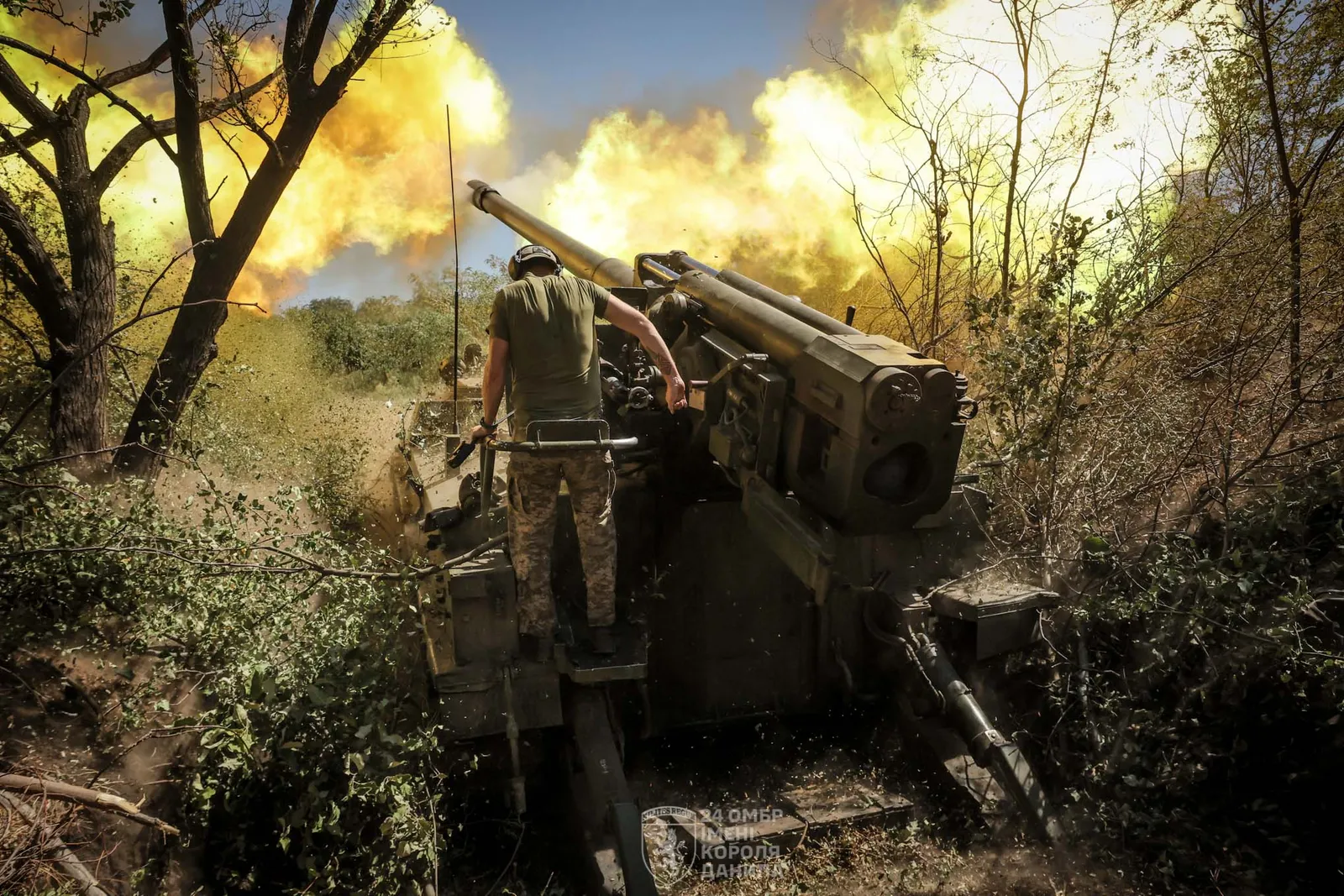
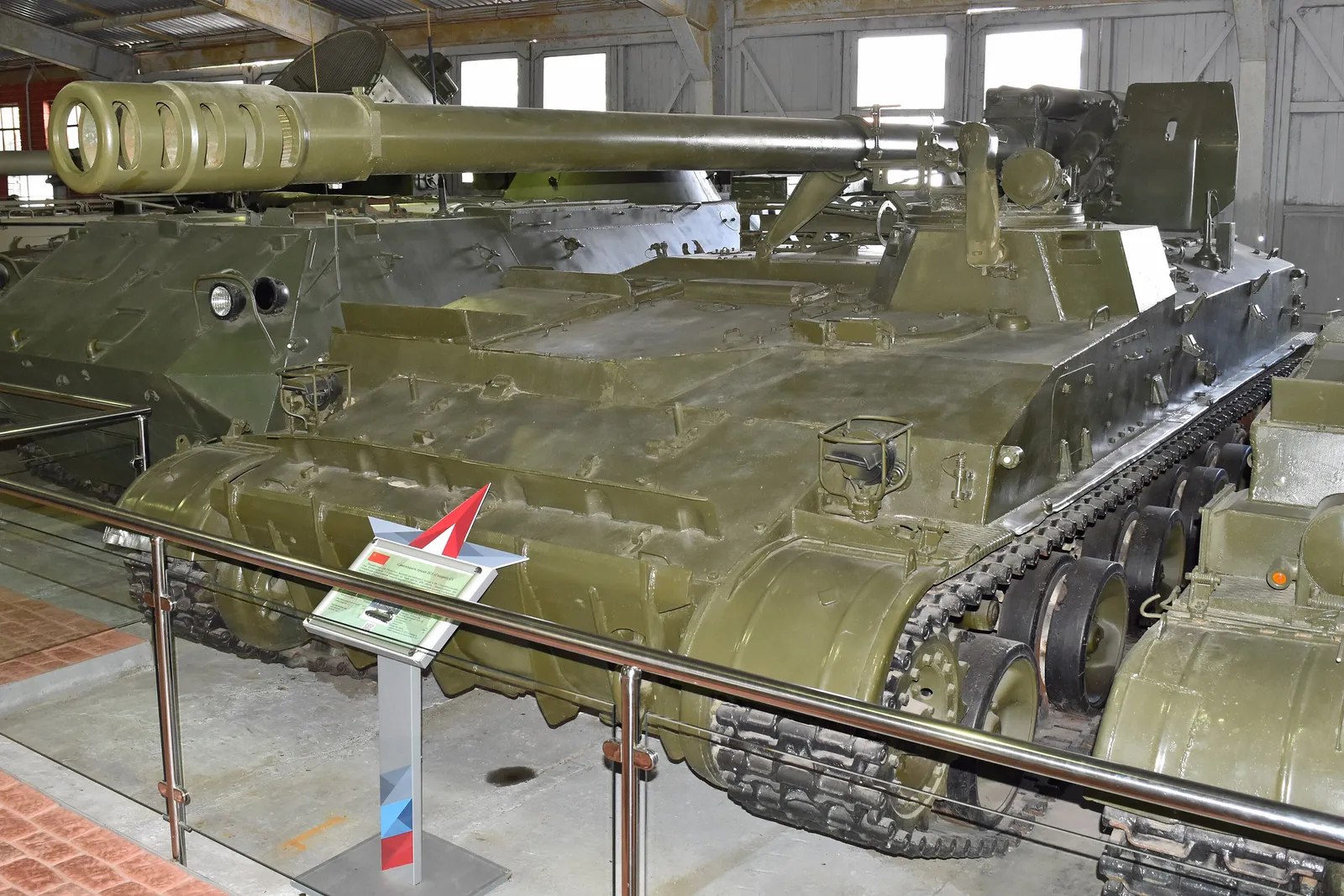
Unlike turreted self-propelled howitzers, the 2S5 carries its long 152 mm 2A37 gun at the rear of the chassis. In firing position the rear spade and platform are lowered, giving the gun a stable base while much of the gun crew works outside the armored hull.

Rear gun mount

Weaponsystems.net describes the 2S5 as a tracked chassis carrying the 152 mm 2A37 gun at the rear.

Source: 2S5 Giatsint-S.

Firing platform

The firing layout uses a lowered rear platform and spade rather than a closed rotating turret.

Sources: 2S5 Giatsint-S; Tank-AFV 2S5 Giatsint-S.

Crew exposure

Steel armor protects the crew during movement, but gun serving exposes crew members around the rear weapon station.

Source: 2S5 Giatsint-S.
Variants

Open references distinguish the adopted 2S5 Giatsint-S from proposed or adjacent Giatsint-family systems. Weaponsystems.net lists no adopted production variants of the 2S5; service designations such as NATO M1981 and Finland's 152 TELAK 91 are retained as aliases rather than separate variants.

VariantConfigurationDesignation notes
2S11 Giatsint-SKProposed cap-loading modification

Tank-AFV lists the 2S11 Giatsint-SK as a modification with a 152 mm 2A52 gun using a cap-loading method; it is kept here as a proposed or experimental branch rather than a fielded production variant.

Sources: Tank-AFV 2S5 Giatsint-S

Ammunition Fired

Tank-AFV identifies 3OF29 as the standard HE-FRAG shell for the 2S5 Giatsint-S, while Transmobile lists its Giatsint round for the 2A36 Giatsint-B and 2A37 Giatsint-S guns.

AmmunitionAmmunition typeFiring evidence
152 mm round for Giatsint howitzer, 152 mm Frag-HE artillery round, Munitions152 mm round for Giatsint howitzer152 mm HE-FRAG projectile

Transmobile lists the round for the 2A37 Giatsint-S gun, and Tank-AFV identifies 3OF29 as the standard HE-FRAG shell fired by the 2S5.

Sources: Transmobile 152 mm round for Giatsint howitzer, Tank-AFV 2S5 Giatsint-S

Shared Ordnance
Compatible itemItem typeCompatibility evidence
2A36 Giatsint-B, 152 mm towed field gun, Artillery2A36 Giatsint-B152 mm towed gun

Sources state that the 2S5 uses a slightly modified 2A37 gun derived from the 2A36, and that the 2S5 uses the same 152 mm ordnance as the 2A36 Giatsint-B.

Sources: 2S5 Giatsint-S, 2S5 152-mm Self-Propelled Gun, 152mm 2A36 Giatsint-B

Timeline

2S5 Giatsint-S Key Events

  1. Development formally ordered

    Tank-AFV traces the Giatsint to a Soviet Central Committee and Council of Ministers decree ordering new 152 mm towed and self-propelled artillery development.

    Sources: Tank-AFV 2S5 Giatsint-S

  2. Soviet adoption reported

    Tank-AFV reports that the 2S5 Giatsint-S was adopted by the Soviet Army after completion of prototype and field-test work.

    Sources: Tank-AFV 2S5 Giatsint-S

  3. Production begins

    Weaponsystems.net and Tank-AFV both place 2S5 production from 1976, with Uraltransmash associated with the vehicle and Perm Machine-Building Plant with the 2A37 gun.

    Sources: 2S5 Giatsint-S, Tank-AFV 2S5 Giatsint-S

  4. Afghanistan combat use documented

    The translated Russian General Staff study on the Soviet-Afghan War says the 2S5 was used for especially difficult fire missions in Afghanistan.

    Sources: The Soviet-Afghan War: How a Superpower Fought and Lost

  5. Grozny maintenance context

    Canadian Army Line of Sight cites Russian maintenance reporting that named the 2S5 among systems needing factory-representative support during the Grozny fighting.

    Sources: Russian Urban Combat Tactics in Grozny

  6. Ethiopian wartime transfer

    SIPRI's Eritrea-Ethiopia case study records Ethiopia receiving about ten 2S5 self-propelled guns in 1999 after a 1998 order.

    Sources: United Nations Arms Embargoes: Eritrea and Ethiopia Case Study

  7. Second Chechen War use cited

    Secondary armor references identify the 2S5 Giatsint-S among systems used during the Second Chechen War.

    Sources: Tank-AFV 2S5 Giatsint-S, Potentsial i vozmozhnosti orudiy Giatsint-S i Giatsint-B

  8. 2S5s spotted near Shymshynivka

    The OSCE SMM reported that a UAV spotted three 2S5 Giatsint-S self-propelled howitzers in a non-government-controlled area near Shymshynivka.

    Sources: OSCE SMM Daily Report 19 September 2017

  9. 2S5s observed at Rubizhne

    The OSCE SMM reported seeing nine 2S5 Giatsint-S self-propelled howitzers at the train station in government-controlled Rubizhne.

    Sources: OSCE SMM Daily Report 2 September 2018

  10. Russian 2S5 destroyed in Kupiansk sector

    Gwara Media reported that Ukrainian special forces found a Russian 2S5 Giatsint-S position in the Kupiansk sector and that HIMARS fire destroyed the system.

    Sources: Ukrainian Special Forces Destroy Russian Giatsint-S in Kupyansk Direction Using HIMARS

  11. Captured system used near Chasiv Yar

    Defense Express reported that Ukrainian 24th Brigade troops restored a captured Russian 2S5 and fired it against Russian positions near Chasiv Yar.

    Sources: Captured Russian Giatsint-S System Turns Against Moscow Near Chasiv Yar

Media
Related Weapon Systems
2S19 Msta-S, 152 mm tracked self-propelled howitzer, ArtilleryArtillery2S19 Msta-S152 mm tracked self-propelled howitzerThe 2S19 Msta-S is a Soviet-designed, Russian-produced 152 mm tracked self-propelled howitzer that combines a 2A64 gun, armored cross-country mobility, automated loading, and later digital fire-control upgrades. The 2S19M1 branch adds automated guidance and command-and-control integration, while official Rostec reporting describes the 2S19M2 / 2S33 Msta-SM2 branch with ASUNO-M fire control, electronic mapping, automatic laying recovery, and a 10-round-per-minute aimed firing rate. Its combat record spans Russian use in Chechnya and Ukraine, Ethiopia's wartime Msta fleet, and Ukrainian operation of captured Msta-S systems.
2S35 Koalitsiya-SV, 152 mm tracked self-propelled howitzer, ArtilleryArtillery2S35 Koalitsiya-SV152 mm tracked self-propelled howitzerThe 2S35 Koalitsiya-SV is a Russian 152 mm tracked self-propelled howitzer developed as a highly automated successor to the 2S19 Msta-S, pairing a 2A88 gun, automated loading, digital fire-control features, and a T-90-derived chassis for long-range tube-artillery missions. Russian and specialist reporting placed small numbers near the 2014 Russia-Ukraine War front from late 2023, but the direct conflict record remains source-limited and centered on counter-battery claims rather than verified large-scale fielding.
2S43 Malva, 152 mm wheeled self-propelled howitzer, ArtilleryArtillery2S43 Malva152 mm wheeled self-propelled howitzerThe 2S43 Malva is a Russian 152 mm wheeled self-propelled howitzer that places a 2A64 gun on a BAZ 8x8 chassis for faster road moves and lower operating demands than tracked turreted artillery. Developed through the Nabrosok wheeled-artillery program, it entered Russian deliveries in 2023 and has since been documented with Russian forces in Ukraine, including reconnaissance sightings, Ukrainian strike reports, and visually confirmed losses.
2S23 Nona-SVK, 120 mm wheeled self-propelled gun-mortar, ArtilleryArtillery2S23 Nona-SVK120 mm wheeled self-propelled gun-mortarThe 2S23 Nona-SVK is a Russian 120 mm self-propelled gun-mortar that adapts the Nona artillery system to a BTR-80 8x8 armored chassis. Its rifled 2A60 weapon can provide direct or indirect fire with mortar bombs, artillery projectiles, and selected guided ammunition, giving motorized units a compact battalion-level fire-support vehicle. The type was reported in Chechnya during Russian service testing and later appeared in 2014 Russia-Ukraine War battlefield reporting, including visually confirmed Russian losses and captured vehicles.

Sources