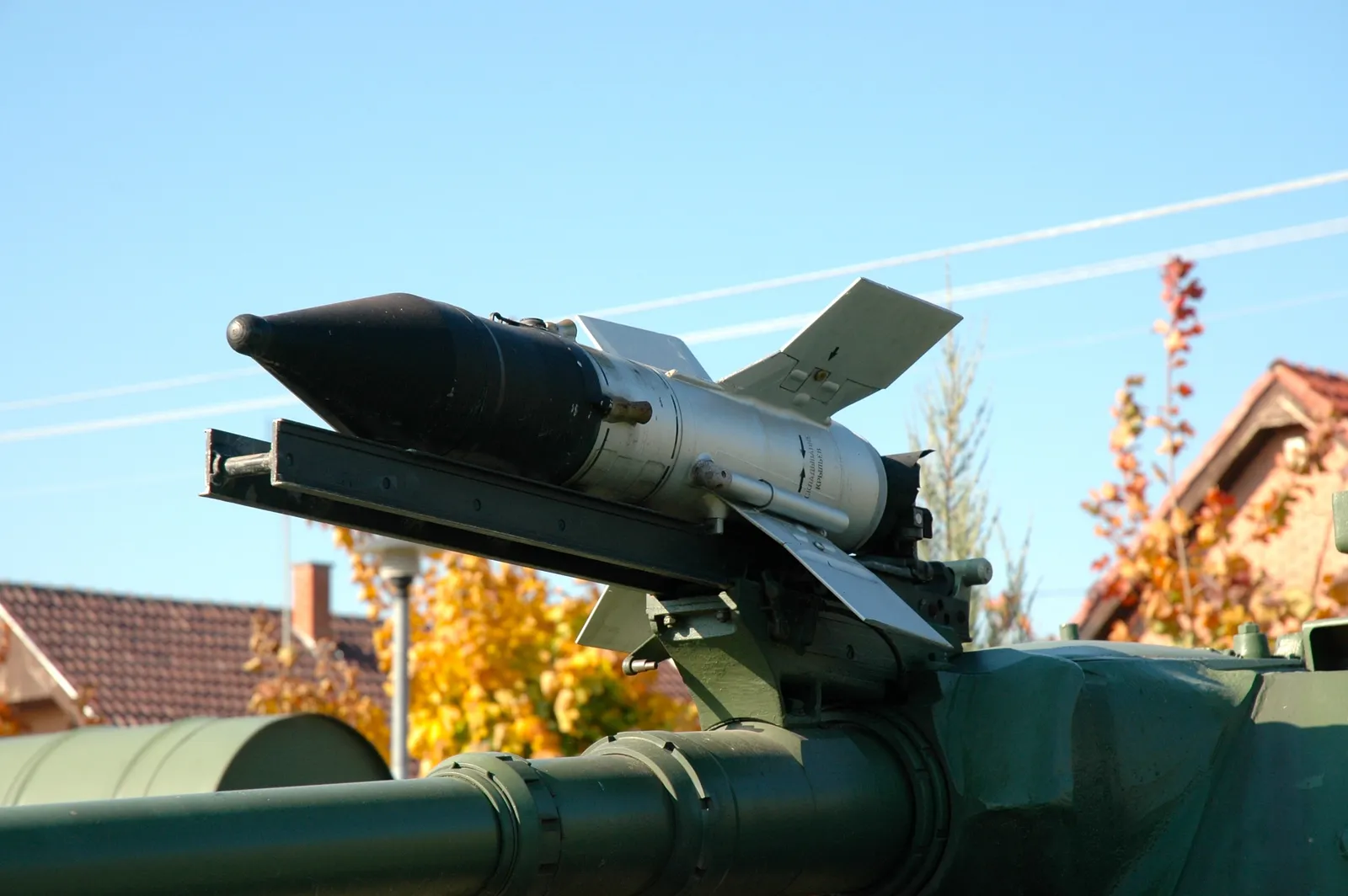

Houthi-aligned forces fielded 9M14 Malyutka anti-tank guided missiles from pre-war Yemeni Army stocks; reporting from Baydha also described AT-3 Sagger missiles among arms left behind during the fighting.
Role detailsInfantry Weapons
9M14 Malyutka
Also known as
- AT-3 Sagger
- 9K11 Malyutka
- Malyutka
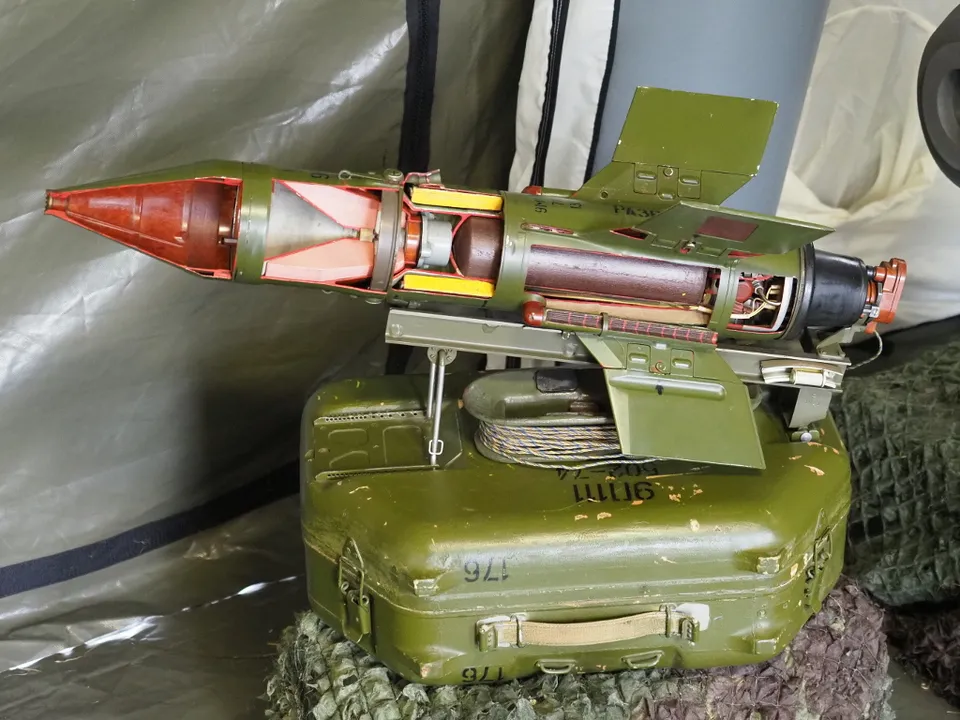
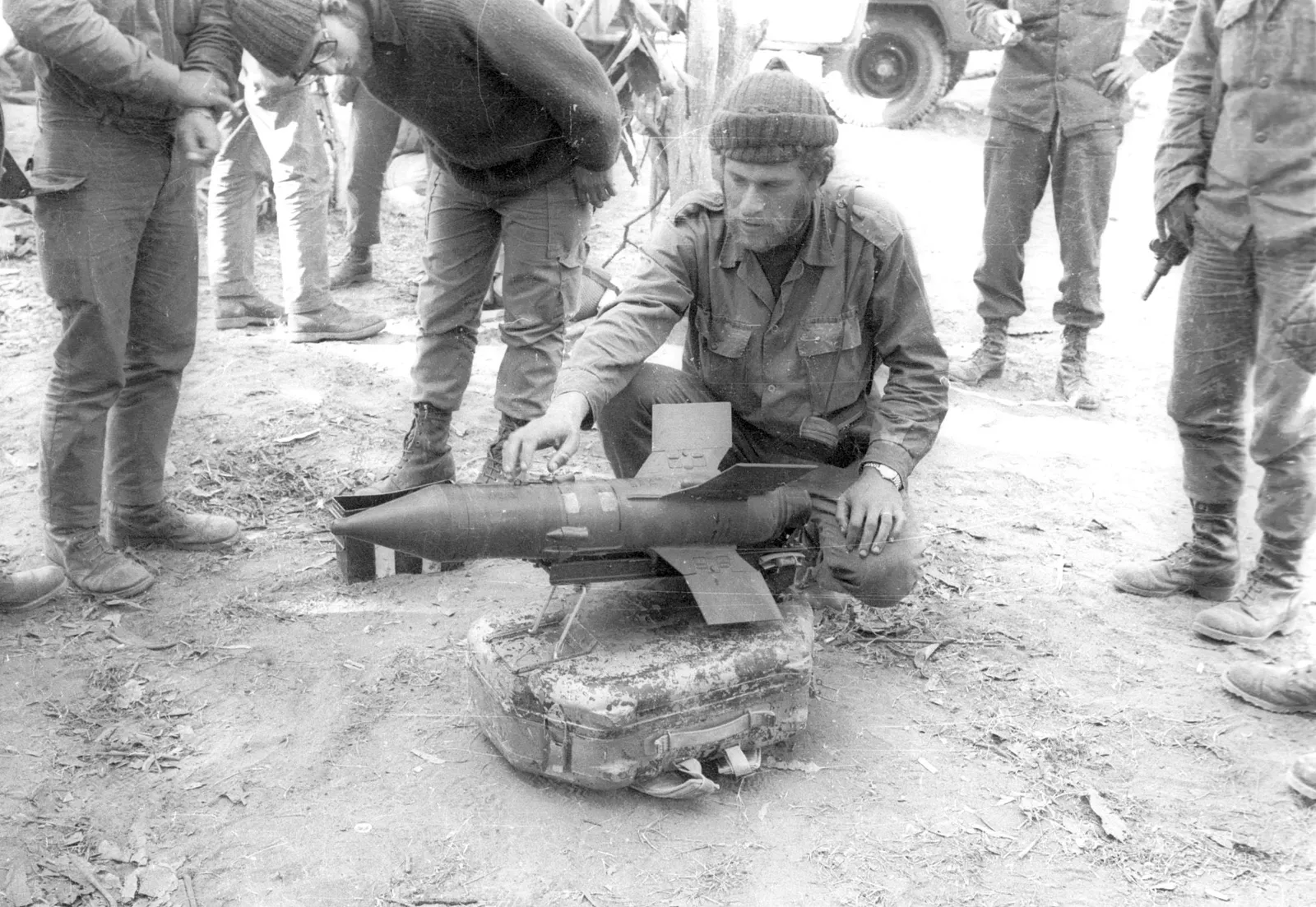
The 9M14 Malyutka, known to NATO as the AT-3 Sagger, is a Soviet MCLOS wire-guided anti-tank missile developed at KBM Kolomna and accepted for service in 1963. It became one of the most widely exported early man-portable ATGMs and later appeared on vehicles, helicopters, and in long-lived legacy stockpiles from Vietnam to Yemen.
Role in Conflicts
Profile / Specs
Profile
- Origin
- Soviet Union
- Built by
- KBM Kolomna
- Type
- MCLOS wire-guided anti-tank guided missile
- Service note
- Introduced in 1963; still encountered in legacy stockpiles and regional conflicts
- Designer
- Kolomna Machine-Building Design Bureau (KBM)
- Designed
- 1960
- Produced
- 1963-present
- Number built
- More than 200,000
Specifications
- Guidance
- MCLOS wire guidance on the baseline 9M14; later Malyutka variants added SACLOS
- Range
- 500-3,000 m
- Length
- 860 mm
- Wingspan
- 393 mm
- Diameter
- 125 mm
- Mass
- 10.9 kg
- Speed
- About 115 m/s
- Launcher
- 9P111 suitcase launcher with 9S415 control box and 9Sh16 optical sight
Variants
- 9M14 Malyutka / AT-3A Sagger
- 9M14M Malyutka-M / AT-3B Sagger
- 9M14P Malyutka-P / AT-3C Sagger
- 9M14P1 Malyutka-P1 / AT-3C Sagger
- 9K11-2 Malyutka-2
- Malyutka-2M
- Malyutka-2F
Launch Platforms
Armatec lists the 9M14 Malyutka as a missile that can be fired from Soviet ground vehicles such as the BMP-1 and BRDM-2. Open sources place the missile on several Soviet and export helicopters, reflecting its long carrier history beyond the handheld launcher.
| Launcher | Launcher type | Launch evidence |
|---|---|---|
 | Infantry fighting vehicle | Armatec lists the 9M14 Malyutka among the missiles that can be fired from the BMP-1. Sources: Armatec 9M14 Malyutka |
 | Armored reconnaissance vehicle | Armatec lists the 9M14 Malyutka among the missiles that can be fired from the BRDM-2. Sources: Armatec 9M14 Malyutka |
 | Tracked infantry fighting vehicle | Yugoimport says the BVP M-80A is fitted with two launchers for Maljutka (AT-3 Sagger) wire-guided anti-tank missiles, and Military Factory lists the M-80 as carrying a 9M14 Malyutka launcher with two missiles on board. Sources: BVP M-80 & M-80A Infantry Fighting Vehicle, M-80 Infantry Combat Vehicle |
 | Light utility helicopter | FAS says the AT-3 Sagger was used as a helicopter weapon on the Mi-2. |
 | Transport helicopter | FAS says the AT-3 Sagger was used as a helicopter weapon on the Mi-8, and Armatec also lists the Mi-8 family among helicopter launch platforms. Sources: AT-3 Sagger / HJ-73 Anti-Tank Guided Missile, Armatec 9M14 Malyutka |
 | Attack helicopter | Armatec lists the Mi-24 among helicopter launch platforms for the 9M14 Malyutka. Sources: Armatec 9M14 Malyutka |
 | Light attack helicopter | Armatec lists the Soko Gazelle among helicopter launch platforms for the 9M14 Malyutka. Sources: Armatec 9M14 Malyutka |
 | Airborne infantry fighting vehicle | Weaponsystems.net lists the BMD-1 among the combat vehicles that mainly use the Malyutka, and its BMD-1 section says the vehicle has a launch rail over the 73 mm cannon with 9S428 fire control. Sources: 9K11 Malyutka, BMD-1 |
Timeline
9M14 Malyutka Key Events
Development begins at KBM Kolomna
KBM Kolomna started the Malyutka program under chief designer S. N. Unbeaten.
Sources: 9K14/9K11 Malyutka anti-tank missile system
Trial launches follow
The program moved into trial firing after the first development work.
Sources: 9K14/9K11 Malyutka anti-tank missile system
Accepted for Soviet service
The baseline system was accepted for service in the Soviet Union on 16 September 1963.
Sources: 9K14/9K11 Malyutka anti-tank missile system, 9K11 Malutka / AT-3 Sagger
9M14M enters service
Army Guide identifies the 9M14M as the first major production update to reach service in 1964.
Sources: 9K11 Malutka / AT-3 Sagger
9M14P enters service
The 9M14P variant brought SACLOS guidance and entered service in 1970.
Sources: 9K11 Malutka / AT-3 Sagger
First documented combat use in South Vietnam
North Vietnamese Malyutka teams ambushed South Vietnamese armor near Dong Ha and destroyed three M48 tanks plus several M113s.
Sources: North Vietnam’s AT-3 Sagger Anti-Tank Missiles
Used in the Arab-Israeli War
Army Guide and Missilery describe the missile as a major anti-armor weapon in the 1973 Arab-Israeli War.
Sources: 9K14/9K11 Malyutka anti-tank missile system, 9K11 Malutka / AT-3 Sagger
Media
9M14 Malyutka Videos
Related Weapon Systems


Sources
Houthi Drone And Missile HandbookPublisher: Oryx | Note: Supports 2014 Yemen Civil War direct conflict-use context: 9M14 Malyutka ATGMs fielded by Houthi-aligned forces from pre-war Yemeni Army stocks. | Accessed: 2026-06-20Yemen Troops Push Into New District in Baydha ProvincePublisher: Gulf News | Note: Supports 2014 Yemen Civil War direct conflict-use context: AT-3 Sagger anti-tank guided missiles left among arms recovered during fighting in Baydha. | Accessed: 2026-06-20AT-3 Sagger / HJ-73 Anti-Tank Guided MissilePublisher: Federation of American Scientists | Note: Supports AT-3/Malyutka designations, helicopter use on the Mi-2 and Mi-8, range, missile weights, warhead types, velocity, and the over-200,000 production figure. | Accessed: 2026-06-209K11 MalyutkaPublisher: Weaponsystems.net | Note: Supports system background, Soviet origin, guidance method, dimensions, range, warhead, and service context. | Accessed: 2026-06-209K11 Malutka / AT-3 SaggerPublisher: Army Guide | Note: Supports manufacturer background, Soviet service entry in 1963, 9M14M service entry in 1964, 9M14P service entry in 1970, and the broader Malyutka variant family context. | Accessed: 2026-06-20Armatec 9M14 MalyutkaPublisher: Armatec | Note: Supports the 9M14 Malyutka's helicopter and vehicle launch-platform context, including BMP-1, BRDM-2, Mi-24, Mi-8, Mi-2, and Soko Gazelle, plus core technical data. | Accessed: 2026-06-23BVP M-80 & M-80A Infantry Fighting VehiclePublisher: Yugoimport-SDPR | Note: Supports the BVP M-80A launcher fit for Maljutka (AT-3 Sagger) wire-guided anti-tank missiles. | Accessed: 2026-06-28M-80 Infantry Combat VehiclePublisher: Military Factory | Note: Supports the M-80 family's documented 9M14 Malyutka launcher loadout and two-missile onboard carry state. | Accessed: 2026-06-28BMD-1Publisher: Weaponsystems.net | Note: Supports the BMD-1 as a launch platform for the Malyutka family, including its launch rail over the 73 mm cannon. | Accessed: 2026-06-289K14/9K11 Malyutka anti-tank missile systemPublisher: Missilery.info | Note: Supports development beginning in 1960, trial launches in 1961, Soviet service acceptance in 1963, the 9P111/9S415/9Sh16 launcher package, and baseline technical background for the Malyutka family. | Accessed: 2026-06-25North Vietnam’s AT-3 Sagger Anti-Tank MissilesPublisher: HistoryNet | Note: Supports the first documented combat use in South Vietnam on 23 April 1972 and the North Vietnamese battlefield context. | Accessed: 2026-06-259M14 Malyutka Kecel 1Publisher: Wikimedia Commons | Note: Supports image provenance for the primary image of a 9M14 Malyutka missile on a BMP-1 at the Army History Museum and Park in Kecel. | Accessed: 2026-06-209M14 Malyutka Cutaway 2021Publisher: Wikimedia Commons | Note: Supports image provenance and CC BY-SA 3.0 licensing for a cutaway 9M14 Malyutka on a 9P111 launch platform. | Accessed: 2026-06-20IDF Soldier with Captured 9M14 MalyutkaPublisher: Wikimedia Commons | Note: Supports image provenance and CC BY 4.0 licensing for a historical photograph of a captured 9M14 Malyutka / AT-3 Sagger missile. | Accessed: 2026-06-20