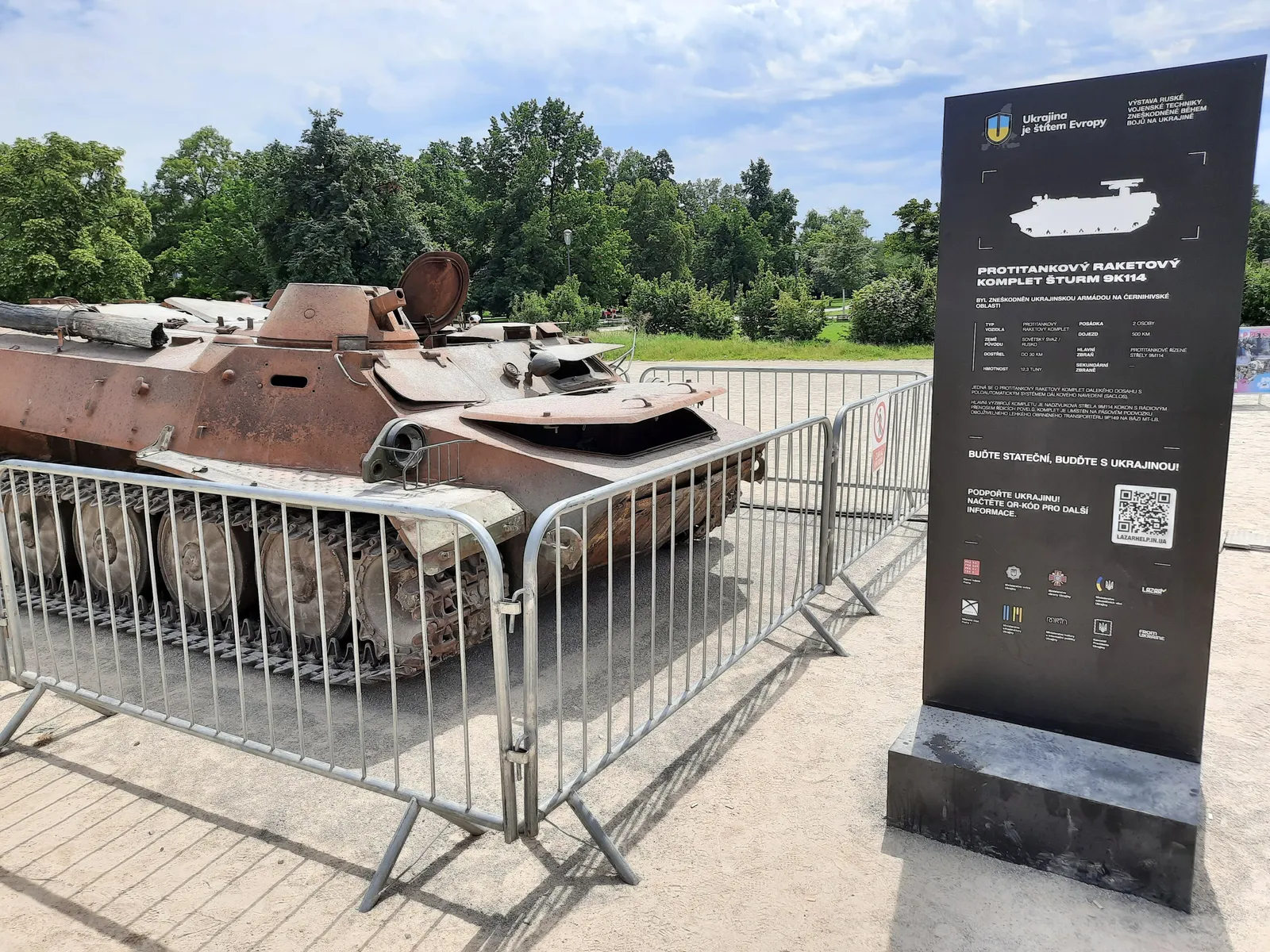

Armenian/Artsakh forces fielded 9P149 Shturm-S self-propelled anti-tank missile systems during the 2020 fighting; Oryx documents 11 Armenian-side 9P149 Shturm-S losses, including one destroyed and ten captured.
Infantry Weapons
9K114 Shturm
Also known as
- Shturm
- AT-6 Spiral
- 9M114 Kokon
- Kokon
- 9P149 Shturm-S
- Shturm-S
- Shturm-V
- 9K132 Shturm-SM
- Shturm-SM
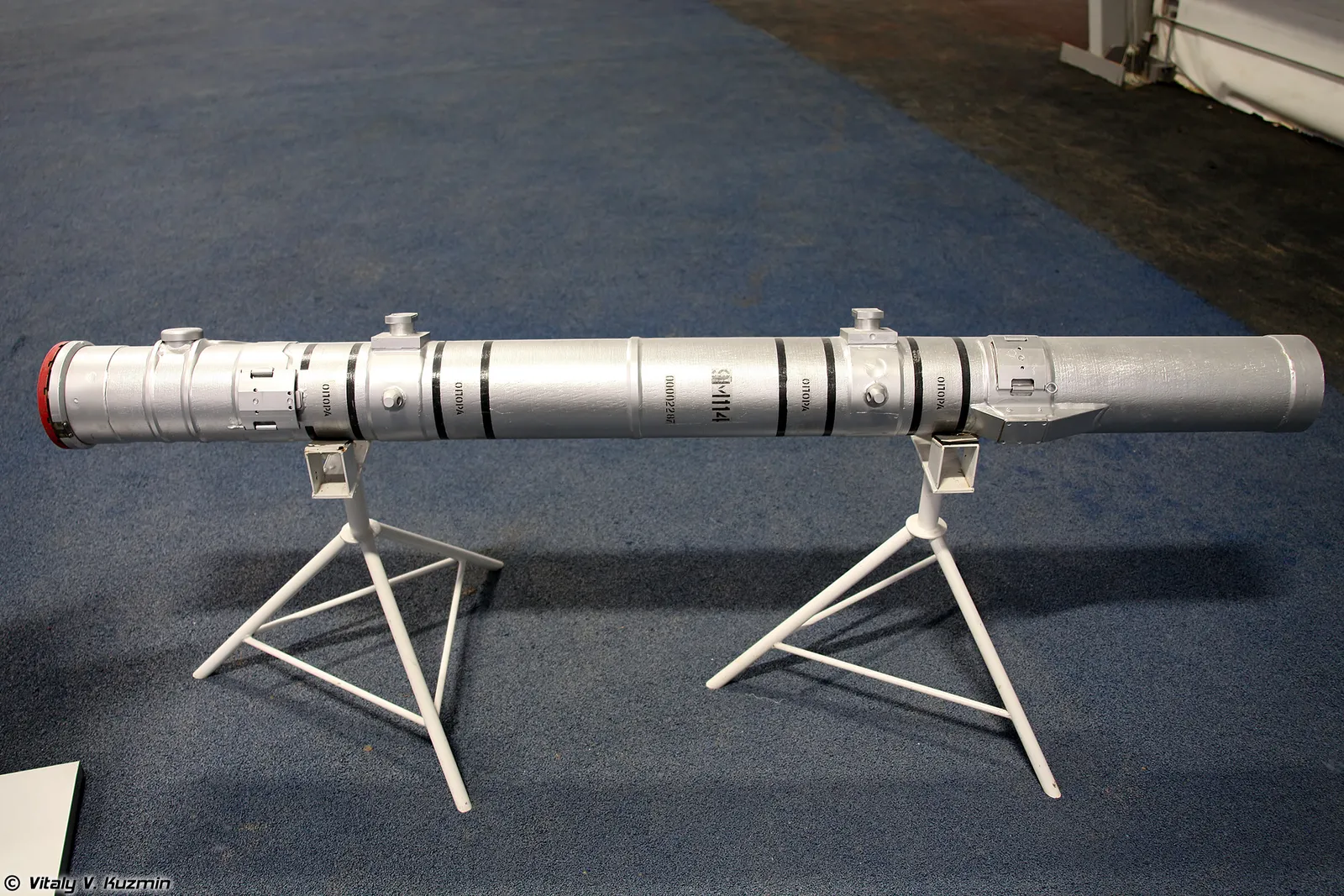
The 9K114 Shturm is a Soviet radio-command anti-tank guided missile system built around the 9M114 Kokon missile and known to NATO as AT-6 Spiral. Designed by KBM Kolomna for attack helicopters and the MT-LB-based 9P149 Shturm-S carrier, it combines SACLOS guidance, a fast missile, and a 5 km baseline range, with later missile variants reaching 6-7 km. In the 2014 Russia-Ukraine War, Russian 9P149 vehicles have been lost or captured, while Ukrainian units have shown Shturm-S training and Shturm-SM modernization work using domestic sights and RK-2P missiles.
Role in Conflicts


OSCE SMM reports documented 9K114/9P149 Shturm systems in the Donbas conflict zone in 2016 and 2018; during the full-scale invasion, Oryx has documented Russian and Ukrainian 9P149 Shturm-S losses, while Ukrainian reporting later showed Shturm-S training and Shturm-SM modernization work.
Role detailsProfile / Specs
Profile
- Origin
- Soviet Union
- Built by
- KBM Kolomna
- Built in
- Soviet UnionRussia
- Type
- Radio-command anti-tank guided missile system
- Service note
- Late Cold War ATGM family in continuing post-Soviet service
- Designer
- KBM Kolomna
- Designed
- 1967-1974
- Unit cost
- About $50,000 per missile in 1992, according to WeaponSystems.net
- Produced
- 1976-present for missile family; 9P149 production from 1978
- Number built
- More than 1,000 9P149 vehicles reported by WeaponSystems.net
Specifications
- Guidance
- SACLOS radio command guidance
- Missile
- 9M114 Kokon anti-tank guided missile
- Range
- 400 m minimum to 5 km maximum for baseline 9M114; later 9M114M2 reaches 7 km
- Missile weight
- 31.4 kg for 9M114
- Warhead
- Single HEAT warhead, about 560-600 mm RHA penetration for 9M114
- Speed
- About 345 m/s
- Carrier
- 9P149 Shturm-S on MT-LB tracked chassis with 12 missiles carried
- 9P149 crew
- 2
- 9P149 combat weight
- 12.3 t
Variants
The Shturm missile branch includes range, guidance, and warhead changes inside the 9M114 family, with the later Ataka family treated as an improved successor.
| Variant | Configuration | Designation notes |
|---|---|---|
| 9M114M1 | Improved missile | Improved guidance, a heavier warhead, and a 6 km range distinguish the M1 missile from the baseline 9M114. Sources: 9K114 Shturm |
| 9M114M2 | Extended-range missile | Further range improvement to 7 km with the improved M1-style warhead. Sources: 9K114 Shturm |
| 9M114F | Thermobaric missile | Thermobaric 9M114-family version for non-tank targets where blast effect is more important than armor penetration. Sources: 9K114 Shturm |
 | Improved successor missile family | WeaponSystems.net describes Ataka as an improved Shturm-family missile with longer range and more capable warheads. Sources: 9K114 Shturm, 9P149 Shturm-S |
Carrier Aircraft
The Shturm missile family was fielded from attack-helicopter installations as well as from ground vehicles.
| Launcher | Launcher type | Launch evidence |
|---|---|---|
 | Attack helicopter | WeaponSystems.net describes the 9M114 as introduced on the Mi-24V and as the main anti-tank armament of the Mi-24P. Sources: 9K114 Shturm |
Tracked Carrier Chassis
The ground-launched Shturm-S installation ties the missile family to a tracked armored carrier chassis rather than a man-portable launcher.
| Compatible item | Item type | Compatibility evidence |
|---|---|---|
 | Tracked armored carrier chassis | The 9P149 Shturm-S uses the MT-LB chassis with a retractable launcher and automatic loader replacing the normal troop compartment. Sources: 9P149 Shturm-S |
Designation Map
The Shturm page combines the missile family and its main launch installations, so the same record uses aliases for the missile, ground carrier, and modernization designations.
| Designation | What it describes | Catalog context |
|---|---|---|
| 9M114 Kokon / AT-6 Spiral | Baseline radio-command anti-tank missile | Core munition of the 9K114 Shturm family. |
| 9P149 Shturm-S | Ground launcher on an | Vehicle branch documented in Nagorno-Karabakh and Russia-Ukraine loss and capture records. |
| Shturm-V | Helicopter launch installation | Associated with |
| Shturm-SM | Modernized ground-launch branch | Ukrainian reporting ties the modernization to OPSN-I sights and RK-2P missile compatibility. |
Sources: 9K114 Shturm; 9P149 Shturm-S; Ukrainian Military Showcases Modernized Soviet Shturm-S Anti-Tank System in Action; Ukraine enhances anti-tank capabilities with upgraded Shturm-SM ATGM fitted on MT-LB chassis.
Timeline
9K114 Shturm Key Events
Soviet development starts
KBM Kolomna began Shturm development in the late 1960s before the missile family entered service in the 1970s.
Sources: 9K114 Shturm
9K114 enters service
The Shturm system entered Soviet service with the 9M114 Kokon radio-command missile and AT-6 Spiral NATO reporting name.
Sources: 9K114 Shturm
9P149 Shturm-S carrier enters service
The MT-LB-based 9P149 Shturm-S tank destroyer entered service as a mobile ground launcher for Shturm missiles.
Sources: 9P149 Shturm-S
Nagorno-Karabakh losses documented
Open-source loss records documented Armenian/Artsakh 9P149 Shturm-S vehicles destroyed or captured during the 2020 fighting.
Sources: The Fight For Nagorno-Karabakh: Documenting Losses On The Sides Of Armenia And Azerbaijan
Ukrainian Shturm-SM approved for use
Reporting on Ukrainian Ministry of Defense codification described Shturm-SM as a domestic modernization of the Soviet-era Shturm-S on an MT-LB chassis.
Sources: Ukraine enhances anti-tank capabilities with upgraded Shturm-SM ATGM fitted on MT-LB chassis
Ukrainian training footage published
Defense Express reported 23rd Mechanized Brigade footage showing Shturm-S combat training and described Ukrainian upgrades tied to the Shturm-SM branch.
Sources: Ukrainian Military Showcases Modernized Soviet Shturm-S Anti-Tank System in Action
Media
Related Weapon Systems




Sources
9P149 Shturm-S Russian Anti-Tank Missile CarrierPublisher: U.S. Army ODIN Worldwide Equipment Guide | Note: Supports official U.S. Army reference background for the 9P149 Shturm-S anti-tank missile carrier. | Accessed: 2026-07-029K114 ShturmPublisher: WeaponSystems.net | Note: Supports system background, KBM Kolomna development/manufacturer context, variants, and 9M114 missile specifications. | Accessed: 2026-06-299P149 Shturm-SPublisher: WeaponSystems.net | Note: Supports Shturm-S carrier layout, MT-LB chassis, ammunition load, mobility, crew, and protection details. | Accessed: 2026-06-29Ukrainian Military Showcases Modernized Soviet Shturm-S Anti-Tank System in ActionPublisher: Defense Express | Note: Supports 2014 Russia-Ukraine War direct use: used by Ukrainian forces in training footage and described as captured Soviet-era Shturm-S systems upgraded for the battlefield. | Accessed: 2026-07-02OSCE SMM Daily Report 9 August 2016Publisher: Organization for Security and Co-operation in Europe | Note: Supports 2014 Russia-Ukraine War direct conflict-zone presence: OSCE SMM reported a 9K114 Shturm mounted on an MT-LB/9P149 near government-controlled Syze in Luhansk region. | Accessed: 2026-07-02OSCE SMM Daily Report 30 October 2018Publisher: Organization for Security and Co-operation in Europe | Note: Supports 2014 Russia-Ukraine War direct conflict-zone presence: OSCE SMM reported a 9P149 Shturm-S near Bila Hora in government-controlled Donetsk region. | Accessed: 2026-07-02Attack On Europe: Documenting Ukrainian Equipment Losses During The Russian Invasion Of UkrainePublisher: Oryx | Note: Supports 2014 Russia-Ukraine War direct use: fielded by Ukrainian forces, with Oryx documenting destroyed, damaged, and captured Ukrainian 9P149 Shturm-S ATGM carriers. | Accessed: 2026-07-02Ukraine enhances anti-tank capabilities with upgraded Shturm-SM ATGM fitted on MT-LB chassisPublisher: Army Recognition | Note: Supports 2014 Russia-Ukraine War direct use: used by Ukrainian forces as an upgraded Shturm-SM anti-tank system on an MT-LB chassis. | Accessed: 2026-06-29Attack On Europe: Documenting Russian Equipment Losses During The Russian Invasion Of UkrainePublisher: Oryx | Note: Supports 2014 Russia-Ukraine War direct use: fielded by Russian forces, with Oryx documenting destroyed, abandoned, damaged, and captured 9P149 Shturm-S and 9K132 Shturm-SM systems. | Accessed: 2026-06-29The Fight For Nagorno-Karabakh: Documenting Losses On The Sides Of Armenia And AzerbaijanPublisher: Oryx | Note: Supports 2020 Nagorno-Karabakh Conflict direct use: fielded by Armenian/Artsakh forces, with Oryx documenting 9P149 Shturm-S systems destroyed and captured from the Armenian side. | Accessed: 2026-06-29Captured Russian 9P149 on display in Prague (4).jpgPublisher: Wikimedia Commons | Note: CC0 image source for a captured Russian 9P149 Shturm-S displayed in Prague during the 2022 Russian invasion of Ukraine. | Accessed: 2026-06-299M114 Shturm ATGM in Park Patriot 02.jpgPublisher: Wikimedia Commons | Note: CC BY-SA 4.0 image source for a 9M114 Shturm missile photographed at Patriot Park. | Accessed: 2026-06-29