- Side
- Russia

Russian helicopters used 9M120 Ataka missiles during the full-scale Ukraine phase, and GICHD lists the 9M120 Ataka among explosive ordnance used extensively in Ukraine.
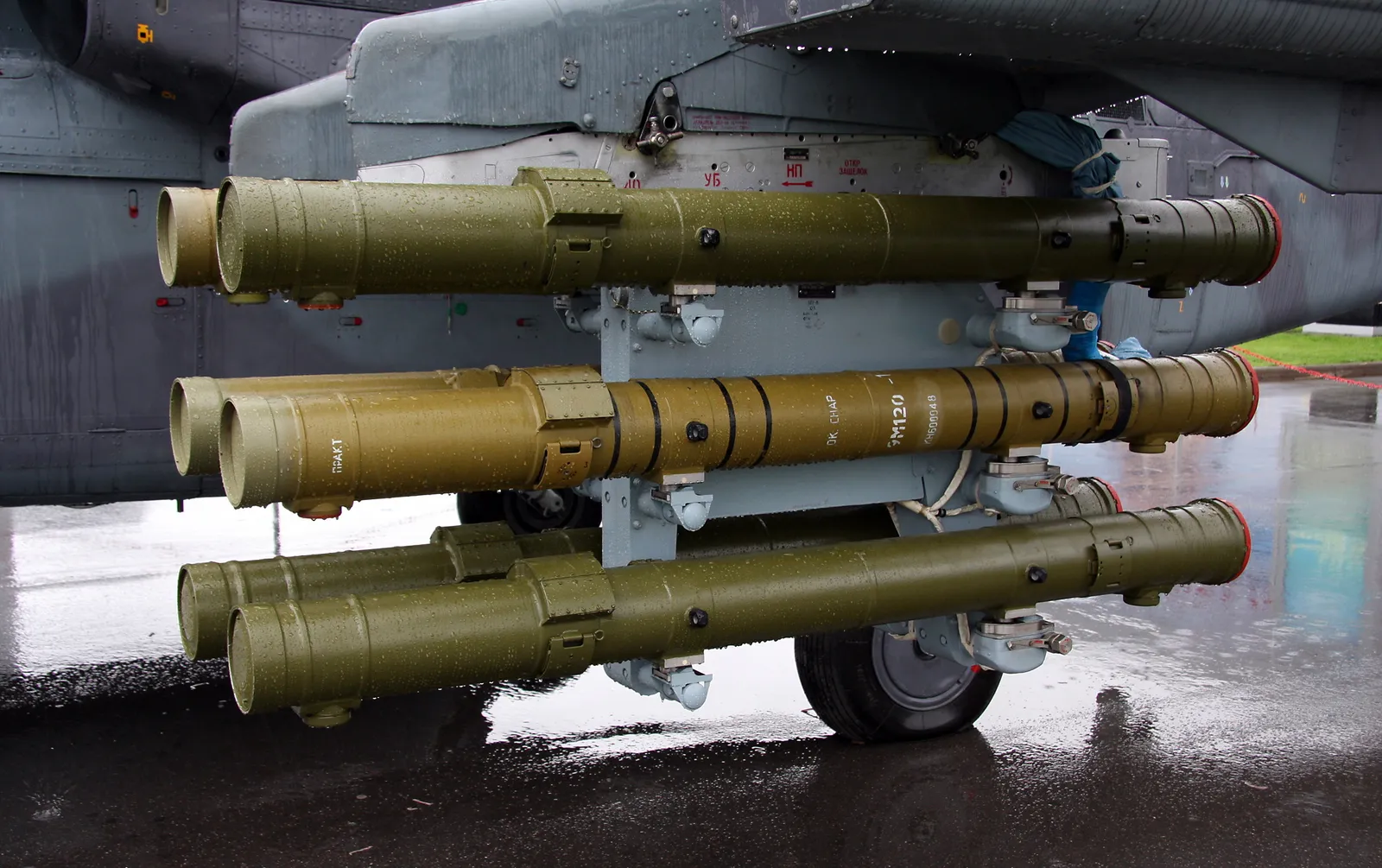
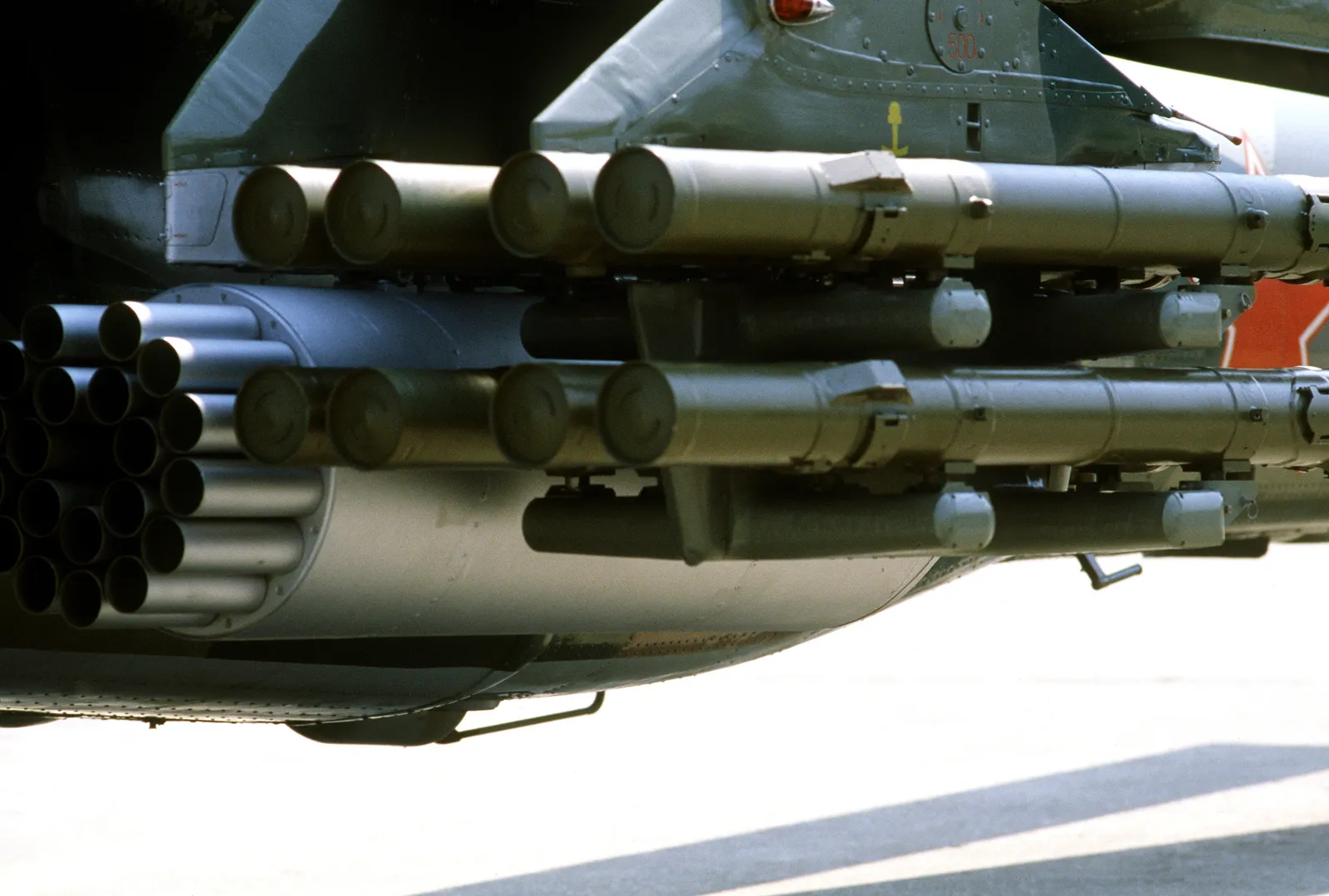
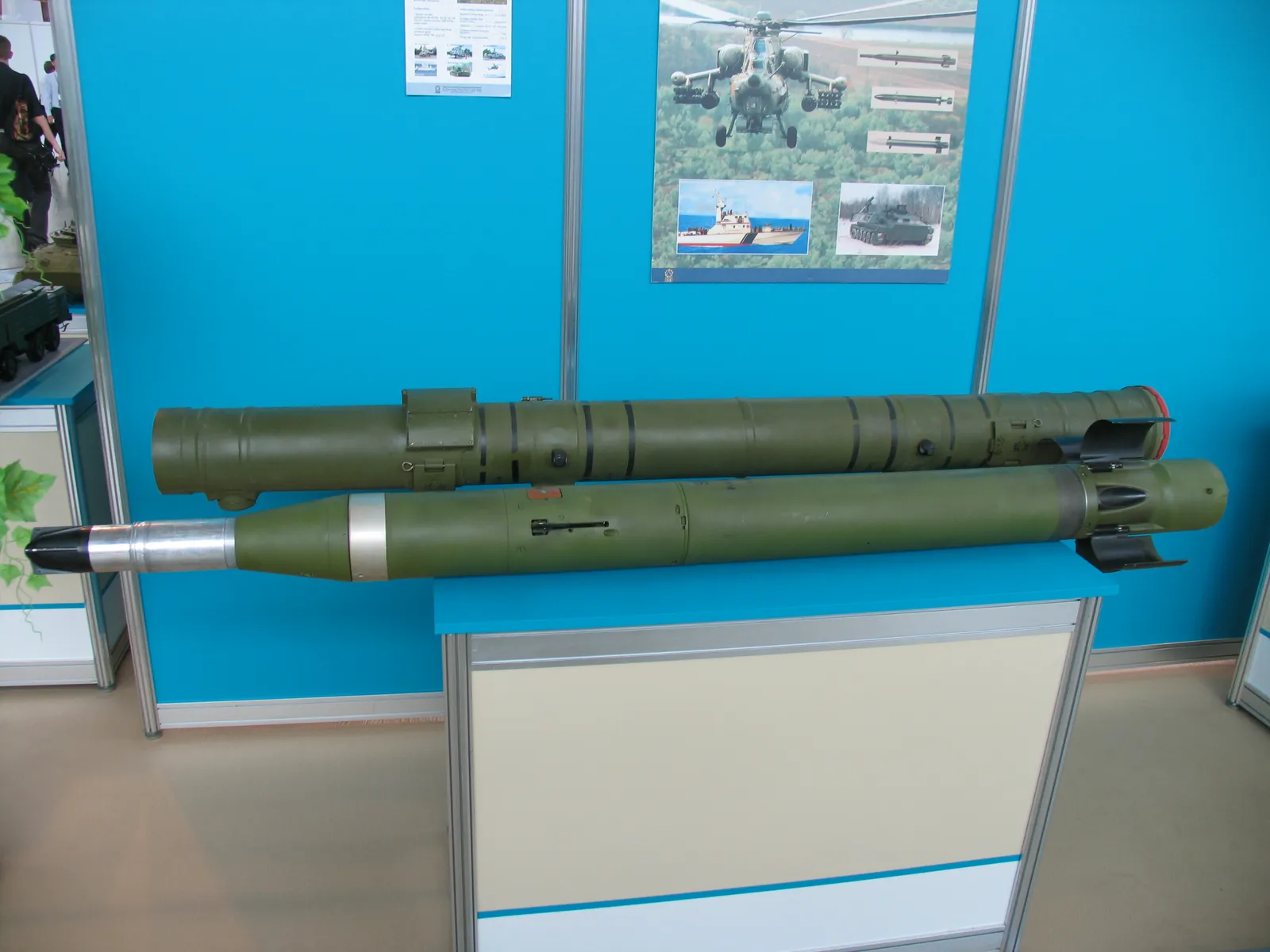
Role detailsThe 9M120 Ataka is a Soviet/Russian anti-tank guided missile family developed from the 9M114 Shturm for helicopter and vehicle launch. Its radio-command SACLOS guidance, 6 km baseline range, tandem HEAT and specialist warhead options place it between legacy Shturm missiles and newer Russian helicopter-launched weapons; documented use includes Russian helicopter employment in Ukraine and Syria.
Russian helicopters used 9M120 Ataka missiles during the full-scale Ukraine phase, and GICHD lists the 9M120 Ataka among explosive ordnance used extensively in Ukraine.
Role detailsRussian Mi-28N helicopters used 9M120 and 9M120F Ataka missiles near Palmyra against Islamic State targets during the Syrian Civil War.
Role detailsAtaka designations separate the missile family from later range, warhead, and launcher-control branches. Public references vary on the anti-helicopter index, so the anti-air branch is best read as a grouped 9A220O/9M220O-style designation rather than separate catalog weapons.
Modernized ATAKA-T missile listed by KBM with semiautomatic laser beam-riding guidance, 0.4-6.0 km range, and at least 800 mm penetration behind ERA.
Sources: ATAKA-T Guided Weapon System; Anti-Tank Guided Missiles 9M120-1.
Extended-range anti-armor member, listed by Missilery with an 800 m to 8 km range and about 950 mm penetration.
Source: Missilery Ataka-V Aircraft Missile System.
Thermobaric branch for unarmored targets, bunkers, sheltered personnel, and structures; TASS reported this variant used near Palmyra in Syria.
Sources: Missilery Ataka-V Aircraft Missile System; TASS Mi-28N Syria Combat Debut.
Modernized high-explosive branches listed by KBM as ATAKA-T components; Rosoboronexport describes fuel-air and fragmentation warhead options for ATAKA-type missiles.
Sources: ATAKA-T Guided Weapon System; Anti-Tank Guided Missiles 9M120-1.
Anti-helicopter branch with an expanding-rod or continuous-rod warhead and a proximity fuse for low-speed air targets.
Sources: GICHD Explosive Ordnance Guide for Ukraine 2025; 9M120 Ataka.
Sources place Ataka-family missiles on Russian attack helicopters and selected upgraded transport/assault helicopter configurations.
| Launcher | Launcher type | Launch evidence |
|---|---|---|
 | Attack helicopter | WeaponSystems.net says the 9M120 is mainly used on the Mi-28, and Rosoboronexport lists 9M120-1 Ataka-type missiles with the Mi-28NME. Sources: 9M120 Ataka, Mi-28NME |
 | Attack and combat-transport helicopter family | WeaponSystems.net places Ataka on some Mi-24 upgrades, while Rosoboronexport lists 9M120-1 Ataka-type missiles with the Mi-35M. Sources: 9M120 Ataka, Mi-35M |
 | Transport and assault helicopter family | WeaponSystems.net lists Ataka on some Mi-17 upgrades; this relationship is upgrade-specific and does not imply every Mi-8/Mi-17 variant carries it. Sources: 9M120 Ataka |
 | Scout-attack helicopter | Rosoboronexport lists 9M120-1 Ataka-type missiles with the Ka-52E combat scout-attack helicopter. Sources: Ka-52E |
| Launcher | Launcher type | Launch evidence |
|---|---|---|
 | Self-propelled ATGM system | Army Recognition, citing the KBM developer catalog, says the 9P149 Shturm-S and upgraded Shturm-SM fire 9M120 Ataka missiles. |
GICHD describes the 9M120 Ataka as the 9M114 Shturm successor and dates the system to the 1980s.
Sources: GICHD Explosive Ordnance Guide for Ukraine 2025
TechInsider, citing Rostec context, reported that the modernized Shturm-SM complex was accepted with a newer Ataka missile, a laser-beam control channel, and expanded warhead options.
Sources: Shturm-SM Ataka Adoption Report
TASS reported Russian Mi-28N use of 9M120 and 9M120F Ataka missiles near Palmyra during fighting against Islamic State targets.
Sources: TASS Mi-28N Syria Combat Debut
The third edition of GICHD's Ukraine explosive-ordnance guide lists the 9M120 Ataka as used extensively in Ukraine.
Sources: GICHD Explosive Ordnance Guide for Ukraine 2025