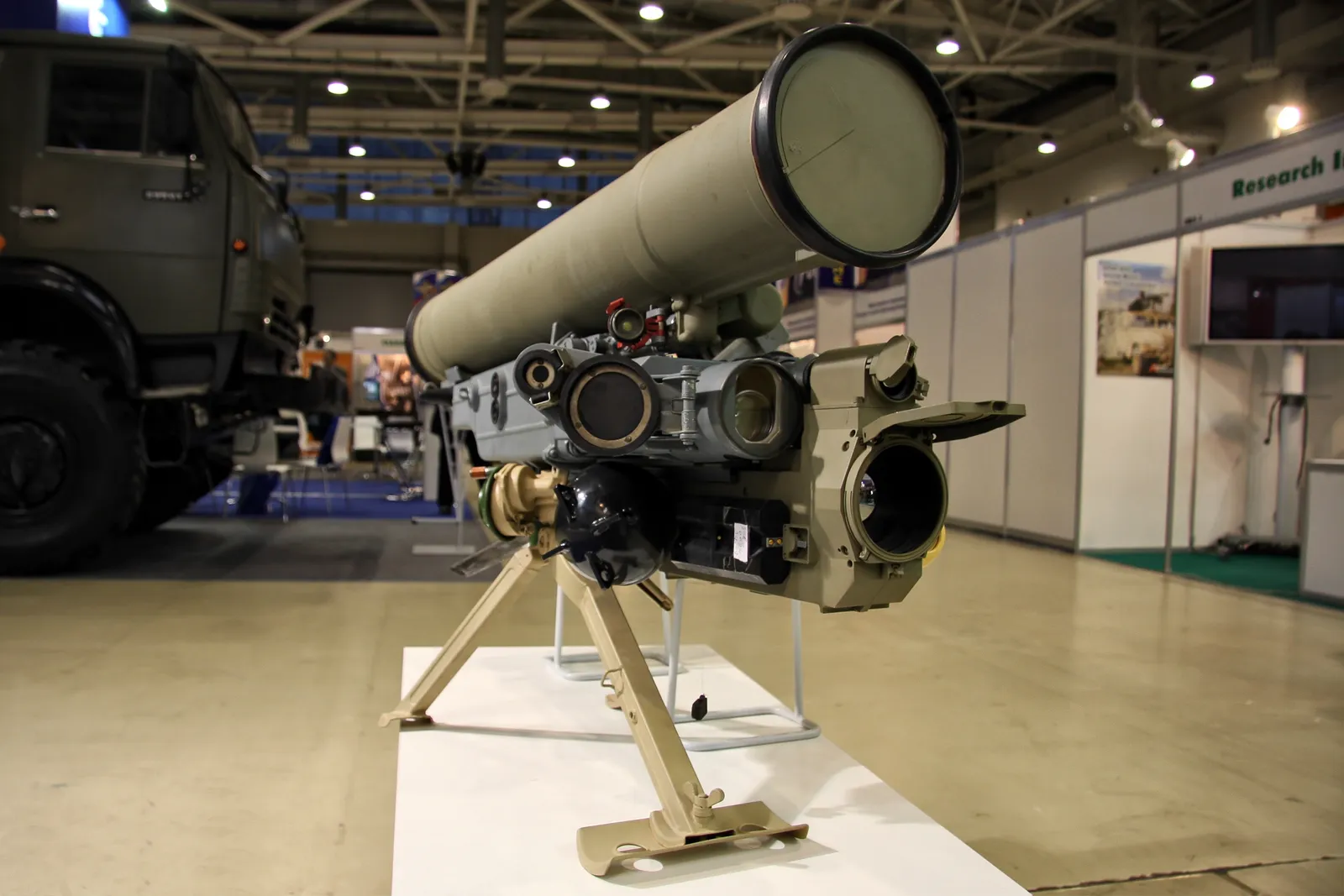


Russian forces have been documented using the upgraded AT-13 Saxhorn-2 / 9K115-2 Metis-M in Ukraine against Ukrainian armored vehicles, while Ukrainian soldiers have also been shown fielding Metis-M systems as portable anti-tank weapons.
Role detailsInfantry Weapons
9K115 Metis
Also known as
- AT-7 Saxhorn
- 9M115 Metis
- 9K115-2 Metis-M
- 9M131 Metis-M
- AT-13 Saxhorn-2
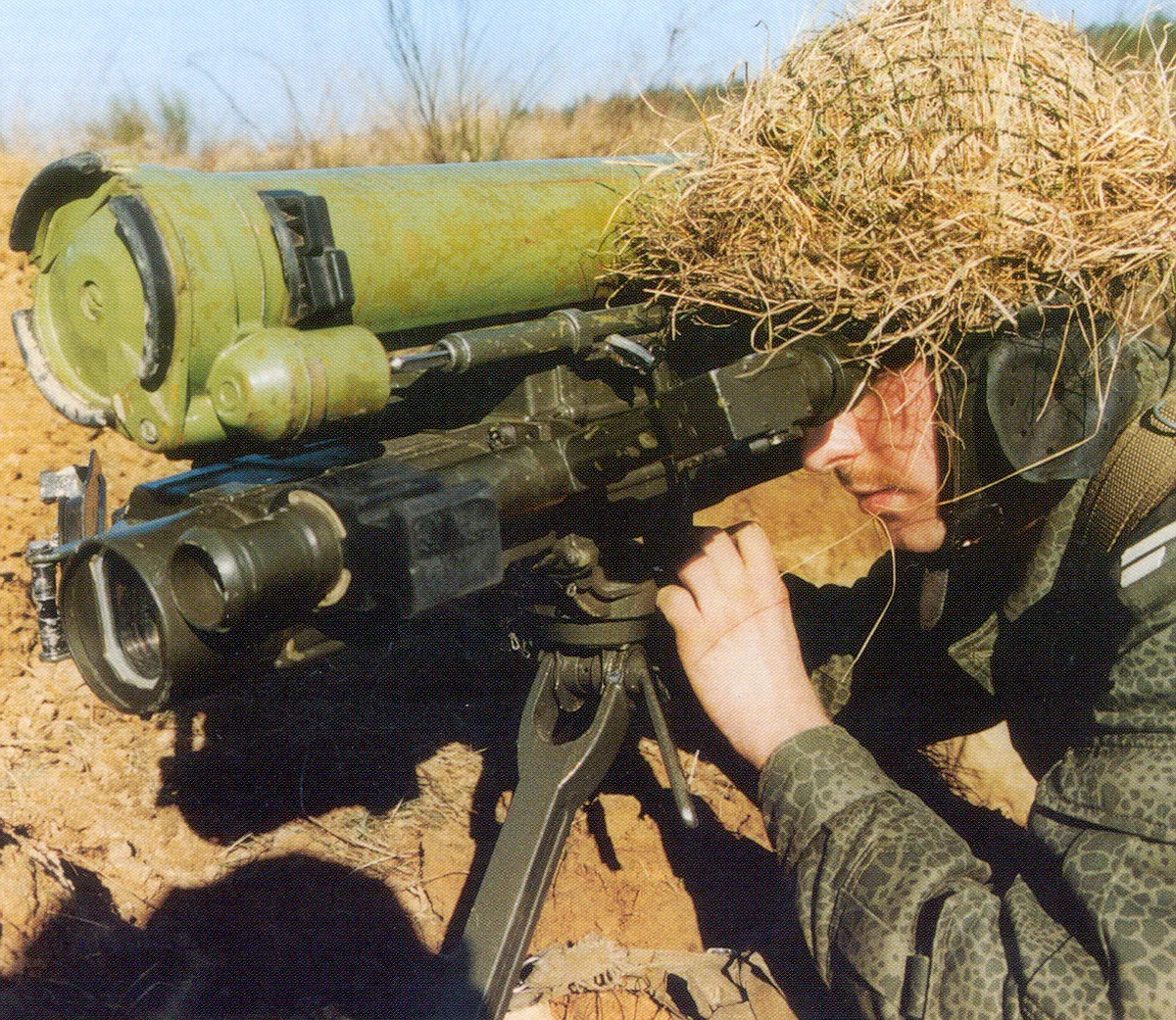
The 9K115 Metis is a Soviet/Russian man-portable, wire-guided anti-tank guided missile family developed for company-level infantry anti-armor fire. The original AT-7 Saxhorn used a lightweight launcher and 94 mm missile for short-range engagements, while the Metis-M and Metis-M1 upgrades moved to larger 130 mm missiles with tandem HEAT and thermobaric options. Its documented conflict use spans Russian and Ukrainian Metis-M fielding in Ukraine, Houthi use in Yemen, Syrian rebel use, and Hezbollah's anti-tank missile threat in the 2006 Lebanon War.
Role in Conflicts

Houthi forces were reported in August 2015 to be fielding Iranian-supplied Metis-M anti-tank systems alongside Kornet-E and RPG-29 weapons during the Yemen war.
Role details
Bellingcat documented Syrian rebel use of 9K115 Metis anti-tank guided missiles as part of its open-source survey of rebel ATGM employment during the Syrian Civil War.
Role detailsCSIS analysis of the 2006 war lists Russian AT-13 Metis-M / 9M131 systems among the advanced anti-tank guided missiles Israeli forces faced from Hezbollah.
Profile / Specs
Profile
- Origin
- Soviet Union / Russia
- Built by
- KBP Instrument Design Bureau
- Type
- Man-portable anti-tank guided missile system
- Service note
- Late Cold War baseline system with post-Soviet Metis-M and Metis-M1 upgrades
- Designer
- KBP Instrument Design Bureau
- Designed
- 1970s baseline; Metis-M upgrade developed later
- Produced
- 1978-present for the family; Metis-M from the post-Soviet period
Specifications
- Guidance
- SACLOS command guidance via wire link
- Range
- 40-1,000 m for the original 9K115; 80-2,000 m for Metis-M1
- Missile caliber
- 94 mm for original 9M115; 130 mm for Metis-M / Metis-M1
- Warhead
- HEAT on the original missile; tandem HEAT or thermobaric missiles on Metis-M1
- Armor penetration
- Metis-M1 averages 900-950 mm behind explosive reactive armor
- Weights
- Metis-M1 launcher 9.5 kg, containerized missile 13.8 kg, thermal imager 6.5 kg
Missile And Designation Split
The Metis family is easiest to read as a launcher-and-missile progression: the original 9K115 system used the smaller 9M115 missile, while Metis-M and Metis-M1 moved to a 130 mm missile family with heavier anti-armor and thermobaric options.
| Designation | Common reporting name | Supported distinction |
|---|---|---|
| 9K115 / 9M115 | AT-7 Saxhorn | Original 94 mm wire-guided Metis system with a 40-1,000 m range class. |
| 9K115-2 / 9M131 | Metis-M / AT-13 Saxhorn-2 | Upgraded 130 mm family; ODIN identifies KBP as the developer and ties the system to the AT-13 reporting name. |
| Metis-M1 / 9M131M / 9M131F | Current export configuration | Rosoboronexport lists tandem HEAT and thermobaric missiles, SACLOS wire guidance, and up to 2,000 m range. |
Variants
Metis designations split between the original 94 mm 9K115 / 9M115 system and later 130 mm Metis-M and Metis-M1 upgrades.
| Variant | Configuration | Designation notes |
|---|---|---|
| 9K115 Metis / AT-7 Saxhorn | Original short-range system | Baseline 94 mm wire-guided Metis system with a 40-1,000 m engagement envelope. Sources: 9K115-2 Metis-M (AT-13 Saxhorn-2) |
| 9K115-2 Metis-M / AT-13 Saxhorn-2 | Upgraded 130 mm system | Russian designation for the larger Metis-M family; U.S. Army ODIN identifies it as the AT-13 Saxhorn-2 and attributes development to KBP. Sources: 9K115-2 Metis-M (AT-13 Saxhorn-2) |
| Metis-M1 | Export/current production configuration | Rosoboronexport markets Metis-M1 with 9M131M tandem HEAT and 9M131F thermobaric missiles, SACLOS wire guidance, and an 80-2,000 m range. |
Timeline
9K115 Metis Key Events
Baseline Metis family enters production
The family is traced to the original 9K115 Metis system before later Metis-M and Metis-M1 upgrades expanded missile caliber and warhead options.
Sources: 9K115-2 Metis-M (AT-13 Saxhorn-2)
Metis-M appears in Hezbollah anti-tank threat reporting
CSIS analysis of the 2006 Lebanon War lists AT-13 Metis-M / 9M131 among the Russian anti-tank guided missiles Israeli forces faced from Hezbollah.
Sources: Lessons of the 2006 Israeli-Hezbollah War
Metis-M reported with Houthi forces in Yemen
The Washington Institute reported Houthi fielding of Iranian-supplied Metis-M systems during the Yemen war alongside other anti-armor weapons.
Sources: The Saudi-UAE War Effort in Yemen (Part 1): Operation Golden Arrow in Aden
Russian Metis-M use reported in Ukraine
Army Recognition reported Russian forces increasing use of AT-13 Saxhorn-2 / Metis-M missiles in Ukraine against armored targets.
Sources: Russian Forces Intensify Use of Advanced AT-13 Saxhorn-2 Anti-Tank Guided Missiles in Ukraine
Media
9K115 Metis Videos
9K115 Metis Images
Related Weapon Systems


Sources
METIS-M1 Anti-Tank Guided Missile SystemPublisher: Rosoboronexport | Note: Official export product page supporting Metis-M1 role, guidance, range, warhead, penetration, caliber, and component weights. | Accessed: 2026-06-309K115-2 Metis-M (AT-13 Saxhorn-2)Publisher: U.S. Army ODIN Worldwide Equipment Guide | Note: Supports general system background, Russian designation, manufacturer context, and upgraded Metis-M characteristics. | Accessed: 2026-06-30Russian Forces Intensify Use of Advanced AT-13 Saxhorn-2 Anti-Tank Guided Missiles in UkrainePublisher: Army Recognition | Note: Directly supports 2014 Russia-Ukraine War conflict-use context for Russian Metis-M / 9K115-2 employment in Ukraine. | Accessed: 2026-06-30Ukrainian Missile Teams Are Using Old School Motorcycles With SidecarsPublisher: The War Zone | Note: Directly supports 2014 Russia-Ukraine War conflict-use context by reporting Ukrainian soldiers shown with 9K115-2 Metis-M anti-tank missile systems carried in motorcycle sidecars. | Accessed: 2026-07-02The Saudi-UAE War Effort in Yemen (Part 1): Operation Golden Arrow in AdenPublisher: The Washington Institute for Near East Policy | Note: Directly supports 2014 Yemen Civil War conflict-use context for Houthi fielding of Metis-M anti-tank systems in 2015. | Accessed: 2026-06-30Seven Years Of War: Documenting Syrian Rebel Use Of Anti-Tank Guided MissilesPublisher: Bellingcat | Note: Directly supports 2011 Syrian Civil War conflict-use context for Syrian rebel use of 9K115 Metis anti-tank guided missiles. | Accessed: 2026-06-30Lessons of the 2006 Israeli-Hezbollah WarPublisher: Center for Strategic and International Studies | Note: Directly supports 2006 Lebanon War conflict-use context for Hezbollah AT-13 Metis-M / 9M131 anti-tank missile threat faced by Israeli forces. | Accessed: 2026-06-30Antitank missile system Metis-M1.jpgPublisher: Wikimedia Commons | Note: Primary image provenance; Vitaly V. Kuzmin photograph of a Metis-M1 missile, licensed CC BY-SA 4.0 with VRT permission noted on Commons. | Accessed: 2026-06-309K115 Metys.jpgPublisher: Wikimedia Commons | Note: Gallery image provenance for the baseline 9K115 Metis in Polish service, attributed to the Polish Ministry of National Defence under the Commons permission statement. | Accessed: 2026-06-30