Profile
- Type
- Attack helicopter
- Conflict side
- Russia
- Origin
- Soviet Union / Russia
- Service note
- Cold War design, post-Soviet service and modernization
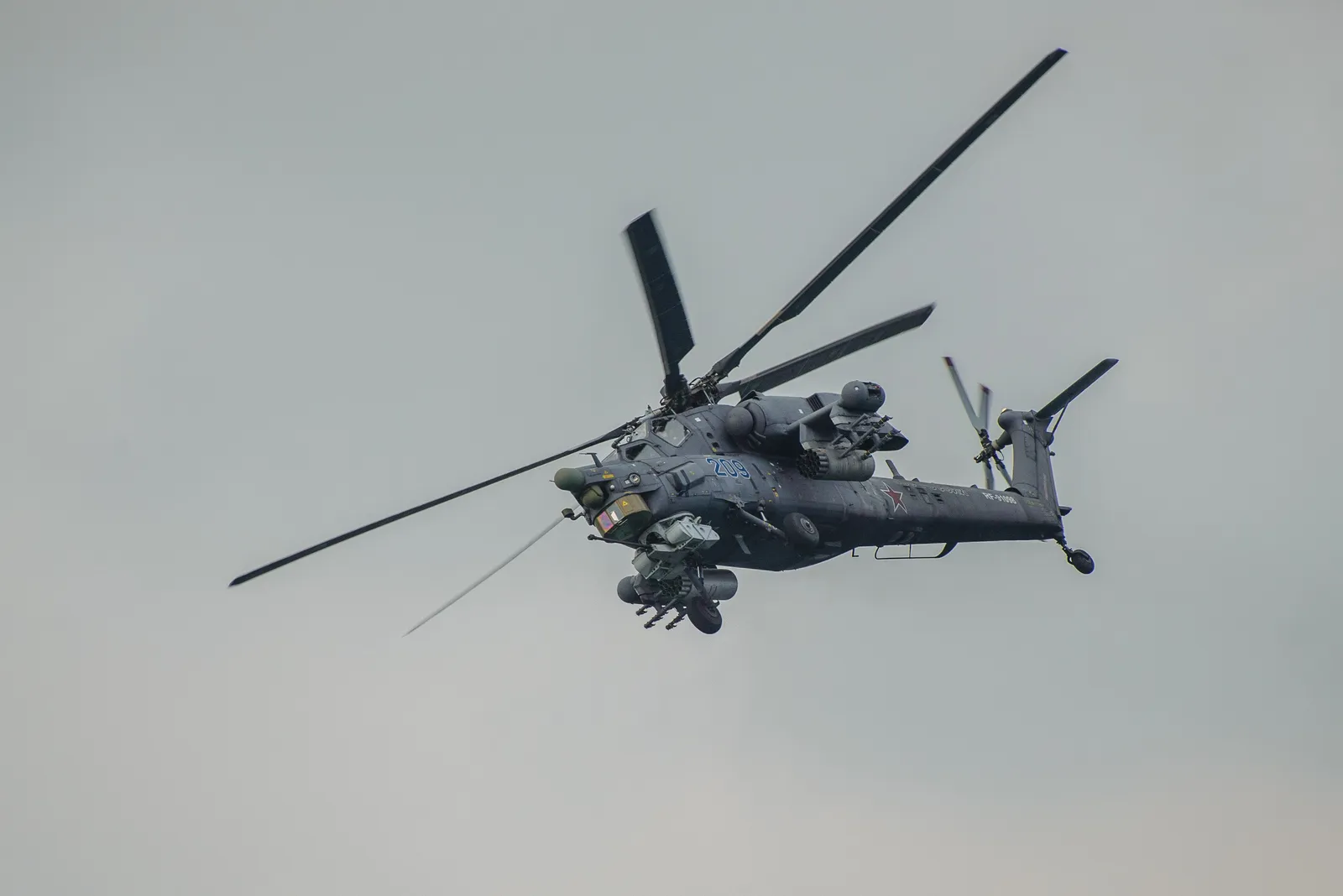
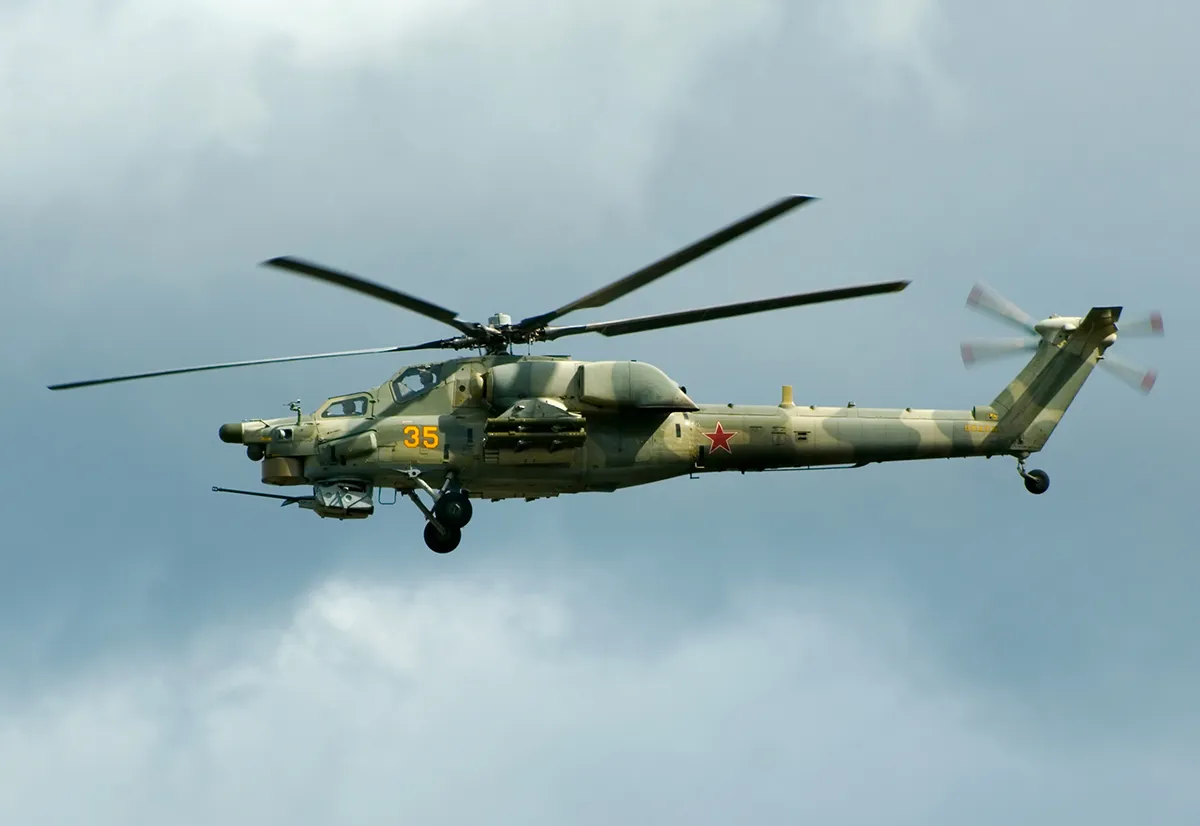
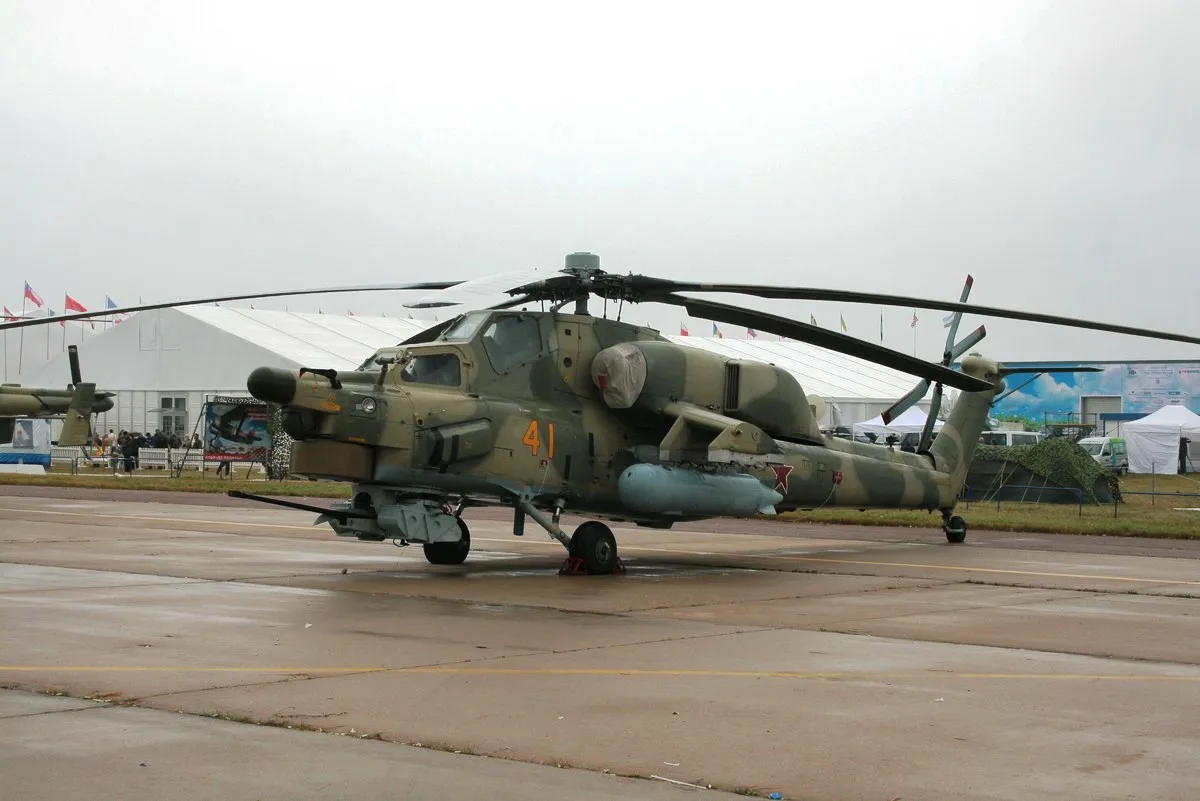
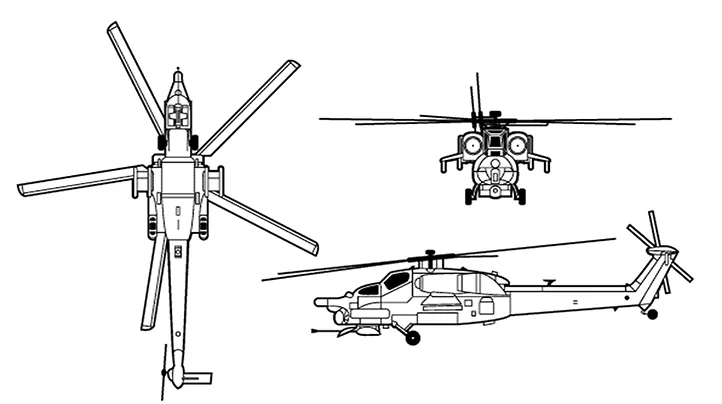
The Mi-28 Havoc is a Russian two-seat attack helicopter developed for anti-armor, close air support, and armed reconnaissance missions. Modern Mi-28N/NM-family aircraft combine armored tandem cockpits, a 30 mm chin cannon, guided missiles, rockets, and day/night sensors; Russian forces have used the type in the Russia-Ukraine War, where helicopters have faced dense ground-based air-defense and drone threats.
Russian forces have operated Mi-28 attack helicopters during the full-scale invasion, including battlefield flights exposed to Ukrainian air defenses and FPV-drone attacks.
Mi-24/Mi-35Attack helicopter and armed assault transportThe Mi-24/Mi-35 Hind family combines an armored attack helicopter with limited troop-carrying capacity, giving operators a platform for close air support, anti-armor fires, and armed escort. In the Russia-Ukraine War, Ukraine has used legacy and donated Mi-24V/Mi-35 airframes for low-level rocket attacks and adapted some Hinds to carry Western unguided rockets.
Ka-52Attack and reconnaissance helicopterThe Ka-52 is a Russian two-seat attack and reconnaissance helicopter derived from the Ka-50 and built around a coaxial rotor layout, side-by-side crew cockpit, 30 mm cannon, and guided-missile hardpoints. In the Russia-Ukraine War it became one of Russia's most visible rotary-wing strike platforms, especially in southern Ukraine where Ka-52 and Ka-52M crews used longer-range anti-tank missiles against Ukrainian ground forces.
9K111 FagotMan-portable anti-tank guided missile systemThe 9K111 Fagot, known to NATO as the AT-4 Spigot, is a Soviet man-portable SACLOS wire-guided anti-tank missile system built around the 9P135 tripod launcher and 9M111 missile family. Its compact launcher, vehicle-mount compatibility, and 2 to 2.5 km range kept it relevant for legacy users, including Russian anti-tank teams documented in the Russia-Ukraine War.
9K114 ShturmRadio-command anti-tank guided missile systemThe 9K114 Shturm is a Soviet radio-command anti-tank guided missile system built around the 9M114 Kokon missile and known to NATO as AT-6 Spiral. Designed by KBM Kolomna for attack helicopters and the MT-LB-based 9P149 Shturm-S carrier, it combines SACLOS guidance, a fast missile, and a roughly 5 km baseline range. In the Russia-Ukraine War, Russian 9P149 vehicles have been captured or displayed as battlefield trophies, while Ukrainian units have shown Shturm-S use and modernization efforts to keep the system relevant for anti-armor missions.
9K115 MetisMan-portable anti-tank guided missile systemThe 9K115 Metis is a Soviet/Russian man-portable, wire-guided anti-tank guided missile family developed for company-level infantry anti-armor fire. The original AT-7 Saxhorn system emphasized a light launcher and short-range portability, while the later 9K115-2 Metis-M and Metis-M1 variants use larger 130 mm missiles, tandem HEAT or thermobaric warheads, and ranges up to 2 km. In the Russia-Ukraine War, Russian forces have been documented using the upgraded AT-13 Saxhorn-2 / Metis-M variant against Ukrainian armor.
9M113 KonkursSACLOS wire-guided anti-tank guided missileThe 9M113 Konkurs, NATO reporting name AT-5 Spandrel, is a Soviet wire-guided anti-tank guided missile family built for infantry launchers and vehicle mounts such as BMP-series vehicles and the BRDM-2-based 9P148. Its SACLOS guidance, 135 mm missile body, and 4 km class engagement range kept it useful after the Cold War, including documented employment in the Russia-Ukraine War by Ukrainian-aligned forces and Russian units.