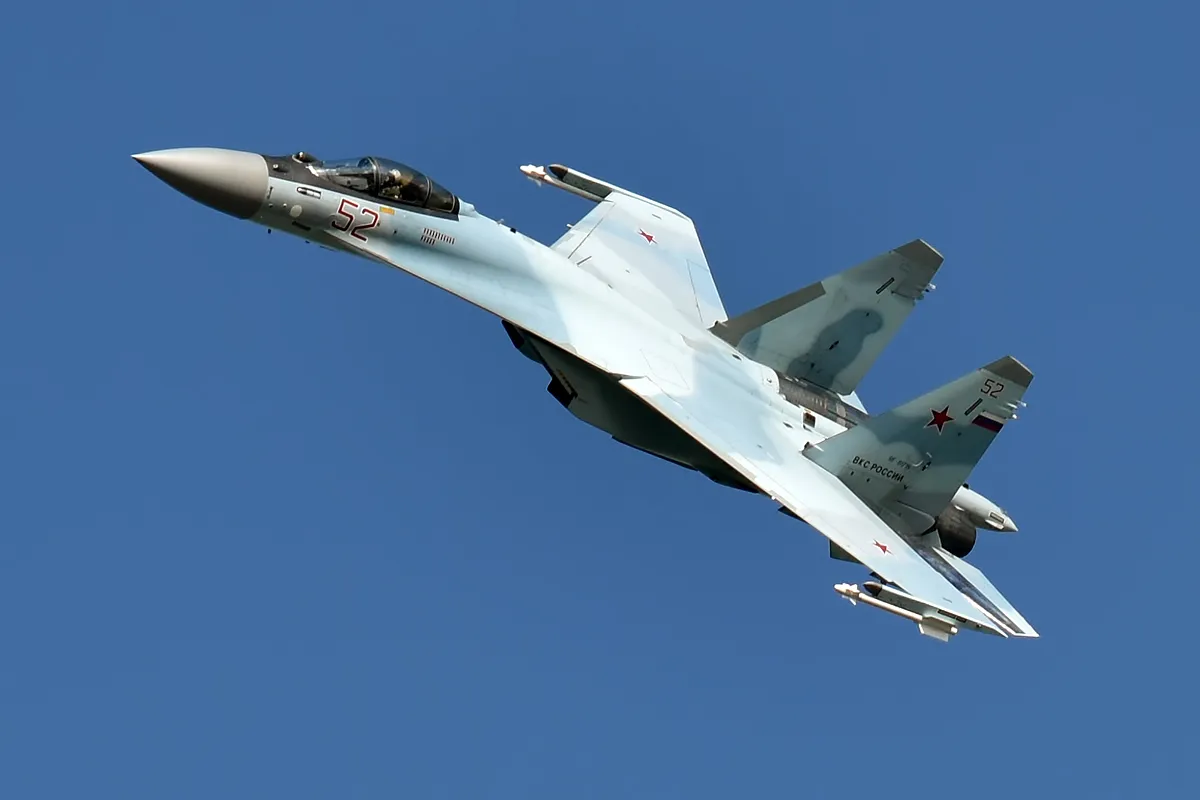
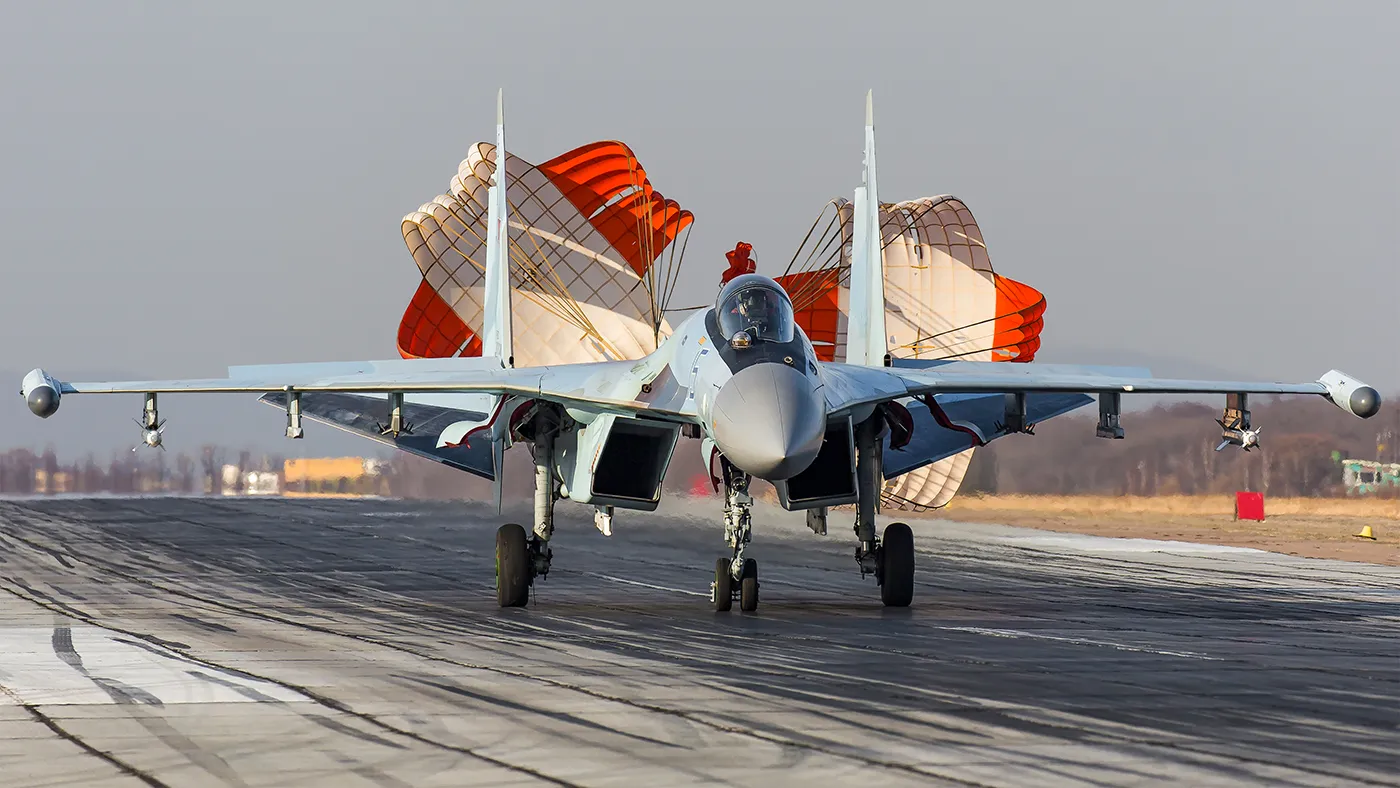
Russian Aerospace Forces Su-35S fighters are documented in the Ukraine air war as front-line air-to-air threats, platforms for Kh-31P and Kh-58 anti-radiation missile launches against Ukrainian SAM radars, and part of the later R-37M long-range missile threat described by RUSI.
Role detailsSu-35
- Sukhoi Su-35
- Flanker-E
- Su-35S
- Sukhoi Su-35S
The Su-35 is a Russian single-seat, twin-engine multirole fighter developed as a deep modernization of the Su-27 family. UAC describes it as a 4++ generation aircraft with thrust-vectoring 117S engines, a phased-array radar, and an 8,000 kg combat load; later reporting documents Su-35S combat service from Syria to the 2014 Russia-Ukraine War, where it has been tied to air-to-air and anti-radiation missile missions.
Role in Conflicts
Russian Su-35S fighters were fielded from Khmeimim airbase during Russia's intervention in Syria, with TASS reporting Russian Defense Ministry confirmation that the aircraft had started combat missions there in early 2016 and U.S. military releases later documenting Russian Su-35 intercept and harassment incidents over Syria in 2023.
Role detailsProfile / Specs
Profile
- Origin
- Russia
- Type
- Single-seat multirole fighter
- Service note
- Introduced in the 2010s; in Russian service during the 2014 Russia-Ukraine War
- Designer
- Sukhoi Design Bureau
- Designed
- 2000s modernization program; first flight in 2008
- Produced
- 2007-present
- Developed from
- Su-27
Specifications
- Crew
- 1
- Engines
- Two 117S afterburning turbofan engines with thrust-vector control
- Maximum speed
- 1,400 km/h near the ground; Mach 2.25 at altitude
- Range
- 3,600 km practical range at cruising altitude without refueling
- Combat load
- Up to 8,000 kg on 12 hardpoints
- Ceiling
- 18,000 m
- Radar
- Phased-array radar cited by UAC as able to track up to 30 aerial targets and engage up to 8
Mission Systems and Weapons
Open sources emphasize the Su-35 as a long-range fighter with a heavy external weapons load, thrust-vectoring engines, and a sensor suite intended for both air-to-air and strike roles.
| Area | Documented detail | Source |
|---|---|---|
| Propulsion | UAC lists two 117S afterburning turbofans with thrust-vector control. | UAC Su-35 |
| Radar | UAC describes the radar as able to track up to 30 aerial targets and engage up to 8. | UAC Su-35 |
| External stores | Rosoboronexport lists air-to-air missiles and strike weapons in the Su-35 export package, including RVV-MD, RVV-SD, RVV-BD, and Kh-58UShKE. | Rosoboronexport Su-35 |
| Ukraine air-war threat | RUSI later highlighted Su-35S use with long-range R-37M missiles as a major standoff air-to-air concern. | The Evolution of Russian and Chinese Air Power Threats |
Variants
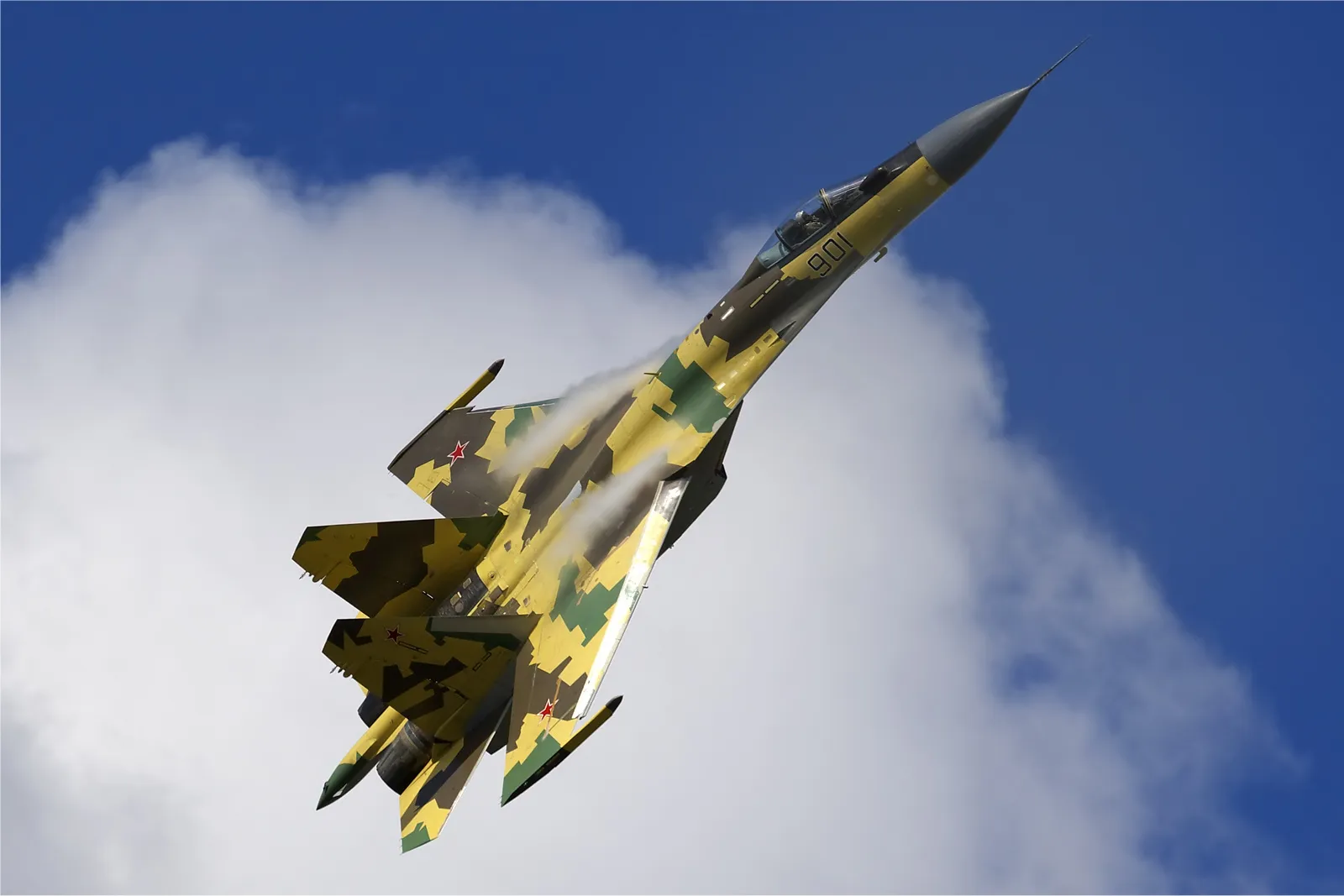
This record covers the modern production Su-35/Su-35S line and links it to the wider Su-27 Flanker family where the catalog has a separate public entry.
Timeline
Su-35 Key Events
First flight
UAC dates the new Su-35 fighter's maiden flight to February 19, 2008.
Sources: UAC Su-35
Syria combat missions reported
TASS reported Russian Defense Ministry confirmation that Su-35S fighters at Khmeimim airbase had started combat missions in Syria.
Sources: Russia's advanced Su-35S fighter jet: premier performance over Syrian skies
Ukraine air-war role
RUSI and CNA later described Su-35S fighters as important Russian air-to-air and anti-radiation missile platforms during the full-scale phase of the Russia-Ukraine War.
Sources: The Russian Air War and Ukrainian Requirements for Air Defence, Russian Combat Air Strengths and Limitations
R-37M threat emphasized
A RUSI air-power update described the Su-35S and Su-30SM2 shift toward long-range R-37M carriage as a significant contributor to the aircraft's standoff air-to-air threat.
Sources: The Evolution of Russian and Chinese Air Power Threats
Related Weapon Systems