- Side
- Russia

Russian Aerospace Forces have used Su-34 Fullbacks as primary UMPK glide-bomb launch platforms, often carrying four bombs per sortie, for stand-off strikes on Ukrainian front-line positions and cities.
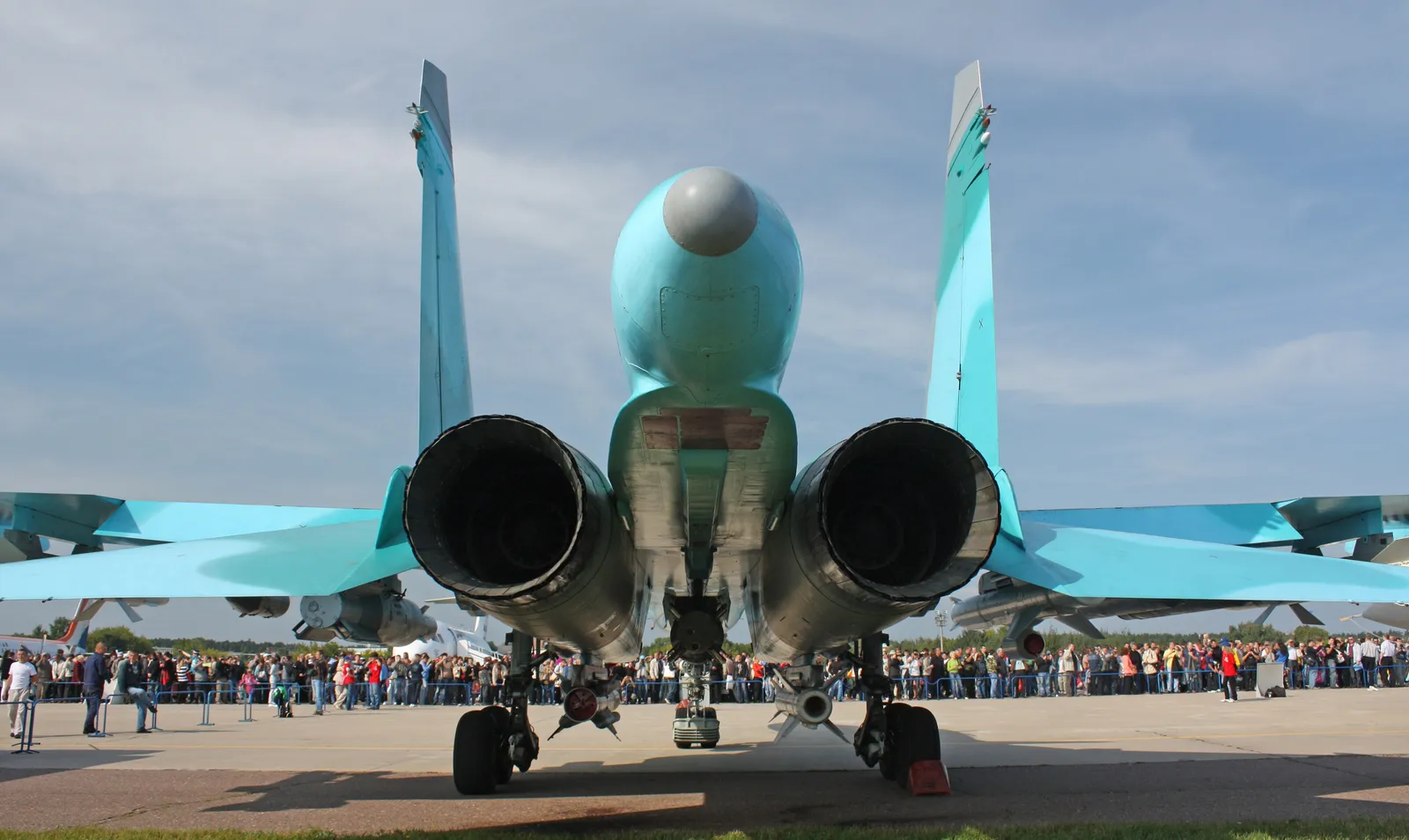
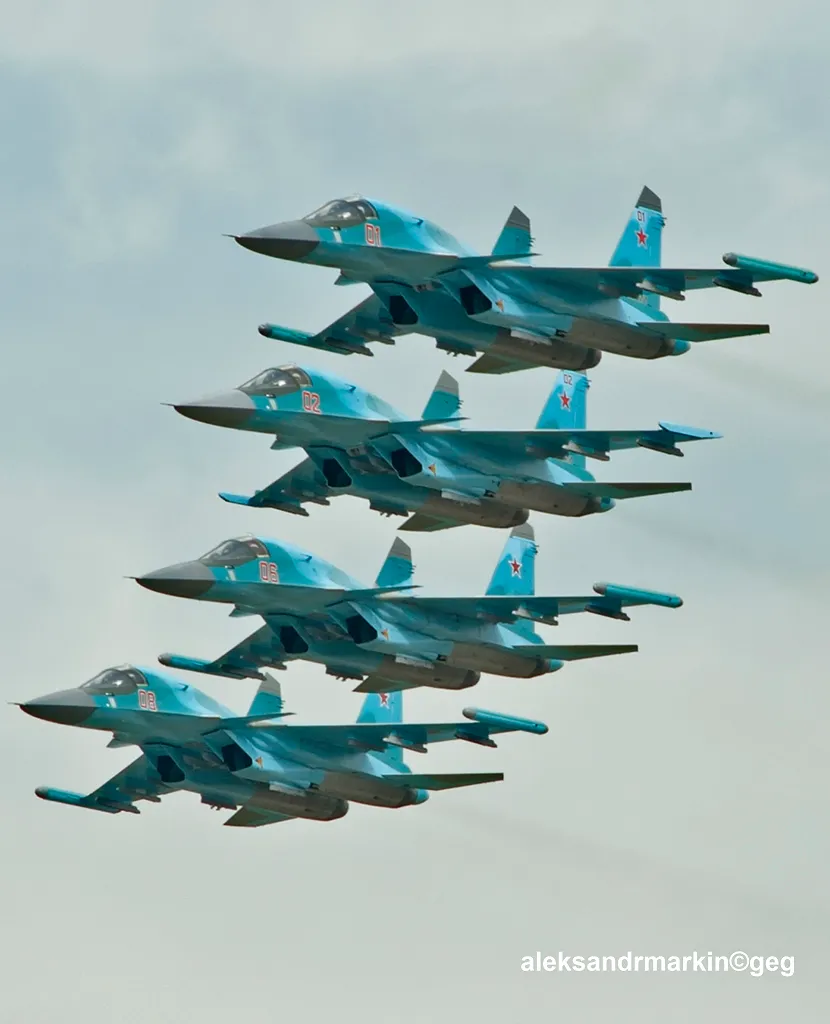
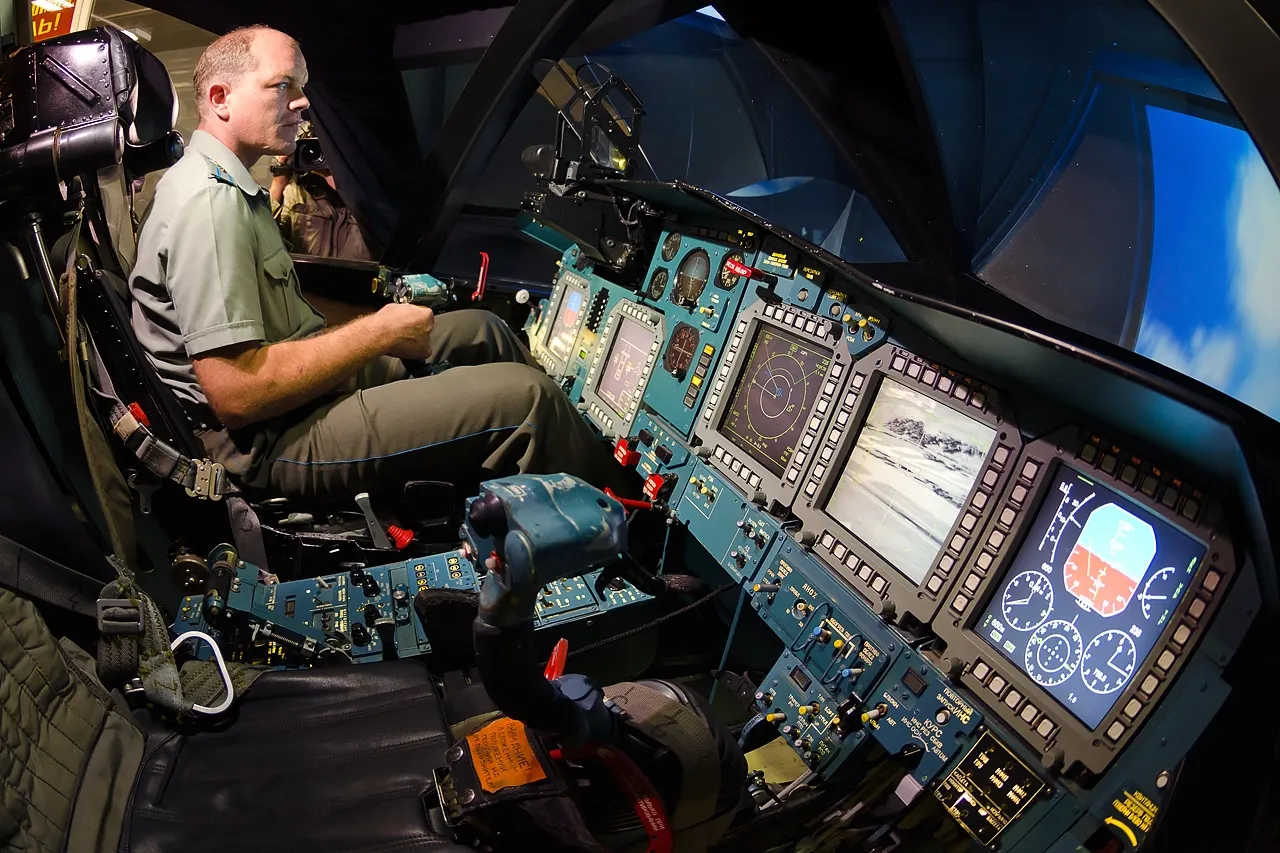
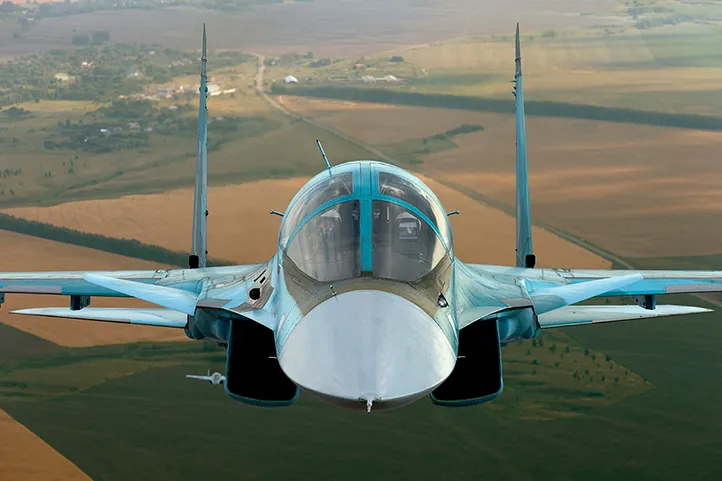
Role detailsThe Su-34 Fullback is a Russian two-seat fighter-bomber from the Sukhoi Su-27 family, built in Novosibirsk for long-range strike, interdiction, and reconnaissance. Its armored cockpit, 12 hardpoints, and 8,500 kg combat load have made it a main Russian strike platform in Syria and in the 2014 Russia-Ukraine War.
Russian Aerospace Forces have used Su-34 Fullbacks as primary UMPK glide-bomb launch platforms, often carrying four bombs per sortie, for stand-off strikes on Ukrainian front-line positions and cities.
Role detailsRussian Aerospace Forces used Su-34s from Hmeimim and, during 2016 Hamadan rotations, for strike missions supporting Syrian government operations.
Role detailsRussian forces used early Su-34 airframes during 2008 combat trials against Georgia, with reporting describing Khibiny electronic-countermeasure employment to jam Georgian air-defense radars.
Public sources separate the Su-34E export analogue and later Su-34M modernization reporting from the baseline Russian production Su-34.
| Variant | Configuration | Designation notes |
|---|---|---|
| Su-34E | Export analogue | Rosoboronexport presents the Su-34E as the export analogue of the Su-34 with the same two-seat strike-aircraft role and a 12-hardpoint weapons fit. Sources: Su-34E |
| Su-34M | Modernized Russian front-line bomber | Army Recognition, citing Russian reporting, described first Su-34M front-line bomber deliveries in 2022 as a modernized configuration for the Russian Air Force. |
Open sources most clearly tie the Su-34 to Russian stand-off weapons through Ukraine-war FAB-series UMPK glide bombs and later Kh-69 launch-platform reporting.
| Carried item | Item type | Carriage evidence |
|---|---|---|
 | 250 kg glide bomb | JAPCC identifies Su-34 Fullbacks as Russia's primary glide-bomb launch platforms in Ukraine and lists FAB-250 among FAB-series bombs converted with UMPK kits. |
 | 1,500 kg glide bomb | JAPCC lists FAB-1500 among FAB-series UMPK conversions and describes Su-34s as the primary launch aircraft for Russia's Ukraine-war glide-bomb campaign. |
 | 3,000 kg-class glide bomb | The War Zone analyzed Russian footage showing a Su-34 carrying and releasing a UMPK-equipped FAB-3000 glide bomb in Ukraine-war service. Sources: Russia's Giant 6,000lb Glide Bomb Seen Launched From Su-34 For First Time |
 | Air-launched cruise missile | Defense Express reports that the Kh-69 can be launched from Su-34 tactical aircraft, a launch-platform point repeated in its coverage of the Trypilska power plant strike. Sources: Defense Express Kh-69 Trypilska TPP |
The Su-34 record has three distinct evidence lanes: early combat testing, expeditionary strike use, and Ukraine-war stand-off bombing. The table keeps those roles separate so conflict notes do not imply a single unchanged mission profile.
| Context | Source-backed detail | Catalog treatment |
|---|---|---|
| 2008 Russo-Georgian War | The War Zone describes early Su-34 airframes using Khibiny electronic countermeasures to jam Georgian air-defense radars. | Added as a narrow electronic-attack support row, not as a broad bombing-campaign claim. |
| 2011 Syrian Civil War | RAND places Su-34s in Russia's Hmeimim strike wing, and Guardian reporting documents Su-34 sorties from Hamadan during the Syria campaign. | Kept as a Russian/Syrian-government-allied long-range strike role. |
| 2014 Russia-Ukraine War | JAPCC identifies Su-34s as primary FAB-series UMPK launch platforms, while The War Zone documents Su-34 carriage and release of a FAB-3000 glide bomb. | Expanded through carried-munition links to existing FAB UMPK records. |
| Kh-69 carriage | Defense Express reports Su-34 compatibility for Kh-69 launches in its Trypilska strike coverage. | Linked as a launch-platform relationship without treating every Kh-69 strike as confirmed Su-34-launched. |
Key sources: The War Zone Su-34 Fullback Strike Fighter; Road to Damascus; Russia Uses Iranian Airbase for First Time in Syria Campaign; Countering Russia's Glide Bomb Warfare in Ukraine; Russia's Giant 6,000lb Glide Bomb Seen Launched From Su-34 For First Time; Defense Express Kh-69 Trypilska TPP.
UAC lists 1990 as the Su-34's maiden flight, marking the start of the fighter-bomber's flight-test program.
Sources: Su-34
The War Zone describes early Su-34 combat trials during the 2008 Russo-Georgian War, including Khibiny electronic-countermeasure use against Georgian air-defense radars.
Sources: The War Zone Su-34 Fullback Strike Fighter
UAC says the Su-34 entered service in 2014 after state joint tests were completed and the Russian government accepted the aircraft.
Sources: Su-34
RAND describes Su-34 fighter-bombers as part of the Russian strike wing at Hmeimim, with later rotations extending support from the Syrian campaign.
Sources: Road to Damascus: The Russian Air Campaign in Syria, 2015 to 2018, Russia Uses Iranian Airbase for First Time in Syria Campaign
JAPCC describes Russian forces as primarily using Su-34 Fullbacks as glide-bomb launch platforms in Ukraine, often carrying four bombs per sortie.
Sources: Countering Russia's Glide Bomb Warfare in Ukraine