Munitions

Vympel R-37M / RVV-BD

Also known as
  • R-37M
  • R-37M missile
  • RVV-BD
  • AA-13 Axehead
  • RS-AA-13

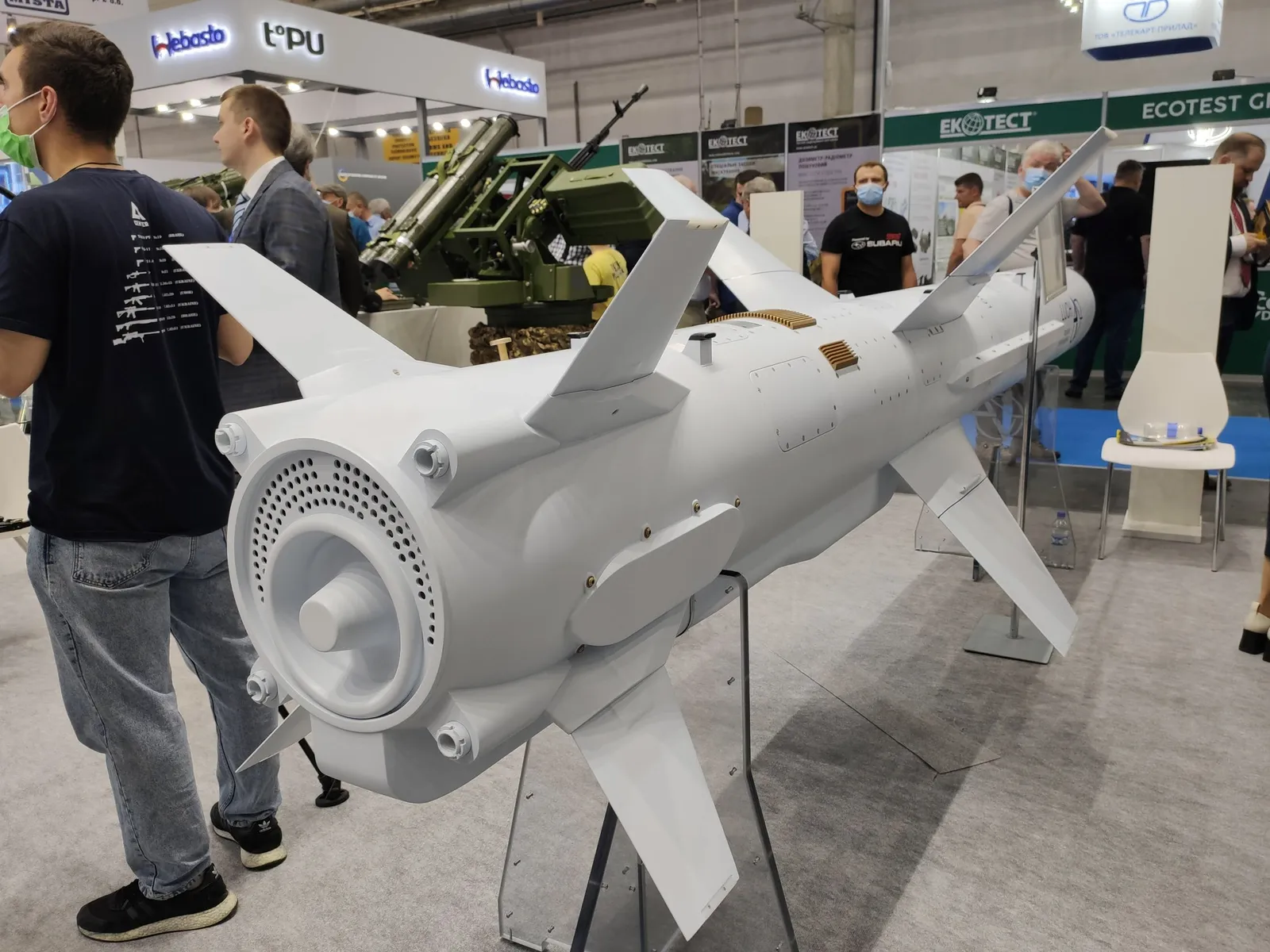
The Vympel R-37M, exported as RVV-BD, is a Russian very-long-range air-to-air missile for engaging aircraft and cruise-missile targets from fighter and interceptor aircraft. Rosoboronexport lists inertial navigation with radio correction and active radar terminal homing, while RUSI ties the missile to Russian MiG-31, Su-35, and Su-30 long-range air-combat tactics in Ukraine and cautions that publicly confirmed kills remain limited.

Role in Conflicts

Profile / Specs

Profile

Origin
Russia
Type
Very-long-range air-to-air missile
Service note
Post-Soviet Russian long-range air-to-air missile in service during the 2014 Russia-Ukraine War.
Designed
Post-Soviet modernization of the R-37 long-range missile family

Specifications

Guidance
Inertial navigation with radio correction and active radar homing in the terminal phase
Launch weight
Up to 510 kg
Warhead
60 kg high-explosive fragmentation warhead
Range
Up to 200 km export range listed for RVV-BD
Target set
Aircraft, cruise missiles, helicopters, and remotely piloted vehicles listed by Rosoboronexport
Launch platforms
RUSI reporting ties wartime R-37M use to MiG-31, Su-35, and Su-30-family fighters
Carrier Aircraft

RUSI identifies the R-37M as a very-long-range air-to-air missile used from Russian fighter and interceptor patrols over Ukraine.

CarrierCarrier typeCarriage evidence
MiG-31, Long-range interceptor with MiG-31K air-launched ballistic missile carrier variant, Aircraft & UAVsMiG-31Long-range interceptor

RUSI reported MiG-31BM combat air patrols using R-37M missiles against Ukrainian aircraft and later included MiG-31s among the Russian fighters regularly firing R-37M missiles in the war.

Sources: RUSI: Russian Air War and Ukrainian Requirements for Air Defence, RUSI: The Evolution of Russian and Chinese Air Power Threats

Su-35, Single-seat multirole fighter, Aircraft & UAVsSu-35Multirole fighter

RUSI reported Su-35S combat air patrols alongside MiG-31BM patrols in Ukraine and later described Su-35s as regular R-37M firing platforms.

Sources: RUSI: Russian Air War and Ukrainian Requirements for Air Defence, RUSI: The Evolution of Russian and Chinese Air Power Threats

Sukhoi Su-30, Twin-engine multirole fighter aircraft, Aircraft & UAVsSukhoi Su-30Multirole fighter

RUSI's 2026 air-power assessment lists Russian Su-30s among the fighter types regularly firing R-37M missiles during the war in Ukraine.

Sources: RUSI: The Evolution of Russian and Chinese Air Power Threats

Designation And Evidence Limits

The strongest public evidence separates three questions: the RVV-BD export designation, the R-37M Russian-service designation used in Ukraine reporting, and the limited public record of confirmed air-to-air kills.

Evidence areaWhat the sources supportImportant limit
Export productRosoboronexport markets RVV-BD as a long-range air-to-air guided missile and publishes the guidance, warhead, launch-weight, target-set, and export-range figures used in the specifications.Export marketing data may not fully describe every Russian Aerospace Forces service configuration.
Ukraine-war useRUSI identifies R-37M use by Russian fighter and interceptor patrols against Ukrainian aircraft during the Russia-Ukraine War.Those sources support the conflict-use row, not a precise missile expenditure count.
Effect assessmentRUSI's 2026 air-power paper treats R-37M as a significant standoff threat but says Russian long-range air-to-air firing produced only a handful of air-to-air kills over four years.The page avoids treating range figures or launch reports as confirmed kill claims.

Sources: Rosoboronexport: RVV-BD Long-Range Air-to-Air Guided Missile; RUSI: Russian Air War and Ukrainian Requirements for Air Defence; RUSI: The Evolution of Russian and Chinese Air Power Threats.
Timeline

Vympel R-37M / RVV-BD Key Events

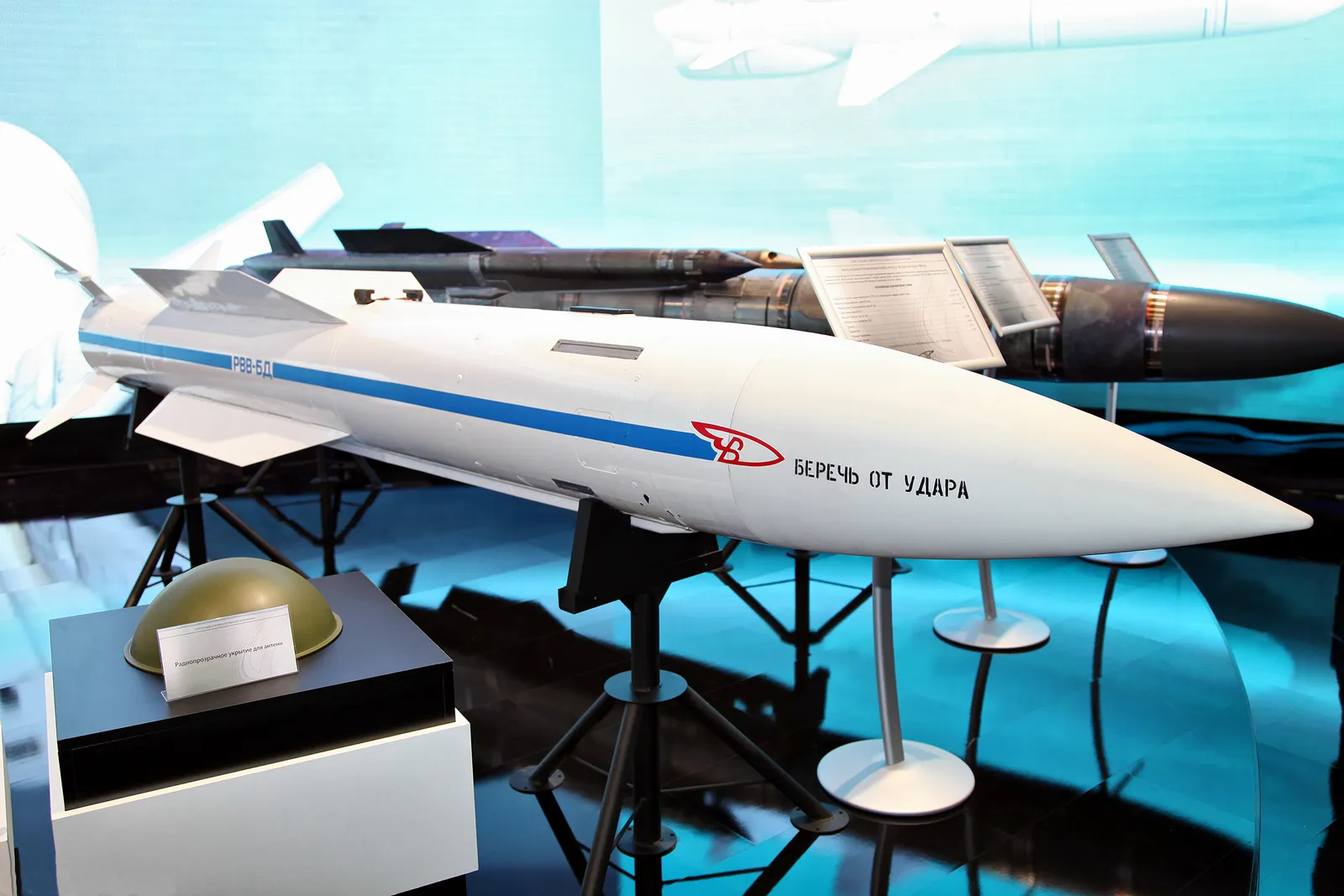
  1. RVV-BD display photographed at MAKS

    The Commons image used for this entry identifies an RVV-BD missile displayed at the 2013 MAKS air show near Moscow.

    Sources: MAKS Airshow 2013 RVV-BD image

  2. RUSI documents Ukraine-war R-37M use

    RUSI's air-war report described Russian fighter patrols using R-37-family very-long-range missiles against Ukrainian aircraft during the full-scale invasion.

    Sources: RUSI: Russian Air War and Ukrainian Requirements for Air Defence

  3. RUSI reassesses the long-range fighter threat

    A later RUSI air-power paper described regular R-37M firing by Russian Su-35s, Su-30s, and MiG-31s, while noting only a handful of air-to-air kills over four years of conflict.

    Sources: RUSI: The Evolution of Russian and Chinese Air Power Threats

Media

Vympel R-37M / RVV-BD Videos

Related Weapon Systems
MiG-31, Long-range interceptor with MiG-31K air-launched ballistic missile carrier variant, Aircraft & UAVsAircraft & UAVsMiG-31Long-range interceptor with MiG-31K air-launched ballistic missile carrier variantThe MiG-31 is a Soviet-designed, twin-engine, two-seat long-range interceptor built for high-speed patrols, bomber and cruise-missile interception, and wide-area air defense. Russian industry sources describe the MiG-31BM modernization as adding the Zaslon-M radar and expanded weapons-control capabilities, while Russia's MiG-31K conversion carries the Kh-47M2 Kinzhal and MiG-31BM patrols have been documented with R-37M missiles in the 2014 Russia-Ukraine War.
R-17 Scud-B ballistic missile, Short-range ballistic missile, MunitionsMunitionsR-17 Scud-B ballistic missileShort-range ballistic missileThe R-17 Elbrus, known to NATO as the SS-1C Scud-B, is a Soviet road-mobile, liquid-fueled short-range ballistic missile built for deep strikes with conventional, chemical, or nuclear payloads. Its combat record spans Egyptian launches in 1973, Iranian and Iraqi city strikes in the 1980-1988 war, Libyan missile attempts in 1986 and 2011, South Yemeni strikes in 1994, Armenian strikes on Ganja in 2020, and Houthi-aligned use of inherited Yemeni stocks, illustrating the lasting political and civilian risk of older inaccurate ballistic missiles.
Kh-69, Air-launched land-attack cruise missile, MunitionsMunitionsKh-69Air-launched land-attack cruise missileThe Kh-69 is a Russian subsonic air-launched land-attack cruise missile developed by Raduga within Tactical Missiles Corporation for precision strikes against fixed targets. Its compact square-section body and folding surfaces are tied to tactical-aircraft carriage, including Su-34, Su-35, and Su-57 launch contexts, while its guidance stack combines inertial, satellite, terrain-height, and electro-optical terminal inputs. The missile has been documented in Russian strikes during the 2014 Russia-Ukraine War, including the April 2024 destruction of the Trypilska thermal power plant.
Kh-59, Air-launched cruise missile family, MunitionsMunitionsKh-59Air-launched cruise missile familyThe Kh-59 Ovod is a Soviet/Russian air-launched cruise missile family developed by Raduga for tactical standoff strike from combat aircraft. The family spans the original TV-guided Kh-59, turbojet-powered Kh-59M/ME, active-radar Kh-59MK anti-ship missile, satellite-guided Kh-59MK2 land-attack missile, and Kh-59MKM penetrator variant. Russia has used Kh-59-series missiles during the 2014 Russia-Ukraine War, and open sources separately describe caveated Kh-59MK2 combat-test reporting from Syria.

Sources