Munitions

Izdeliye 305 (LMUR)

Also known as
  • LMUR
  • Light Multipurpose Guided Missile
  • Izdeliye 305
  • Izdeliye 305E
  • 305E
  • Product 305
  • Kh-39
  • LGM missile

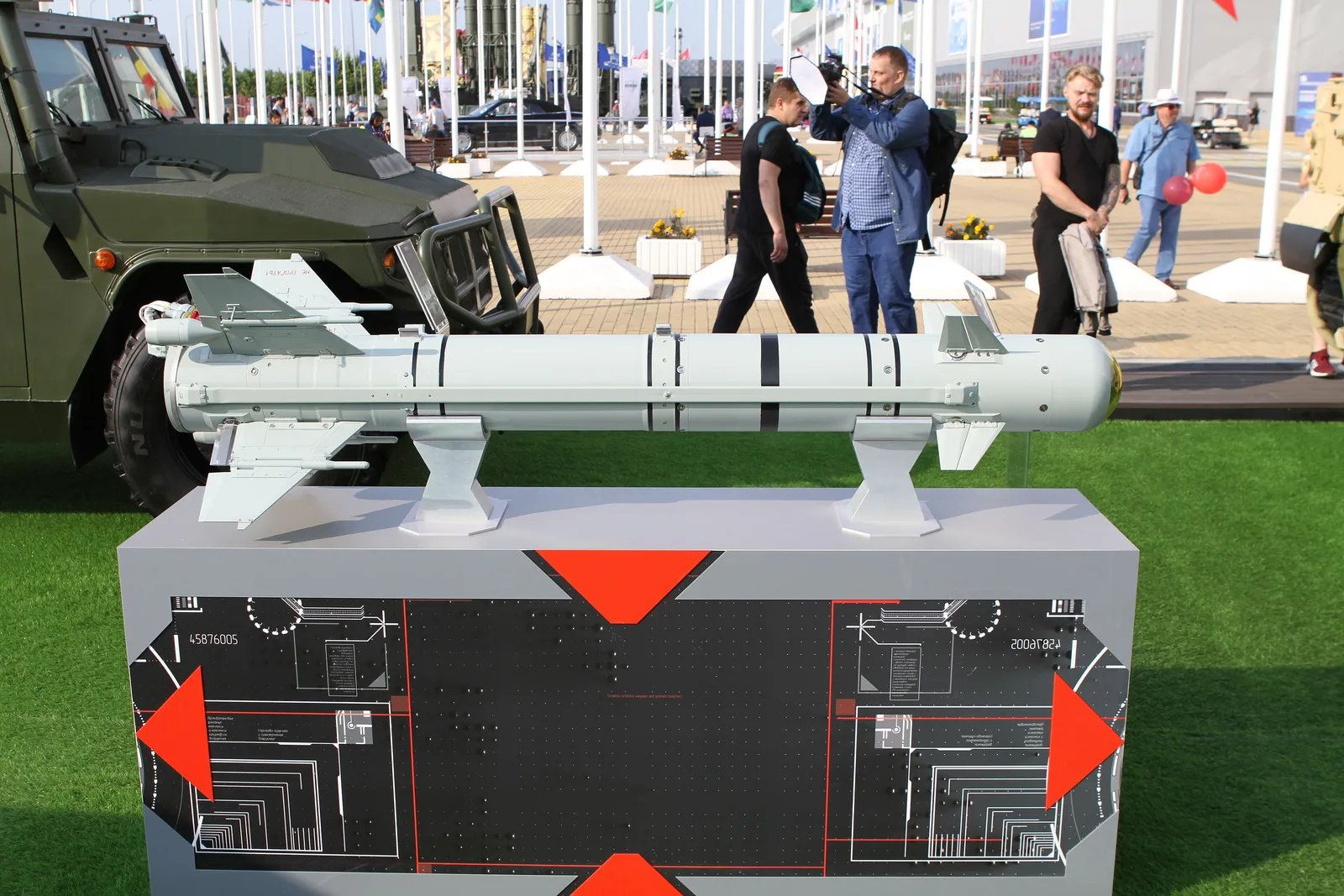
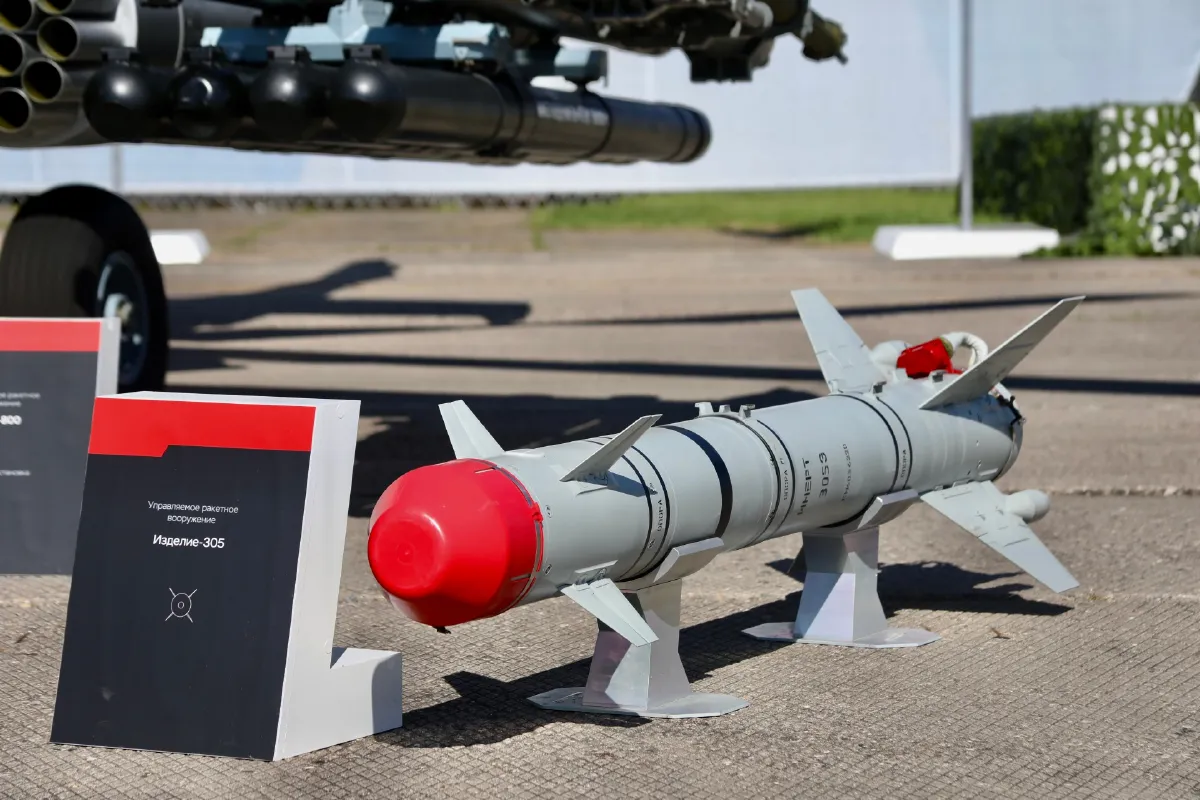
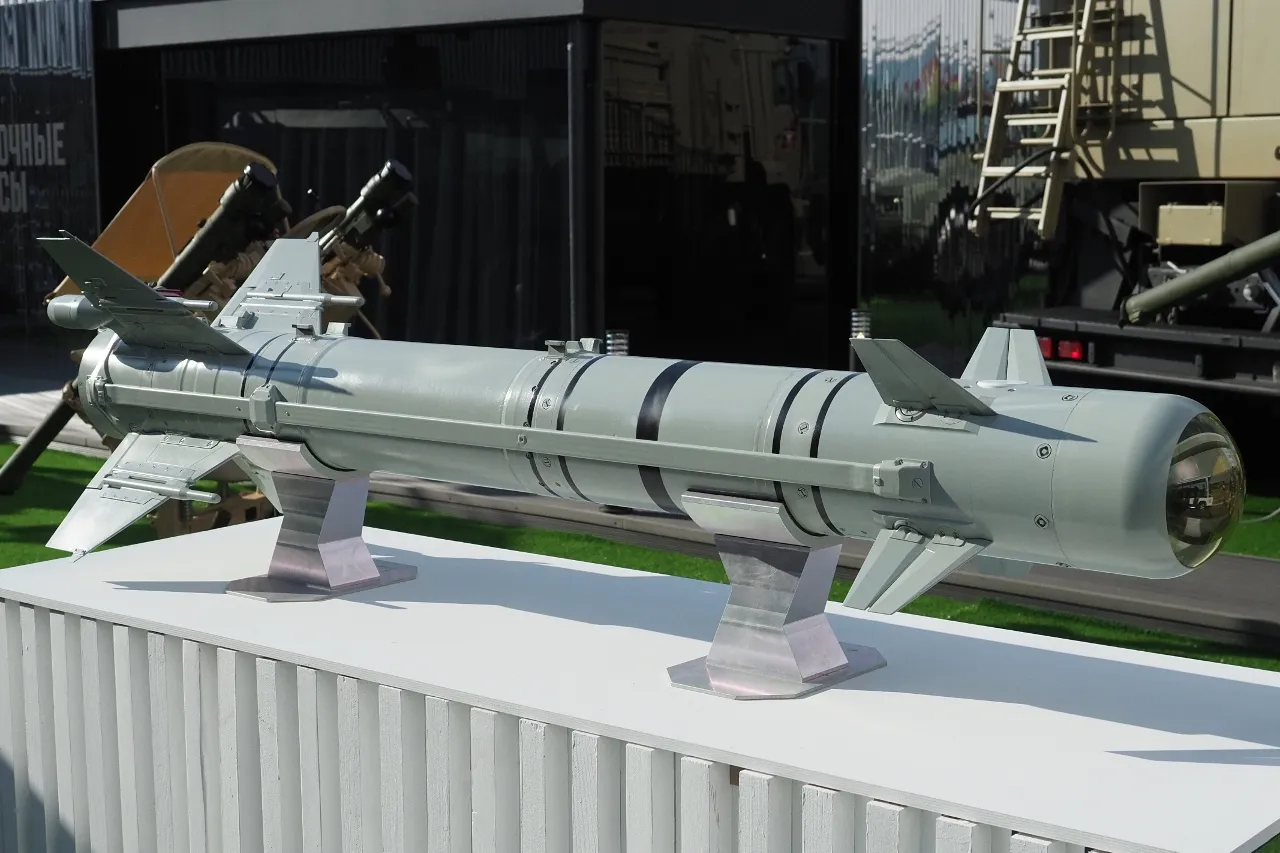
Izdeliye 305, commonly called LMUR, is a Russian helicopter-launched air-to-surface guided missile developed by KB Mashinostroyeniya for long-range precision attacks from Mi-8, Mi-28, and Ka-52 family helicopters. The missile combines inertial/satellite navigation with an electro-optical seeker and operator-in-the-loop terminal control, giving Russian crews a standoff weapon documented in Ukraine against vehicles, bridges, buildings, and other point targets.

Role in Conflicts

Guidance And Employment

LMUR is heavier and longer-ranged than many older Russian helicopter-launched anti-tank missiles, and its guidance chain changes how the launching helicopter can break away after firing.

FeatureDocumented detailSource context
Midcourse navigationInertial and satellite navigation move the missile toward the target area before terminal seeker use.Rosoboronexport and TWZ
Terminal seekerOpen sources describe an electro-optical or thermal-imaging seeker that can send imagery to the crew through a datalink.Rosoboronexport and TWZ
Operator controlThe crew can select, switch, or cancel a target during flight when the helicopter carries the required communications equipment.TWZ
Launch evidence in UkraineTWZ reported January 2023 footage showing Mi-28NM helicopters carrying LMUR missiles on APU-L rails and launching one during a mission.TWZ
Ukraine target setOryx tracked visually confirmed Ukraine strikes against vehicles, pontoon bridges, buildings, warehouses, outposts, a tent, and a smokestack.Oryx
Profile / Specs

Profile

Origin
Russia
Type
Helicopter-launched air-to-surface guided missile
Service note
2010s Russian development; combat use documented during the full-scale 2014 Russia-Ukraine War
Designer
KB Mashinostroyeniya (KBM)
Designed
2011 research and development order for the related Izdeliye 79 program; Izdeliye 305 development continued for FSB helicopter use
Unit cost
TWZ cites a 2018 Russian Ministry of Defense contract price of 14.2 million rubles, about $227,000 at then-current rates.
Produced
Serial production reported after 2015-2016 helicopter tests
Number built
Open-source estimates vary; TWZ calculated at least about 200 deliveries before the Ukraine reporting surge.

Specifications

Launch platform
Helicopter-launched from compatible Mi-8, Mi-28, and Ka-52 family carriers
Missile weight
105 kg
Warhead weight
25 kg
Warhead type
High-explosive fragmentation
Maximum range
14,500 m for 305E; open reporting describes about 14.5-15 km
Length
1,945 mm
Body diameter
200 mm
Maximum speed
About 230 m/s
Flight altitude
About 100-600 m in TWZ's specification summary
Guidance
Combined inertial/satellite navigation with electro-optical/thermal seeker, autopilot, datalink, and possible operator terminal control
Launch equipment
APU-305 single-rail launcher or APU-L two-round launcher described in open reporting
Variants

Public sources use several closely related designations for the combat, export, and training branches of the LMUR family.

VariantConfigurationDesignation notes
Izdeliye 79Prifiks R&D precursor

TWZ traces the 2011 Prifiks development order to an Izdeliye 79 lightweight multirole guided missile effort before the later Izdeliye 305 program.

Sources: TWZ LMUR Ukraine analysis

Izdeliye 305-ULFlying training missile

TWZ describes the 305-UL as a practice missile without the combat warhead and with a smaller non-folding wing.

Sources: TWZ LMUR Ukraine analysis

Izdeliye 306Probable alternate-warhead variant

TWZ says documents for the Mi-8MNP-2 mention Izdeliye 306 alongside Izdeliye 305 and treats it as an unconfirmed likely LMUR variant with a different warhead.

Sources: TWZ LMUR Ukraine analysis

Launch Platforms

Open sources identify the missile as a helicopter-launched weapon, with Rosoboronexport naming export carrier families and TWZ describing Russian integration work.

LauncherLauncher typeLaunch evidence
Ka-52, Attack and reconnaissance helicopter, Aircraft & UAVsKa-52Attack helicopter

Rosoboronexport lists Ka-52-family helicopters among 305E carriers, while TWZ says Ka-52M testing followed Mi-28NM integration work in 2020.

Sources: Rosoboronexport 305E product page, TWZ LMUR Ukraine analysis

Mi-28, Attack helicopter, Aircraft & UAVsMi-28Attack helicopter

Rosoboronexport lists Mi-28-family helicopters among 305E carriers; TWZ reports Mi-28NM tests with LMUR beginning in 2019 and Ukraine footage in January 2023 showing Mi-28NM helicopters carrying and launching the missile.

Sources: Rosoboronexport 305E product page, TWZ LMUR Ukraine analysis, TWZ Mi-28NM LMUR Ukraine report

Mi-8/Mi-17, Medium twin-turbine utility transport helicopter, Aircraft & UAVsMi-8/Mi-17Special-purpose helicopter family

TWZ reports Mi-8MNP-2 testing for FSB helicopter use in 2015-2016, and Rosoboronexport lists Mi-8-family carriers for the export missile.

Sources: TWZ LMUR Ukraine analysis, Rosoboronexport 305E product page

Timeline

Izdeliye 305 (LMUR) Key Events

  1. Prifiks development order

    TWZ reports that Russia's Ministry of Defense ordered KBM to work on a lightweight multirole guided missile under the Prifiks research and development effort.

    Sources: TWZ LMUR Ukraine analysis

  2. Mi-8MNP-2 testing begins

    The missile was tested on the FSB's Mi-8MNP-2 special-purpose helicopter in 2015 and 2016, with serial production starting afterward.

    Sources: TWZ LMUR Ukraine analysis

  3. Mi-28NM test integration

    TWZ reports that tests on the modernized Mi-28NM began in 2019, followed by Ka-52M work in 2020.

    Sources: TWZ LMUR Ukraine analysis

  4. Export configuration promoted

    Rosoboronexport's 305E product page presents the export missile for guided-missile systems on Mi-8, Mi-28, Ka-52, and other carriers.

    Sources: Rosoboronexport 305E product page

  5. Ukraine strike videos identified

    Oryx identifies June 2022 as the first visible Ukraine strike footage it attributed to the Izdeliye 305/LMUR missile.

    Sources: Oryx LMUR strike tracker

  6. Mi-28NM launch footage appears

    TWZ reported January 2023 cockpit and external footage showing Mi-28NM helicopters in Ukraine carrying LMUR missiles on APU-L rails and launching one during a mission.

    Sources: TWZ Mi-28NM LMUR Ukraine report

  7. UK defence reporting highlights Ka-52M use

    Forces News reported UK Ministry of Defence assessment that Ka-52M helicopters carried LMUR missiles and used their range beyond many Ukrainian short-range air defenses.

    Sources: Forces News Ka-52M LMUR report

Designation Map

The same missile family appears under multiple names in English-language reporting and Russian export material.

NameUse in sourcesCatalog interpretation
LMURRussian acronym for light multipurpose guided missile.Common English shorthand for the family.
Izdeliye 79TWZ links the 2011 Prifiks work to an earlier lightweight multirole missile effort.Development precursor, not the main combat identity.
Izdeliye 305Russian service designation discussed in development and Ukraine-use reporting.Main combat missile identity for this record.
305ERosoboronexport product designation for the export missile.Export configuration and official specification source.
Izdeliye 305-ULTWZ describes a practice missile without the combat warhead.Training branch, not a separate conflict-use record.
Izdeliye 306TWZ reports the designation in Mi-8MNP-2 documentation and treats the warhead explanation as unconfirmed.Probable alternate-warhead branch, kept caveated.
Media
Related Weapon Systems
Kh-69, Air-launched land-attack cruise missile, MunitionsMunitionsKh-69Air-launched land-attack cruise missileThe Kh-69 is a Russian subsonic air-launched land-attack cruise missile developed by Raduga within Tactical Missiles Corporation for precision strikes against fixed targets. Its compact square-section body and folding surfaces are tied to tactical-aircraft carriage, including Su-34, Su-35, and Su-57 launch contexts, while its guidance stack combines inertial, satellite, terrain-height, and electro-optical terminal inputs. The missile has been documented in Russian strikes during the 2014 Russia-Ukraine War, including the April 2024 destruction of the Trypilska thermal power plant.
Kh-59, Air-launched cruise missile family, MunitionsMunitionsKh-59Air-launched cruise missile familyThe Kh-59 Ovod is a Soviet/Russian air-launched cruise missile family developed by Raduga for tactical standoff strike from combat aircraft. The family spans the original TV-guided Kh-59, turbojet-powered Kh-59M/ME, active-radar Kh-59MK anti-ship missile, satellite-guided Kh-59MK2 land-attack missile, and Kh-59MKM penetrator variant. Russia has used Kh-59-series missiles during the 2014 Russia-Ukraine War, and open sources separately describe caveated Kh-59MK2 combat-test reporting from Syria.
Barak LR / LRAD interceptor, Long-range surface-to-air interceptor, Air DefenseAir DefenseBarak LR / LRAD interceptorLong-range surface-to-air interceptorBarak LR, also identified in Israeli operational reporting as LRAD, is Israel Aerospace Industries' 70 km long-range interceptor in the Barak MX air and missile defense family. It combines vertical launch, a dual-pulse motor, an active RF seeker, and battle-management data links for land and naval air defense, including Barak Magen use from Israeli Navy Sa'ar 6 missile ships against Iranian-launched UAVs during the 2025 Israel-Iran Conflict.
SPIKE anti-tank guided-missile family, Anti-tank guided missile family, Infantry WeaponsInfantry WeaponsSPIKE anti-tank guided-missile familyAnti-tank guided missile familyRafael's SPIKE family is a combat-proven electro-optical guided-missile line whose long-range NLOS branch is also known as Tamuz in Israeli service and Exactor in British service. The family spans infantry, vehicle, aircraft, and naval launchers, from compact short-range variants to Spike NLOS, which reaches 32 km from land or 50 km from the air and has documented use by Israeli, British, Azerbaijani, and U.S. forces.

Sources