

Open-source military-balance reporting for the 2020 Nagorno-Karabakh context listed Mi-2 helicopters in both Azerbaijani and Armenian air-force inventories; the available sources support fielding/in-service context rather than documented combat sorties.
Aircraft & UAVs
Mi-2
Also known as
- Mil Mi-2
- PZL-Swidnik Mi-2
- Hoplite
- Mi-2 Hoplite
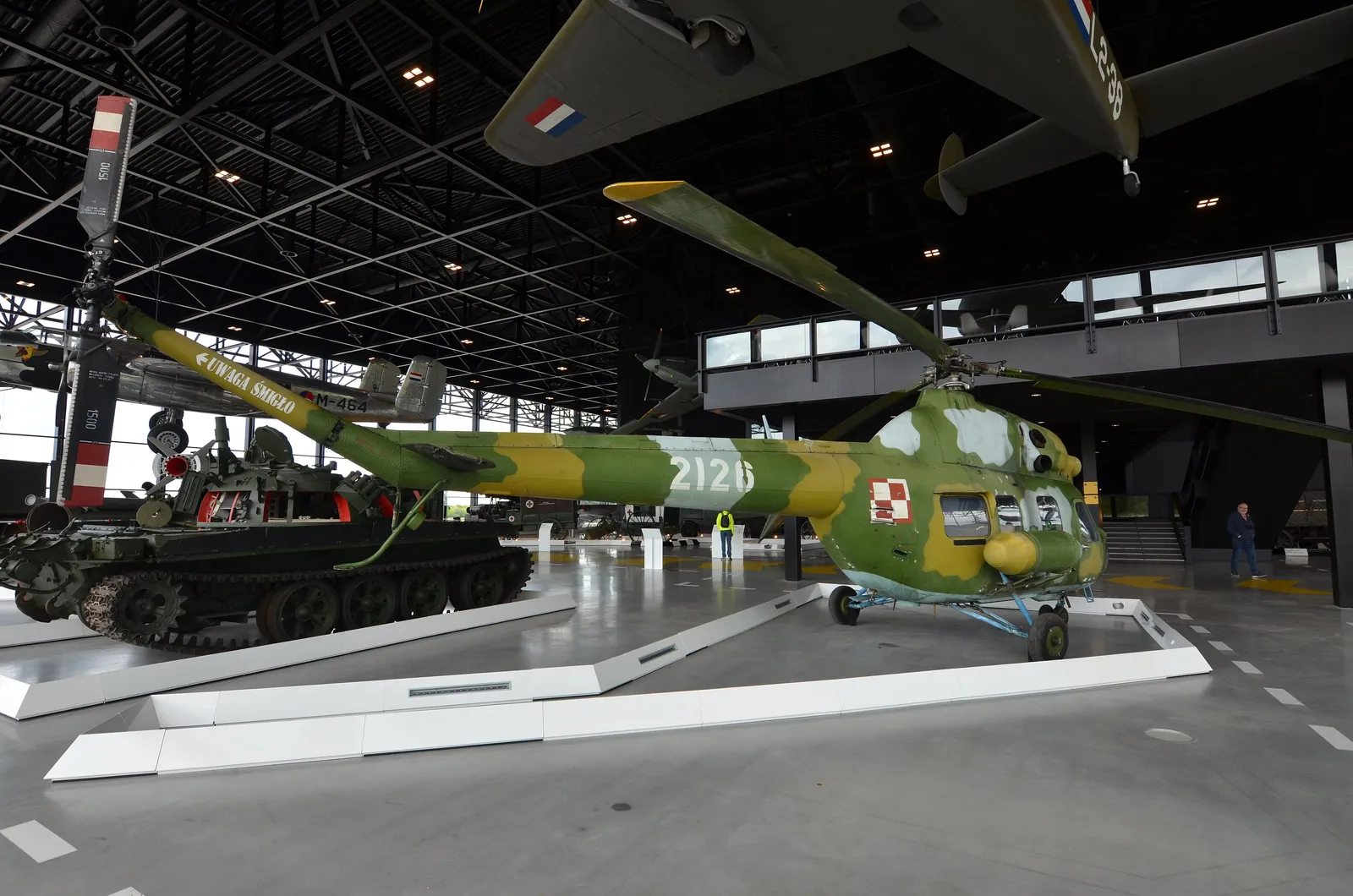
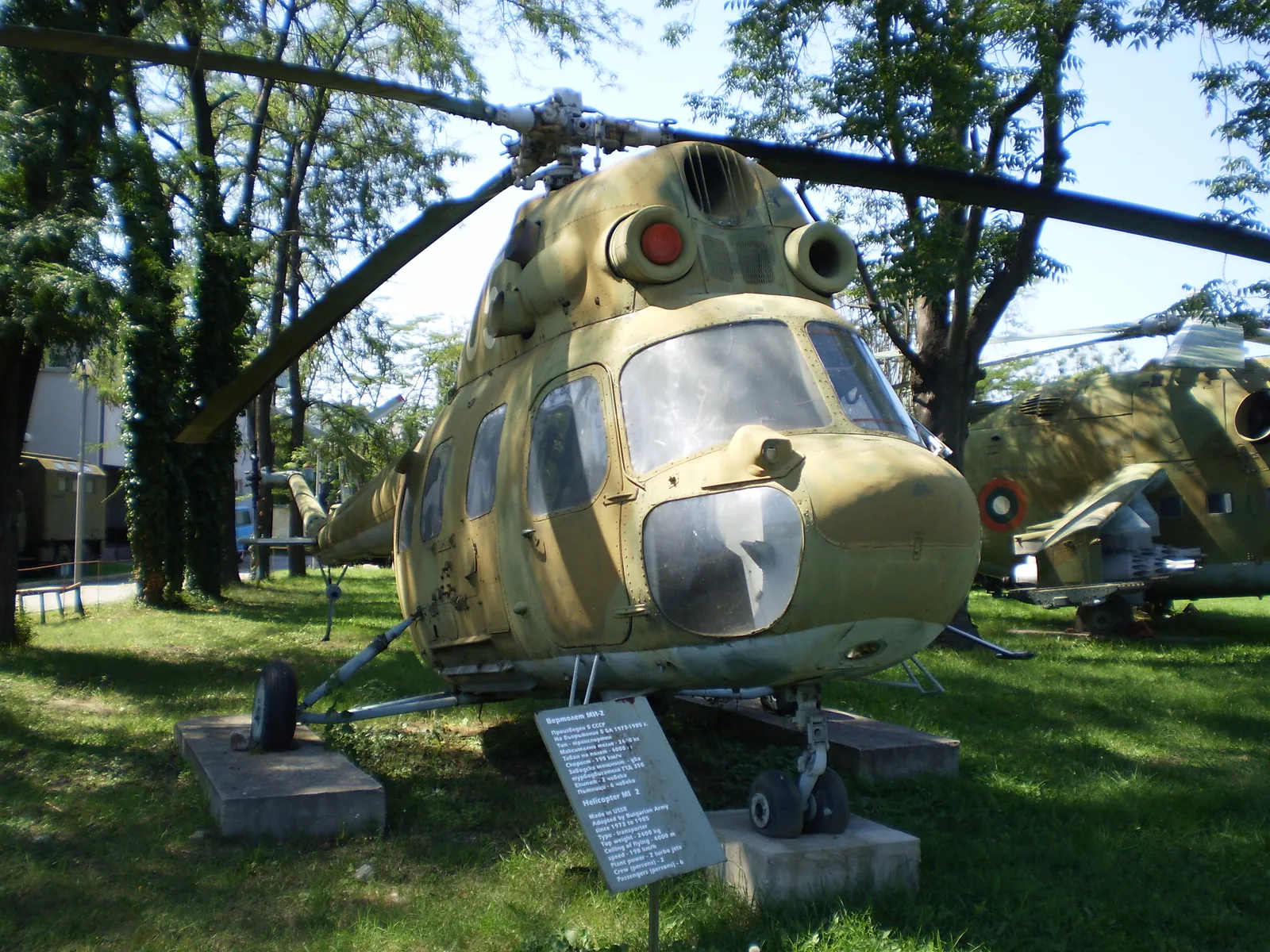
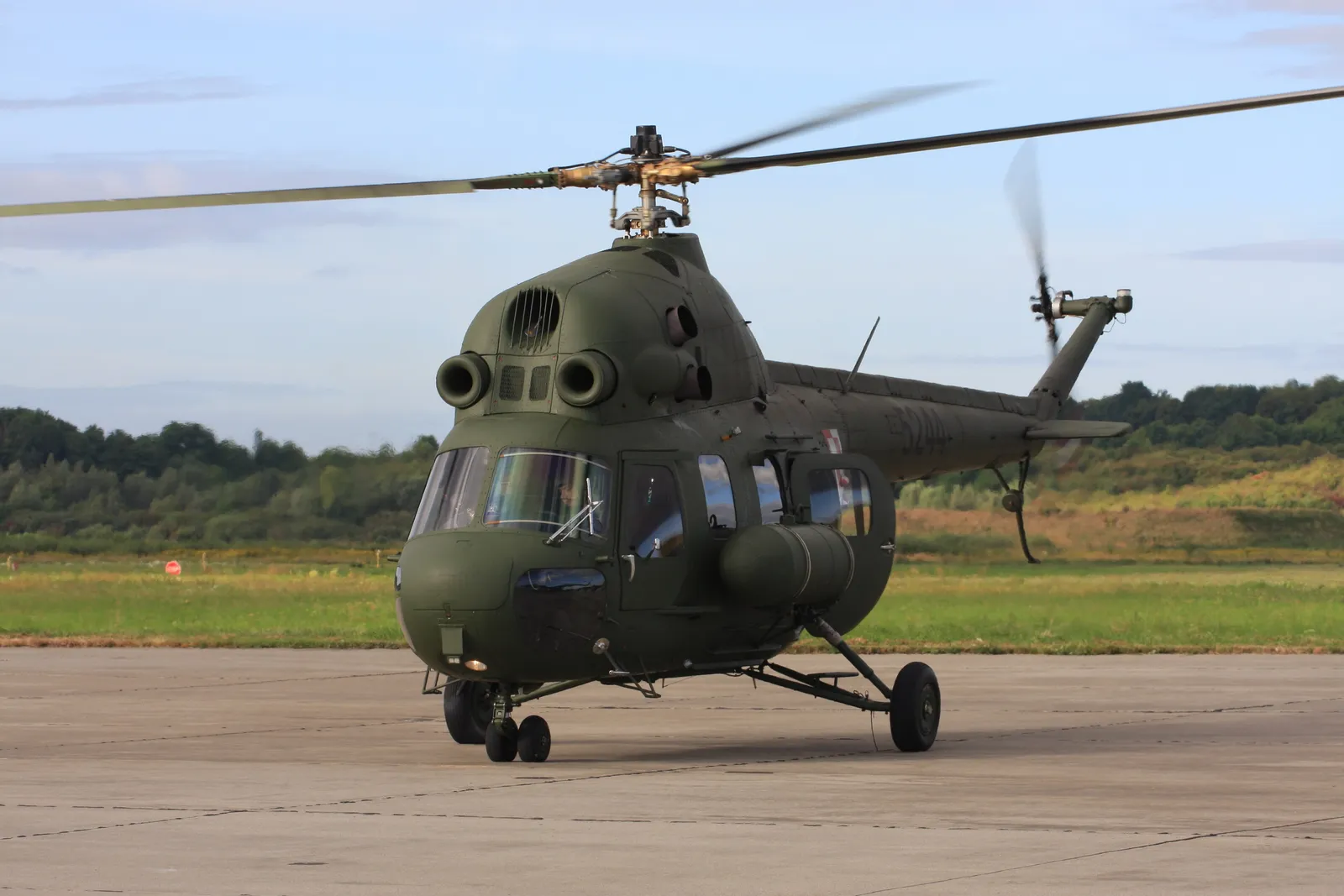
The Mi-2, NATO reporting name Hoplite, is a Soviet-designed light utility helicopter produced in Poland by PZL-Swidnik. It moved the Mi-1 light-helicopter concept to twin turboshaft power, giving operators a compact transport, training, rescue, reconnaissance, and limited armed-support platform. Cataloged conflict evidence ranges from Soviet and Nagorno-Karabakh inventory context to Ukrainian loss and transfer records and Myanmar reporting on junta air attacks.
Role in Conflicts
- Side
- Ukraine

Ukrainian Mi-2 training helicopters are visually documented among full-scale-invasion aircraft losses, including destroyed and captured examples; Slovakia and Latvia also transferred Mi-2 helicopters to Ukraine in 2022, with Slovak-supplied helicopters reported in Ukrainian armed-forces use.
Role details- Side
- Soviet Union and Afghan government forces


A study of Soviet airpower in Afghanistan cites Mi-2 Hoplites in the Soviet helicopter inventory in Afghanistan in 1986; the evidence supports Soviet fielding in theater, while specific Mi-2 mission tasking remains limited to light-helicopter support context.
- Side
- State Administration Council and allied forces

Myanmar reporting citing former air-force captains says junta forces used Mi-2 assault helicopters, alongside other aircraft, in air attacks in Sagaing and Magwe after the 2021 coup.
Profile / Specs
Profile
- Origin
- Soviet Union / Poland
- Built by
- WSK PZL-Swidnik
- Built in
- Poland
- Type
- Light twin-turbine utility and training helicopter
- Service note
- Introduced in the 1960s; retained in small numbers by some post-Soviet and former Eastern Bloc operators
- Designer
- Mil Moscow Helicopter Plant
- Designed
- Early 1960s; first prototype flight in September 1961
- Produced
- 1960s-1990s
- Number built
- More than 5,300 reported in specialist reference and museum sources
- Developed from
- Mi-1
Specifications
- Crew
- 2
- Passenger or cargo capacity
- Up to 8 passengers, 700 kg internal cargo, or 800 kg underslung load
- Engines
- Two Izotov GTD-350 turboshaft engines rated at about 330 kW each
- Cruise speed
- 185 km/h typical cruise; 210 km/h high-speed cruise
- Range
- 420 km operating range
- Flight ceiling
- 3,800 m
- Maximum takeoff weight
- 3,550 kg
- Rotor diameter
- 14.5 m main rotor
Variants
Mi-2 designations cover transport, rescue, reconnaissance, armed-support, anti-tank, and later modernization branches of the same light helicopter family. Polish-built armed variants use suffixes such as US, URN, and URP to distinguish gun, rocket, and anti-tank configurations, while Mi-2MSB identifies a Ukrainian Motor Sich re-engining and avionics modernization.
| Variant | Configuration | Designation notes |
|---|---|---|
| Mi-2T | Military transport variant | Military transport configuration within the Mi-2 family; Czech and specialist references describe the base helicopter's personnel, cargo, training, reconnaissance, and rescue roles. Sources: Mil Mi-2 - NATO code: HOPLITE, Mil Mi-2 helicopter - development history, photos, technical data |
| Mi-2US | Gunship / armed support variant | Armed support configuration with a fixed 23 mm NS-23KM cannon on the port side, 7.62 mm gun pods on side pylons, and additional cabin-mounted machine guns. Sources: Mil Mi-2 helicopter - development history, photos, technical data, Polish Aviation Museum WSK Mi-2URP |
| Mi-2URN Zmija | Rocket-armed reconnaissance and close-support variant | Combat-support derivative using two Mars 2 launchers for S-5 57 mm unguided rockets instead of the Mi-2US pylon-mounted gun pods; Aviastar dates service entry to 1973. Sources: Mil Mi-2 helicopter - development history, photos, technical data, Polish Aviation Museum WSK Mi-2URP |
| Mi-2URP Salamandra | Anti-tank variant | Anti-tank configuration with outriggers for four 9M14M Malyutka wire-guided missiles and four additional missiles carried in the cargo compartment; Aviastar dates service entry to 1976. Sources: Mil Mi-2 helicopter - development history, photos, technical data, Polish Aviation Museum WSK Mi-2URP |
| Mi-2URPG Gniewosz | Anti-tank / short-range air-defense derivative | Related Mi-2URP derivative fitted for four Gad launchers with 9M32 Strela-2 missiles in addition to the anti-tank configuration. Sources: Mil Mi-2 helicopter - development history, photos, technical data, Polish Aviation Museum WSK Mi-2URP |
| Mi-2MSB / Mi-2MSB-W | Ukrainian re-engined modernization and armed demonstrator | Motor Sich modernization replacing GTD-350 engines with AI-450M engines and upgraded avionics; the armed Mi-2MSB-W demonstrator added weapon pylons for 80 mm rocket launchers, grenade-launcher pods, optional machine-gun pods, flares, and an infrared jammer. Sources: Mi-2MSB - Ukrainian Combat Variant Of The Mi-2 Helicopter |
Carried Missiles
Anti-tank Mi-2 variants turned the light utility airframe into a missile carrier, but the available catalog relationship source supports compatibility rather than a specific conflict-use claim.
| Launched item | Item type | Launch evidence |
|---|---|---|
 | Wire-guided anti-tank missile | Armatec lists the 9M14 Malyutka as a missile that can be fired from Mi-2 helicopters, and Polish museum material identifies Mi-2URP launch rails for 9M14M Malyutka missiles. Sources: Armatec 9M14 Malyutka, Polish Aviation Museum WSK Mi-2URP |
 | 57 mm unguided rocket | Aviastar identifies the Mi-2URN as a combat-support and armed-reconnaissance version with two Mars 2 launchers for S-5 57 mm unguided rockets. Sources: Mil Mi-2 helicopter - development history, photos, technical data |
 | Short-range infrared-guided missile | Aviastar and Polish museum material describe Mi-2URP-derived configurations tested or fitted with Strela-2/Gad missiles, including the Mi-2URPG derivative. Sources: Mil Mi-2 helicopter - development history, photos, technical data, Polish Aviation Museum WSK Mi-2URP |
Timeline
Mi-2 Key Events
Mi-2 prototype flies
The first Mi-2 prototype flew in September 1961 as a turbine-powered successor to the Mi-1.
Sources: Mil Mi-2 - NATO code: HOPLITE, Mil Mi-2 helicopter - development history, photos, technical data
Development and production move to Poland
A 1964 agreement transferred further Mi-2 development, manufacture, and marketing to Poland, where PZL-Swidnik became the production center.
Sources: Mil Mi-2 - NATO code: HOPLITE, Mil Mi-2 helicopter - development history, photos, technical data, Polish Aviation Museum WSK Mi-2URP
First Polish-built Mi-2 flies
Aviastar reports the first Polish-built Mi-2 flight on 4 November 1965, after an earlier Swidnik assembly flight from Russian-supplied parts.
Sources: Mil Mi-2 helicopter - development history, photos, technical data, Polish Aviation Museum WSK Mi-2URP
Mi-2URN rocket variant enters service
The Mi-2URN armed reconnaissance and close-support configuration entered service with Mars 2 launchers for 57 mm S-5 rockets.
Sources: Mil Mi-2 helicopter - development history, photos, technical data
Mi-2URP anti-tank variant enters service
The Mi-2URP Salamandra anti-tank configuration entered service with 9M14M Malyutka missile rails and internal reloads.
Sources: Mil Mi-2 helicopter - development history, photos, technical data
Mi-2MSB-W armed demonstrator reported
Defence24 reported a Motor Sich Mi-2MSB armed configuration with AI-450M engines, weapon pylons, countermeasures, and planned Ukrainian National Guard interest.
Sources: Mi-2MSB - Ukrainian Combat Variant Of The Mi-2 Helicopter
Related Weapon Systems


Sources
Mil Mi-2 - NATO code: HOPLITEPublisher: Ministry of Defence of the Czech Republic | Note: Supports Mi-2 background, Polish production transfer, roles, engine data, capacity, and basic specifications. | Accessed: 2026-07-02Mil Mi-2 helicopter - development history, photos, technical dataPublisher: Aviastar | Note: Supports Mi-2 designation history, Polish production transfer, first Polish-built flight, transport and armed variant distinctions, and variant service-entry dates. | Accessed: 2026-07-02Polish Aviation Museum WSK Mi-2URPPublisher: Polish Aviation Museum | Note: Supports Polish Mi-2 production history, early Polish service, armed variant development, and Mi-2URP Malyutka armament details. | Accessed: 2026-07-02A Balancing Act or a Game Changer?Publisher: TRT World Research Centre | Note: Supports 2020 Nagorno-Karabakh Conflict direct fielded by context by comparing Azerbaijani and Armenian air forces in 2020 and listing Mi-2 helicopters in the conflict military-balance table. | Accessed: 2026-06-20Armed Forces of Azerbaijan and Military-Defense Industrial Cooperation with TurkiyePublisher: Defence Turkey | Note: Supports background inventory context for Azerbaijan by listing PZL Mi-2 Hoplite helicopters among Azerbaijan Air and Air Defense Forces rotary-wing equipment. | Accessed: 2026-06-20List Of Aircraft Losses During The Russian Invasion Of UkrainePublisher: Oryx | Note: Supports 2014 Russia-Ukraine War direct fielded by and captured equipment context by listing Ukrainian Mi-2 training helicopters destroyed and captured during the Russian invasion of Ukraine. | Accessed: 2026-07-02Slovakia Supplies Mi-17, Mi-2 Helicopters, Ammunition for Grad MLRS to UkrainePublisher: Defense Express | Note: Supports 2014 Russia-Ukraine War direct transferred to and used by context by reporting Slovakia's Mi-2 donation and stating the supplied helicopters were already being used by Ukraine's armed forces. | Accessed: 2026-07-02Latvia Delivered Mi-17 and Mi-2 Helicopters to UkrainePublisher: European Pravda | Note: Supports 2014 Russia-Ukraine War direct transferred to context by reporting Latvia's delivery of two Mi-2 helicopters to Ukraine's Air Force. | Accessed: 2026-07-02The Limits of Soviet AirpowerPublisher: Journal of Conflict Studies / University of New Brunswick | Note: Supports 1979 Soviet-Afghan War direct fielded by context by citing Mi-2 Hoplites in the Soviet helicopter inventory in Afghanistan in 1986. | Accessed: 2026-07-02Sky-High AtrocitiesPublisher: The Irrawaddy | Note: Supports 2021 Myanmar Civil War direct used by context by reporting Mi-2 assault helicopters among junta aircraft used in post-coup air attacks in Sagaing and Magwe. | Accessed: 2026-07-02Armatec 9M14 MalyutkaPublisher: Armatec | Note: Supports the Mi-2 as a helicopter launch platform for the 9M14 Malyutka. | Accessed: 2026-06-28Mi-2MSB - Ukrainian Combat Variant Of The Mi-2 HelicopterPublisher: Defence24 | Note: Supports Mi-2MSB and Mi-2MSB-W modernization details, including AI-450M engines, avionics upgrades, armament pylons, countermeasures, and proposed mission use. | Accessed: 2026-07-02File:Mil Mi-2 helicopter Nationaal Militair Museum 2019.jpgPublisher: Wikimedia Commons | Note: Supports image provenance and CC BY-SA 4.0 licensing for the primary Mi-2 gallery image. | Accessed: 2026-06-20File:Mi-2 Hoplite.JPGPublisher: Wikimedia Commons | Note: Supports image provenance and licensing for an additional Mi-2 Hoplite gallery image. | Accessed: 2026-06-20File:Mil Mi-2 Hoplite (7964796014).jpgPublisher: Wikimedia Commons | Note: Supports image provenance and CC BY-SA 2.0 licensing for an additional Mi-2 Hoplite gallery image. | Accessed: 2026-06-20