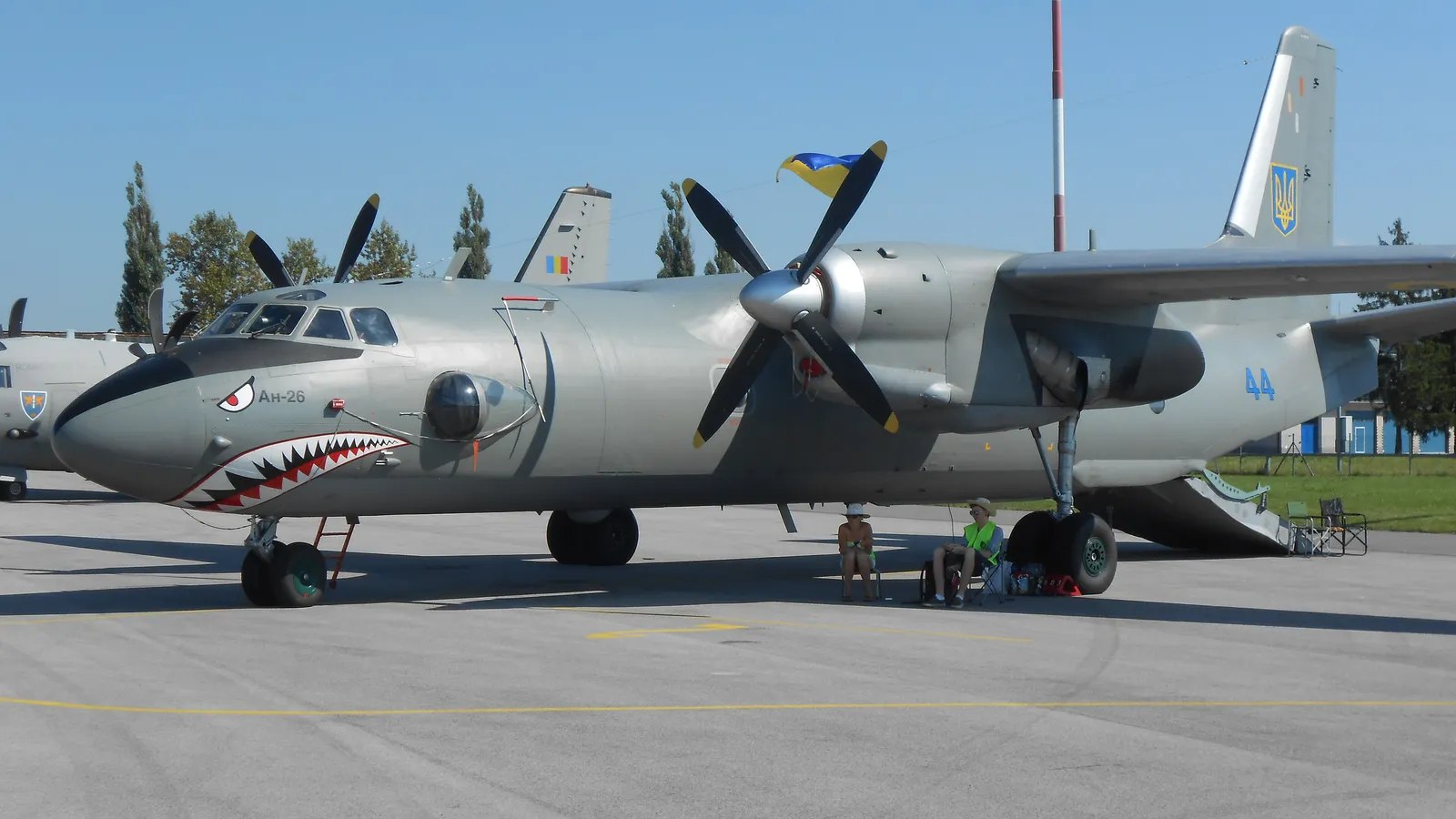


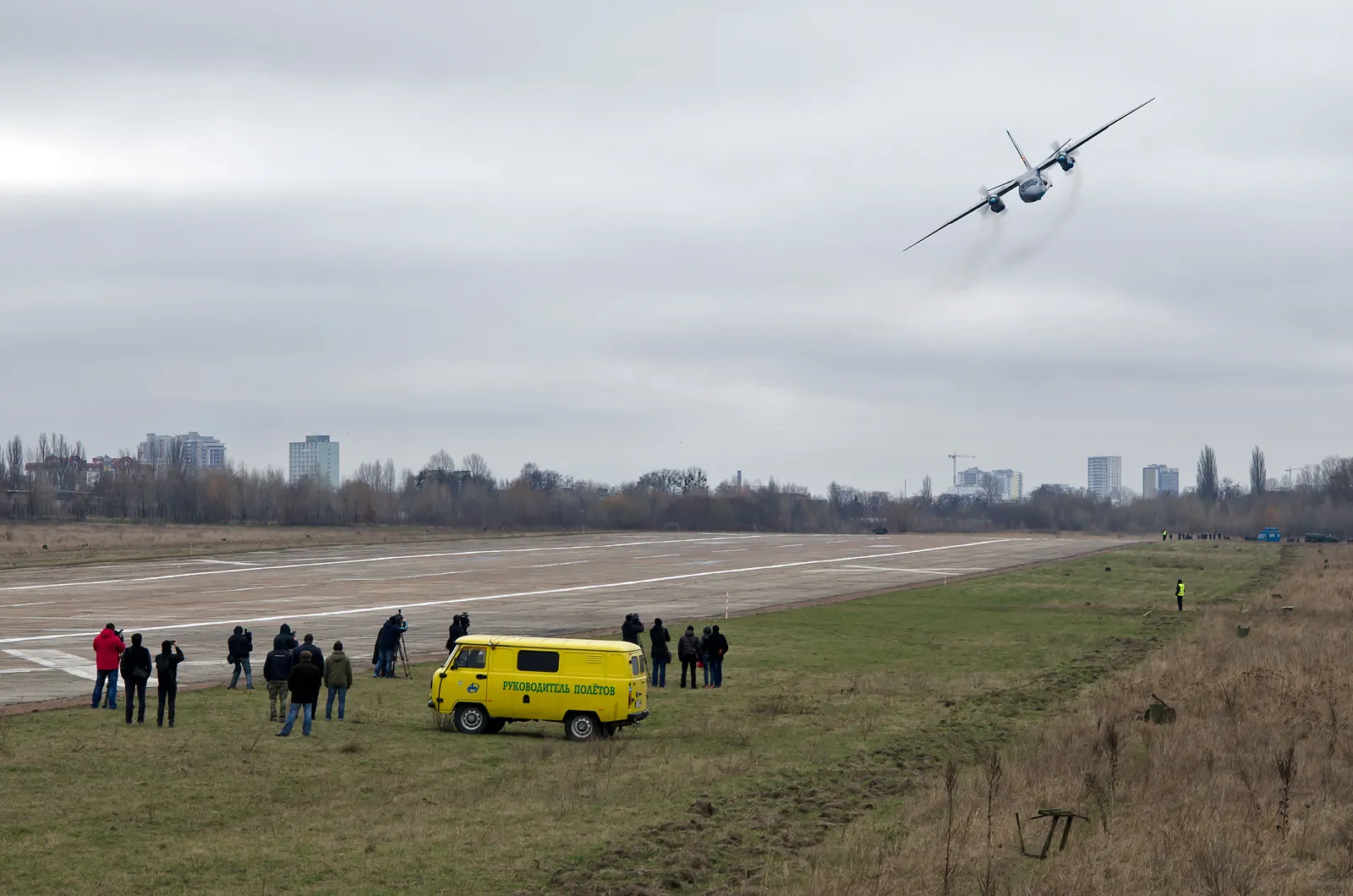
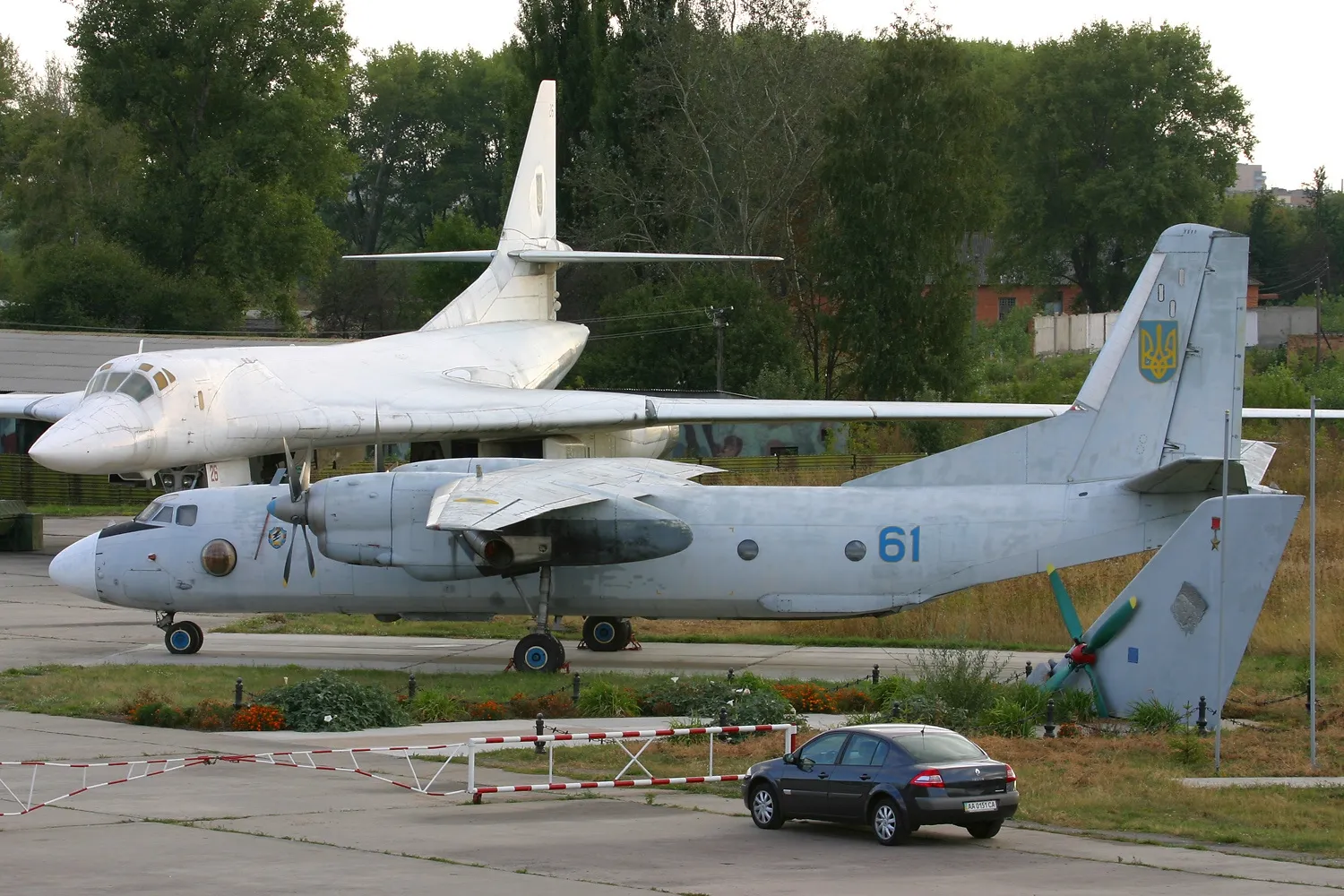
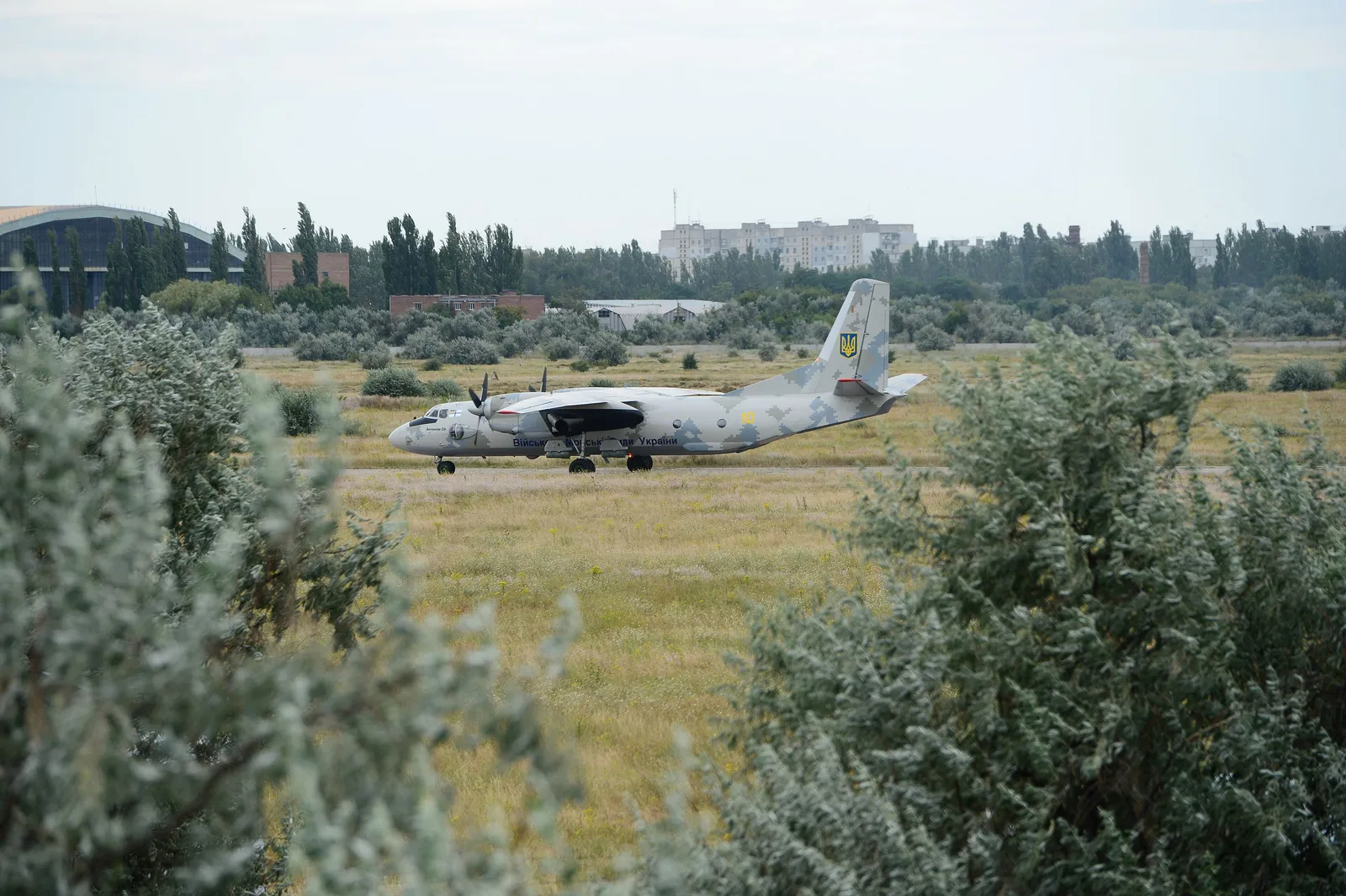
Ukraine operated the An-26 as a military transport aircraft in the 2014 Donbas fighting, including an aircraft shot down on July 14, 2014. Later Ukraine-linked reporting documented Russian An-26 transport aircraft destroyed or targeted in occupied Crimea during the full-scale war.
Role detailsSupport Equipment
An-26
Also known as
- Antonov An-26
- AN-26
- Curl
- NATO reporting name Curl
- Nastia
The An-26 is an Antonov-designed twin-turboprop tactical transport built around a rear cargo door and pressure ramp for rapid loading, parachute drops, and military cargo movement. Antonov records Kyiv production from 1969 to 1986, while conflict evidence places the type in Ukrainian, Syrian, Russian, Sudanese, and Libyan transport, resupply, improvised-bomber, and aircraft-loss contexts.
Role in Conflicts

Syrian government An-26 transport use is documented around the Abu al-Duhur airbase siege, including reports of a January 2015 Syrian army cargo aircraft carrying soldiers, food, and ammunition to the besieged airbase; Russia also lost an An-26 at Khmeimim airbase in 2018 during the Syria campaign.
Role details- Side
- Sudanese government and allied militias

UN Panel of Experts reporting links Sudanese Air Force An-26 tactical number 7717 at El Fasher to Type 1 improvised air-delivered munitions and assesses the aircraft as regularly used in an improvised bomber role in Darfur.

During the 2019-2020 Tripoli campaign, a Libyan National Army An-26, UP-AN601, was destroyed near Tarhuna on April 5, 2020; GNA-aligned reporting described the targeted Antonov-type cargo aircraft as carrying weapons and ammunition for Haftar's forces, while the LNA disputed the cargo.
Conflict Airlift And Bomber Roles
Most An-26 conflict evidence centers on transport, resupply, aircraft losses, and the vulnerability of rear-area airfields rather than direct air combat. Darfur is the major exception in the current record: UN investigators connected a Sudanese Air Force An-26 at El Fasher to improvised air-delivered munitions and assessed it as regularly used in an improvised bomber role.
Airlift pattern
Ukraine, Syria, Russia, and Libya records show the type moving troops, cargo, ammunition, or theater support around contested airbases and front-line corridors.
Darfur exception
The UN Panel of Experts tied An-26 tactical number 7717 to Type 1 improvised air-delivered munitions at El Fasher in 2013.
Tarhuna loss
Aviation Safety Network lists An-26 UP-AN601 as a Libyan National Army aircraft written off near Tarhuna on April 5, 2020.
Profile / Specs
Profile
- Origin
- Soviet Union / Ukraine
- Built by
- Antonov Design Bureau
- Type
- Twin-engine tactical transport aircraft
- Service note
- Cold War tactical transport design with continuing post-Soviet military service
- Designer
- Antonov Design Bureau
- Designed
- 1968-1969
- Produced
- 1969-1986
- Number built
- 1,398 aircraft, according to Antonov
- Developed from
- Antonov An-24RT
- Developed into
- Antonov An-32 and Chinese Y-7H/Y-14 family derivatives
Specifications
- Crew
- Multi-crew tactical transport aircraft; Antonov lists six personnel on the first flight
- Payload role
- Cargo, equipment, troops, and parachute delivery through a rear cargo door and pressure ramp
- Length
- 23.8 m
- Wingspan
- 29.20 m per Antonov; SKYbrary lists 29.90 m
- Height
- 8.58 m per Antonov; SKYbrary lists 8.60 m
- Wing area
- 74.98 sq m
- Cruise speed
- 440 km/h
- Operational range
- 1,100 km
- Operational ceiling
- 9,000 m
- Powerplant
- Two Ivchenko AI-24VT turboprops plus one RU-19-300 auxiliary turbojet in the starboard nacelle, per SKYbrary
Cargo Ramp And Airlift Role
The An-26's catalog importance is its battlefield logistics role rather than a primary strike mission. Antonov describes a redesigned rear fuselage with a large cargo door and pressure ramp that can lower to the ground or slide under the fuselage, supporting quick loading, oversized cargo movement, and parachute delivery of cargo or personnel.
Transport role
Twin-turboprop light/tactical transport for cargo, troops, and parachute-drop missions.
Loading feature
Rear pressure ramp and cargo door distinguish it from the An-24RT airframe it was based on.
Production base
Antonov records serial manufacture at the aviation plant in Kyiv from 1969 to 1986.
Variants
The An-26 is the rear-ramp light transport member of the An-24 family. Open sources use An-26 for the baseline tactical transport and list later civil cargo, passenger/cargo conversion, communications, ELINT, training, firefighting, and Chinese Y-7H/Y-14 derivative designations; some specialist designations appear only as small-batch or one-off conversions.
| Variant | Configuration | Designation notes |
|---|---|---|
| An-26B | Civil cargo version | Reference material identifies the An-26B as a civil cargo variant, while GlobalSecurity records continuing AN-26/AN-26B cargo-aircraft certification context in Europe. Sources: Wikipedia An-26, GlobalSecurity An-26 CURL |
| An-26-100 / An-26B-100 | Convertible passenger/cargo conversion | The -100 conversions are listed as passenger/cargo modifications carried out from An-26 and An-26B airframes at Kyiv from 1999. Sources: Wikipedia An-26, GlobalSecurity An-26 CURL |
| An-26RT / An-26RTR | Signals-intelligence and relay variants | The RT/RTR designations appear in reference variant lists for radio relay, electronic-intelligence, or related special-mission configurations. Sources: Wikipedia An-26 |
| An-26Sh | Navigator trainer | The An-26Sh appears in variant lists as a navigator trainer, with open references describing a Kyiv-built training subfleet. Sources: Wikipedia An-26 |
| An-26LP / An-26P | Firefighting conversions | The firefighting conversions used An-26 airframes for water or suppressant delivery; GlobalSecurity specifically describes the AN-26P with external 4,000-liter discharge tanks. Sources: Wikipedia An-26, GlobalSecurity An-26 CURL |
| Xi'an Y-7H / Y-14 | Chinese military transport derivative | SKYbrary lists Y-7H as a manufactured-as designation for the AN26, while Wikipedia describes Y-14 as the initial Chinese copy designation later folded into the Y-7 series. Sources: SKYbrary AN26 technical data, Wikipedia An-26 |
Timeline
An-26 Key Events
AN-26 development authorized
Antonov dates the joint Soviet Ministry of Aviation Industry and Air Force resolution for An-26 development to March 12, 1968.
Sources: Antonov AN-26 history
First flight
Antonov records the An-26's first flight on May 21, 1969, with Y. N. Ketov as pilot in command.
Sources: Antonov AN-26 history
First production aircraft rolls out
Antonov records the first production An-26 leaving the Kyiv assembly shop on August 29, 1969.
Sources: Antonov AN-26 history
Polish air transport service begins
Antonov's chronology says seven An-26 aircraft entered service with the 1st Squadron of Poland's 13th Air Transport Regiment in 1972.
Sources: Antonov AN-26 history
Kyiv production total closes
Antonov states that 1,398 An-26 aircraft were built in Kyiv from 1969 to 1986.
Sources: Antonov AN-26 history
Passenger/cargo conversions appear
Open reference lists describe An-26-100 and An-26B-100 passenger/cargo conversions from existing airframes beginning in 1999 or the early 2000s.
Sources: Wikipedia An-26, GlobalSecurity An-26 CURL
UN panel documents Darfur An-26 loading
A UN Panel of Experts report says an An-26 with tactical number 7717 was photographed at El Fasher being loaded with Type 1 improvised air-delivered munitions.
Sources: UN Panel of Experts on Sudan 2014 final report
LNA-linked An-26 destroyed near Tarhuna
Aviation Safety Network lists An-26 UP-AN601 as a Libyan National Army aircraft written off near Tarhuna, while Anadolu reported a GNA-aligned claim that an Antonov-type cargo aircraft carrying arms for Haftar was struck after landing.
Sources: ASN Libya aircraft losses, Anadolu Libyan Army hits cargo plane for Haftar
Media
An-26 Videos
Related Weapon Systems


Sources
Antonov AN-26 historyPublisher: Antonov | Note: Supports the An-26 identity, light transport role, An-24RT basis, rear cargo ramp design, Kyiv production, production total, chronology, and Antonov-listed dimensions and performance figures. | Accessed: 2026-07-02SKYbrary AN26 technical dataPublisher: SKYbrary Aviation Safety | Note: Supports the AN26 tactical transport description, An-24 development context, Y-7H manufactured-as designation, engine data, and dimensions/performance cross-checks. | Accessed: 2026-07-02Wikipedia An-26Publisher: Wikipedia | Note: Used as a starting reference layer for aliases, NATO reporting name, variant terminology, family relationships, operators, and source leads; core specifications and production claims are backed by Antonov and SKYbrary where possible. | Accessed: 2026-07-02GlobalSecurity An-26 CURLPublisher: GlobalSecurity.org | Note: Supports additional An-26 background including An-24 development context, ramp/cargo role, AN-26P firefighting conversion context, Kyiv production, European type-certificate context, and AN-26-100 conversion context. | Accessed: 2026-07-02Reuters Ukrainian AN-26 downed July 2014Publisher: Reuters via Kyiv Post | Note: Supports 2014 Russia-Ukraine War direct conflict-use context by reporting that a Ukrainian AN-26 transport aircraft participating in the campaign against separatist rebels was shot down on July 14, 2014. | Accessed: 2026-07-02AP Ukraine An-26 shootdownPublisher: Associated Press | Note: Supports 2014 Russia-Ukraine War direct conflict-use context by reporting that a Ukrainian Antonov-26 military transport was shot down along Ukraine's eastern border during the Donbas fighting. | Accessed: 2026-07-02OSCE Ukraine FSC Statement July 2014Publisher: Organization for Security and Co-operation in Europe | Note: Supports 2014 Russia-Ukraine War direct conflict-use context by recording Ukraine's statement that an AN-26 of the armed forces of Ukraine was shot down on July 14, 2014, in the ATO zone. | Accessed: 2026-07-02Kyiv Independent Russian An-26 Crimea strikePublisher: The Kyiv Independent | Note: Supports 2014 Russia-Ukraine War direct conflict-use context by reporting Ukrainian military-intelligence claims that Ukrainian drones destroyed Russian An-26 transport aircraft and radar systems in occupied Crimea in September 2025. | Accessed: 2026-07-02Oryx Abu ad-Duhor Airbase SiegePublisher: Oryx | Note: Supports 2011 Syrian Civil War direct conflict-use context by describing SyAAF An-26 and Mi-8/17 resupply flights to the besieged Abu ad-Duhor airbase. | Accessed: 2026-07-02UPI Syrian An-26 Abu al-Duhur crashPublisher: UPI | Note: Supports 2011 Syrian Civil War direct conflict-use context by reporting that a Syrian military An-26 crashed near besieged Abu al-Duhur while carrying soldiers, food, and ammunition, with government and Al-Qaida-linked accounts differing over the cause. | Accessed: 2026-07-02VOA Syrian army cargo plane crashPublisher: Voice of America | Note: Supports 2011 Syrian Civil War direct conflict-use context by describing the Syrian army cargo aircraft crash at Abu al-Duhur, its cargo of food and ammunition, and competing bad-weather versus Nusra shootdown claims. | Accessed: 2026-07-02Al Jazeera Russian An-26 Syria crashPublisher: Al Jazeera | Note: Supports 2011 Syrian Civil War direct conflict-use context by reporting the Russian Defense Ministry account of a Russian An-26 transport aircraft crash at Khmeimim airbase during Russia's Syria deployment. | Accessed: 2026-07-02UN Panel of Experts on Sudan 2014 final reportPublisher: United Nations Security Council | Note: Supports 2003 War in Darfur direct conflict-use context by documenting Sudanese Air Force An-26 tactical number 7717 at El Fasher being loaded with Type 1 improvised air-delivered munitions and assessing the aircraft as regularly used in an improvised bomber role. | Accessed: 2026-07-05Reeves Antonov cargo planes as bombersPublisher: Sudan Research, Analysis, and Advocacy | Note: Supports 2003 War in Darfur direct conflict-use context by identifying the An-26 as a Sudanese Armed Forces aircraft deployed in Darfur and describing Antonov cargo aircraft used in aerial assaults with crude bombs. | Accessed: 2026-07-05Anadolu Libyan Army hits cargo plane for HaftarPublisher: Anadolu Agency | Note: Supports 2014 Second Libyan Civil War direct conflict-use context by reporting a GNA-aligned claim that an Antonov-type cargo aircraft carrying weapons and ammunition for Haftar-aligned forces was targeted after landing at Tarhuna in April 2020. | Accessed: 2026-07-05ASN Libya aircraft lossesPublisher: Aviation Safety Network | Note: Supports 2014 Second Libyan Civil War direct conflict-use context by listing Antonov An-26 UP-AN601 as a Libyan National Army aircraft written off near Tarhuna on April 5, 2020. | Accessed: 2026-07-05Wikimedia Commons Ukrainian Air Force An-26 imagePublisher: Wikimedia Commons | Note: Supports image provenance and licensing for the primary Ukrainian Air Force An-26 gallery image; Commons credits Andrej-airliner and lists CC BY-SA 4.0 licensing. | Accessed: 2026-07-02Wikimedia Commons Ukrainian An-26 Svyatoshino imagePublisher: Wikimedia Commons | Note: Supports image provenance and licensing for the primary Ukrainian Air Force An-26 gallery image; Commons credits Vasiliy Koba and lists CC BY-SA 4.0 licensing with VRT permission. | Accessed: 2026-07-02Wikimedia Commons Ukrainian An-26 Poltava imagePublisher: Wikimedia Commons | Note: Supports image provenance and licensing for the additional Ukrainian Air Force An-26 gallery image; Commons credits Oleg V. Belyakov and lists CC BY-SA 3.0/GFDL licensing with VRT permission. | Accessed: 2026-07-02Wikimedia Commons Ukrainian Navy An-26 Sea Breeze 2016 imagePublisher: Wikimedia Commons | Note: Supports image provenance for a Ukrainian Navy An-26 photographed during Sea Breeze 2016; Commons credits U.S. Navy Mass Communication Specialist 1st Class Justin Stumberg and marks it public domain as a U.S. Navy work. | Accessed: 2026-07-05