Support Equipment

An-22

Also known as
  • Antonov An-22
  • AN-22
  • An-22 Antei
  • An-22 Antey
  • Antei
  • Antey
  • Antheus
  • NATO reporting name Cock
  • Cock

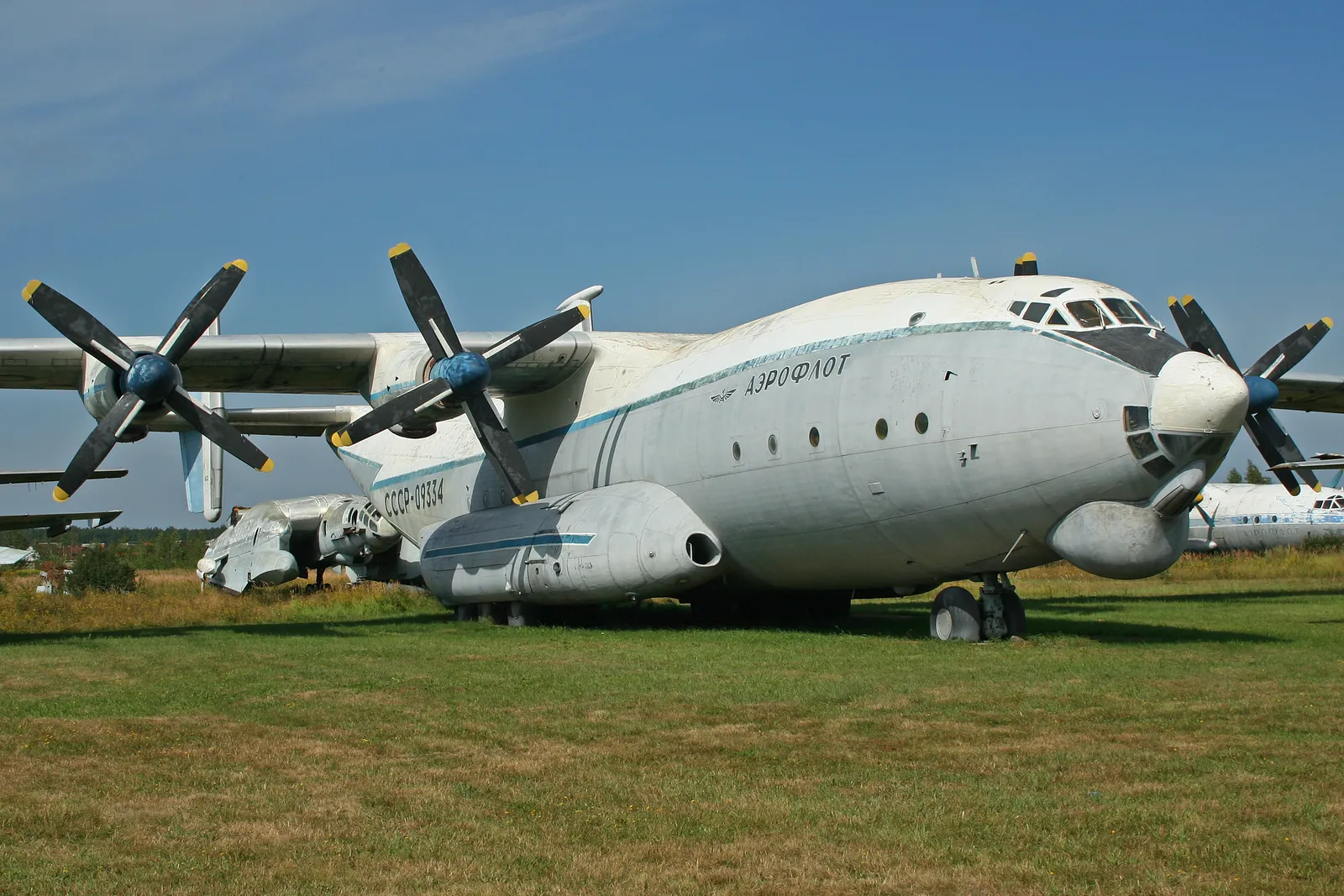
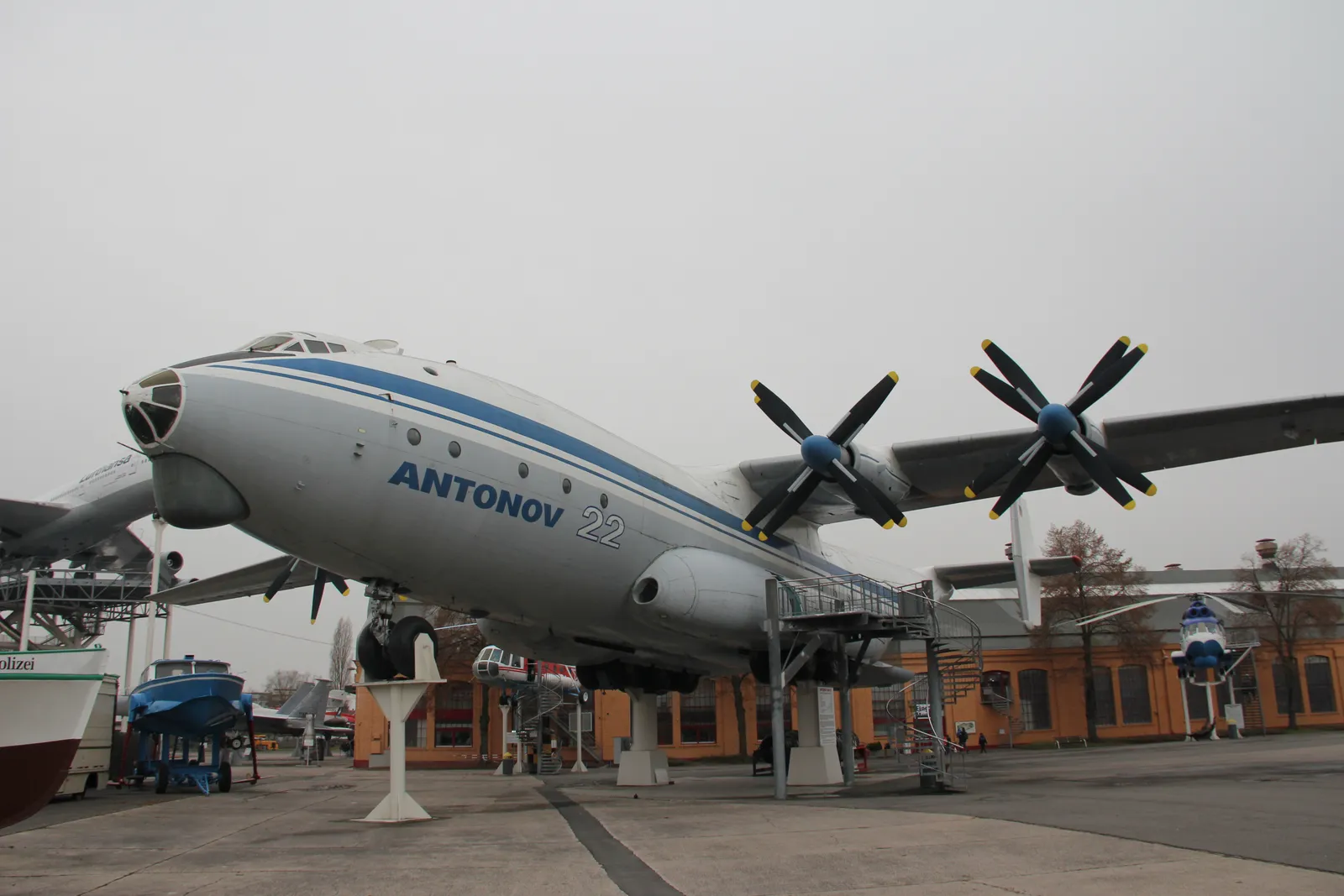
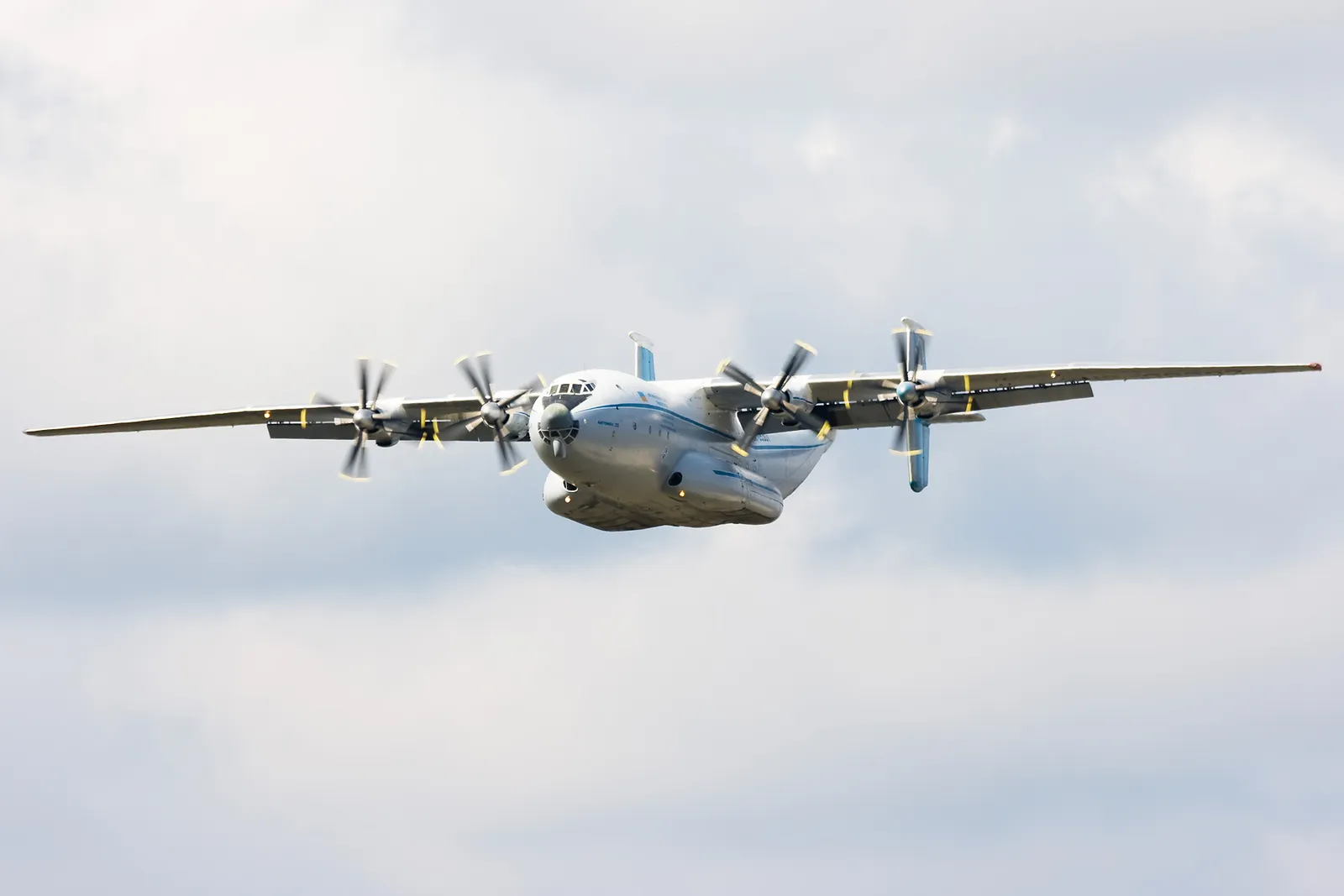
The An-22 is an Antonov-designed Soviet heavy military transport aircraft built around four Kuznetsov NK-12MA turboprops and rough-field heavy-lift operations. Antonov records its first flight on 27 February 1965, serial production at Tashkent from 1965 to 1976, and later use as an outsized component carrier for the An-124 and An-225 programs.

Role in Conflicts

Side
EgyptSyria

Soviet Military Transport Aviation used An-22 sorties in the 1973 Arab-Israeli war airlift from the USSR to the Middle East, moving personnel, cargo, military equipment, and weapons for Egypt and Syria.

Side
Soviet Union and Afghan government forces

Soviet forces used An-22s in the initial Kabul airlift and later regular Afghanistan transport missions carrying military cargo, food, and personnel; open sources also describe An-22 crews adapting steep approaches and departures at Afghan airfields under MANPADS threat.

Side
Russia

A Tver-based An-22 is described as one of the first aircraft to land at Grozny airport after Russian forces retook it in 1995, applying airfield procedures learned during Afghan operations.

Antonov Airlines An-22A UR-09307 was substantially damaged while parked at Kyiv-Gostomel during Russia's February 24, 2022 attempt to seize the airport; this row documents a Ukraine-war ground-damage case, not confirmed operational sorties.

Role details
Profile / Specs

Profile

Origin
Soviet Union / Ukraine
Type
Heavy turboprop military transport aircraft
Service note
Cold War strategic airlifter with post-Soviet heavy-cargo and military transport service
Designer
Antonov Design Bureau
Designed
1960-1965
Produced
1965-1976
Number built
66 serial aircraft according to Antonov; 68 commonly reported when prototypes are included

Specifications

Crew
5
Configuration
Four-engine high-wing turboprop transport with twin tail
Engines
4 x Kuznetsov NK-12MA turboprops with eight-blade contra-rotating propellers
Length
57.84 m
Wingspan
64.40 m
Height
12.54 m
Wing area
345 sq m
Cruise speed
580 km/h
Operational range
5,225 km
Operational ceiling
9,100 m
Maximum takeoff weight
250,000 kg
Maximum payload
Up to 80 tonnes
Heavy-Lift Design Notes

The An-22 combined a high-mounted wing, four NK-12MA turboprops with contra-rotating propellers, a large rear loading ramp, and landing gear suited to austere fields. Its cargo role centered on loads too bulky for smaller transports, including heavy vehicles and large aircraft components.

Rough-field role

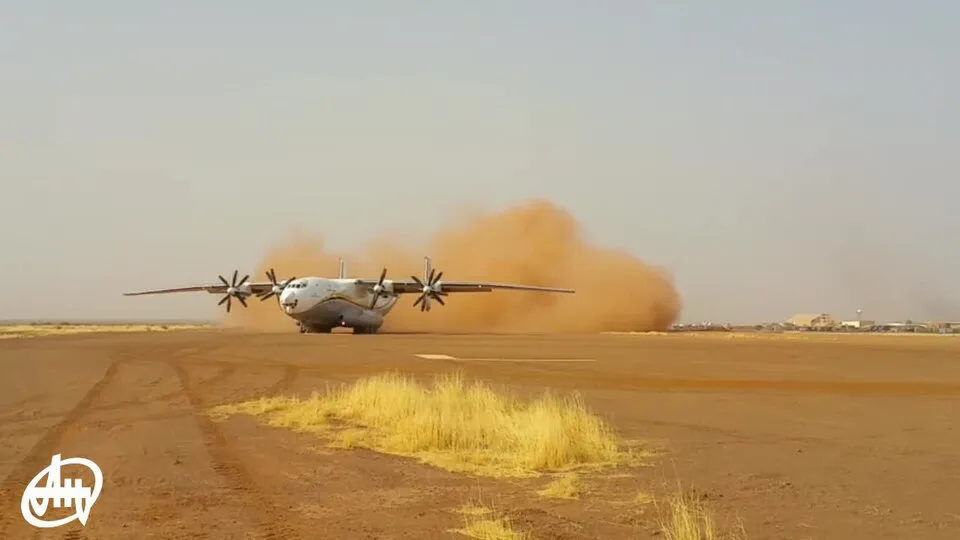
Antonov emphasizes the aircraft's ability to operate from unpaved runways while carrying large cargo to remote areas.

External loads

The Antei later carried An-124 and An-225 wing assemblies externally between Tashkent and Kyiv.

Variants

The An-22 family includes the baseline transport, the improved An-22A, external-load conversion work, and several unbuilt studies.

VariantConfigurationDesignation notes
An-22AImproved production transport

Updated production standard with equipment and systems changes; GlobalSecurity describes state testing in 1972 and later production at Tashkent.

Sources: GlobalSecurity An-22 variants

An-22PZOversized component carrier conversion

External-load conversion used to move large Antonov wing sections for the An-124 and An-225 programs.

Sources: Antonov AN-22 history, GlobalSecurity An-22 variants

An-22 AmphibianUnbuilt amphibious transport study

Projected water-capable transport variant studied from the Model 100/An-22 design but not produced.

Sources: GlobalSecurity An-22 variants

Timeline

An-22 Key Events

  1. Model 100 development authorized

    Antonov dates the Soviet decision to develop the Model 100 military transport aircraft to 13 October 1960.

    Sources: Antonov AN-22 history

  2. First flight

    The AN-22 Antei made its first flight with Yurii Kurlin leading the test crew.

    Sources: Antonov AN-22 history

  3. Tashkent production ordered

    The Soviet aviation ministry ordered An-22 series production at the Valerii Chkalov Aviation Production Association in Tashkent.

    Sources: Antonov AN-22 history

  4. Paris Air Show debut

    The AN-22 arrived at Le Bourget for the 26th International Paris Air Show.

    Sources: Antonov AN-22 history

  5. Payload-altitude record

    Antonov records the aircraft lifting more than 100 tonnes to 7,848 m, one of the Antei program's record-setting flights.

    Sources: Antonov AN-22 history

  6. Outsized Antonov component transport begins

    Antonov says the Antei began carrying oversized components for the An-124 and later An-225 programs.

    Sources: Antonov AN-22 history

  7. Antonov Airlines An-22A damaged at Hostomel

    Aviation Safety Network records substantial damage to An-22A UR-09307 while it was standing at Kyiv-Gostomel during Russia's assault on the airport.

    Sources: ASN An-22A UR-09307 Hostomel damage

Media
Related Weapon Systems
2S5 Giatsint-S, 152 mm tracked self-propelled gun, ArtilleryArtillery2S5 Giatsint-S152 mm tracked self-propelled gunThe 2S5 Giatsint-S is a Soviet 152 mm tracked self-propelled gun built for long-range corps- and army-level fire support. Its open rear-mounted 2A37 gun gives it greater reach than many older Soviet 152 mm systems, while its tracked chassis and stabilizing rear spade support shoot-and-move artillery work. Sources document 2S5 use or fielding context from Afghanistan and Chechnya through the 2014 Russia-Ukraine War, with additional wartime transfer evidence for Ethiopia during the Eritrean-Ethiopian War.
Mi-2, Light twin-turbine utility and training helicopter, Aircraft & UAVsAircraft & UAVsMi-2Light twin-turbine utility and training helicopterThe Mi-2, NATO reporting name Hoplite, is a Soviet-designed light utility helicopter produced in Poland by PZL-Swidnik. It moved the Mi-1 light-helicopter concept to twin turboshaft power, giving operators a compact transport, training, rescue, reconnaissance, and limited armed-support platform. Cataloged conflict evidence ranges from Soviet and Nagorno-Karabakh inventory context to Ukrainian loss and transfer records and Myanmar reporting on junta air attacks.
1V1003 command-observation vehicle, Artillery command-observation vehicle, Support EquipmentSupport Equipment1V1003 command-observation vehicleArtillery command-observation vehicleThe 1V1003 is the BTR-80-based command-observation vehicle in Russia's 1V198 Kanonada automated artillery fire-control system, used to help detect targets and automate fire missions for artillery batteries. Rostec says the 1V198 package was developed and produced by VNII Signal and includes 1V1003 vehicles with 1V1004 command-staff vehicles; open-source loss tracking and Ukrainian reporting documented at least one Russian 1V1003 captured during the 2022 phase of the Russia-Ukraine War.
1V110 BM-21 Grad battery command vehicle, Artillery battery command and fire-control vehicle, Support EquipmentSupport Equipment1V110 BM-21 Grad battery command vehicleArtillery battery command and fire-control vehicleThe 1V110 Bereza is the senior battery officer's command vehicle in the Soviet 1V17 Mashina-B artillery fire-control complex, used with towed and rocket-artillery units including BM-21 Grad batteries. Built on a GAZ-66 truck chassis, it carries navigation, communications, meteorological, and fire-control equipment for battery-level coordination; Oryx has documented Russian 1V110 BM-21 Grad battery command vehicles among losses in the 2014 Russia-Ukraine War.
1V119 Reostat, Airborne artillery reconnaissance and fire-control vehicle, Support EquipmentSupport Equipment1V119 ReostatAirborne artillery reconnaissance and fire-control vehicleThe 1V119 Reostat is a Soviet airborne, amphibious tracked artillery reconnaissance and fire-control vehicle based on the BTR-D chassis. Developed in the late 1970s for Soviet airborne artillery units, it combined observation, navigation, communications, and ballistic fire-control equipment to support self-propelled artillery formations, especially 2S9 Nona batteries. OSCE monitoring and Ukrainian reporting document Ukrainian 1V119s in the Donbas phase of the 2014 Russia-Ukraine War, while visual-loss records and defense reporting document Russian examples destroyed or captured after the 2022 full-scale invasion.

Sources