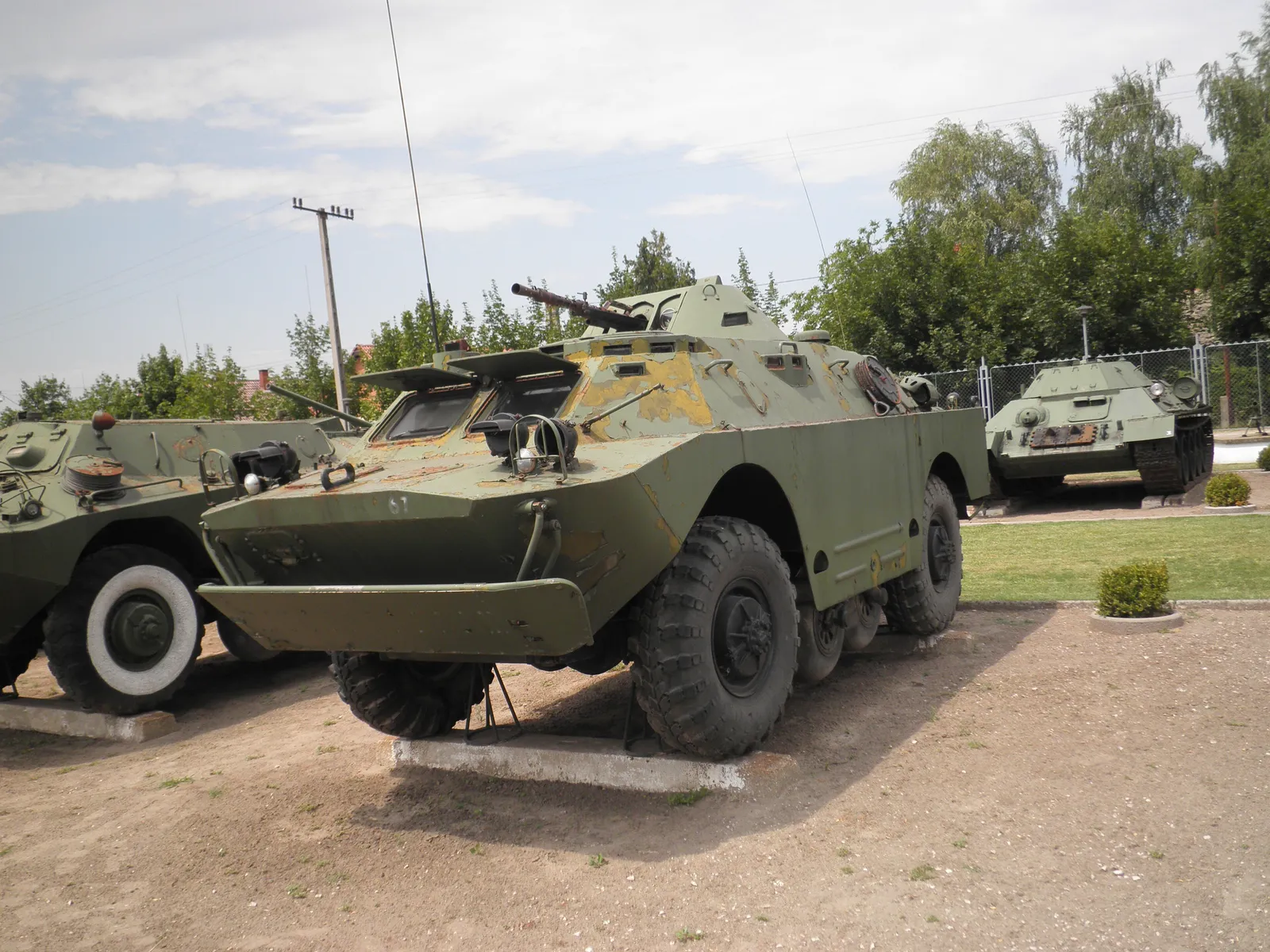


Oryx documents BRDM-2-family losses on both sides of the full-scale war, including Russian and Ukrainian BRDM-2RKhb chemical reconnaissance vehicles as well as base and modernized scout-car variants.
Role detailsArmored Vehicles
BRDM-2
Also known as
- BRDM-2M/A
- BRDM-2M(A)
- BRDM-2M
- BRDM-2A
- BRDM-2RKh
- BRDM-2RKhA
- BRDM-2RKhB
- BRDM-2-RKhb
- BRDM-2-RKha
- GAZ-41-08
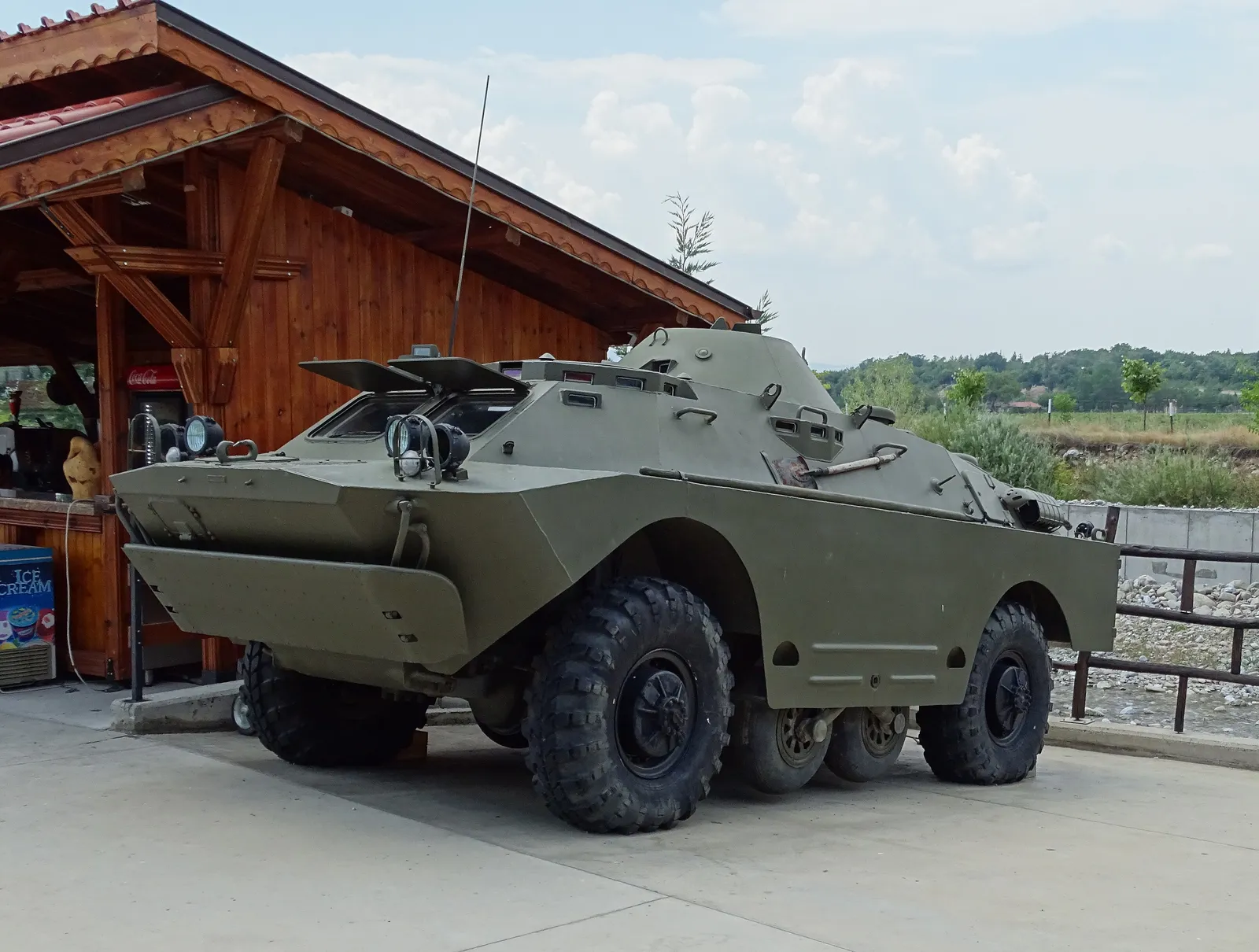
The BRDM-2 is a Soviet amphibious armored scout car built for reconnaissance, patrol, liaison, and specialist battlefield-support tasks. Its family includes radiological and chemical reconnaissance versions such as BRDM-2RKh and BRDM-2RKhb, which add contamination-detection and marking equipment to the scout-car chassis. Oryx loss records keep both base and chemical reconnaissance variants visible in the Russia-Ukraine War, while older export fleets appear in Nagorno-Karabakh, Yemen, and other post-Soviet or Soviet-supplied conflicts despite the vehicle's light armor.
Role in Conflicts

Armenian/Artsakh forces fielded BRDM-2 scout cars during the 2020 fighting; visually documented losses include one destroyed vehicle and five captured vehicles.

Oryx lists BRDM-2 scout cars in Yemen's pre-war army inventory and identifies the list as equipment available to Yemeni parties on the battlefield after the 2014-2015 Houthi takeover.
Role detailsProfile / Specs
Profile
- Origin
- Soviet Union
- Type
- Amphibious armored scout car
- Service note
- Cold War design, still used in post-Soviet arsenals
- Designer
- V. K. Rubtsov / Dedkov OKB
- Designed
- Early 1960s
- Produced
- 1962-1989
- Number built
- About 9,400 including variants
Specifications
- Crew
- 4
- Armament
- 14.5 mm KPVT heavy machine gun with coaxial 7.62 mm PKT machine gun
- Weight
- About 7,000 kg combat load
- Dimensions
- 5.75 m long, 2.35 m wide, 2.31 m high
- Engine
- GAZ-41 V8 petrol engine, 140 hp
- Mobility
- 4x4 wheeled chassis with retractable belly wheels; about 100 km/h road speed and 750 km road range
- Amphibious capability
- Water-jet propulsion, about 10 km/h in water
- Protection
- Welded steel armor against small-arms fire and shell splinters
- Radiological/chemical reconnaissance fit
- BRDM-2RKh/RKha versions carried rear pole and flag dispensers for marking contaminated lanes; BRDM-2RKhb is described as a chemical reconnaissance version with twin 7.62 mm PKT machine guns
Modernization Pattern
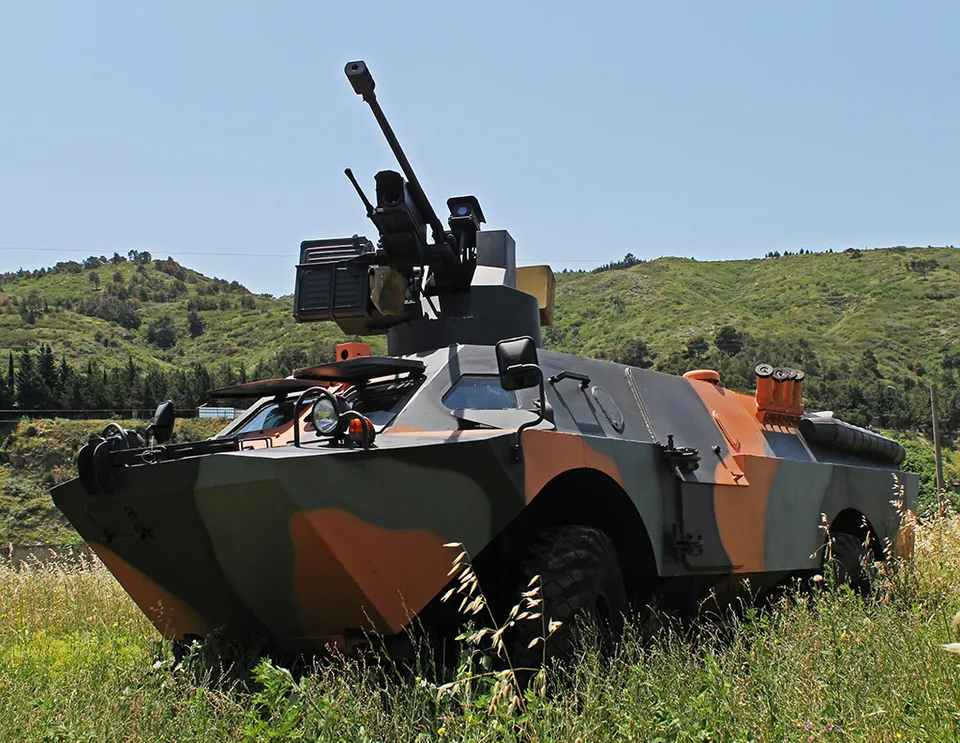
BRDM-2 modernization programs usually try to solve the same old vehicle problems: difficult roof-hatch access, outdated petrol powertrain, limited sensors, and light protection. The Arzamas BRDM-2M/A approach trades the original auxiliary belly wheels for side hatches and updates the running gear, while newer Ukrainian BRDM-2M work goes further by adding remote-control architecture, cameras, a stronger engine, and a stabilized remote weapon station.
BRDM-2M/A
Arzamas modernization with side hatches, diesel power, and BTR-80-derived suspension elements.
Ukrainian BRDM-2M
2026 rebuild shown with 360-degree cameras, 300 hp engine, ZF automatic transmission, remote driving, and MBU-1 weapon station.
Polish BRDM-2M-96i
1997 Polish diesel-engine modernization with new brakes, part of a wider national upgrade line.
Radiological And Chemical Reconnaissance Versions
The BRDM-2RKh and BRDM-2RKhb adapted the BRDM-2 scout-car chassis for contaminated-area reconnaissance rather than troop transport. Army Guide separates the earlier BRDM-2-RKha, with pole and flag dispensers on the rear corners and the standard heavy-machine-gun armament, from the BRDM-2-RKhb, which it describes as another chemical reconnaissance version armed only with twin 7.62 mm PKT machine guns. Oryx lists BRDM-2RKhb chemical reconnaissance vehicles among visually documented Russian and Ukrainian equipment losses in the Russia-Ukraine War.
Mission equipment
Lane-marking poles and flags allowed chemical reconnaissance crews to mark contaminated ground from the armored vehicle.
Armament split
The RKh/RKha description keeps the standard 14.5 mm weapon fit, while the RKhb description substitutes twin 7.62 mm PKT machine guns.
Conflict visibility
Both Russian and Ukrainian RKhb losses are listed separately from generic BRDM-2 losses in Oryx's full-scale invasion records.
Variants
BRDM-2 designations cover the base Soviet scout car, specialist command or reconnaissance vehicles, missile-carrier derivatives, and multiple national modernization packages. BRDM-2RKh and BRDM-2RKhb are radiological and chemical reconnaissance members of the same chassis family rather than separate combat-vehicle designs.
| Variant | Configuration | Designation notes |
|---|---|---|
| BRDM-2M/A | Arzamas modernization | The Arzamas modernization removed the auxiliary belly wheels to make room for BTR-70-style side hatches, used a D-245.9 diesel engine, and paired the rebuild with BTR-80-derived suspension elements. Sources: Military Review BRDM-2 Modernization |
| BRDM-2M | Ukrainian remote-control modernization | ArmSpetsTekhnolohiya's 2026 BRDM-2M rebuild adds a redesigned hull, 360-degree camera coverage, 300 hp engine, ZF automatic transmission, remote-control architecture, and an MBU-1 remote weapon station. Sources: Defense Express Ukrainian BRDM-2M, UNITED24 BRDM-2M |
| BRDM-2M-96i | Polish diesel modernization | The National Defence University of Ukraine describes the BRDM-2M-96i as a 1997 Polish modernization with an Iveco Aifo 8040 diesel engine and new brakes. Sources: NDUU BRDM-2 |
 | Later/export modernization | Army Recognition describes BRDM-2MS as an improved modernization with removed auxiliary wheels, added armor, new sights and cameras, a 150 hp engine, and export users including Myanmar. Sources: Army Recognition BRDM-2MS |
| BRDM-2RKh / BRDM-2RKhb | Radiological/chemical reconnaissance variant | Army Guide describes BRDM-2-RKha as a chemical reconnaissance version with rear lane-marking pole and flag dispensers that retained the 14.5 mm gun; it describes BRDM-2-RKhb as another chemical reconnaissance version armed only with twin 7.62 mm PKT machine guns. Oryx separately identifies BRDM-2RKhb chemical reconnaissance vehicle losses in the Russia-Ukraine War. Sources: Army Guide BRDM-2, Oryx Russian Equipment Losses, Oryx Ukrainian Equipment Losses |
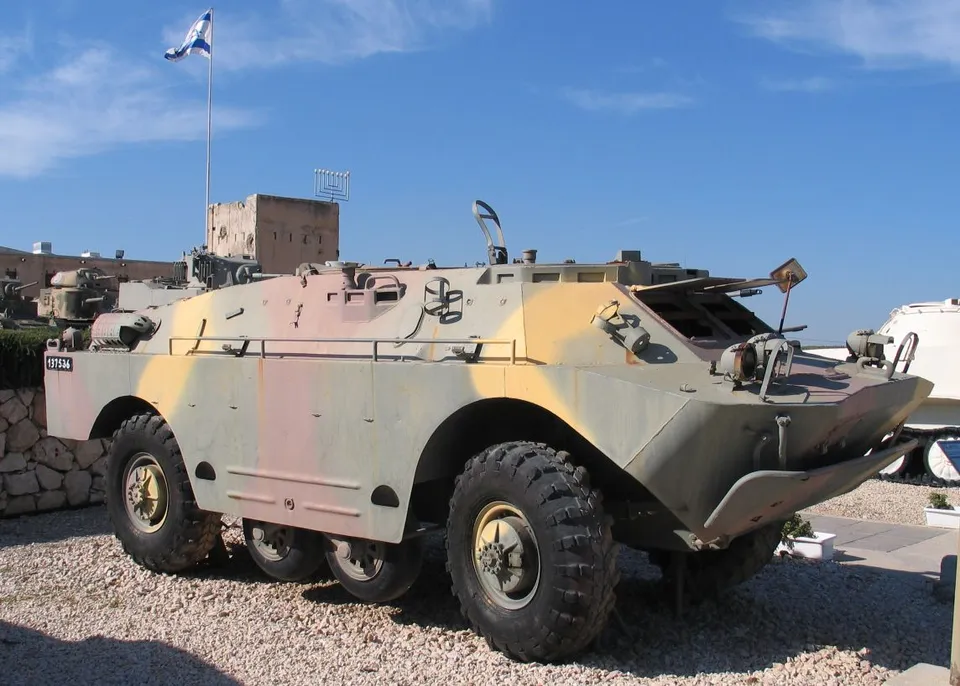
| BRDM-2UM | Command vehicle | Command-vehicle versions use the same BRDM-2 chassis family for reconnaissance-unit communications and control tasks. Sources: BRDM-2 |

Launch Platform
| Launched item | Item type | Launch evidence |
|---|---|---|
 | Wire-guided anti-tank missile | Armatec lists the 9M14 Malyutka among the missiles that can be fired from BRDM-2 vehicles. Sources: Armatec 9M14 Malyutka |
Timeline
BRDM-2 Key Events
BRDM-2 accepted into service
The National Defence University of Ukraine identifies May 22, 1962 as the service-entry date for the BRDM-2 combat reconnaissance and surveillance vehicle.
Sources: NDUU BRDM-2
Serial production begins at GAZ
Serial production started at GAZ in 1963 before Arzamas production followed in 1965.
Sources: NDUU BRDM-2
Soviet production run ends
Soviet BRDM-2 production continued until 1989, after which later operators and repair plants kept the family active through overhaul and modernization programs.
Sources: NDUU BRDM-2, Military Review BRDM-2 Modernization
Ukrainian BRDM-2M demonstrated
Defense Express reported ArmSpetsTekhnolohiya's deep BRDM-2M modernization with remote-control capability, upgraded protection, a new powertrain, and an MBU-1 remote weapon station.
Sources: Defense Express Ukrainian BRDM-2M
Related Weapon Systems


Sources
Oryx Russian Equipment LossesPublisher: Oryx | Note: Supports 2014 Russia-Ukraine War direct conflict use: Oryx documents Russian BRDM-2-family losses in the full-scale invasion list, including BRDM-2RKhb chemical reconnaissance vehicles, BRDM-2M/A vehicles, and BRDM-2MS vehicles. | Accessed: 2026-07-02Oryx Ukrainian Equipment LossesPublisher: Oryx | Note: Supports 2014 Russia-Ukraine War direct conflict use: Oryx documents Ukrainian BRDM-2-family losses in the full-scale invasion list, including BRDM-2RKhb chemical reconnaissance vehicles and base BRDM-2 vehicles. | Accessed: 2026-07-02Military Review BRDM-2 ModernizationPublisher: Military Review | Note: Supports BRDM-2 modernization context, including the Arzamas BRDM-2M/A side-hatch, D-245.9 diesel, and BTR-80 suspension references. | Accessed: 2026-07-02Defense Express Ukrainian BRDM-2MPublisher: Defense Express | Note: Supports the 2026 Ukrainian BRDM-2M modernization details: ArmSpetsTekhnolohiya developer, remote-control architecture, upgraded protection, 300 hp engine, ZF transmission, cameras, MBU-1 remote weapon station, and troop/evacuation layout. | Accessed: 2026-07-02UNITED24 BRDM-2MPublisher: UNITED24 Media | Note: Supports English-language context for the 2026 Ukrainian BRDM-2M demonstration, remote operation, upgraded hull, troop capacity, and MBU-1 remote weapon station. | Accessed: 2026-07-02NDUU BRDM-2Publisher: National Defence University of Ukraine | Note: Supports BRDM-2 service-entry date, GAZ and Arzamas serial-production timeline, base armament, and selected Polish and Ukrainian modernization variants. | Accessed: 2026-07-02Army Recognition BRDM-2MSPublisher: Army Recognition | Note: Supports BRDM-2MS modernization context, including removed auxiliary wheels, added armor, updated sighting/camera equipment, engine output, and export-service framing. | Accessed: 2026-07-02Army Guide BRDM-2Publisher: Army Guide | Note: Supports BRDM-2 design background, base scout-car equipment, NBC overpressure context, and BRDM-2-RKha/BRDM-2-RKhb chemical reconnaissance variant distinctions. | Accessed: 2026-07-02Nagorno-Karabakh Documented LossesPublisher: Oryx | Note: Supports 2020 Nagorno-Karabakh Conflict direct use: BRDM-2 scout cars were used by Armenian/Artsakh forces, with visually documented Armenian BRDM-2 vehicles destroyed and captured in the 2020 fighting. | Accessed: 2026-06-20Handbook Of Pre-War Yemeni Fighting VehiclesPublisher: Oryx | Note: Supports 2014 Yemen Civil War direct use: BRDM-2 scout cars were used by Yemeni parties, with Oryx listing them among equipment available on the battlefield after the Houthi takeover. | Accessed: 2026-06-20BRDM-2Publisher: WeaponSystems.net | Note: Supports Soviet origin, GAZ and Arzamas production background, design period, production dates, armament, dimensions, engine, mobility, and protection data. | Accessed: 2026-06-20BRDM-2 Technical DataPublisher: Army Recognition | Note: Supports technical specifications for armament, armor, engine, road speed, range, amphibious mobility, and reconnaissance-vehicle role. | Accessed: 2026-06-20Armatec 9M14 MalyutkaPublisher: Armatec | Note: Supports the BRDM-2 as a launch platform for the 9M14 Malyutka. | Accessed: 2026-06-28Commons BRDM-2 01Publisher: Wikimedia Commons | Note: Supports image provenance for a BRDM-2 armored scout car photographed at the Army History Museum and Park in Kecel, Hungary; licensed CC BY-SA 3.0. | Accessed: 2026-06-20Commons BRDM-2 Command LatrunPublisher: Wikimedia Commons | Note: Supports image provenance for a BRDM-2 command-vehicle variant at Yad La-Shiryon Museum; licensed under selectable free licenses including CC BY-SA 3.0 and CC BY 2.5. | Accessed: 2026-06-20Commons Bulgaria BRDM-2Publisher: Wikimedia Commons | Note: Supports image provenance for a BRDM-2 photographed in Bulgaria; licensed CC BY-SA 4.0 with attribution required. | Accessed: 2026-06-20Commons Modernised BRDM-2Publisher: Wikimedia Commons | Note: Supports image provenance for a modernized STC Delta BRDM-2 variant; licensed CC BY-SA 4.0. | Accessed: 2026-06-20