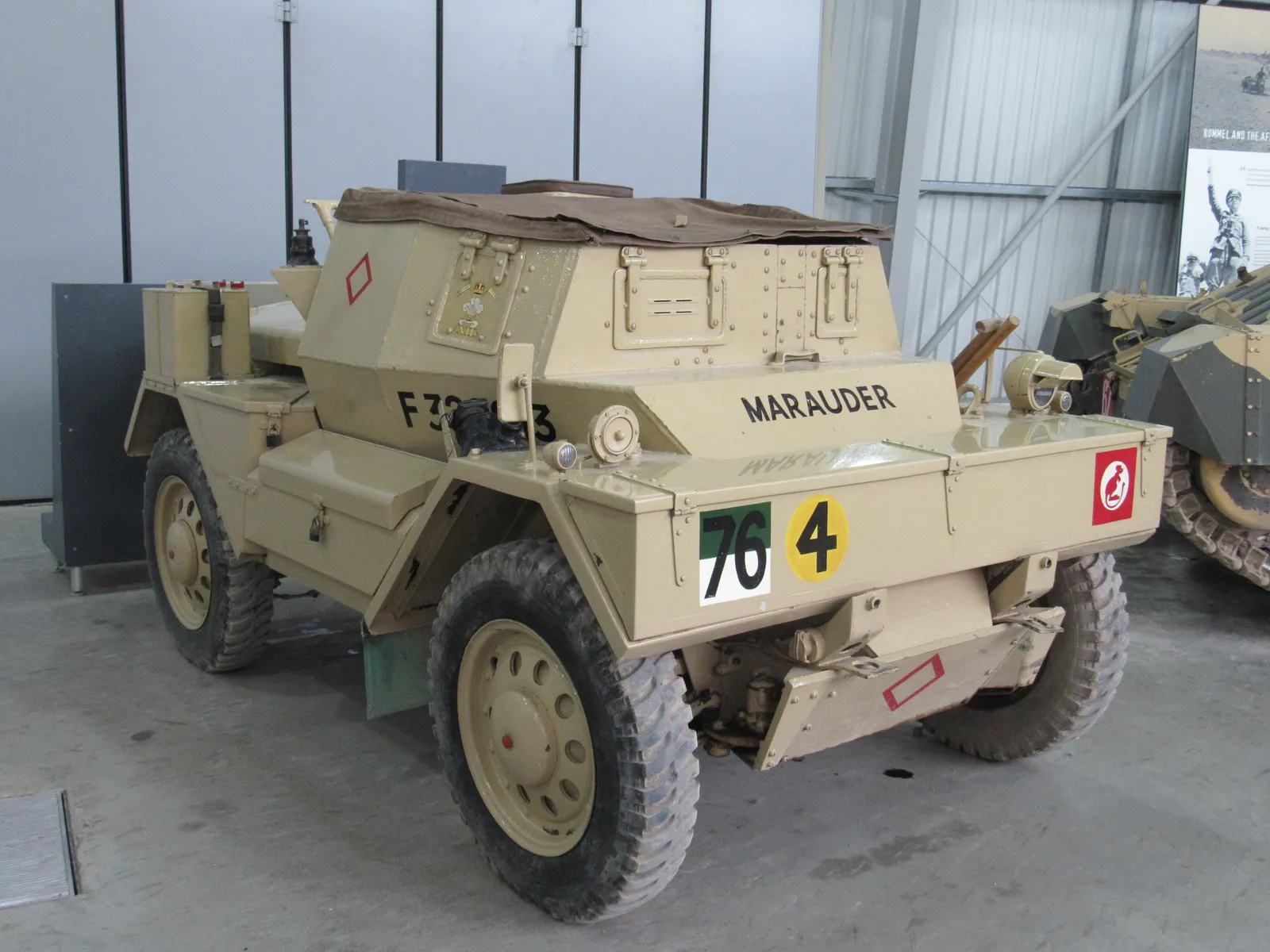
The Tank Museum says the Dingo entered service in 1939 and began as a reconnaissance vehicle for infantry and armoured divisions, while Jaguar Daimler Heritage Trust describes the War Office contract, wartime production, and a 1944 scout car believed to have seen action in the closing stages of the European war.
Armored Vehicles
Daimler Dingo scout car
Also known as
- Daimler Scout Car
- Car, Scout, Daimler
- Dingo Scout Car
- Daimler Dingo
- Daimler Scout Car Mark III
The Daimler Dingo was a compact British 4x4 armored scout car produced by Daimler during the Second World War. Sources describe it as a lightly armored reconnaissance vehicle with a two-person crew, a rear-mounted 2.5-litre Daimler engine, pre-selector transmission, independent suspension, and the ability to reverse at speed, features that suited liaison, scouting, and battlefield observation roles.
Role in Conflicts
Documented Wartime Use
Archival collection records place Daimler scout cars with Allied units in several Second World War theaters. The surviving records support a compact conflict-use row rather than separate theater pages: British armor in the Western Desert, British infantry in Italy, Polish II Corps near Ancona, and Belgian Piron Brigade service in Normandy all show the type in reconnaissance, liaison, or command-vehicle contexts.
Western Desert
IWM records a Daimler scout car of 5th Royal Tank Regiment, 4th Armoured Brigade in North Africa on 28 April 1942.
Italy
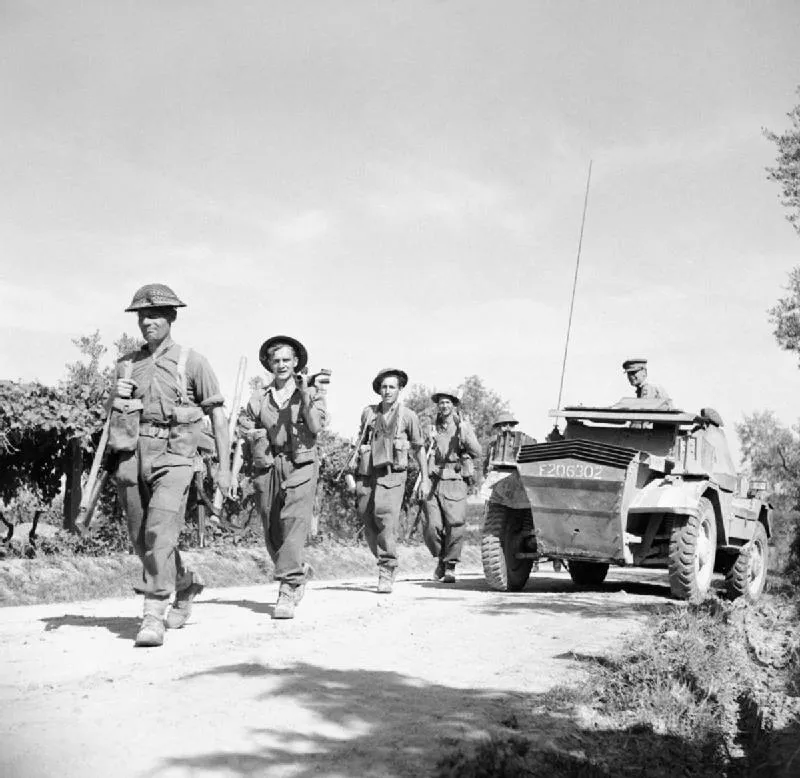
IWM records British infantry passing a Daimler scout car during the 78th Division advance in Italy on 30 June 1944, and a 2nd Polish Corps Dingo near Ancona in July 1944.
Piron Brigade
Bastogne Barracks states that several Dingos were assigned to the Piron Brigade and took part in its campaigns, especially Normandy.
Sources: IWM North Africa Daimler Scout Car; IWM British Army Italy Dingo NA16556; IWM Polish Army Italy Dingo; Bastogne Barracks Dingo Scout Car.
Profile / Specs
Profile
- Origin
- United Kingdom
- Built by
- Daimler Company
- Type
- 4x4 armored scout car
- Service note
- Second World War scout-car design that remained in postwar service with several users
- Designer
- BSA / Daimler Company engineering team
- Designed
- 1938-1939
- Produced
- 1939-1945
- Number built
- 6,626 Daimler Dingo scout cars
- Developed into
- Daimler Ferret armoured car
Specifications
- Crew
- 2
- Armament
- 1 x .303 Bren machine gun in The Tank Museum vehicle facts; WW2DB also notes a Boys anti-tank rifle option
- Dimensions
- About 3.2 m long, 1.7 m wide, and 1.5 m high in the Bastogne Barracks museum profile; specialist notes give 10 ft 9 in long, 5 ft 9 in wide, and 5 ft 1 in high
- Weight
- 2.8 tons in The Tank Museum facts; around 3 tons in Jaguar Daimler Heritage Trust and WW2DB references
- Engine
- 2.5-litre six-cylinder Daimler petrol engine rated at 55 hp in WW2DB and Jaguar Daimler Heritage Trust references
- Transmission
- Fluid flywheel and five-speed pre-selector gearbox with five forward and reverse ratios
- Mobility
- 4x4 wheeled drive; independent suspension; top speed about 50-55 mph depending on source
- Protection
- 30 mm armor figure listed by The Tank Museum and WW2DB; specialist notes describe angled welded plates and lighter side protection
Scout-Car Design
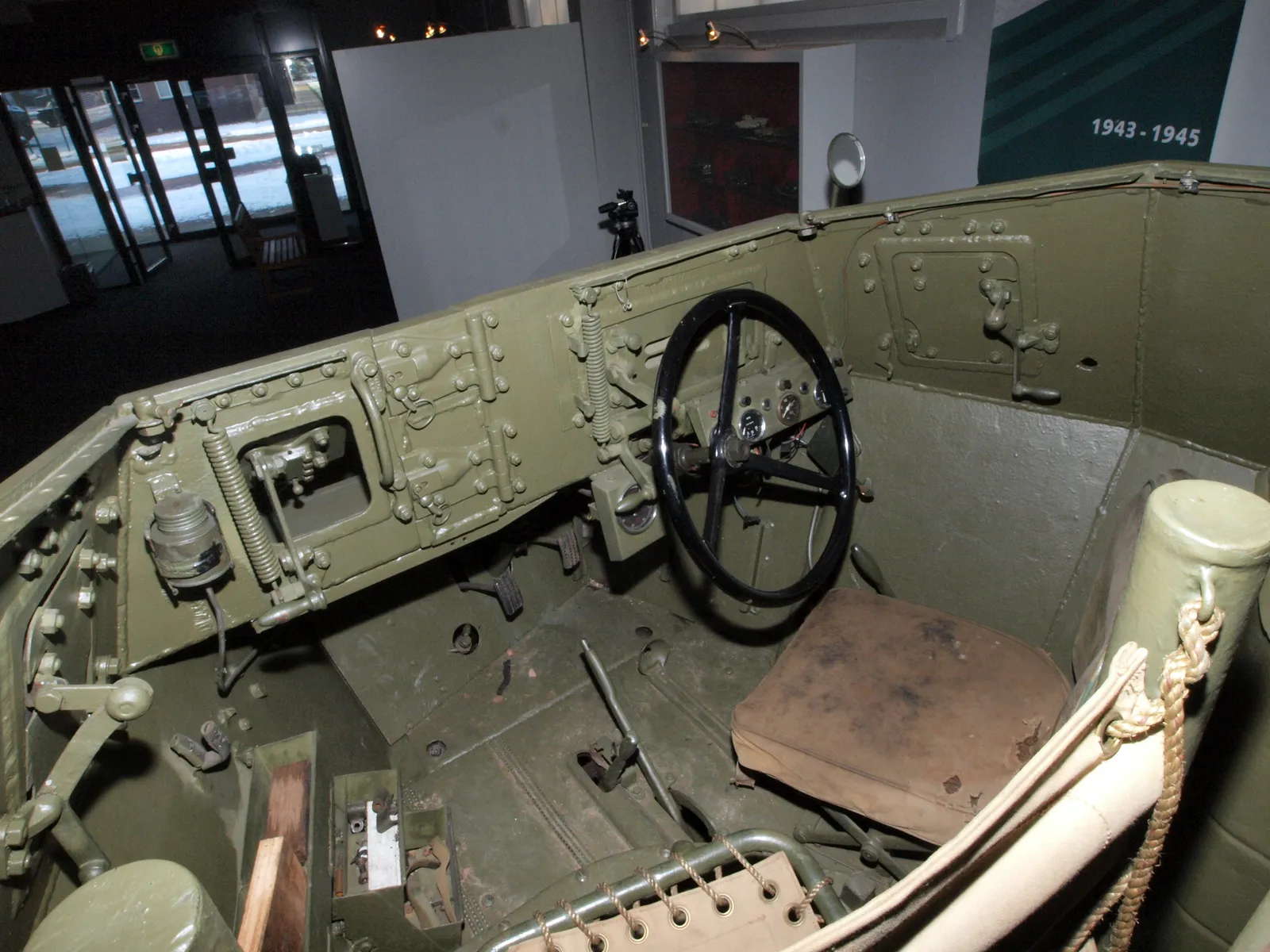
The Dingo was built around a compact two-person reconnaissance layout: driver on the right, commander-gunner on a swivelling left seat, rear engine, low hull, and a transmission arrangement that let the vehicle reverse quickly out of contact.
Reverse mobility
The fluid flywheel and five-speed pre-selector gearbox gave five forward and five reverse ratios, a useful feature for observation vehicles that might need to withdraw without turning around.
Crew station
The second crewman could operate the No. 19 radio set or the Bren gun from a swivelling seat, tying the vehicle's liaison and scouting roles to its interior layout.
Mobility tradeoff
Early four-wheel steering gave a tight turning circle, but later marks deleted rear steering and strengthened the chassis to simplify handling.
Sources: Tank Museum Dingo Scout Car; Jaguar Daimler Heritage Trust Dingo; Daimler Ferret Owners Club Dingo PDF.
Variants
Daimler Scout Car marks were incremental wartime changes to roof, cooling, steering, chassis, and waterproofing arrangements rather than separate vehicle families.
| Variant | Configuration | Designation notes |
|---|---|---|
| Daimler Scout Car Mark I | Early production scout car | Early Mark I vehicles used four-wheel steering and a sliding roof, a combination later simplified because the rear steering could be difficult for inexperienced drivers. Sources: Daimler Ferret Owners Club Dingo PDF |
| Daimler Scout Car Mark IA | Roof revision | The Mark IA retained the early layout but replaced the sliding roof with a folding roof. Sources: Daimler Ferret Owners Club Dingo PDF |
| Daimler Scout Car Mark IB | Cooling revision | The Mark IB introduced revised engine cooling and a new armored radiator grille before the larger Mark II steering and chassis changes. Sources: Daimler Ferret Owners Club Dingo PDF |
| Daimler Scout Car Mark II | Front-steering wartime mark | The Mark II dropped the rear steering in favor of front-axle steering and a strengthened chassis; the Commons image source depicts a Mark II Dingo at Bovington. Sources: Daimler Ferret Owners Club Dingo PDF, Wikimedia Commons Dingo Mark II |
| Daimler Scout Car Mark III | Late-war open-roof mark | The Tank Museum identifies its vehicle as Car, Scout, Daimler Mark III, while specialist notes describe the Mark III as having waterproofed ignition and no armored roof. Sources: Tank Museum Dingo Scout Car, Daimler Ferret Owners Club Dingo PDF |
Timeline
Daimler Dingo scout car Key Events
War Office contract awarded
Jaguar Daimler Heritage Trust says the War Office awarded Daimler the scout-car contract in May 1939.
Sources: Jaguar Daimler Heritage Trust Dingo
Production begins
World War II Database places Daimler Scout Car production from 1939 to 1945 and gives total output as 6,626 vehicles.
Sources: World War II Database Dingo
Wartime service
Jaguar Daimler Heritage Trust says the Daimler Scout Car went into service in 1940, and The Tank Museum describes the type's reconnaissance use with infantry and armoured divisions.
Sources: Jaguar Daimler Heritage Trust Dingo, Tank Museum Dingo Scout Car
Western Desert photograph
Imperial War Museums records a Daimler scout car of 5th Royal Tank Regiment, 4th Armoured Brigade in the Western Desert on 28 April 1942.
Sources: IWM North Africa Daimler Scout Car
Polish Corps at Ancona
Imperial War Museums records a Daimler Dingo armoured scout car of the 2nd Polish Corps fording the River Esino after the Battle of Ancona.
Sources: IWM Polish Army Italy Dingo
Daimler Scout-Car Lineage
The Dingo came from a BSA design selected for Daimler production after the War Office scout-car competition. Its compact reconnaissance role continued after the war in the Daimler Ferret armoured car, which specialist and heritage sources describe as the later scout-car successor to the Dingo design line. The larger Daimler Armoured Car also shared broad BSA/Daimler development roots, but it has no public catalog record here yet.
Sources: Jaguar Daimler Heritage Trust Dingo; Daimler Ferret Owners Club Dingo PDF; Think Defence Ferret Armoured Car.
Media
Daimler Dingo scout car Videos
Daimler Dingo scout car Images
Related Weapon Systems


Sources
Tank Museum Dingo Scout CarPublisher: The Tank Museum | Note: Supports Daimler Coventry manufacture, reconnaissance role, wartime service entry, Mark III identification, production total, crew, armament, weight, speed, armor, and Second World War direct use by Allied British infantry and armoured divisions. | Accessed: 2026-07-13Jaguar Daimler Heritage Trust DingoPublisher: Jaguar Daimler Heritage Trust | Note: Supports the May 1939 War Office contract, 1940 service entry, 1944 vehicle context, Second World War direct use by Allied forces in the closing stages of the European war, Daimler Scout Car production background, technical layout, engine, transmission, weight, speed, and Ferret lineage. | Accessed: 2026-07-13World War II Database DingoPublisher: World War II Database | Note: Supports Daimler Scout Car production dates and totals, BSA-to-Daimler production context, postwar Ferret replacement context, and technical specifications. | Accessed: 2026-07-13Wikimedia Commons Dingo Mark IIPublisher: Wikimedia Commons | Note: Supports image provenance for a Daimler Dingo Scout Car Mark II photograph at Bovington Tank Museum, published under CC BY-SA 4.0. | Accessed: 2026-07-13Daimler Ferret Owners Club Dingo PDFPublisher: Daimler Ferret Owners Club | Note: Supports Dingo design layout, transmission, crew arrangement, variant distinctions from Mark I through Mark III, Ford Lynx context, Dingo-to-Ferret lineage, and Daimler Armoured Car relationship background. | Accessed: 2026-07-13IWM North Africa Daimler Scout CarPublisher: Imperial War Museums | Note: Supports Second World War direct use by Allied British forces through a record of a Daimler scout car of 5th Royal Tank Regiment, 4th Armoured Brigade in the Western Desert on 28 April 1942. | Accessed: 2026-07-13Wikimedia Commons British Infantry Italy Dingo NA16556Publisher: Wikimedia Commons | Note: Supports image provenance for a public-domain War Office photograph of British infantry moving past a Daimler scout car in Italy on 30 June 1944. | Accessed: 2026-07-13IWM British Army Italy Dingo NA16556Publisher: Imperial War Museums | Note: Supports Second World War direct use by Allied British forces through the IWM record for British infantry moving past a Daimler scout car during the 78th Division advance in Italy on 30 June 1944. | Accessed: 2026-07-13Wikimedia Commons Dingo Interior AlfvanBeemPublisher: Wikimedia Commons | Note: Supports image provenance for a CC0 interior photograph of a Daimler Scout Car Dingo dashboard and driver compartment. | Accessed: 2026-07-13IWM Polish Army Italy DingoPublisher: Imperial War Museums | Note: Supports Second World War direct use by Allied Polish forces through a record of a Daimler Dingo armoured scout car of the 2nd Polish Corps fording the River Esino after the Battle of Ancona in July 1944. | Accessed: 2026-07-13Bastogne Barracks Dingo Scout CarPublisher: Bastogne Barracks | Note: Supports dimensions, Belgian museum context, and Second World War direct use because Dingo scout cars were used by the Piron Brigade in Normandy and other campaigns. | Accessed: 2026-07-13Think Defence Ferret Armoured CarPublisher: Think Defence | Note: Supports the Ferret as the postwar Daimler scout-car successor developed after the Dingo role and linked to the FV701 requirement. | Accessed: 2026-07-13