Armored Vehicles

Staghound Mk I

Also known as
  • T17E1
  • T17E1 Staghound
  • Staghound I
  • Staghound Mk. I
  • Staghound Mark I
  • Chevrolet T17E1
  • Medium Armored Car T17E1
  • Armored Car T17E1
  • M6 Staghound

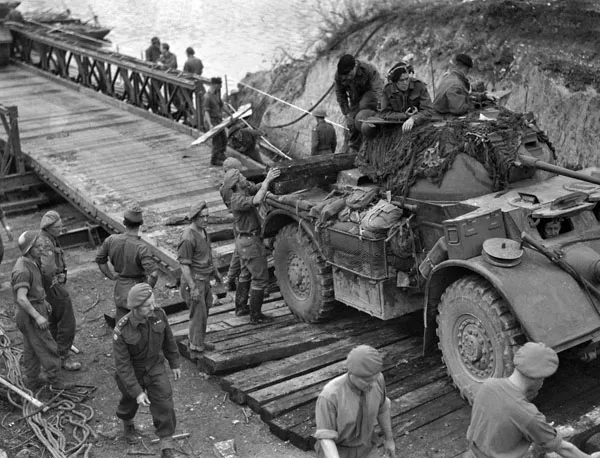
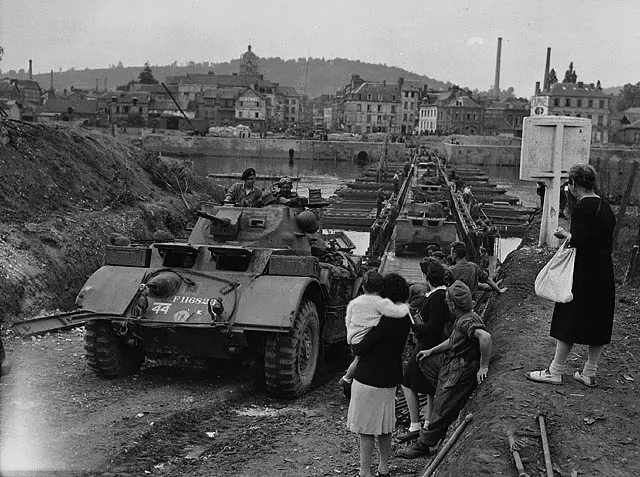
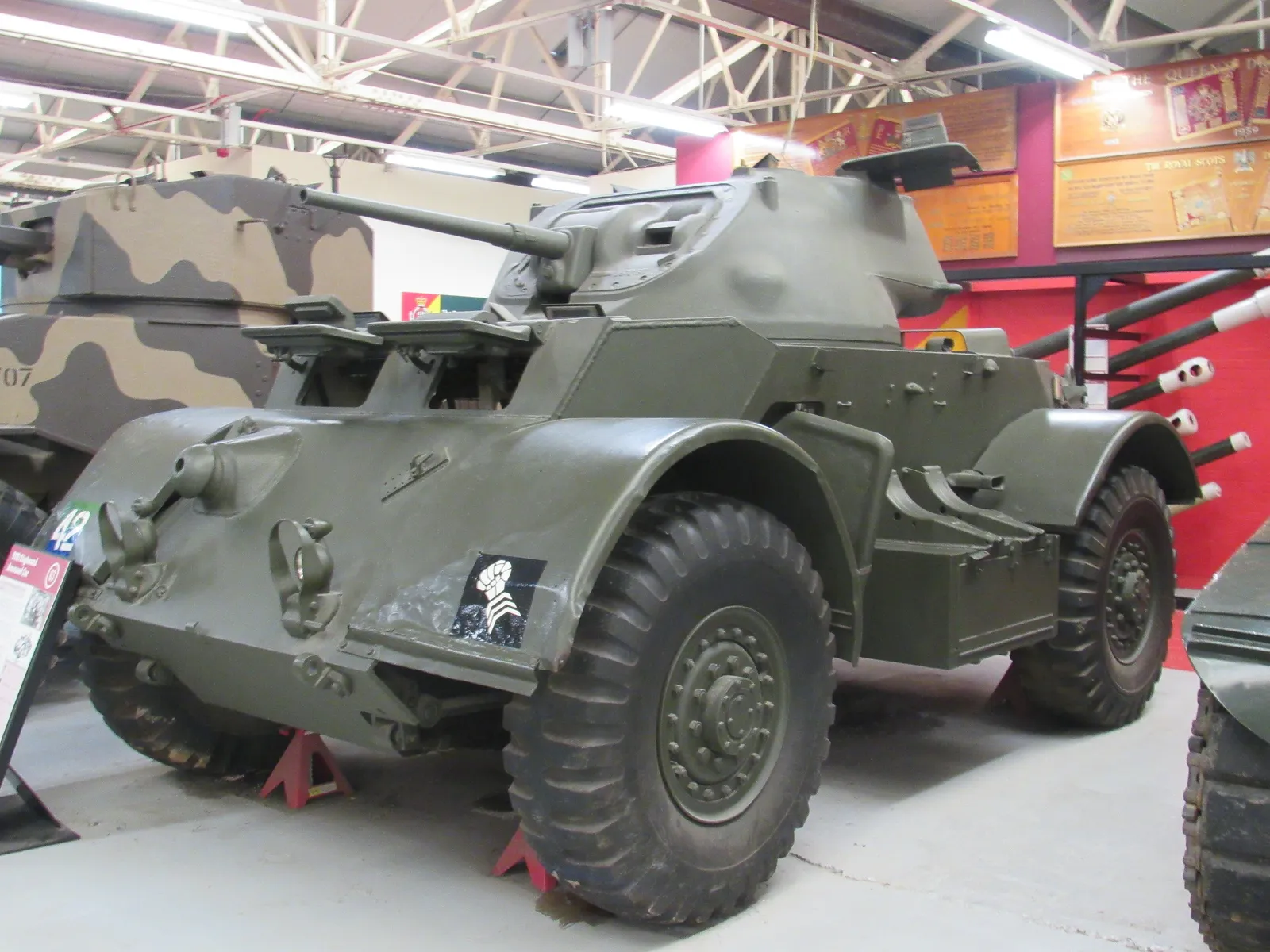
The Staghound Mk I was the British service designation for Chevrolet's T17E1 armored car, a large 4x4 reconnaissance vehicle supplied to British and Commonwealth forces rather than standardized for U.S. Army use. The Mk I combined a 37 mm M6 gun, multiple .30-caliber M1919A4 machine guns, twin GMC engines, and long road range, making it a heavy armored-car platform for headquarters, reconnaissance, and command-vehicle roles.

Profile / Specs

Profile

Origin
United States
Built by
Chevrolet
Type
4x4 reconnaissance armored car
Service note
World War II
Designer
Chevrolet Division of General Motors
Designed
1941 - 1942
Produced
October 1942 - December 1943
Number built
2,844 T17E1 / Staghound Mk I; 3,844 Staghound-series armored cars across all variants; roughly 100 to 300 Mk III conversions reported

Specifications

Crew
5
Weight
13.9 t combat load / 30,705 lb combat weight
Dimensions
5.49 m length; 2.69 m width; 2.84 m height
Armament
37 mm M6 cannon, coaxial .30 M1919A4 machine gun, bow .30 M1919A4 machine gun, roof-mounted .30 M1919A4 machine gun, and a 51 mm M3 smoke mortar
Ammunition
103 rounds for the 37 mm gun; 5,250 rounds for the coaxial .30-caliber M1919A4; 14 smoke bombs on smoke-mortar-equipped vehicles
Powertrain
Twin GMC 270 gasoline engines with Hydramatic transmissions and selectable two- or four-wheel drive
Mobility
4x4 wheeled chassis; 89 km/h road speed; about 720 km road range with external fuel
Protection
Welded rolled-steel hull and cast turret; 16 to 22 mm hull front; 45 mm turret front
Design And Variant Context

The T17E1 sat between light scout cars and tracked reconnaissance vehicles: it was too heavy to become the U.S. Army's standardized armored car, but British and Commonwealth forces accepted it as a robust long-range platform.

Designation caution

Use T17E1 for this Chevrolet 4x4 vehicle; T17 alone can refer to Ford's separate 6x6 Deerhound design.

Automotive layout

The Staghound used twin rear-mounted GMC 270 engines, automatic transmissions, selectable two- or four-wheel drive, and a rigid hull that carried suspension and steering components directly.

Variant path

British conversions emphasized close support, heavier turret armament, command radios, and anti-aircraft defense while retaining the T17E1/Staghound family base.

Sources: Military Trader: A look at the Staghound; T17E1 Staghound Armoured Car - Airborne Assault Museum; Medium Armored Car T17E1 Staghound I - AFV Database; Staghound - Oorlogsmuseum Overloon.
Variants

The Staghound family combines U.S. T17E-series designations with British Staghound mark names. This page covers the 37 mm gun-armed Chevrolet T17E1 baseline; later close-support, heavier-gun, command, and anti-aircraft variants are listed without catalog links until separate public records exist.

VariantConfigurationDesignation notes
Staghound Mk II Close SupportClose-support conversion

British close-support conversion that replaced the 37 mm gun with a 3-inch howitzer in the original turret and removed the bow machine gun; conversion totals are not well established.

Sources: Medium Armored Car T17E1 Staghound I - AFV Database, Military Trader: A look at the Staghound

Staghound Mk IIIUp-gunned fire-support variant

Replaced the original turret with a Crusader-type turret carrying 75 mm armament and a coaxial 7.92 mm Besa; the bow machine gun was removed, and reported production totals vary from roughly 100 to 300.

Sources: Medium Armored Car T17E1 Staghound I - AFV Database, Staghound Mk I | Weaponsystems.net, Military Trader: A look at the Staghound

Staghound CommandCommand vehicle

The command conversion removed the turret and fitted additional radio equipment for communications duties.

Sources: Military Trader: A look at the Staghound

T17E2 Staghound AAAnti-aircraft branch

The T17E2 replaced the 37 mm turret with an open-topped twin-.50-caliber machine-gun turret and was acquired by Britain as the Staghound AA.

Sources: Armored Car T17E2 Staghound AA - AFV Database, Military Trader: A look at the Staghound

T17E375 mm howitzer prototype

Experimental T17E1 fitted with the turret from the M8 Howitzer Motor Carriage and a 75 mm M2/M3 howitzer; trials took place in December 1943, but the type did not enter production.

Sources: Military Trader: A look at the Staghound

Radpanzer StaghoundSwiss postwar up-gun

Swiss Mk I modifications replaced the 37 mm main gun with a 47 mm Pak 41, while a trial-gun version tested a Hispano-Suiza HS 820 automatic cannon.

Sources: Military Trader: A look at the Staghound

Carried Weapons

Weaponsystems.net lists three Browning M1919A4 machine guns on the Staghound Mk I in bow, coaxial, and roof mounts.

Carried itemItem typeCarriage evidence
.30-Caliber Machine Gun, Crew-served medium machine gun, Infantry Weapons.30-Caliber Machine GunCrew-served medium machine gun

The Staghound Mk I carried three .30 M1919A4 machine guns: one bow mount, one coaxial with the 37 mm cannon, and one on the roof.

Sources: Staghound Mk I | Weaponsystems.net

Timeline

Staghound Mk I Key Events

  1. T17E1 design work begins

    The U.S. Army medium armored-car requirement and British Purchasing Commission interest led Chevrolet to develop the four-wheel-drive T17E1 alongside Ford's separate 6x6 T17.

    Sources: Military Trader: A look at the Staghound, T17E1 Staghound Armoured Car - Airborne Assault Museum

  2. Initial British order

    Military Trader describes a December 1941 British Purchasing Commission order for 300 T17E1 armored cars, the vehicles that British service later named Staghound.

    Sources: Military Trader: A look at the Staghound

  3. T17E1 accepted into production

    AFV Database gives October 1942 as the first acceptance date and lists 2,844 total T17E1 acceptances by Chevrolet.

    Sources: Medium Armored Car T17E1 Staghound I - AFV Database

  4. British service name enters use

    Museum sources describe the Chevrolet-built T17E1 as adopted by the British Army under the Staghound Mk I name and introduced in 1943.

    Sources: Staghound - Oorlogsmuseum Overloon, T17E1 Staghound Armoured Car - Airborne Assault Museum

  5. Smoke mortar fitted on later production

    AFV Database notes that from May 1943 a 2-inch smoke mortar was installed through a turret-roof opening, with fourteen smoke bombs stowed.

    Sources: Medium Armored Car T17E1 Staghound I - AFV Database

  6. T17E2 anti-aircraft production starts

    The T17E2 Staghound AA branch entered production with a twin-.50-caliber anti-aircraft turret for British use.

    Sources: Armored Car T17E2 Staghound AA - AFV Database

  7. Howitzer prototype tested

    The T17E3 howitzer project trialed a T17E1 hull with an M8 Howitzer Motor Carriage turret and 75 mm M2/M3 howitzer, but did not enter production.

    Sources: Military Trader: A look at the Staghound

Media
Related Weapon Systems
Daimler Ferret armoured car, 4x4 armored reconnaissance car, Armored VehiclesArmored VehiclesDaimler Ferret armoured car4x4 armored reconnaissance carThe Daimler Ferret is a compact British 4x4 armored reconnaissance car built for liaison, scouting, patrol, and internal-security work. Daimler produced the type from the 1950s into the early 1970s, and its small hull, machine-gun armament, smoke dischargers, and high road speed made it a durable export vehicle after British service. Sri Lanka Army history places Ferret scout cars in its reconnaissance fleet before civil-war armor deployments, while Ukrainian Mk 1 vehicles have appeared as improvised light reconnaissance and force-protection platforms, including a modified example with anti-drone grilles and electronic-warfare equipment during the 2025 Nadiia operation.
Alvis Saladin, 6x6 armored reconnaissance car, Armored VehiclesArmored VehiclesAlvis Saladin6x6 armored reconnaissance carThe Alvis Saladin is a British FV601 6x6 armored reconnaissance car developed from a postwar British Army requirement and produced at Coventry from 1958 to 1972. Its production Mk 2 form combined a three-person turreted layout, a 76 mm L5A1 low-pressure gun, welded steel protection, and road mobility suited to reconnaissance, convoy escort, internal-security, and light direct-fire roles. Yemen evidence remains inventory-level: Oryx lists the Saladin in pre-war Yemeni Army armored-fighting-vehicle stocks available to parties after the 2014-2015 takeover, so this entry does not claim a specific Saladin engagement in that war.
BRM-1K, Tracked armored reconnaissance vehicle, Armored VehiclesArmored VehiclesBRM-1KTracked armored reconnaissance vehicleThe BRM-1K is a Soviet tracked armored reconnaissance vehicle derived from the BMP-1 chassis, combining amphibious mobility with battlefield surveillance equipment and a 73 mm 2A28 cannon. Russia later modernized the type as the BRM-1KM/BRM-1K Model 2021 with a BTR-82A-style combat compartment, 30 mm 2A72 armament, updated communications, and newer reconnaissance equipment; both legacy and modernized vehicles are visually documented in post-Soviet conflicts.

Sources