Profile
- Origin
- Soviet Union
- Built in
- Soviet UnionRussia
- Type
- Twin-barrel 30 mm autocannon
- Service note
- Cold War design, still fielded on air-defense platforms
- Designer
- KBP Instrument Design Bureau
- Designed
- 1970s
- Number built
- Well over 1,000
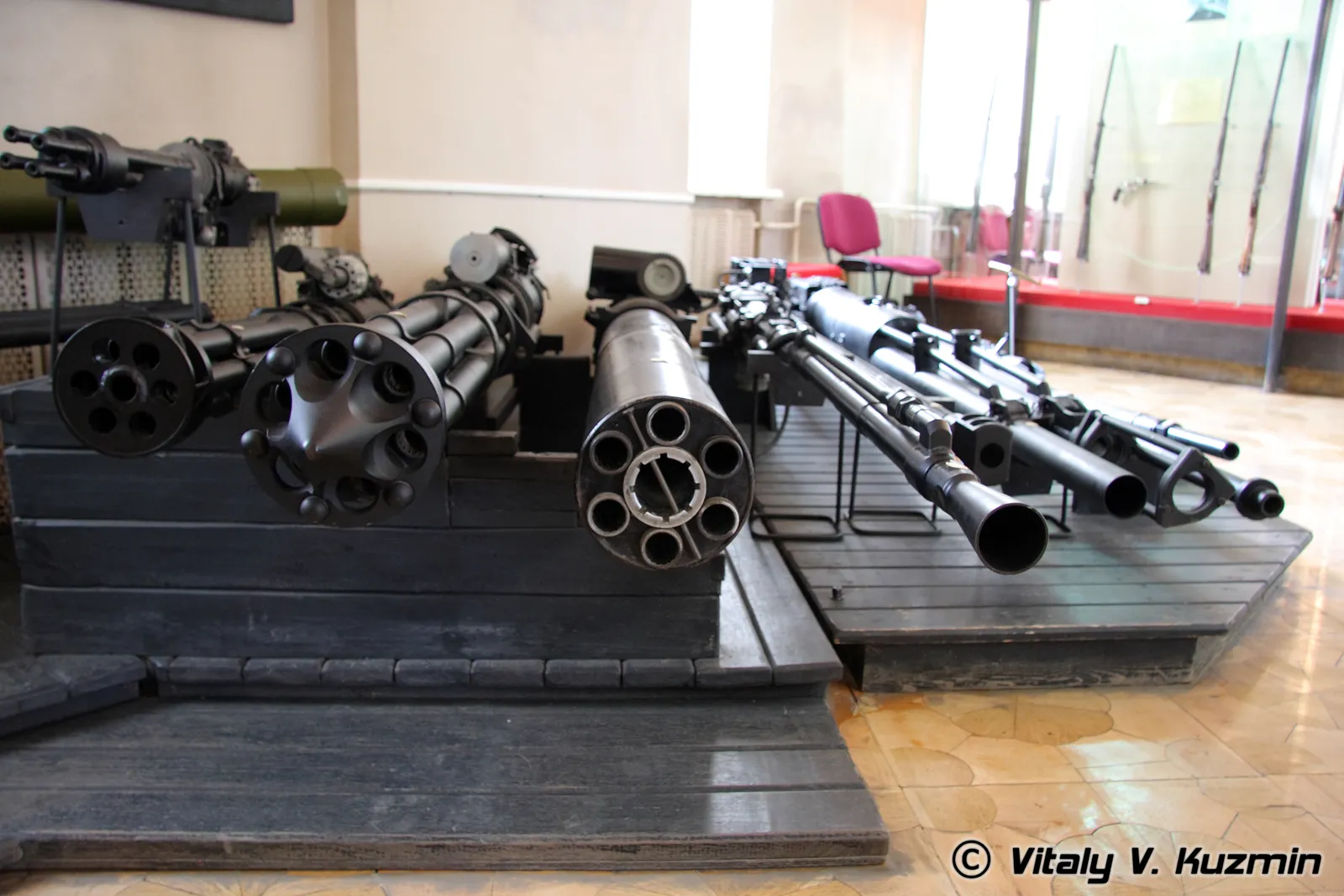
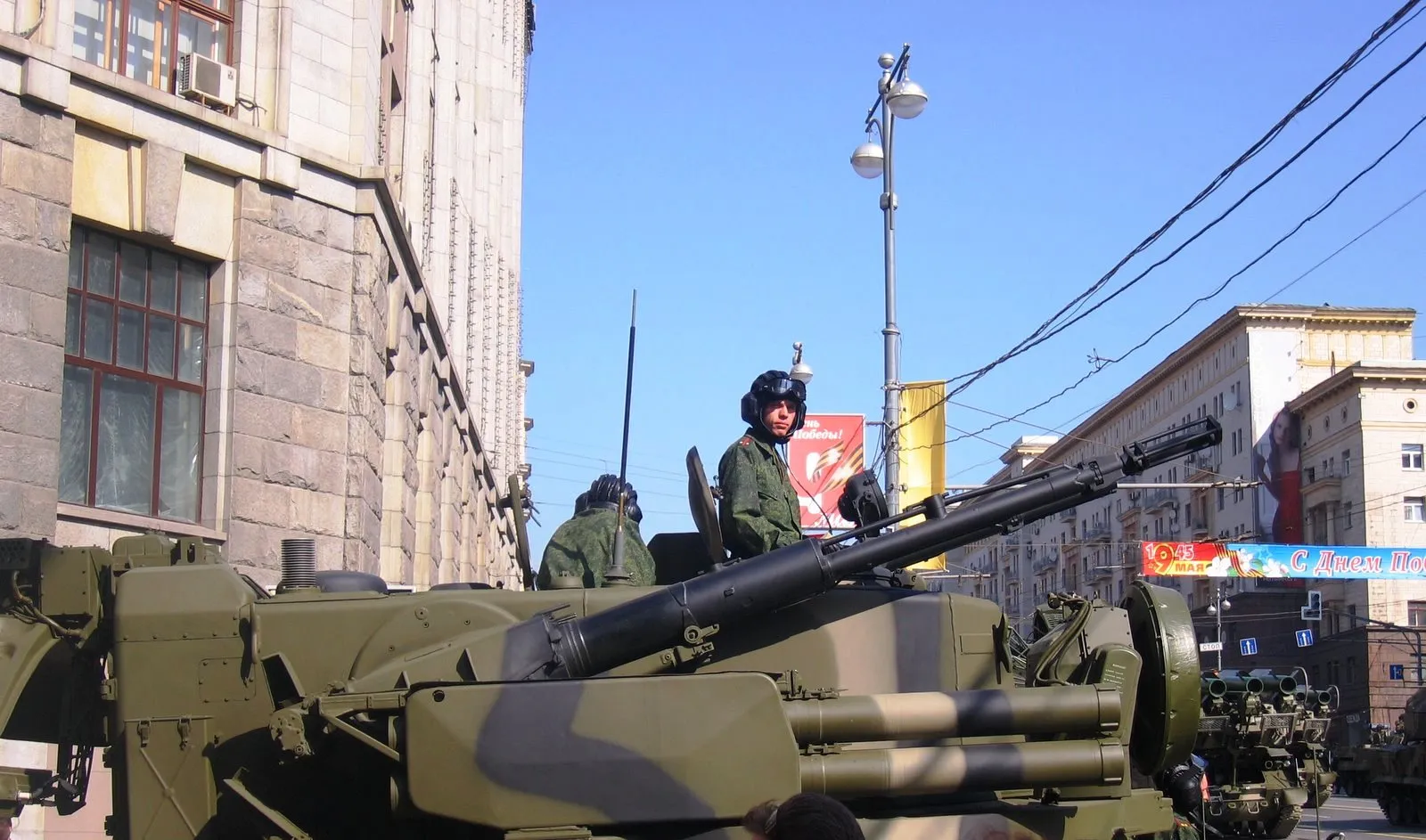
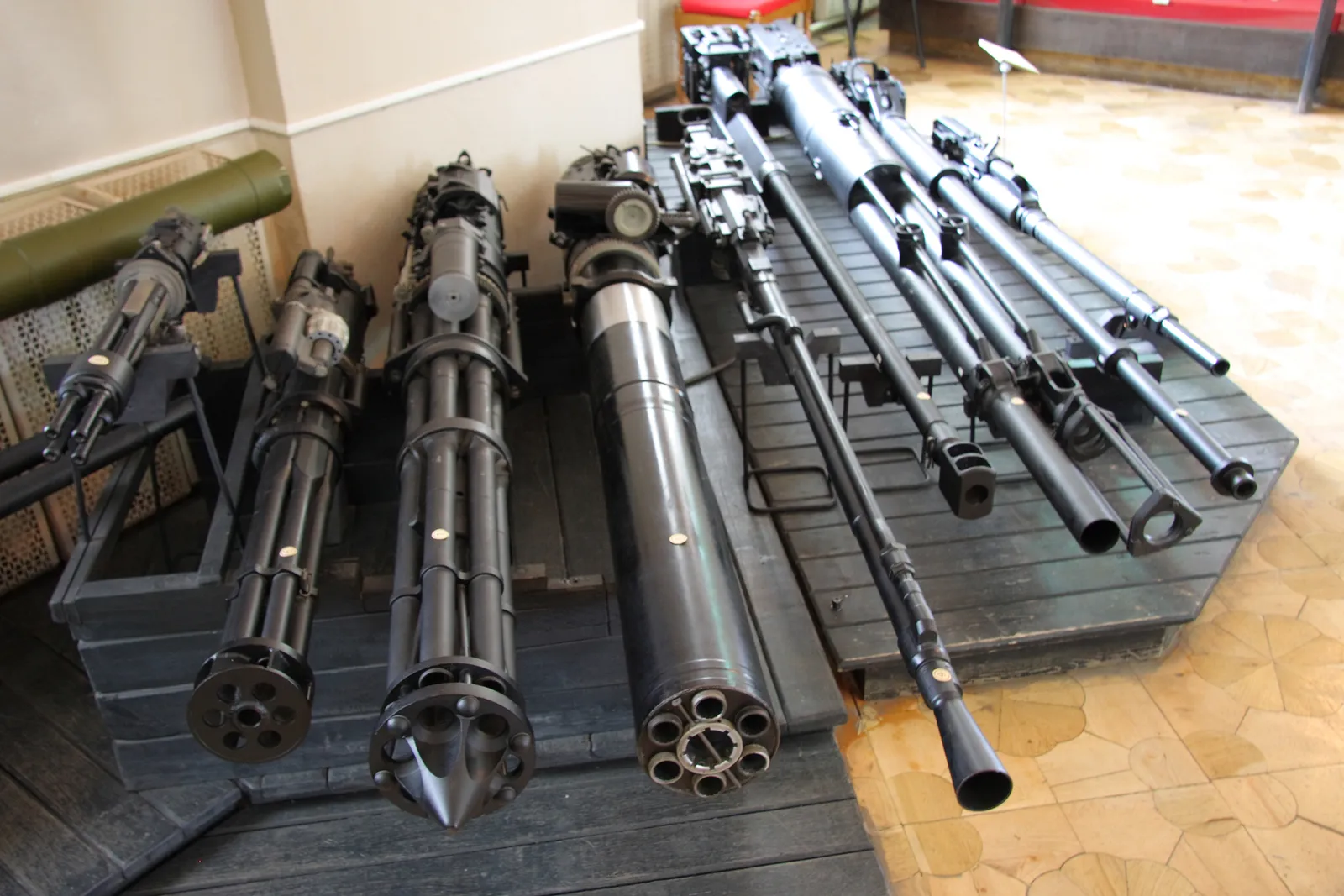
The 2A38 is a Soviet twin-barrel 30 mm autocannon developed in the 1970s for the 2S6 Tunguska short-range air-defense system. It uses the Gast principle, water cooling, and 30x165 mm ammunition to deliver very high burst fire from a compact gun package, and the later 2A38M version carried the family into Tunguska-M and Pantsir-S1.
| Firing weapon | Weapon type | Firing evidence |
|---|---|---|
 | Tracked short-range air-defense system | WeaponSystems.net states that the 2A38 was first introduced on the 2S6 Tunguska. Sources: WeaponSystems.net 30mm 2A38 |
WeaponSystems.net describes the 2A38 as a late-Cold-War Soviet autocannon developed in the 1970s.
Sources: WeaponSystems.net 30mm 2A38
WeaponSystems.net says the 2A38 entered service in the early 1980s, when it was fielded on the 2S6 Tunguska short-range air-defense system.
Sources: WeaponSystems.net 30mm 2A38
GlobalSecurity lists the 2K22M / 2S6M upgrade in 1990 with 2A38M autocannons, showing the family's move into the Tunguska-M generation.
Sources: GlobalSecurity 2S6M Tunguska
The follow-on 2A38M kept the same twin-30 mm air-defense role and reappears on later Russian gun-missile systems.
| Variant | Platform | Documented note |
|---|---|---|
| 2A38M | | GlobalSecurity lists the 2K22M / 2S6M introduction in 1990 with 2A38M autocannons. |
| 2A38M |  | CSIS identifies the baseline Pantsir system as carrying two 30 mm 2A38M cannons. |