- Side
- Sudanese government and allied militias

Amnesty International documented A-5 Fantans at Nyala airport in early 2007 and described them as aircraft designed for ground-attack operations.
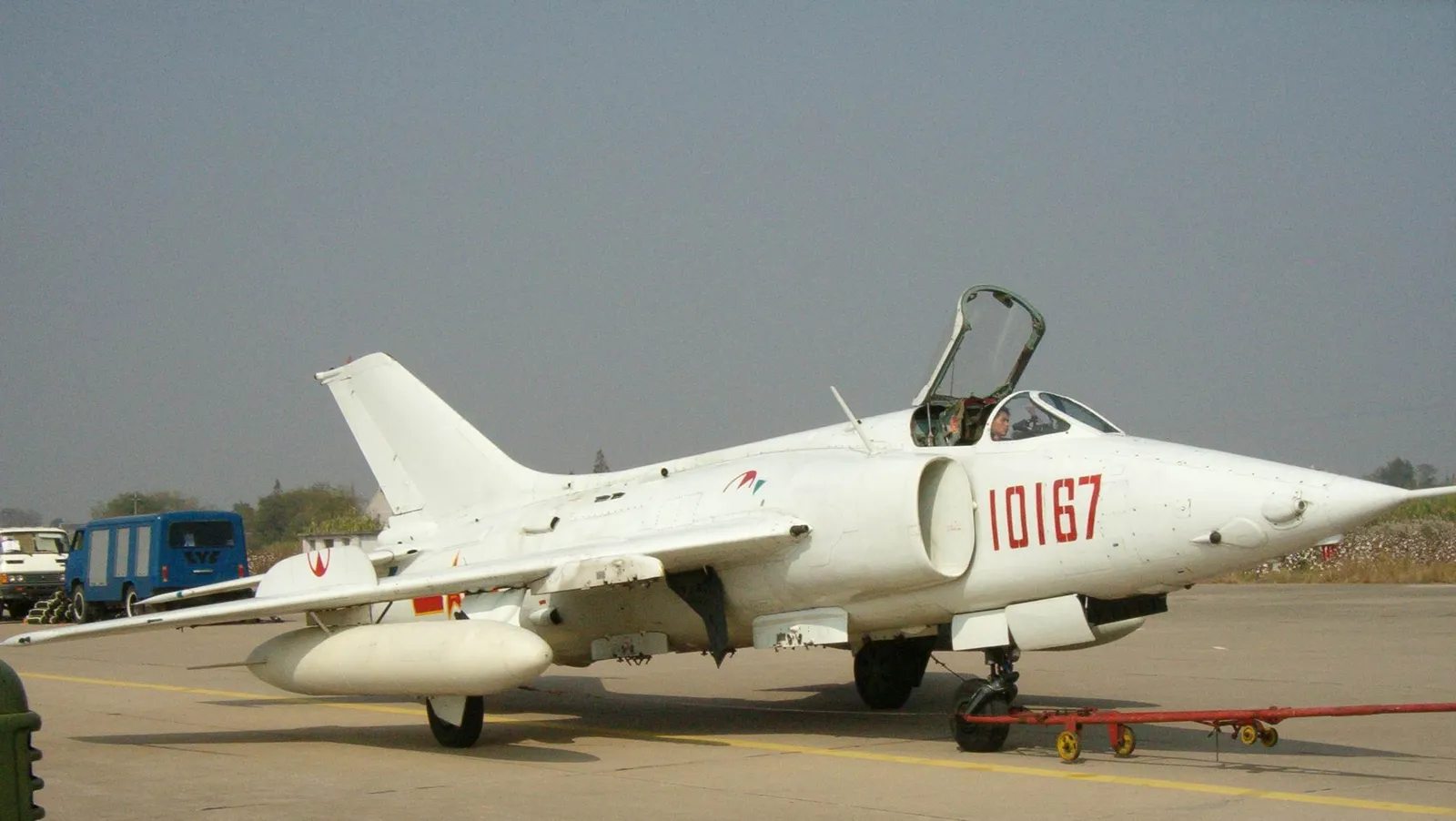
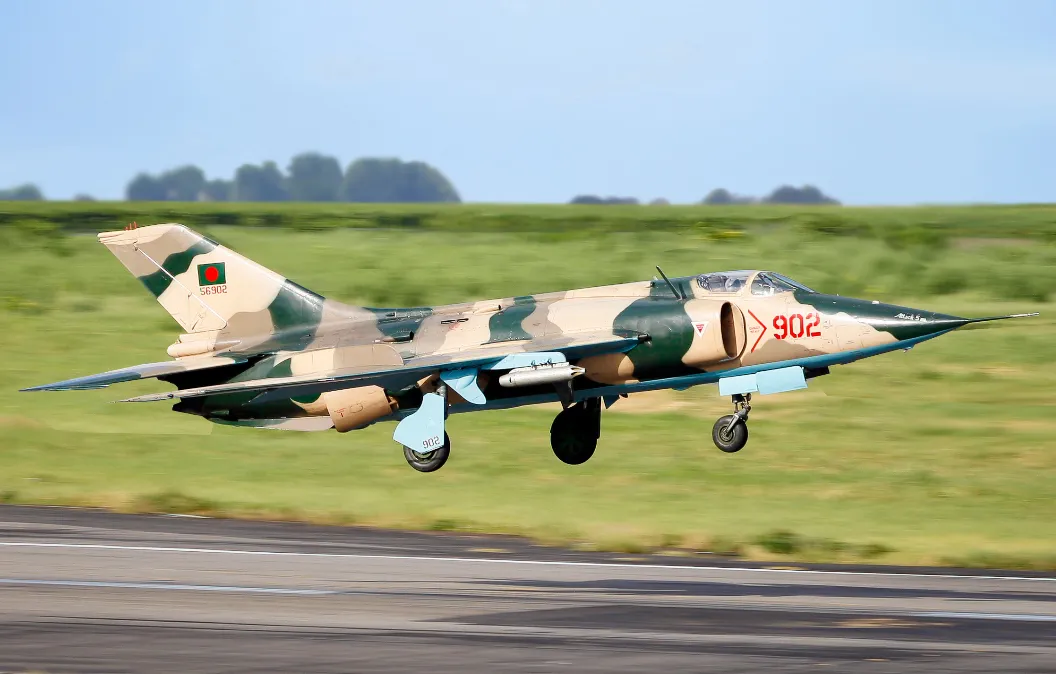
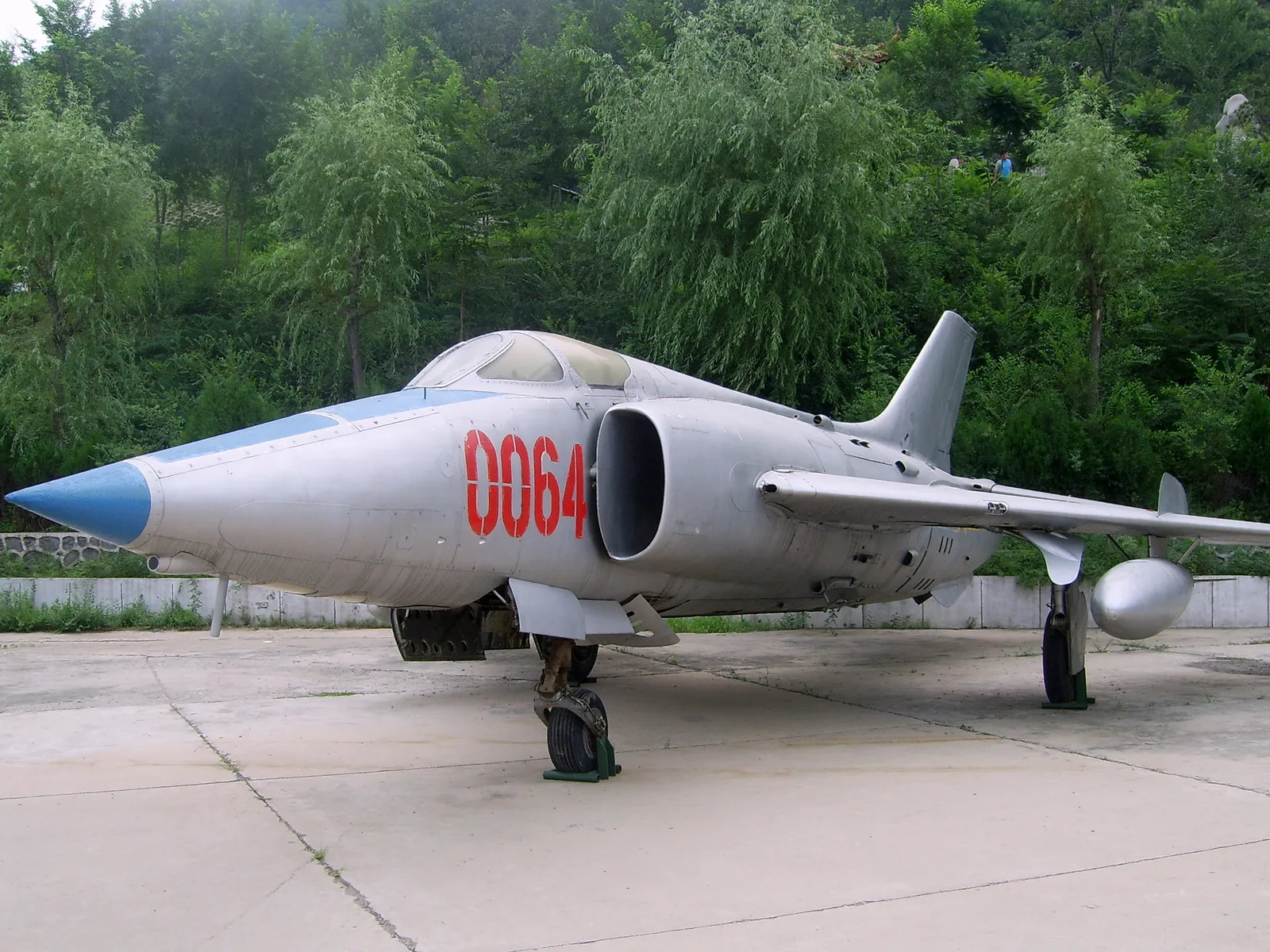
The Nanchang Q-5, exported as the A-5 Fantan, is a Chinese single-seat, twin-engine ground-attack aircraft built by Nanchang Aircraft Company from the MiG-19/J-6 lineage. Its redesign moved the intakes to the fuselage sides, emphasized low-altitude attack, and paired 23 mm cannon with bombs, rocket pods, and short-range air-to-air missiles. Export A-5 variants added customer-specific avionics and weapons fits for operators including Pakistan, Bangladesh, Myanmar, and Sudan.
Amnesty International documented A-5 Fantans at Nyala airport in early 2007 and described them as aircraft designed for ground-attack operations.
GoKunming identified a Myanmar Air Force A-5C Fantan in March 2015 reporting on the Kokang fighting and the cross-border bombing incident in Yunnan.
Tearline identified A-5C aircraft at Myanmar airbases and in domestic airstrike operations during the post-2021 civil war.
The Q-5 and export A-5 family appear in conflict reporting from Africa and Myanmar as a ground-attack platform used for strike sorties and airbase-based offensive operations.
| Conflict | Side | Context |
|---|---|---|
| 2003 War in Darfur | Sudanese government and allied militias | Amnesty documented A-5 Fantans at Nyala airport in early 2007 and said they were designed for ground-attack operations. |
| 2015 Kokang Offensive | Myanmar government and military forces | March 2015 reporting on the Kokang fighting identified a Myanmar Air Force A-5C Fantan and described the cross-border bombing incident in Yunnan. |
| 2021 Myanmar Civil War | State Administration Council and allied forces | Tearline identified A-5C aircraft at Myanmar airbases and in domestic airstrike operations during the post-2021 civil war. |
Q-5 designations cover domestic attack-aircraft upgrades, while A-5 designations identify export versions. Public sources do not always map every export name to a single Chinese-service subvariant, so the rows below group only the source-backed distinctions.
| Variant | Configuration | Designation notes |
|---|---|---|
| Q-5 | Baseline Chinese attack aircraft | GlobalSecurity describes the Q-5/A-5 as a Nanchang-developed single-seat, twin-engine supersonic attack aircraft derived from the MiG-19 program and optimized for low-altitude attack. Sources: FANTAN Q-5 / A-5 Overview |
| Q-5I | Extended-range domestic variant | GlobalSecurity says the Q-5I replaced the internal bomb bay with fuel capacity, adjusted stores carriage, and increased payload to about 2 tons. |
| Q-5IA | Improved domestic variant | GlobalSecurity lists warning/countermeasure equipment, a revised gun-bomb sight, pressure refueling, and electric bomb-release changes for the Q-5IA branch. |
| Q-5II / A-5B | Radar-warning and export branch | GlobalSecurity identifies Q-5II/A-5B as a Q-5I-based improvement with tail-warning, bomb-sight, pressure-filling, and external-weapons changes. Sources: FANTAN Variants - Q-5I/Q-5II/Q-5III/Q-5IV, Export Variant Designations |
| Q-5III / A-5C | Pakistan-oriented export strike variant | GlobalSecurity describes the Q-5III/A-5C as an export model shaped by Pakistan-specific requests, including Western equipment, Martin-Baker ejection seats, and compatibility with AIM-9/R550-class missiles; the Pakistan Air Force account says 54 A-5 IIIs were ferried from China in 1983-1984. Sources: FANTAN Variants - Q-5I/Q-5II/Q-5III/Q-5IV, Export Variant Designations, Fantastic Fantan Tale of a Rugged Warrior |
| Q-5M / A-5M | Italian-avionics upgrade project | GlobalSecurity describes the Q-5M/A-5M as a Nanchang-Aeritalia avionics modernization with AMX-derived navigation and attack electronics; its export A-5M branch was cancelled after 1989. Sources: FANTAN Variants - Q-5M / A-5M, Export Variant Designations |
GlobalSecurity traces the Dongfeng 106/Q-5 effort to an improvement of the MiG-19 fighter, with early design at Plant 112 and later transfer to Nanchang 320 Plant.
Sources: FANTAN Q-5 / A-5 Overview
The Q-5 design moved the air inlets to the fuselage sides and used nose volume for radar and electronic equipment space, separating the attack aircraft from the nose-intake MiG-19/J-6 layout.
Sources: FANTAN Q-5 / A-5 Overview
GlobalSecurity says the Q-5I extended-range project began in April 1977, with the bomb bay converted for fuel and stores carriage revised for a larger external load.
Sources: FANTAN Variants - Q-5I/Q-5II/Q-5III/Q-5IV
GlobalSecurity says Pakistan accepted its initial 42 Q-5III aircraft in February 1983, with exports following under the A-5C/A-5III branch.
Sources: FANTAN Variants - Q-5I/Q-5II/Q-5III/Q-5IV
The Pakistan Air Force magazine account says the first six A-5 IIIs arrived on 1983-02-12 and that 54 aircraft were ferried from China over the following months.
Sources: Fantastic Fantan Tale of a Rugged Warrior
GlobalSecurity says China National Aero-Technology Import and Export Corporation and an Italian aircraft company agreed in July 1986 on a 30-month Western-avionics upgrade plan for the Q-5M/A-5M.
Sources: FANTAN Variants - Q-5M / A-5M
GlobalSecurity identifies 1988-08-30 as the first successful flight of the Q-5M prototype before the program was later cancelled.
Sources: FANTAN Variants - Q-5M / A-5M
The Q-5 was not a clean-sheet aircraft. Sources tie it to the MiG-19/J-6 family, but describe a substantial attack-aircraft redesign: side intakes opened nose volume for planned electronics, the airframe was adapted for low-altitude strike, and later export models added customer-specific weapons and avionics.
MiG-19/J-6-derived twin-jet attack aircraft developed by Nanchang Aircraft Company.
Two 23 mm cannon plus bombs, rocket pods, and short-range air-to-air missiles in the source specification set.
A-5C/A-5III export aircraft added Western equipment and missile compatibility for Pakistan and other customers.