Munitions

PL-5

Also known as
  • PL-5E
  • PL-5EII
  • PL-5B
  • PL-5C
  • Pen Lung 5
  • Air Dragon 5
  • Pi Li 5
  • Thunderbolt-5

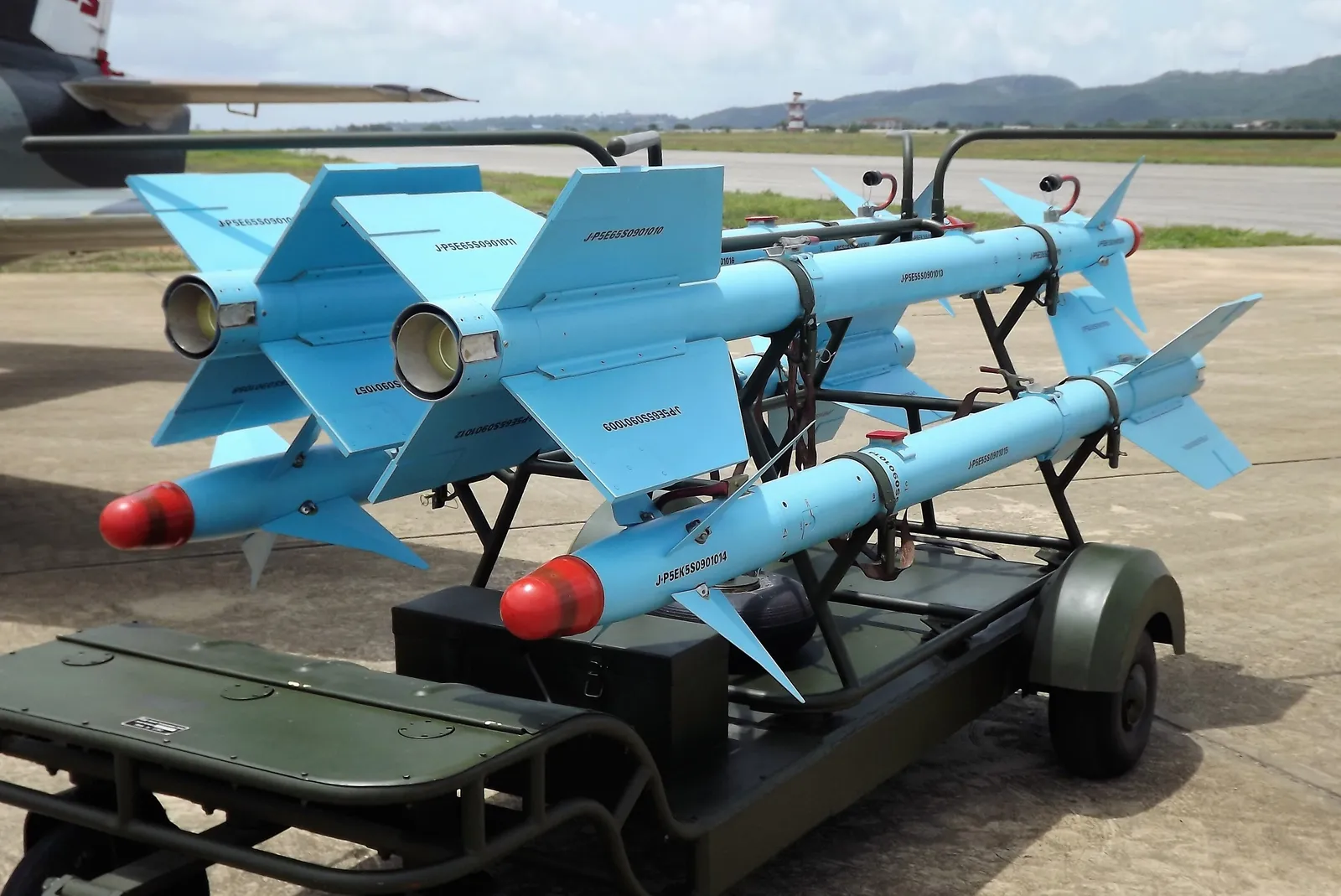
The PL-5 is a Chinese short-range infrared air-to-air missile family tied to the Luoyang/Institute 612 and China Airborne Missile Academy lineage. It began as a long-running Cold War-era dogfight-missile program and stayed catalog-relevant through PL-5E and PL-5EII export-era upgrades for lighter Chinese fighter and trainer platforms.

Profile / Specs

Profile

Origin
China
Type
Short-range infrared air-to-air missile
Service note
Cold War-origin Chinese air-to-air missile family with later export and upgrade variants
Designer
China Airborne Missile Academy predecessor organizations in the Luoyang / Institute 612 lineage
Produced
Low-rate PL-5B production reported from 1987; PL-5E export variant available by 1999

Specifications

Role
Short-range air-to-air missile
Guidance
Infrared homing for production PL-5B and later family members; PL-5EII references describe a dual-band, multi-element infrared detector
Propulsion
Solid-fuel rocket motor
Representative range
Public ODIN summaries place PL-5E and PL-5EII in the roughly 16 km short-range class
Representative speed
Public summaries commonly list the PL-5 family around Mach 2-plus class
PL-5E seeker cueing
ODIN reports CATIC-published all-aspect PL-5E off-boresight figures of +/-25 degrees before launch and +/-40 degrees after launch
PL-5EII fuze
Laser proximity fuse reported for the later PL-5EII
Catalog scope
Relationship-only compatibility, manufacturer, and PL-series context; no direct conflict-use claim is attached
Variants

Open sources describe the PL-5A radar-homing branch as cancelled, the PL-5B as the infrared production branch, and later PL-5E/PL-5EII models as all-aspect or improved export-era upgrades.

VariantConfigurationDesignation notes
PL-5ACancelled semi-active radar-homing branch

CASI records PL-5 development beginning in 1966 and identifies the PL-5A radar-homing branch as cancelled in 1983 rather than fielded as the mature infrared family.

Sources: CASI Air-to-Air Missiles in China

PL-5BInfrared-guided production model

Military Periscope describes the PL-5B as an infrared-homing design with improved seeker and maneuvering features compared with earlier PL-2-derived weapons; CASI reports low-rate PL-5B production from 1987.

Sources: Military Periscope PL-5 overview, CASI Air-to-Air Missiles in China

PL-5EAll-aspect export-era upgrade

CASI describes the PL-5E as an all-aspect development of the PL-5B that became available in 1999, while ODIN reports public CATIC claims for PL-5E off-boresight seeker limits.

Sources: CASI Air-to-Air Missiles in China, ODIN PL-5 equipment guide

PL-5EIIImproved export-era variant

ODIN and The War Zone describe PL-5EII as a later PL-5 model with improved infrared seeker features and a laser proximity fuse; ODIN specifically identifies a dual-band, multi-element detector.

Sources: ODIN PL-5 equipment guide, The War Zone Chinese AAM guide

Carrier Aircraft

The PL-5 page remains relationship-only because reviewed sources support compatibility and display context more strongly than direct conflict use by the missile itself.

CarrierCarrier typeCarriage evidence
Hongdu L-15, Supersonic advanced jet trainer and light-attack aircraft, Aircraft & UAVsHongdu L-15Advanced trainer and light-attack aircraft

Defense News reported CATIC material at Singapore Airshow 2016 listing PL-5EII among the weapons displayed for the armed L-15 attack/fighter/trainer configuration.

Sources: Defense News L-15 PL-5EII display

PAC/CAC JF-17 Thunder fighter, Multirole combat aircraft, Aircraft & UAVsPAC/CAC JF-17 Thunder fighterMultirole combat aircraft

Deagel lists PL-5C among FC-1/JF-17 accepted air-to-air missiles, while Air Power Australia captions a PL-5E-II on a JF-17 wingtip exported to Pakistan.

Sources: Deagel FC-1 / JF-17 profile, Air Power Australia PLA air-to-air missiles report

Chengdu F-7 / J-7 fighter aircraft, Single-engine supersonic fighter and light attack aircraft, Aircraft & UAVsChengdu F-7 / J-7 fighter aircraftLight fighter family

Airforce Technology lists PL-5 among J-7/F-7 air-to-air missiles, and Air Power Australia identifies PL-5 variants as used on the J-7 Fishbed family.

Sources: Airforce Technology J-7 / F-7 fighter aircraft profile, Air Power Australia PLA air-to-air missiles report

Shenyang J-8, Twin-engine interceptor fighter aircraft, Aircraft & UAVsShenyang J-8Interceptor fighter aircraft

Air Power Australia identifies PL-5 variants as used on the J-8 Finback family.

Sources: Air Power Australia PLA air-to-air missiles report

Xi'an JH-7, Twin-engine fighter-bomber, Aircraft & UAVsXi'an JH-7Fighter-bomber

The U.S. Office of Naval Intelligence says the JH-7 can carry two PL-5 or PL-8 short-range air-to-air missiles alongside maritime-strike loads.

Sources: ONI PLA Navy capabilities report

Nanchang Q-5 / A-5, Ground-attack aircraft, Aircraft & UAVsNanchang Q-5 / A-5Ground-attack aircraft

Air Power Australia identifies PL-5 variants as used on the Q-5 Fantan attack-aircraft family.

Sources: Air Power Australia PLA air-to-air missiles report

K-8 Karakorum trainer aircraft, Jet trainer / light attack aircraft, Aircraft & UAVsK-8 Karakorum trainer aircraftJet trainer and light attack aircraft

Airforce Technology lists PL-5 and PL-7 air-to-air missiles among K-8 Karakorum armament options.

Sources: Airforce Technology K-8 Karakorum project profile

Timeline

PL-5 Key Events

  1. PL-5 development begins

    CASI traces the PL-5 program to Institute 612-era work that began in 1966 as China pursued a more capable follow-on to earlier PL-series short-range missiles.

  2. PL-5A branch cancelled

    The semi-active radar-homing PL-5A path was cancelled, leaving the infrared-guided PL-5B branch as the practical production direction.

  3. PL-5B low-rate production reported

    CASI reports low-rate production of the PL-5B infrared model beginning in 1987 after the long development cycle.

  4. PL-5E available

    CASI describes the PL-5E as an all-aspect PL-5B development that became available in 1999, setting up the later export-oriented PL-5EII context.

  5. PL-5EII displayed with L-15 stores

    Defense News reported CATIC Singapore Airshow material listing PL-5EII among the stores offered with the armed Hongdu L-15 attack/fighter/trainer configuration.

Related Weapon Systems
Northrop F-5 Freedom Fighter / Tiger II, Supersonic light fighter aircraft, Aircraft & UAVsAircraft & UAVsNorthrop F-5 Freedom Fighter / Tiger IISupersonic light fighter aircraftThe Northrop F-5 Freedom Fighter / Tiger II is a lightweight supersonic fighter family developed by Northrop for export customers, low operating cost, and easy support. The later F-5E/F Tiger II and F-5N/F adversary aircraft kept the design relevant through radar, structural, avionics, and training-role upgrades, while combat use spans Vietnam, Iran, Yemen, North Africa, and other source-limited air-war records.
Harbin H-5 bomber, Twin-jet light bomber, Aircraft & UAVsAircraft & UAVsHarbin H-5 bomberTwin-jet light bomberThe Harbin H-5 is a Chinese-built derivative of the Soviet Ilyushin Il-28, produced by Harbin Aircraft Factory as a twin-jet tactical light bomber with a three-person crew and a 3,000 kg maximum bomb load. Chinese state-industry history describes the H-5 as heavily reworked for local production, with a redesigned wing, shared H-6 equipment, bomber-trainer, reconnaissance, electronic-warfare, torpedo, and nuclear-test variants, and Chinese service lasting until the early 2010s.
Chengdu J-10C, Single-engine multirole fighter aircraft, Aircraft & UAVsAircraft & UAVsChengdu J-10CSingle-engine multirole fighter aircraftThe Chengdu J-10C is a Chinese single-engine multirole fighter developed by Chengdu Aircraft Industry Group and exported as the J-10CE. Public manufacturer and state-media material emphasizes all-weather multirole missions, AESA-class radar, electronic-warfare and cooperative-engagement features, PL-15/PL-15E beyond-visual-range missile compatibility, and Pakistan's documented use of the type during the 2025 India-Pakistan Conflict.
Shenyang J-11, Air-superiority fighter aircraft, Aircraft & UAVsAircraft & UAVsShenyang J-11Air-superiority fighter aircraftThe Shenyang J-11 is a Chinese Flanker-family air-superiority fighter derived from the Sukhoi Su-27SK and built by Shenyang Aircraft Corporation. The family moved from license-produced J-11/J-11A aircraft into domestically upgraded J-11B, naval, trainer, J-11BG, and J-11D branches, with later versions adding Chinese avionics, WS-10-series engines, and PL-10/PL-15-class missile compatibility. Its directly documented dispute record centers on People's Liberation Army air intercepts over the South China Sea rather than a conventional shooting war.
Nanchang Q-5 / A-5, Ground-attack aircraft, Aircraft & UAVsAircraft & UAVsNanchang Q-5 / A-5Ground-attack aircraftThe Nanchang Q-5, exported as the A-5 Fantan, is a Chinese single-seat, twin-engine ground-attack aircraft built by Nanchang Aircraft Company from the MiG-19/J-6 lineage. Its redesign moved the intakes to the fuselage sides, emphasized low-altitude attack, and paired 23 mm cannon with bombs, rocket pods, and short-range air-to-air missiles. Export A-5 variants added customer-specific avionics and weapons fits for operators including Pakistan, Bangladesh, Myanmar, and Sudan.

Sources