- Side
- North Vietnam and Viet Cong

North Vietnam fielded missile-armed MiG-21s from 1966 as ground-controlled interceptors against U.S. strike packages, using fast one-pass attacks to disrupt bombing missions over North Vietnam.
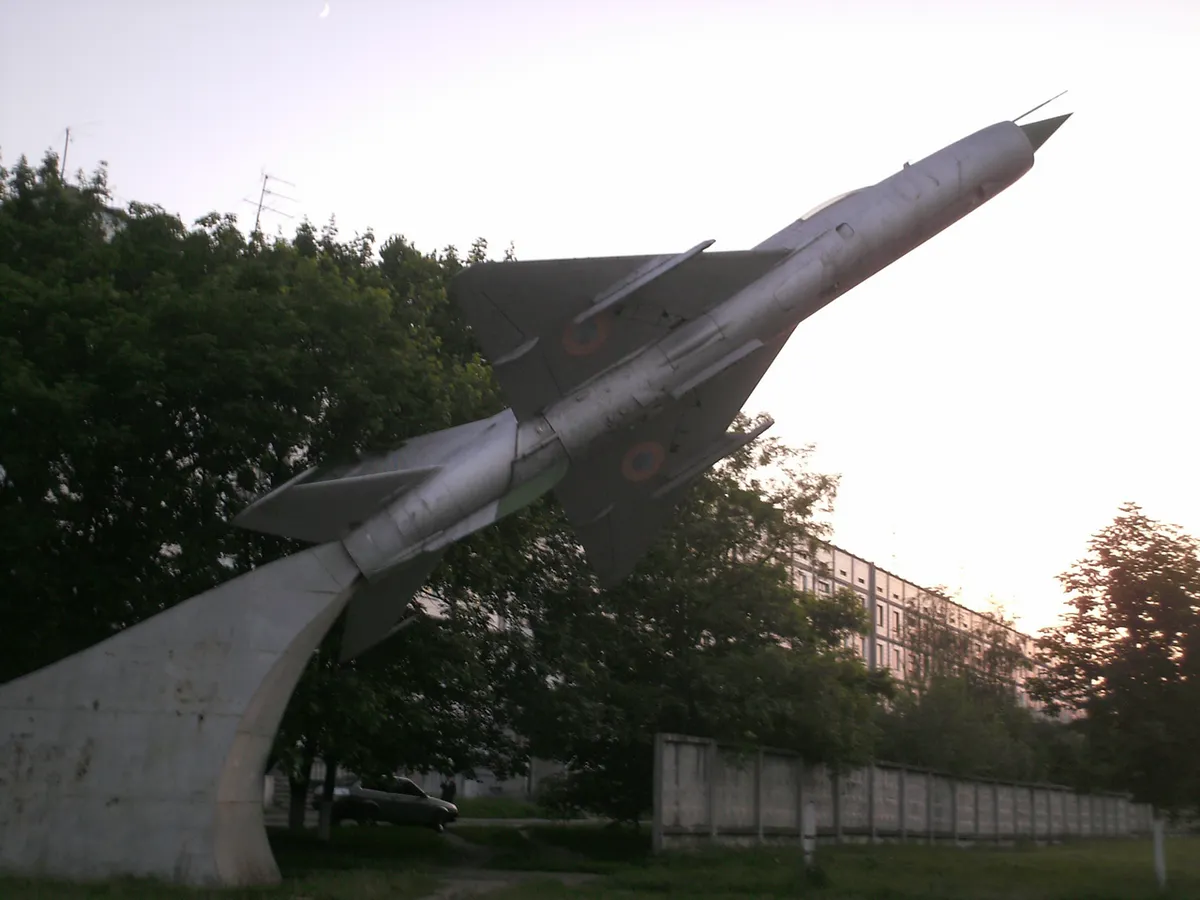
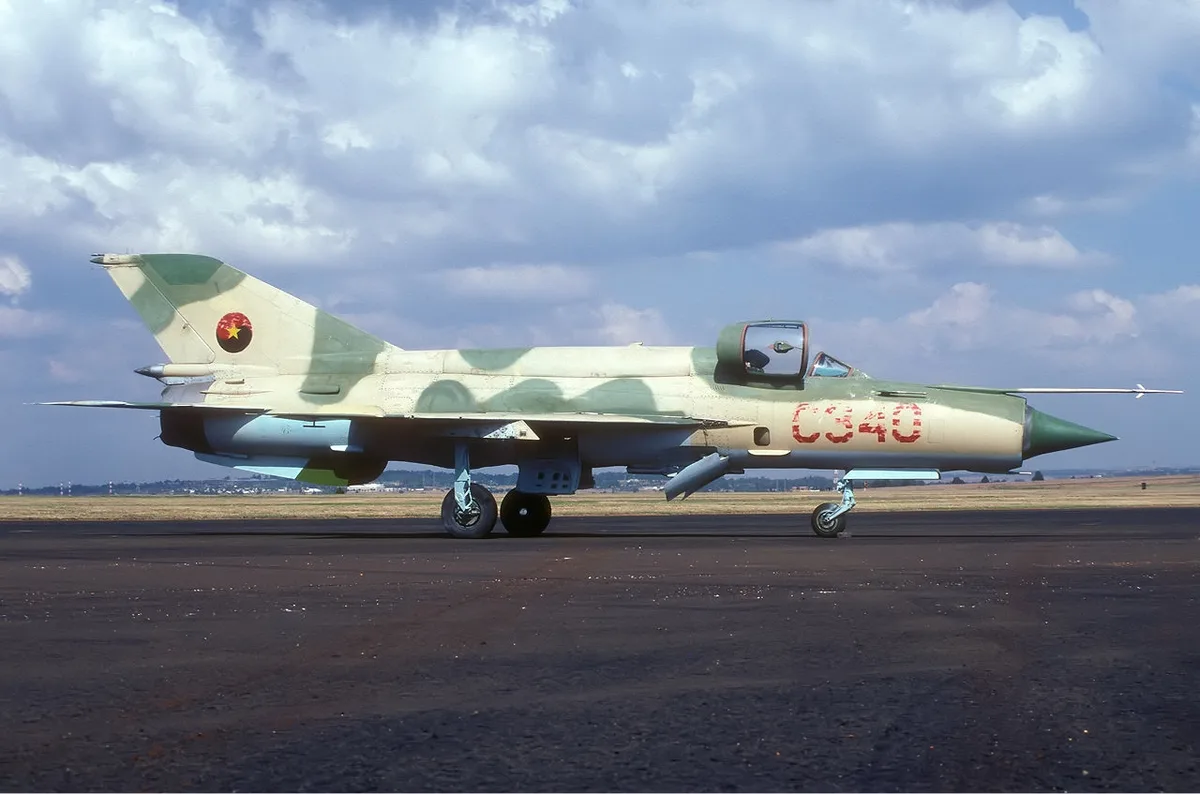
The MiG-21 is a Soviet-designed supersonic fighter and interceptor that became one of the most widely built jet fighters of the Cold War. Its conflict record spans North Vietnamese interceptor use, Indian MiG-21FL combat in 1971, Arab and Iraqi air-defense service, Syrian and Libyan wartime fielding, and a conservative Azerbaijani fleet-context row for 2020 reporting where MiG-21 sorties are not directly documented.
North Vietnam fielded missile-armed MiG-21s from 1966 as ground-controlled interceptors against U.S. strike packages, using fast one-pass attacks to disrupt bombing missions over North Vietnam.
Indian Air Force MiG-21FLs flew combat air patrol, escort, and strike-support missions in the 1971 war, including the Jamnagar CAP engagement in which a No. 47 Squadron MiG-21FL shot down a Pakistani F-104A.
Egyptian and Syrian MiG-21 units formed part of Arab fighter-interceptor forces in the 1973 Yom Kippur War, with Egyptian squadron accounts and Syrian Air Force combat reporting documenting MiG-21 activity around the October air campaign.
Iraq operated MiG-21s as a major fighter element during the Iran-Iraq War, including early-war engagements in which Iraqi MiG-21s intercepted Iranian F-5 strike aircraft.
Iraq fielded MiG-21s during the 1990 Gulf War; U.S. Air Force historical analysis lists two Iraqi MiG-21s among aircraft shot down during Operation Desert Storm.
Role detailsSyrian government forces kept MiG-21s in limited wartime service, with sources documenting Syrian Arab Air Force MiG-21s joining the post-2012 air campaign, residual Hama-based combat sorties after 2016, and a Hama-based MiG-21 shot down near Kafr Nabudah in March 2016.
Role detailsLibyan National Army-aligned air forces used MiG-21s for strike missions during the 2014 Second Libyan Civil War, including reported Benghazi air strikes in 2014 and a MiG-21 shot down by GNA-aligned forces south of Tripoli in April 2019.
Azerbaijan fielded MiG-21s in its combat-jet fleet during 2020 Nagorno-Karabakh reporting, but the cited source uses the type as an Azerbaijani aircraft comparison point and does not document MiG-21 combat sorties.
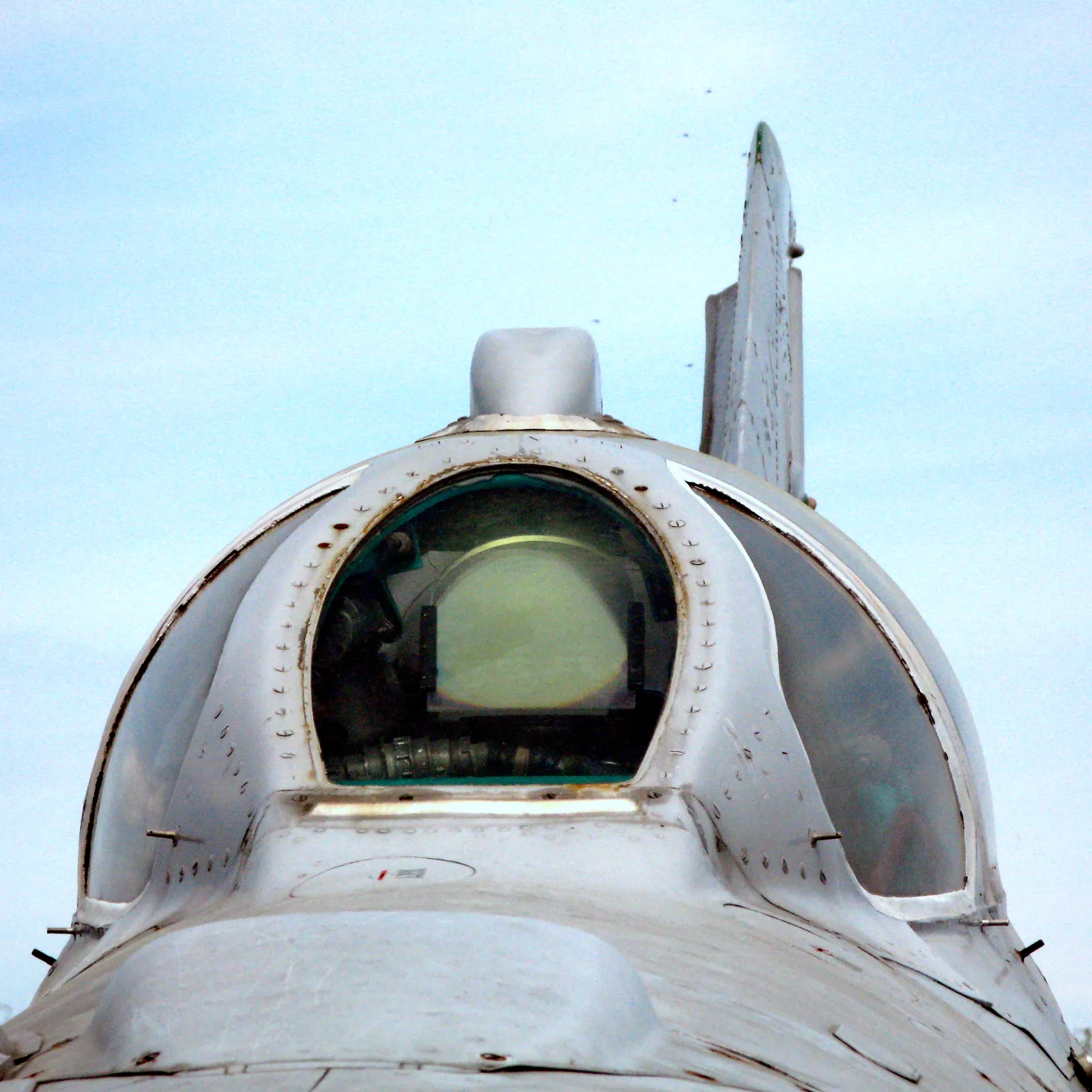
The MiG-21 was developed as a compact Soviet short-range interceptor and light fighter rather than a large multirole aircraft. Museum sources describe a tailed-delta layout, high speed, simple construction, and enough ruggedness for wide export service.
Single-seat fuselage, nose intake, delta wing, and a design emphasis on speed, climb, and production scale.
Radar, engine, fuel, canopy, ejection-seat, cannon, and stores changes turned the early clear-weather fighter into all-weather interceptor and multirole branches.
MiG-21 designations track a long Soviet fighter/interceptor development path rather than one fixed aircraft standard. Early F-series aircraft were short-range clear-weather fighters, PF/PFM variants added radar and all-weather interceptor features, MF-era aircraft broadened the multirole fit, and the bis branch carried the final Soviet single-seat MiG-21 engine and avionics improvements.
| Variant | Configuration | Designation notes |
|---|---|---|
| MiG-21F-13 | Early clear-weather fighter/interceptor | The first operational branch paired the tailed-delta fighter airframe with early K-13 missile armament and entered service at the start of the 1960s. |
| MiG-21PF | All-weather interceptor | The radar-equipped Fishbed-D branch added all-weather interception features and missile armament; the U.S. Air Force museum example represents a North Vietnamese 921st Fighter Regiment aircraft. Sources: Mikoyan-Gurevich MiG-21PF Fishbed-D, Mikoyan-Gurevich MiG 21PF |
| MiG-21PFM | Improved interceptor | The PFM branch introduced high-lift and field-operation changes while retaining the compact interceptor logic of the MiG-21 family. |
| MiG-21MF | Multirole fighter branch | The MF-era branch broadened the export and multirole fit, including later engine and stores changes compared with earlier PF/PFM interceptors. Sources: All the World's Aircraft MiG-21 |
| MiG-21bis | Final Soviet single-seat branch | Late Fishbed variants used the R-25-300 engine and a more capable stores fit, including a 23 mm cannon and four wing hardpoints on representative museum examples. Sources: Mikoyan-Gurevich MiG-21, All the World's Aircraft MiG-21 |
 | Indian MiG-21bis upgrade | India's Bison upgrade kept the MiG-21bis airframe in service with modernized radar, avionics, missile compatibility, and defensive systems. |
MiG-21 stores changed by variant, but public records already cover several weapons and pods directly tied to the Fishbed family.
| Carried item | Item type | Carriage evidence |
|---|---|---|
 | Short-range air-to-air missile | The National Museum of the U.S. Air Force lists K-13/Atoll missiles on its MiG-21PF fact sheet, and missile-family sources identify the MiG-21F-13 as an early K-13 carrier. Sources: Mikoyan-Gurevich MiG-21PF Fishbed-D, R-3S aircraft missile (K-13, item 310 and 310A) |
 | 23 mm aircraft cannon | MiG-21 references document GP-9 pod carriage on second-generation variants and permanent GSh-23L installation on later variants such as the MiG-21M, MiG-21MF, MiG-21SMT, and MiG-21bis. Sources: All the World's Aircraft MiG-21 |
 | 57 mm rocket pod | MiG-21 stores references list UB-16-family rocket pods among documented MiG-21 external weapons, linking the aircraft to the Soviet S-5 rocket-pod ecosystem. Sources: All the World's Aircraft MiG-21 |
 | General-purpose bomb load | Weaponsystems.net names the MiG-21 among FAB M62 carrier aircraft, and cataloged FAB-100M-62 loadout references include MiG-21 variants. Sources: Weaponsystems.net FAB M62 |
Museum of Flight material places the start of Mikoyan MiG-21 design work in 1953, before prototype flying and later high-volume production.
Sources: Mikoyan-Gurevich MiG-21 PFM Fishbed-F
Museum sources describe the MiG-21 as first flown in 1955, establishing the compact Soviet fighter layout that later became the Fishbed family.
Sources: Mikoyan-Gurevich MiG-21 PFM Fishbed-F, Mikoyan-Gurevich MiG-21PF Fishbed-D
The first operational version entered service as the MiG-21F-13, pairing the tailed-delta fighter airframe with early missile armament.
Sources: Mikoyan-Gurevich MiG-21F-13 Fishbed-C
National Museum of the U.S. Air Force material describes North Vietnamese MiG-21s joining the air war as fast, ground-controlled interceptors against U.S. strike aircraft.
Sources: Countering MiGs: Air-to-Air Combat Over North Vietnam, Mikoyan-Gurevich MiG-21PF Fishbed-D
The National Museum of the U.S. Air Force states that the USSR built more than 10,000 MiG-21s before production ended in 1985.
Sources: Mikoyan-Gurevich MiG-21PF Fishbed-D