- Side
- Azerbaijan

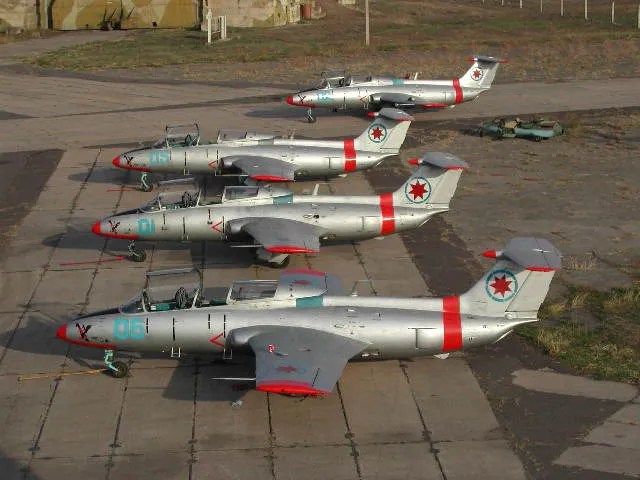
Azerbaijani forces used L-29 Delfin jet trainers for rocket and light-bomb sorties during the 1988-1994 war; ACIG reports L-29 combat use from June 1992 onward and several L-29 losses to Armenian air defenses.
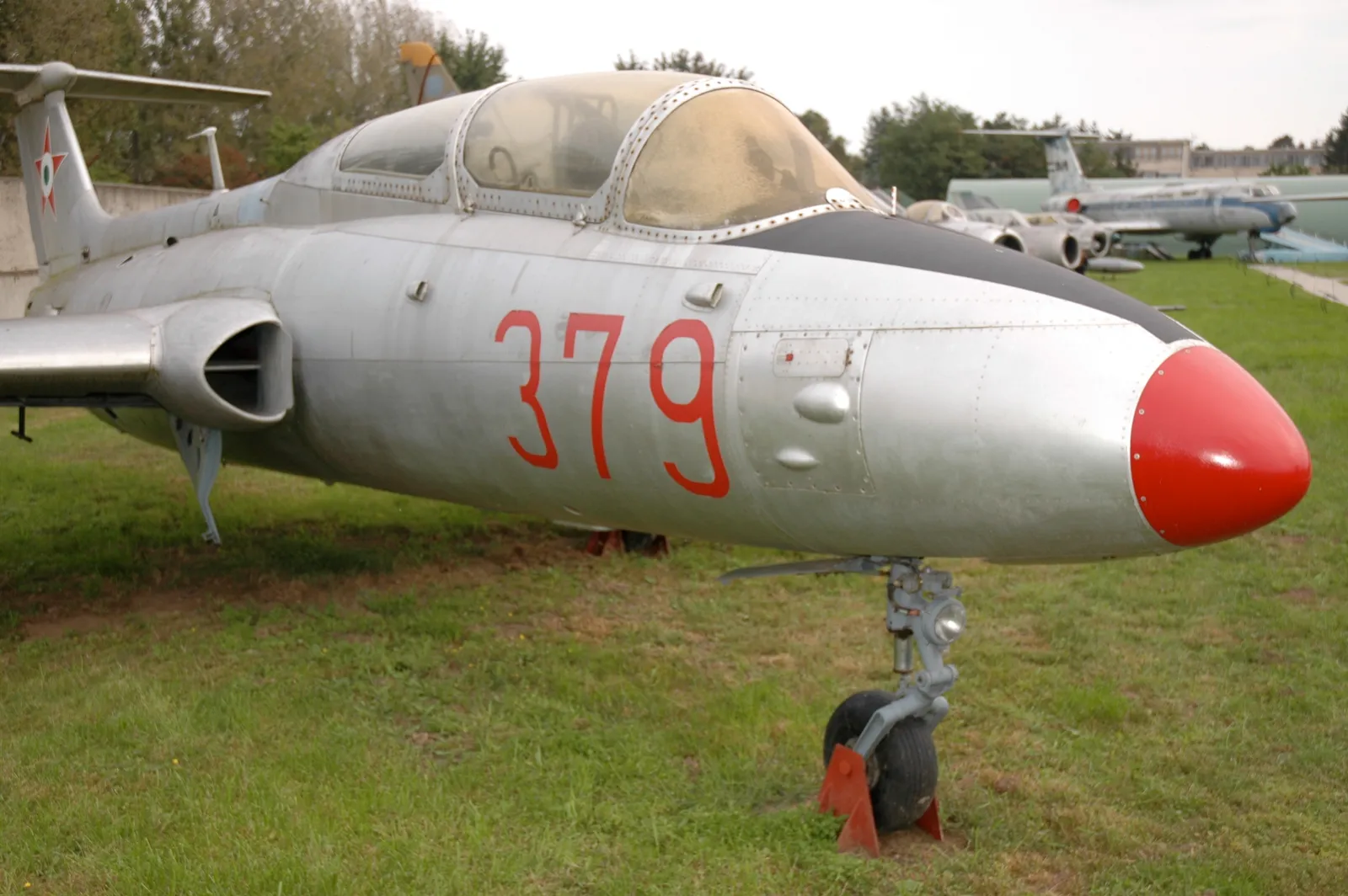
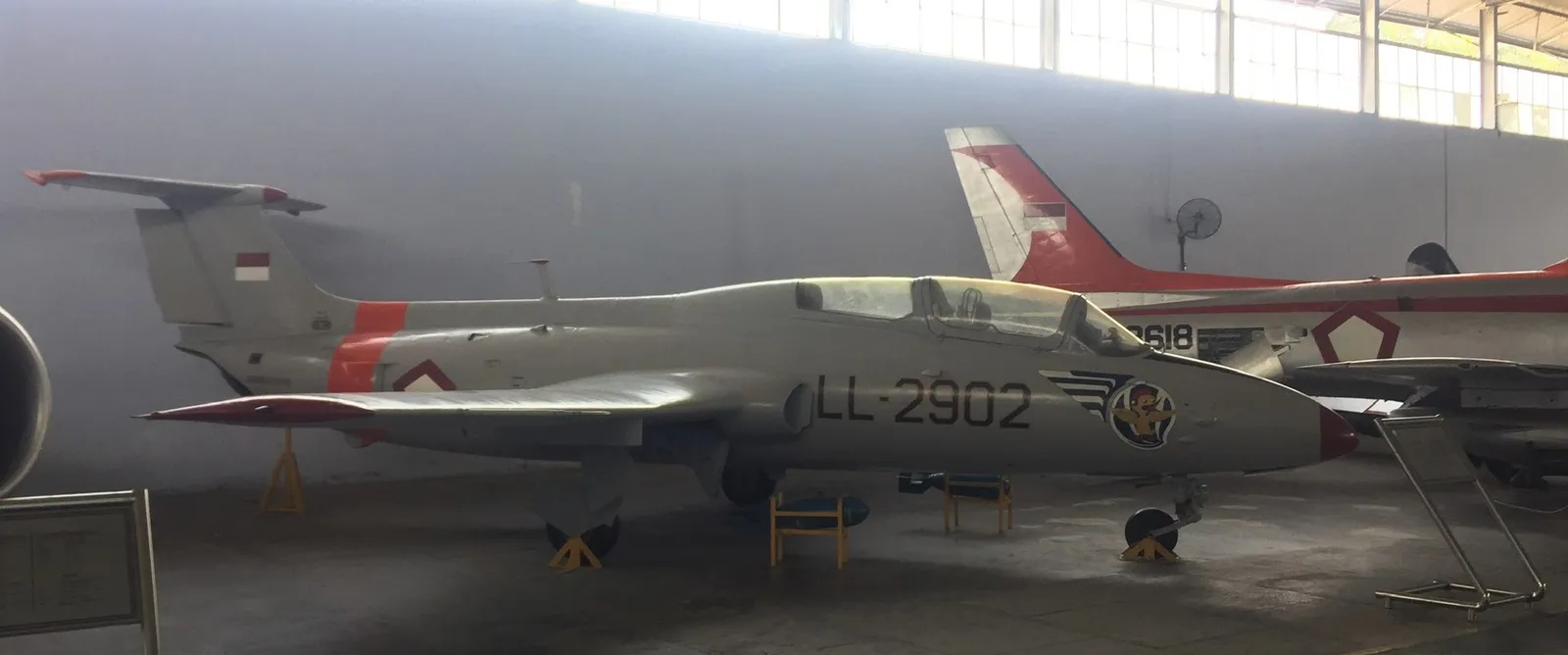
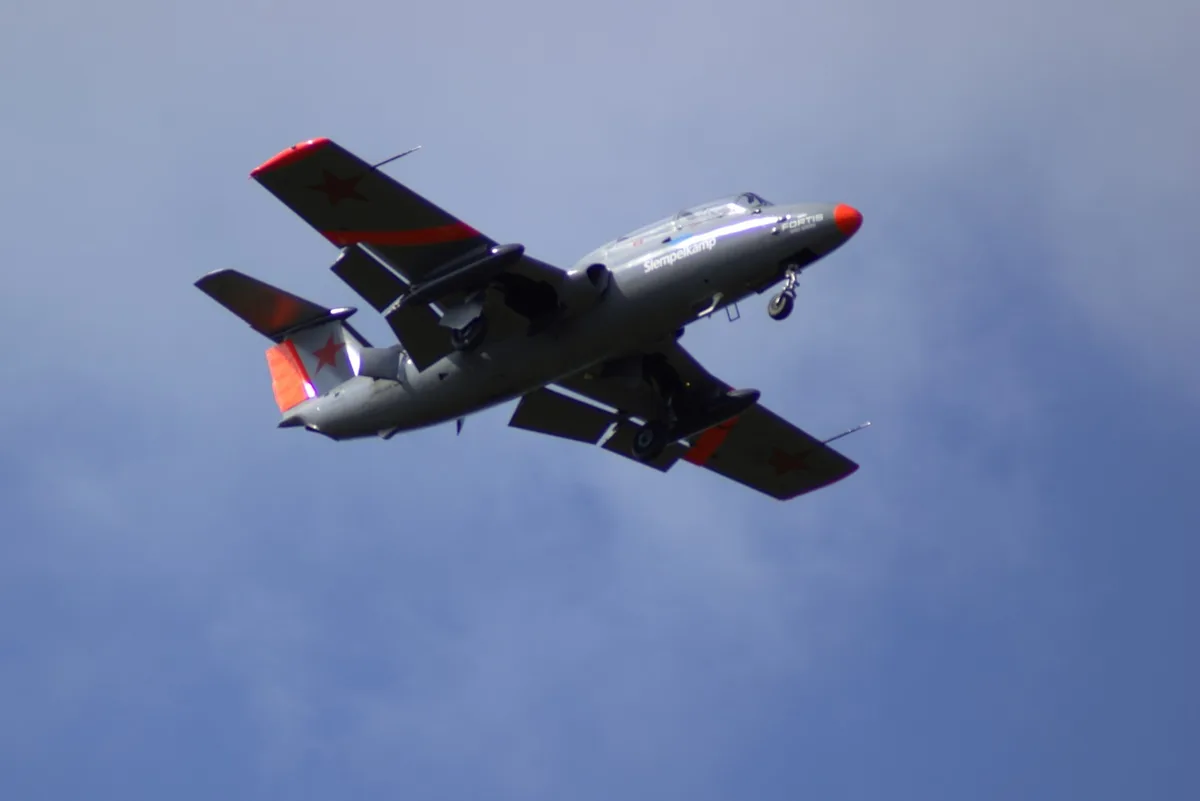
The Aero L-29 Delfin is a Czechoslovak two-seat jet trainer built by Aero Vodochody and Let Kunovice for Warsaw Pact and export air forces. Its simple, rugged design was optimized for basic, intermediate, and weapons training, with underwing stores for gun pods, light bombs, or unguided rockets. Azerbaijani forces pressed L-29s into ground-attack service during the 1988 First Nagorno-Karabakh War, where the lightly protected trainers suffered repeated losses to Armenian air defenses.
Azerbaijani forces used L-29 Delfin jet trainers for rocket and light-bomb sorties during the 1988-1994 war; ACIG reports L-29 combat use from June 1992 onward and several L-29 losses to Armenian air defenses.
The L-29 was designed as a simple training aircraft rather than a protected attack jet. Museum and aviation sources describe a rugged two-seat trainer with manual flight controls, hydraulic flaps and airbrakes, synchronized ejection seats, and two underwing pylons for weapons training. In Azerbaijani service during the 1988-1994 war, that light stores fit allowed rocket and bomb attacks, but ACIG's loss chronology shows how vulnerable the aircraft was to dense gun and MANPADS defenses.
Tandem crew seating put the instructor behind and above the student, with both seats in a pressurized cockpit.
Reference material emphasizes a straightforward airframe intended for easy operation, maintenance, and training use from austere airfields.
The underwing fit supported two 100 kg bombs, rocket launchers, or 7.62 mm gun pods, but not the armor or payload of a dedicated strike aircraft.
Sources: Polish Aviation Museum L-29 Delfin; Skytamer L-29 Delfin; Air War over Nagorniy-Kharabakh, 1988-1994.
The Delfin family was centered on the basic two-seat trainer, with limited specialist versions for aerobatics and reconnaissance.
| Variant | Configuration | Designation notes |
|---|---|---|
| L-29 Delfin | Two-seat basic and advanced trainer | Baseline production aircraft used for Warsaw Pact jet training and export service. Sources: Aero Vodochody History, Polish Aviation Museum L-29 Delfin, Skytamer L-29 Delfin |
| L-29A Akrobat | Single-seat aerobatic version | Museum and reference sources identify the L-29A as a single-seat aerobatic derivative. Sources: Aero L-29R Oko Anniversary, Polish Aviation Museum L-29 Delfin, Skytamer L-29 Delfin |
| L-29R Oko | Two-seat reconnaissance version | Aero describes the Oko reconnaissance version as a modified L-29 with camera equipment under the cockpit area and fixed 200-liter wingtip tanks to extend range. Sources: Aero L-29R Oko Anniversary, Polish Aviation Museum L-29 Delfin |
| L-29RS | Single-seat advanced-training version | Aero identifies the L-29RS as a one-seat advanced-training derivative produced during the L-29 program. |
The L-29 Delfin could carry bombs on its underwing hardpoints during weapons-training or light-attack use.
| Carried item | Item type | Carriage evidence |
|---|---|---|
 | 100 kg freefall aviation bomb | Source material for the L-29 lists either two bombs of up to 220 lb (100 kg) under the wings. Sources: Skytamer L-29 Delfin |
Open sources also describe the L-29 as able to carry underwing 7.62 mm machine-gun pods for weapons training and light attack.
| Carried item | Item type | Carriage evidence |
|---|---|---|
 | Underwing gun pod | The aircraft was equipped with hardpoints to carry two 7.62 mm machine-gun pods under the wings. Sources: Skytamer L-29 Delfin |
Open sources describe the L-29 Delfin as able to carry air-to-ground rockets on its underwing hardpoints.
| Carried item | Item type | Carriage evidence |
|---|---|---|
 | 57 mm unguided air-to-surface rocket | Skytamer lists eight air-to-ground rockets as one of the L-29's armament options, and WeaponsSystems.net identifies the common fit as R57-4M launchers carrying 57 mm S-5 aerial rockets. Sources: Skytamer L-29 Delfin, Aero L-29 Delfin - Weaponsystems.net |
The XL-29 prototype made its first flight in Czechoslovakia, beginning the Delfin test program.
Sources: Aero Vodochody History, Czech MOD L-29 Delfin, Polish Aviation Museum L-29 Delfin, Skytamer L-29 Delfin
The L-29 won the Moscow competition for a common Warsaw Pact jet trainer against the Yak-30 and TS-11 Iskra.
Sources: Polish Aviation Museum L-29 Delfin
Serial production began in 1963, with Delfins built at Aero Vodochody and Let Kunovice until 1974.
Sources: Aero Vodochody History, Czech MOD L-29 Delfin, Polish Aviation Museum L-29 Delfin, Skytamer L-29 Delfin
Aero says the first reconnaissance-version prototype appeared under the Oko project, adding camera equipment and fixed wingtip tanks.
Sources: Aero L-29R Oko Anniversary
ACIG reports that Azerbaijan took over L-29 and L-39 trainers from the former Soviet 97th IAP and used them in combat from June 1992.
Sources: Air War over Nagorniy-Kharabakh, 1988-1994
During Azerbaijani attacks near the Lachin corridor, ACIG reports one L-29 shot down and another damaged after flying into heavy defensive fire.
Sources: Air War over Nagorniy-Kharabakh, 1988-1994