- Side
- Unconfirmed conflict context

Serial production and planned Turkish Air Force delivery place HÜRJET in a development and procurement context rather than documented battlefield use.
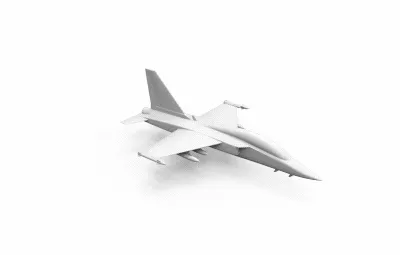
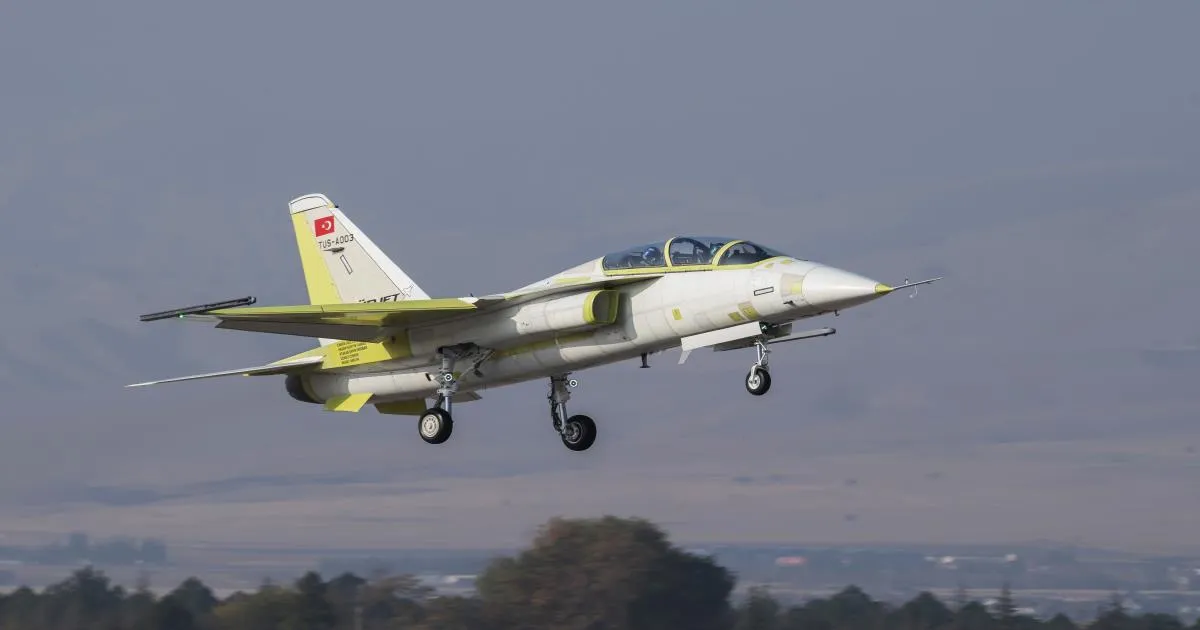
Turkish Aerospace Hürjet is Turkey's single-engine, tandem-seat supersonic advanced jet trainer and light-attack aircraft, developed under SSB coordination for indigenous jet-training capacity. The aircraft first flew in April 2023, is in serial-production and flight-test work for Turkish Air Force service, and now anchors Spain's Airbus-led SAETA II combat-training system while GE Aerospace supplies F404 propulsion support for the program.
Serial production and planned Turkish Air Force delivery place HÜRJET in a development and procurement context rather than documented battlefield use.
HÜRJET is presented primarily as a training aircraft, with light-attack growth roles described in program and propulsion sources rather than documented combat employment.
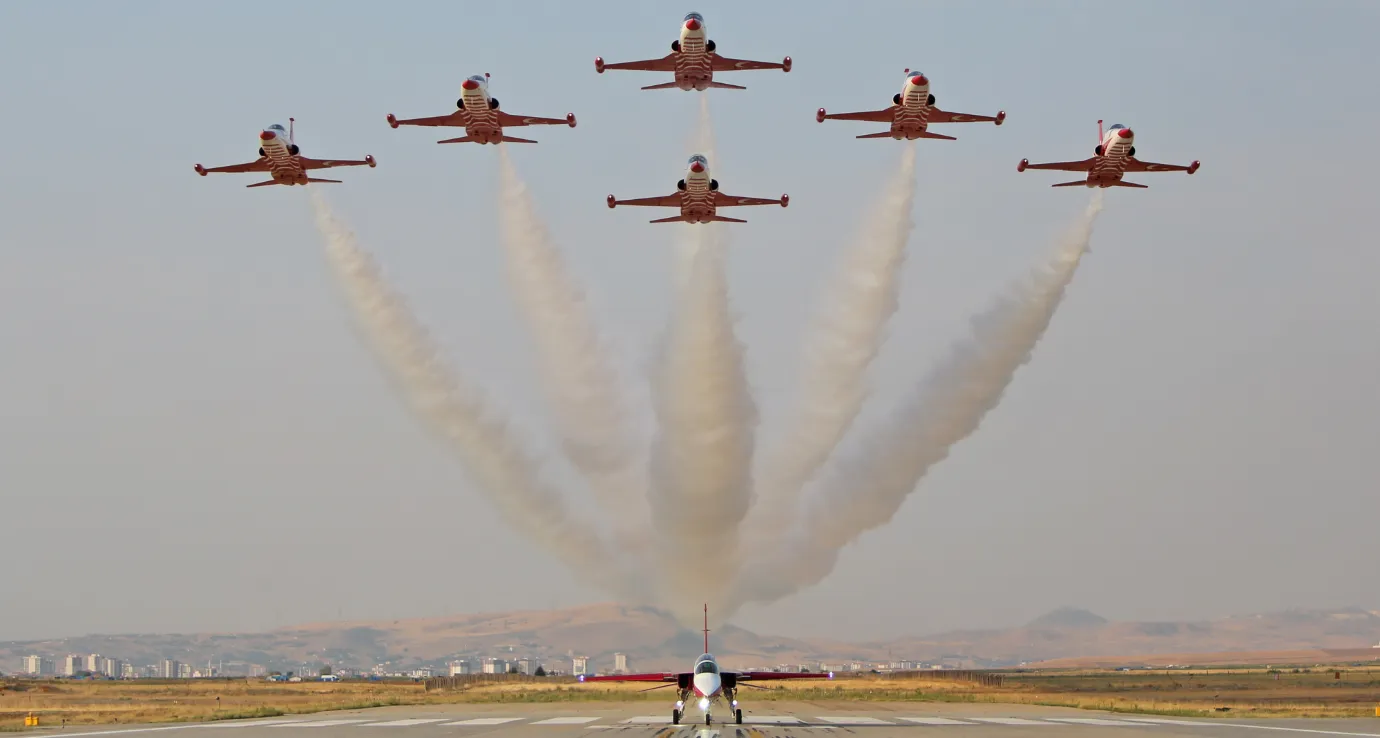
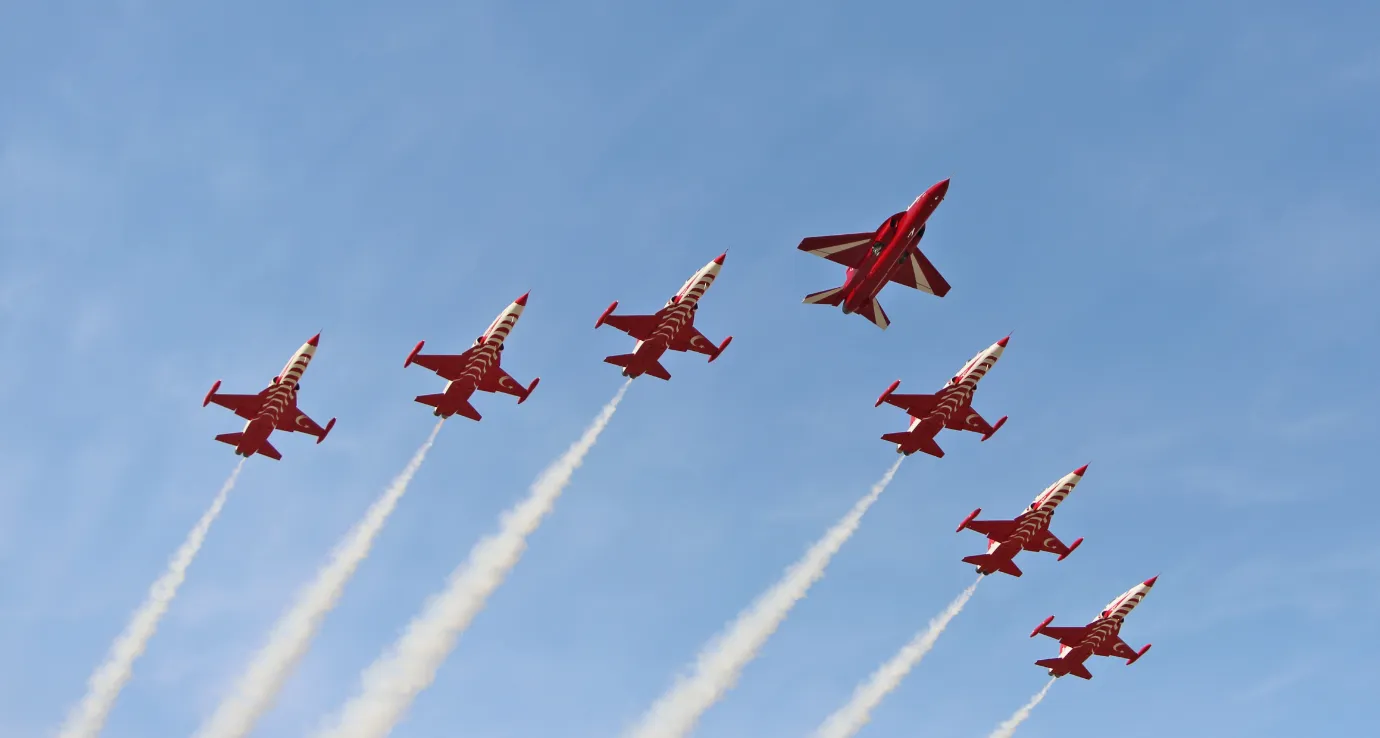
Turkish Aerospace lists advanced jet training, fighter-fundamentals training, red-air work, and aerobatic-team use among HÜRJET's roles.
Source: HÜRJET | Turkish Aerospace.
The official product page says P1 and P2 have made more than 500 test flights while serial production proceeds toward Turkish Air Force delivery.
Source: HÜRJET | Turkish Aerospace.
GE Aerospace says HÜRJET is powered by the F404 and that its 2026 agreement with Turkish Aerospace supports the aircraft and future variants.
Source: GE Aerospace and Turkish Aerospace Announce Agreement for F404 Engines for the HÜRJET Program.
SSB frames HÜRJET as a domestic jet-trainer requirement and Turkish Aerospace positions it alongside Turkey's wider trainer and future-combat-aircraft pipeline. The catalog already has a separate Turkish Aerospace Hürkuş record for the turboprop trainer family; this HÜRJET entry covers the jet trainer and light-attack platform rather than copying Hürkuş export or conflict history.
Public sources distinguish the prototype test aircraft, the baseline advanced jet trainer role, light-attack development context, and Spain's SAETA II configuration derived from HÜRJET.
| Variant | Configuration | Designation notes |
|---|---|---|
| P1 prototype | First flying prototype | Turkish Aerospace identifies the first HÜRJET jet trainer flight on April 25, 2023 and says the aircraft later exceeded 45,000 feet and the sound barrier during testing. Sources: HÜRJET | Turkish Aerospace |
| P2 prototype | Second flying prototype | Turkish Aerospace says the second prototype first flew on November 12, 2024 and remained airborne for 26 minutes at 200 knots and 10,000 feet. Sources: HÜRJET | Turkish Aerospace |
| HÜRJET Advanced Jet Trainer | Training configuration | SSB frames HÜRJET as an indigenous jet trainer with modern avionics and high maneuverability for Turkey's jet-trainer requirement. Sources: HÜRJET Advanced Jet Trainer Project |
| HÜRJET light-attack configuration | Developmental combat-capable configuration | Turkish Aerospace and GE describe HÜRJET as an advanced trainer with light-combat or operational-flexibility roles; the cited sources do not document combat employment. Sources: HÜRJET | Turkish Aerospace, GE Aerospace and Turkish Aerospace Announce Agreement for F404 Engines for the HÜRJET Program |
| SAETA II | Spanish combat-trainer configuration | Airbus says Spain's version of the HÜRJET platform is nationally designated SAETA II and will be customized with Spanish mission and training systems. Sources: SAETA II: The Spanish sovereign combat trainer system, Airbus leads national industry launch of Spain's new combat training system |
Turkish Aerospace says the HÜRJET program was launched in 2017 under SSB coordination to meet Turkish Air Force needs with a domestically developed advanced jet trainer.
Sources: Second Prototype of HÜRJET Advanced Jet Trainer Completes Maiden Flight, HÜRJET Advanced Jet Trainer Project
Defense News reported that Turkey's Defense Industry Executive Committee decided on January 12, 2022 to start serial production of HÜRJET.
Sources: Turkey kicks off serial production for armed trainer Hurjet
Turkish Aerospace says the first HÜRJET prototype flew on April 25, 2023 and later completed more than 150 test activities.
Sources: HÜRJET | Turkish Aerospace
Turkish Aerospace says HÜRJET P2 first flew on November 12, 2024, stayed airborne for 26 minutes, and reached 200 knots and 10,000 feet.
Sources: HÜRJET | Turkish Aerospace
Turkish Aerospace says HÜRJET P2 completed its second flight on November 21, 2024 as serial-production work continued.
Sources: HÜRJET | Turkish Aerospace
Airbus said Spain selected Airbus to lead its new combat Integrated Training System, including acquisition of 30 HÜRJET trainers from Turkish Aerospace.
Sources: Airbus to lead Spain's new combat training system
Airbus presented the Spanish industrial program for the HÜRJET-derived SAETA II, with Airbus as prime contractor and Turkish Aerospace as aircraft manufacturer.
Sources: Airbus leads national industry launch of Spain's new combat training system, SAETA II: The Spanish sovereign combat trainer system
GE Aerospace and Turkish Aerospace announced an agreement for GE Aerospace F404 engines to power HÜRJET aircraft and support future variants.
Sources: GE Aerospace and Turkish Aerospace Announce Agreement for F404 Engines for the HÜRJET Program
Spain's HÜRJET-derived program has moved from an export path into an Airbus-led national training-system program.
| Element | Status | Source-backed detail |
|---|---|---|
| Aircraft fleet | 30 aircraft | Airbus says the Spanish program includes acquisition and Spanishisation of a 30-aircraft HÜRJET fleet nationally designated SAETA II. |
| Industrial roles | Airbus prime; Turkish Aerospace manufacturer | The April 2026 Airbus release identifies Airbus as prime contractor and Turkish Aerospace as manufacturer of the HÜRJET training aircraft. |
| Delivery path | 2028-2035 | Airbus says the first phase begins in 2028 with 21 aircraft, while completed SAETA II and ground-training-system deliveries are scheduled for 2031-2035. |
| Training system | Integrated live and ground training | Airbus describes Talavera la Real training-center work, simulators, mission-system integration, and Spanish support control as part of the ITS-C package. |