Aircraft & UAVs

T-46A Eaglet

Also known as
  • Fairchild Republic T-46A
  • Fairchild T-46
  • T-46 Eaglet
  • Fairchild-Republic T-46A
  • Next Generation Trainer T-46A

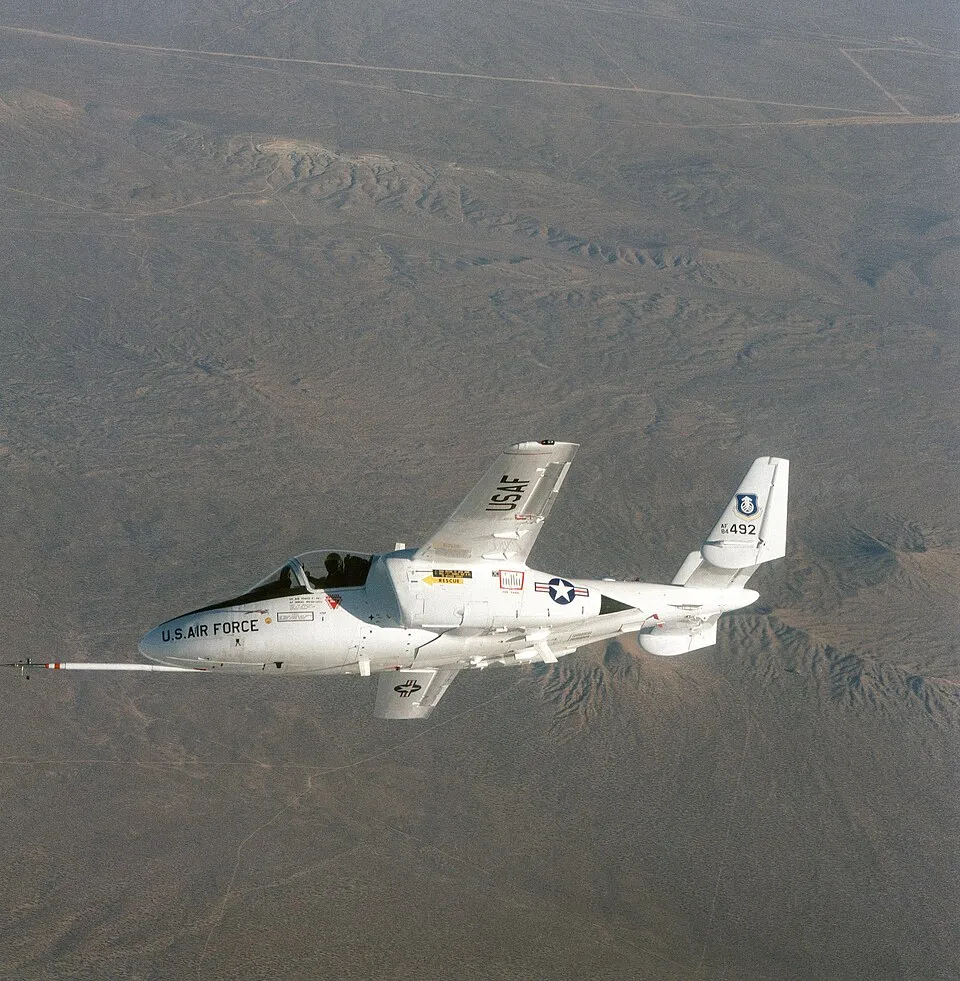
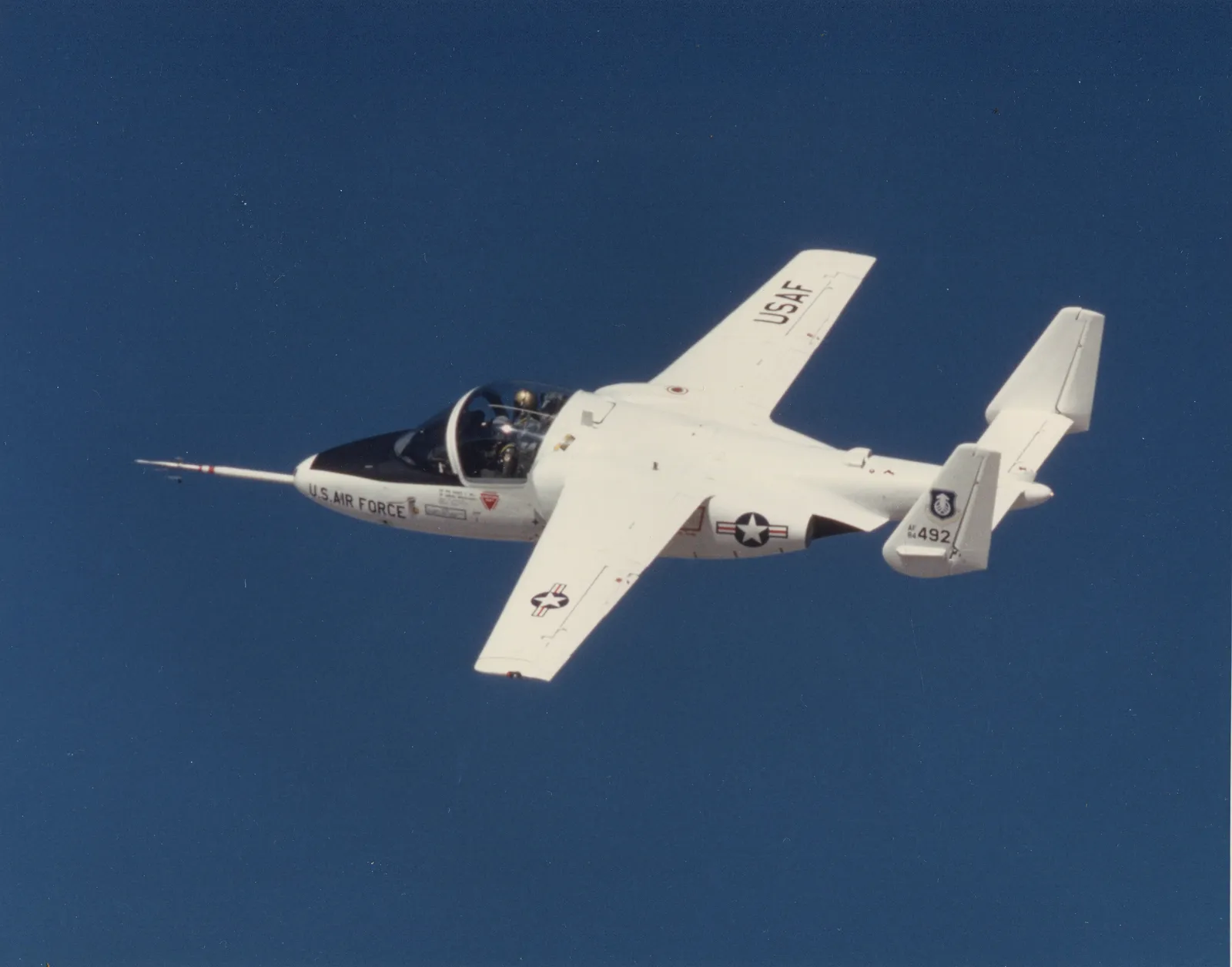
The T-46A Eaglet was Fairchild Republic's Next Generation Trainer aircraft for the U.S. Air Force, intended to replace the Cessna T-37 in primary jet training. It paired side-by-side seating, pressurization, ejection seats, a twin-tail layout, and Garrett F109 turbofans, but cost, schedule, management, and budget pressures kept the program to prototype and early-production work before cancellation.

Program Context

The T-46A is a support-page entry rather than a conflict-use weapon because the aircraft was a cancelled U.S. Air Force trainer prototype. Its value in the catalog is as a documented acquisition and flight-test case: Fairchild Republic's design won the Next Generation Trainer competition, entered flight test at Edwards, and then stopped before replacing the T-37 fleet.

Training role

Primary jet trainer for undergraduate pilot training, planned around side-by-side student and instructor seating.

Acquisition scale

GAO described an expected fleet of as many as 650 aircraft, with more than $3 billion in life-of-program acquisition cost.

Cancellation boundary

The Air Force did not field the T-46A operationally; the known aircraft remained test, production-option, or museum-preserved examples.

Profile / Specs

Profile

Origin
United States
Type
Light jet trainer aircraft
Service note
1980s U.S. Air Force Next Generation Trainer prototype program.
Designer
Fairchild Republic
Designed
Fairchild Republic won the Air Force Next Generation Trainer competition in 1982 after a 1981 flight-demonstrator effort.
Produced
Development aircraft and the first production option lot were underway in the mid-1980s; the Air Force halted further production funding before full-rate service entry.
Number built
Three T-46A aircraft are identified by aviation museum and archival sources; the program did not reach operational service.
Developed from
Model 73 NGT flight demonstrator

Specifications

Role
Primary light jet trainer planned to replace the Cessna T-37
Configuration
High-wing, side-by-side two-seat trainer with twin tail
Crew equipment
Pressurized cockpit and ejection seats
Powerplant
Two Garrett F109-GA-100 turbofans, each flat-rated at 1,330 lb thrust
Demonstrator
Model 73 NGT, a 62-percent flight demonstrator with two Microturbo TRS-18 engines
Program plan
Up to 650 trainers were expected over the program life before cancellation
Flight-test status in March 1986
First development aircraft had about 110 hours across 74 of 221 planned test flights
First flight
October 15, 1985 at Edwards Air Force Base
Preserved examples
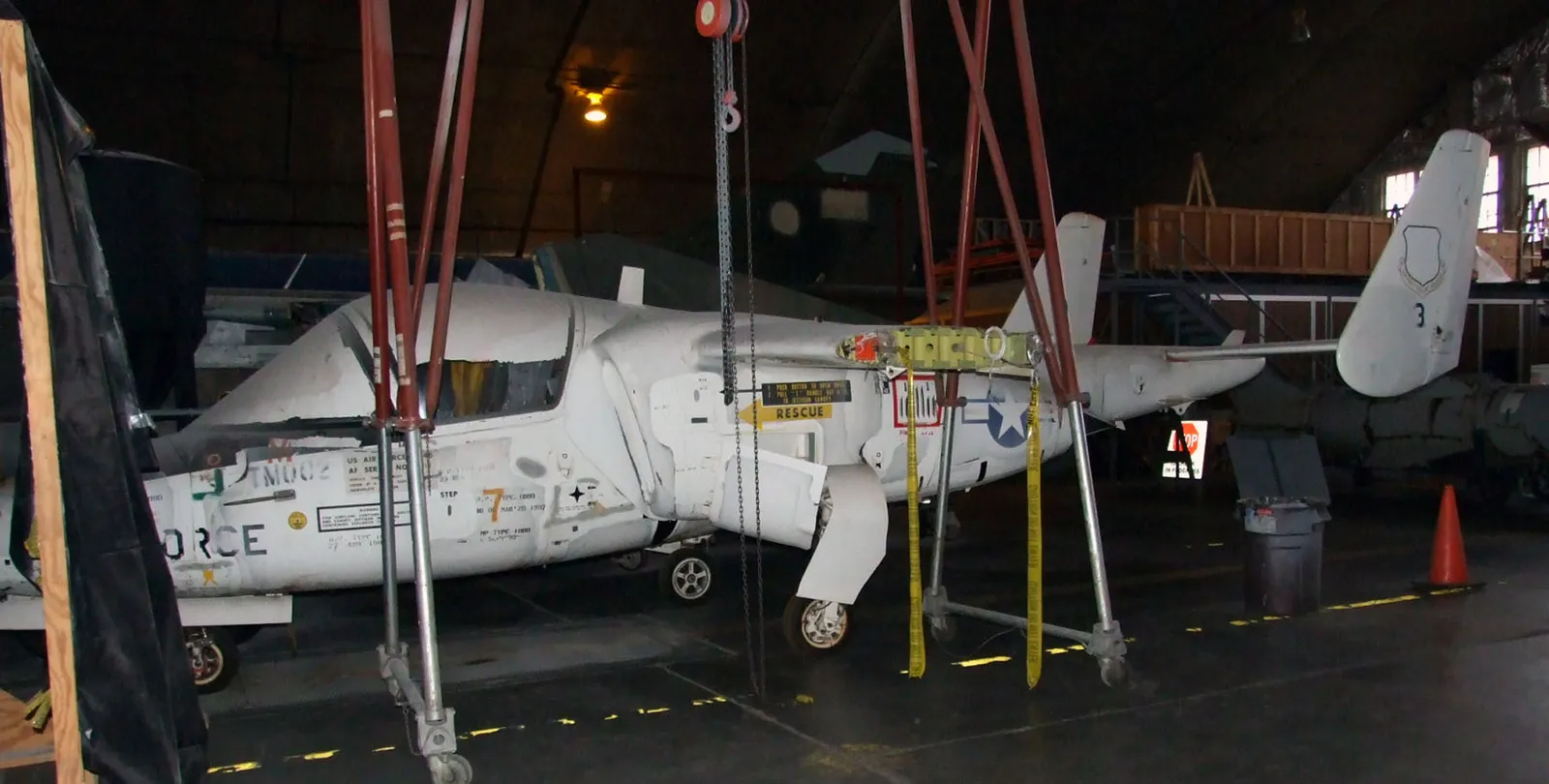
At least the first T-46A, serial 84-0492, is preserved by the Flight Test Historical Foundation; the National Museum also identifies a stored T-46A
Variants

The catalog entry covers the full-size T-46A Eaglet; the related Model 73 NGT was a smaller flight demonstrator used before the Air Force selected Fairchild Republic's trainer design.

VariantConfigurationDesignation notes
Model 73 NGT flight demonstrator62-percent demonstrator

Cradle of Aviation identifies a 1981 Fairchild-Republic demonstrator built at Bohemia with two Microturbo TRS-18 engines before the full-size T-46A program.

Sources: Cradle of Aviation T-46 demonstrator

Timeline

T-46A Eaglet Key Events

  1. Demonstrator work precedes selection

    Fairchild Republic used a smaller Model 73 NGT flight demonstrator to support its Next Generation Trainer proposal before the full-size T-46A program.

  2. Air Force awards T-46A contracts

    GAO reported that the Air Force awarded Fairchild Republic a fixed-price incentive airframe contract and Garrett a matching F109 engine contract in July 1982.

  3. First production option exercised

    The Air Force exercised an option for ten aircraft, support equipment, and a data package while the trainer remained in development.

  4. First flight at Edwards

    The T-46A first flew at Edwards Air Force Base; Aviation Week later noted the aircraft completed an initial airworthiness series by November 8, 1985.

  5. Second production lot halted

    The Secretary of the Air Force announced an intent not to exercise the second production-lot option amid budget pressure and program-management concerns.

  6. Program cancelled

    An Air Force history article places the T-46A cancellation in March 1987 after technical and managerial problems prevented the trainer from entering service.

Flight-Test Findings

GAO's 1986 review gives the clearest contemporary snapshot of the aircraft before cancellation. It reported successful early flight-test results and Air Training Command interest in the aircraft, while also recording unresolved drag, stall-warning, primary-control, and speed-brake-buffet issues. Those findings explain why the T-46A should be read as a development program rather than a mature trainer type.

Media
Related Weapon Systems
AIDC AT-3/T-5 Brave Eagle, Advanced jet trainer and light attack aircraft family, Aircraft & UAVsAircraft & UAVsAIDC AT-3/T-5 Brave EagleAdvanced jet trainer and light attack aircraft familyThe AIDC AT-3/T-5 family covers Taiwan's indigenous jet trainer line, starting with the AT-3 Tzu Chung, which first flew in 1980 and entered ROCAF service in 1985, and continuing through the XA-3 attack derivative and T-5 Brave Eagle advanced trainer. AIDC, ROCAF, and Janes sources describe the T-5/T-5A as a 66-aircraft replacement program for older AT-3 and F-5 training aircraft, with production aircraft delivered from 2021.
AAV Survivability Upgrade, Assault Amphibious Vehicle modernization package, Armored VehiclesArmored VehiclesAAV Survivability UpgradeAssault Amphibious Vehicle modernization packageThe AAV Survivability Upgrade was a U.S. Marine Corps program to keep legacy Assault Amphibious Vehicles relevant by adding buoyant armor, blast protection, automotive improvements, and mobility changes to existing hulls. SAIC was the major contractor for the upgrade effort, which moved from prototype work into low-rate production before testing and acquisition concerns were overtaken by the Corps' decision to focus resources on the Amphibious Combat Vehicle.
Turkish Aerospace Hürjet, Supersonic advanced jet trainer and light-attack aircraft, Aircraft & UAVsAircraft & UAVsTurkish Aerospace HürjetSupersonic advanced jet trainer and light-attack aircraftTurkish Aerospace Hürjet is Turkey's single-engine, tandem-seat supersonic advanced jet trainer and light-attack aircraft, developed under SSB coordination for indigenous jet-training capacity. The aircraft first flew in April 2023, is in serial-production and flight-test work for Turkish Air Force service, and now anchors Spain's Airbus-led SAETA II combat-training system while GE Aerospace supplies F404 propulsion support for the program.
F-15EX Eagle II, Multirole fighter aircraft, Aircraft & UAVsAircraft & UAVsF-15EX Eagle IIMultirole fighter aircraftThe F-15EX Eagle II is Boeing's latest U.S. Air Force F-15 variant, a two-seat multirole fighter intended to replace aging F-15C/D aircraft while adding digital fly-by-wire controls, open mission systems, modern electronic warfare, and a 29,500-pound payload. U.S. Air Force and Air National Guard milestones trace the aircraft from 2021 test delivery through Portland operational fielding, weapons-training coverage, and Kadena transition work.
Lockheed Martin QuadStar (NGSRI), Developmental short-range air-defense interceptor, Air DefenseAir DefenseLockheed Martin QuadStar (NGSRI)Developmental short-range air-defense interceptorLockheed Martin's QuadStar is a U.S. Army Next-Generation Short-Range Interceptor candidate for M-SHORAD Increment 3, the program intended to replace the FIM-92 Stinger with a soldier-portable fire-and-forget short-range air-defense missile. Public sources place the missile in competitive development and flight testing, with Army budget documents and production-planning reporting tying NGSRI to SGT STOUT compatibility, dismounted air-defense use, and future procurement planning rather than confirmed combat fielding.

Sources