Aircraft & UAVs

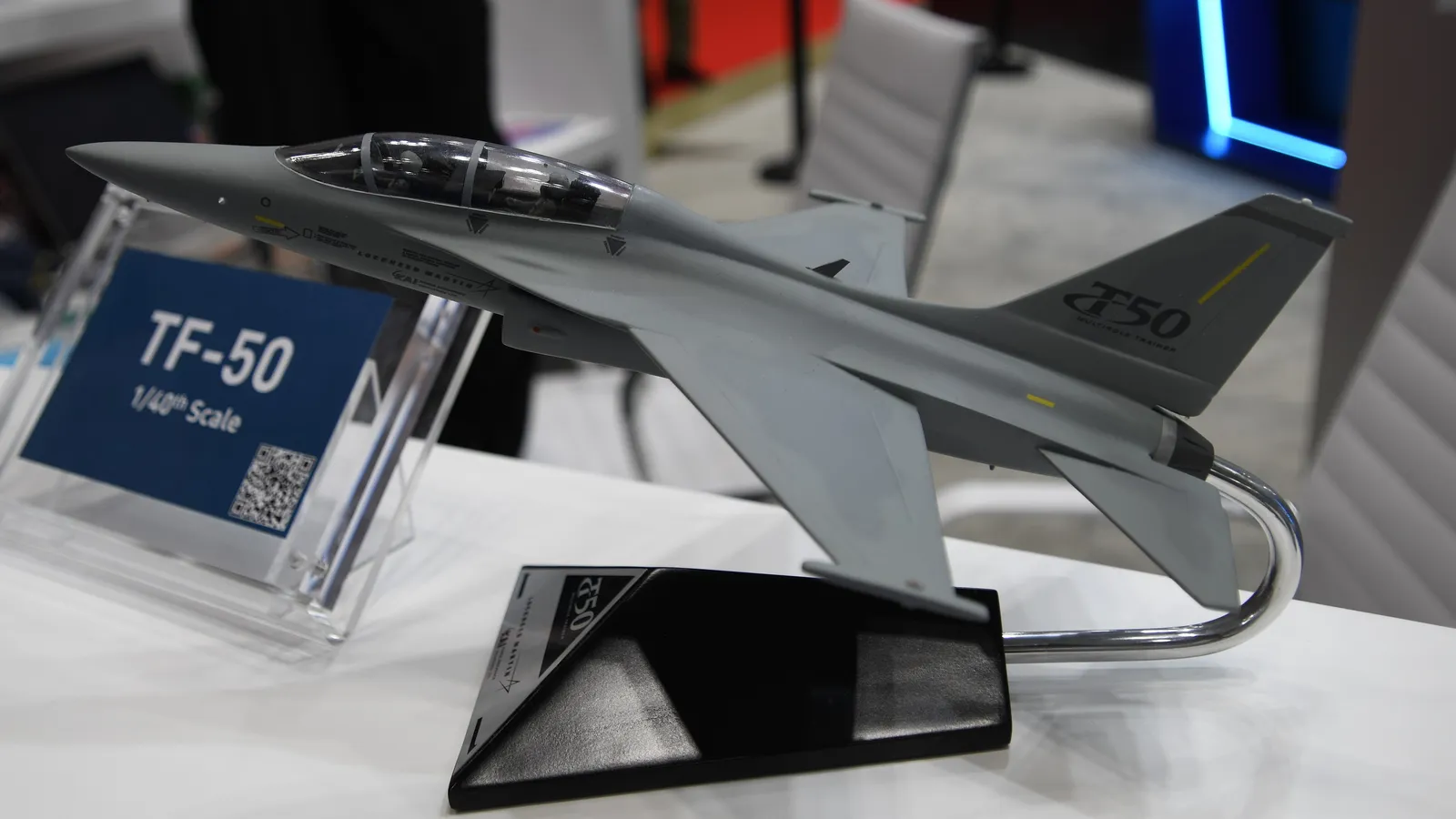
TF-50 Trainer Jet

Also known as
  • TF-50
  • TF-50A
  • TF-50N
  • T-50
  • T-50 Golden Eagle

The TF-50 Trainer Jet is Lockheed Martin's proposed advanced trainer and light attack fighter version of the KAI T-50 family. Lockheed markets the TF-50 as a production-ready path for faster fourth- and fifth-generation fighter training; the TF-50A was submitted for U.S. Air Force tactical training needs, while the TF-50N was a U.S. Navy trainer proposal before Lockheed withdrew from the 2026 UJTS solicitation.

Profile / Specs

Profile

Origin
South Korea / United States
Type
Advanced trainer and light attack fighter proposal
Service note
2020s proposal
Designer
Lockheed Martin / Korea Aerospace Industries
Designed
2020s proposal
Unit cost
Not publicly stated
Produced
Offered/proposal stage; TF-50 procurement or production not publicly announced
Number built
No TF-50 production aircraft publicly identified

Specifications

Crew
2
Length
43.1 ft / 13.14 m
Wingspan
31 ft / 9.45 m
Height
15.8 ft / 4.82 m
Maximum speed
Mach 1.5
TF-50N maximum takeoff gross weight
26,929 lb
Powerplant
GE F404 afterburning engine; 17,700 lb maximum thrust
Stores stations
Seven stores stations on the TF-50N proposal
Mission systems
TF-50A: radar, electronic warfare system, and tactical data link; TF-50N: multimode AESA radar, Link 16 tactical datalink, embedded training system, helmet-mounted display and cueing, and open systems architecture
Proposal And Training Context

Open official and defense-industry sources present TF-50 as a proposal built from the proven T-50/FA-50 industrial base, not as a delivered conflict-use aircraft. The separate FA-50PH catalog record covers the Philippine combat aircraft that has documented Marawi and counterinsurgency use.

Production base

Lockheed Martin says the active T-50 production line in South Korea supports full value-stream production and could support a Final Assembly and Check-Out facility when needed.

Training technology

The Red 6 work is centered on augmented-reality synthetic training for TF-50/T-50 ground and airborne training environments.

Conflict-use boundary

Sources reviewed through 2026-07-03 describe offers, requests for information, product cards, competition reporting, and simulator integration; they do not document TF-50 procurement, delivery, fielding, or combat use.
Variants

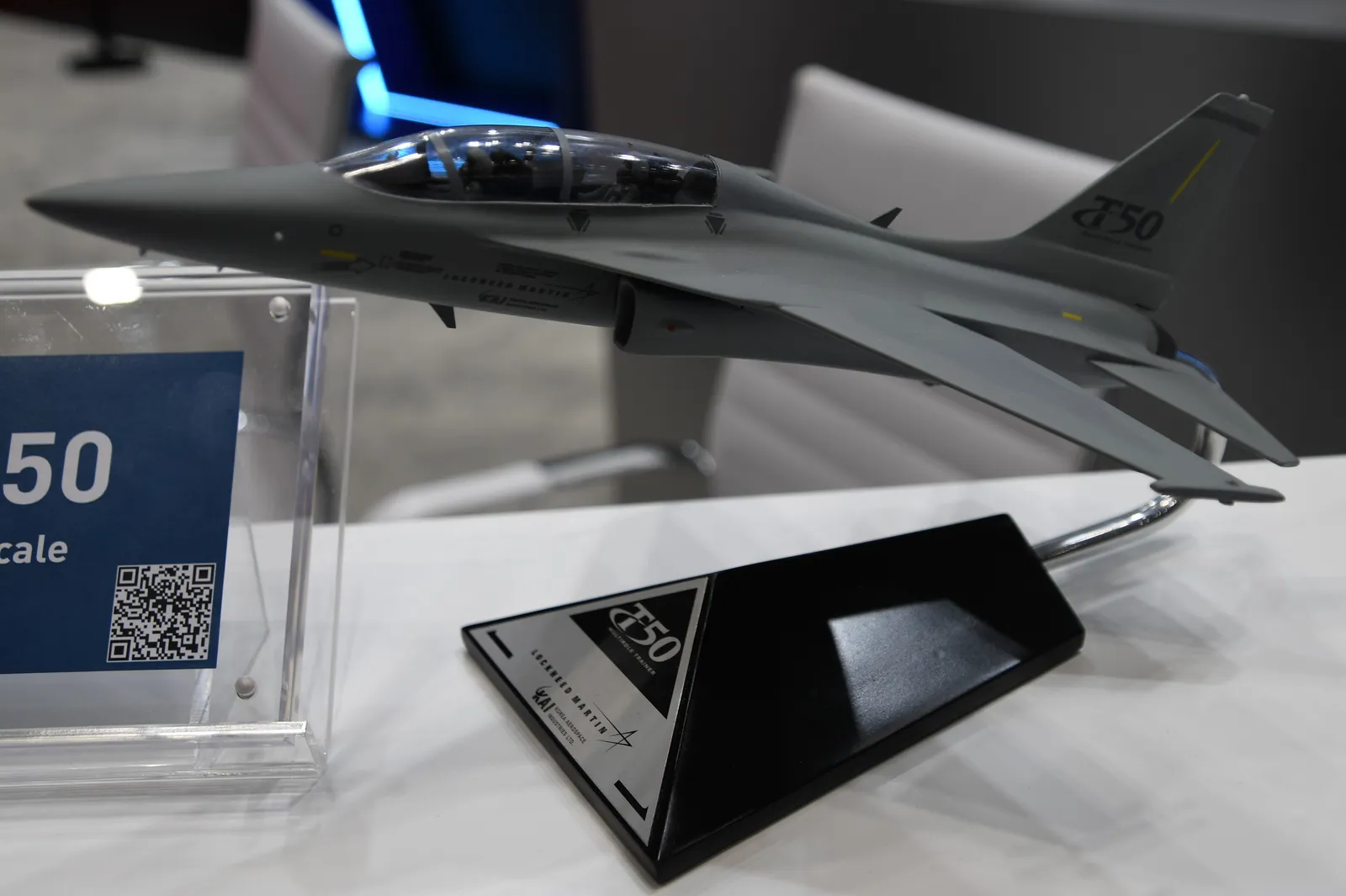
Lockheed Martin uses TF-50 for the proposed advanced trainer/light-attack derivative of the T-50/FA-50 family; TF-50A and TF-50N identify customer-program configurations rather than fielded production models.

VariantConfigurationDesignation notes
TF-50AU.S. Air Force tactical trainer proposal

Submitted for an Air Force trainer program covering tactical training, adversary air support, and tactical fighter surrogate missions; Lockheed described the configuration as adding radar, electronic warfare, tactical data link, and other Air Combat Command-oriented capabilities.

Sources: Lockheed Martin, Korea Aerospace Industries & Red 6 Aerospace Announce Emerging Technology Partnership, Lockheed Martin, Korea Aerospace Industries & Red 6 Announce Initial Augmented Reality Integration Work for T-50 Platform

TF-50NU.S. Navy trainer proposal

Configured for Navy fast-jet training, landing qualification, adversary air, tactical surrogate, and chase missions; Lockheed later told Breaking Defense it would not pursue the 2026 UJTS solicitation.

Sources: TF-50N Product Card, Breaking Defense Lockheed Exits Navy Trainer Competition

Related Aircraft Family

The TF-50 proposal sits inside the KAI T-50 and FA-50 aircraft family rather than a separate combat lineage.

Compatible itemItem typeCompatibility evidence
FA-50PH, Supersonic light combat aircraft, Aircraft & UAVsFA-50PHLight combat aircraft variant

Lockheed Martin describes TF-50 and TF-50A as variants of the T-50 family, while KAI identifies the FA-50 as part of the same T-50-derived light-combat-aircraft family represented in the catalog by the FA-50PH record.

Sources: Lockheed Martin, Korea Aerospace Industries & Red 6 Aerospace Announce Emerging Technology Partnership, KAI T-50

Timeline

TF-50 Trainer Jet Key Events

  1. Emerging technology partnership announced

    Lockheed Martin, Korea Aerospace Industries, and Red 6 announced a partnership to bring augmented reality training capability into the TF-50 and TF-50A family, including radar, electronic warfare, and tactical data link enhancements on the TF-50A proposal.

    Sources: Lockheed Martin, Korea Aerospace Industries & Red 6 Aerospace Announce Emerging Technology Partnership

  2. T-50 demonstrator integration work begins

    Lockheed Martin, KAI, and Red 6 announced engineering work to integrate Red 6 ATARS with a T-50 demonstrator and associated ground-based training systems, while describing TF-50A and TF-50N as trainer-program submissions.

    Sources: Lockheed Martin, Korea Aerospace Industries & Red 6 Announce Initial Augmented Reality Integration Work for T-50 Platform

  3. TF-50 simulator AR integration advances

    Lockheed Martin and Red 6 announced completed phase-one integration of Red 6 augmented reality training technology with a TF-50 simulator, presenting it as part of the TF-50 training roadmap.

    Sources: Lockheed Martin and Red 6 Announce Augmented Reality Integration Progress for TF-50

  4. Lockheed exits Navy trainer contest

    Breaking Defense reported that Lockheed Martin formally notified the U.S. Navy it would not pursue the UJTS solicitation, removing the TF-50N/KAI bid from that competition.

    Sources: Breaking Defense Lockheed Exits Navy Trainer Competition

Media
Related Weapon Systems
Lockheed Martin F-21, Multirole fighter aircraft proposal, Aircraft & UAVsAircraft & UAVsLockheed Martin F-21Multirole fighter aircraft proposalThe Lockheed Martin F-21 is an India-specific multirole fighter proposal based on the F-16 Block 70/72 and marketed for the Indian Air Force's MRFA requirement. Lockheed and Tata framed the bid around Indian production, F-16 wing work at Hyderabad, and an aircraft configuration with conformal fuel tanks, a large-area cockpit display, APG-83-class AESA radar, probe-and-drogue plus boom refueling compatibility, and promotional carriage of AMRAAM, AIM-9X, Sniper pod, and AN/ALE-50 stores.
F-22 Raptor, Fifth-generation stealth air-superiority fighter, Aircraft & UAVsAircraft & UAVsF-22 RaptorFifth-generation stealth air-superiority fighterThe F-22 Raptor is a U.S. fifth-generation stealth air-dominance fighter built around low-observable shaping, supercruise, thrust-vectoring F119 engines, integrated avionics, and internal weapons carriage. Designed first for air-to-air control, it also carries JDAM and small-diameter bomb loads for precision strike, with U.S. Air Force sources documenting combat use over Syria and Iraq during 2014 Operation Inherent Resolve and CENTCOM material identifying F-22s in the 2025 Operation Midnight Hammer strike package against Iran.
Yakovlev Yak-130, Combat trainer / light attack aircraft, Aircraft & UAVsAircraft & UAVsYakovlev Yak-130Combat trainer / light attack aircraftThe Yakovlev Yak-130 is a Russian two-seat combat trainer and light-attack aircraft designed by Yakovlev and built through the Irkut/Yakovlev line inside United Aircraft Corporation. Official Russian sources frame it as a training aircraft able to simulate modern fighter employment and carry up to 3,000 kg of stores, while conflict records document Myanmar ground-attack sorties and an Iranian Yak-130 shot down during the 2026 Iran War.
AIDC AT-3/T-5 Brave Eagle, Advanced jet trainer and light attack aircraft family, Aircraft & UAVsAircraft & UAVsAIDC AT-3/T-5 Brave EagleAdvanced jet trainer and light attack aircraft familyThe AIDC AT-3/T-5 family covers Taiwan's indigenous jet trainer line, starting with the AT-3 Tzu Chung, which first flew in 1980 and entered ROCAF service in 1985, and continuing through the XA-3 attack derivative and T-5 Brave Eagle advanced trainer. AIDC, ROCAF, and Janes sources describe the T-5/T-5A as a 66-aircraft replacement program for older AT-3 and F-5 training aircraft, with production aircraft delivered from 2021.

Sources