- Side
- Yugoslav and Serb forces

The Belgrade Aeronautical Museum describes a JNA G-4 damaged by a man-portable air-defense missile during a combat flight near Licki Ribnik on 24 September 1991, after which the aircraft returned to Udbine.
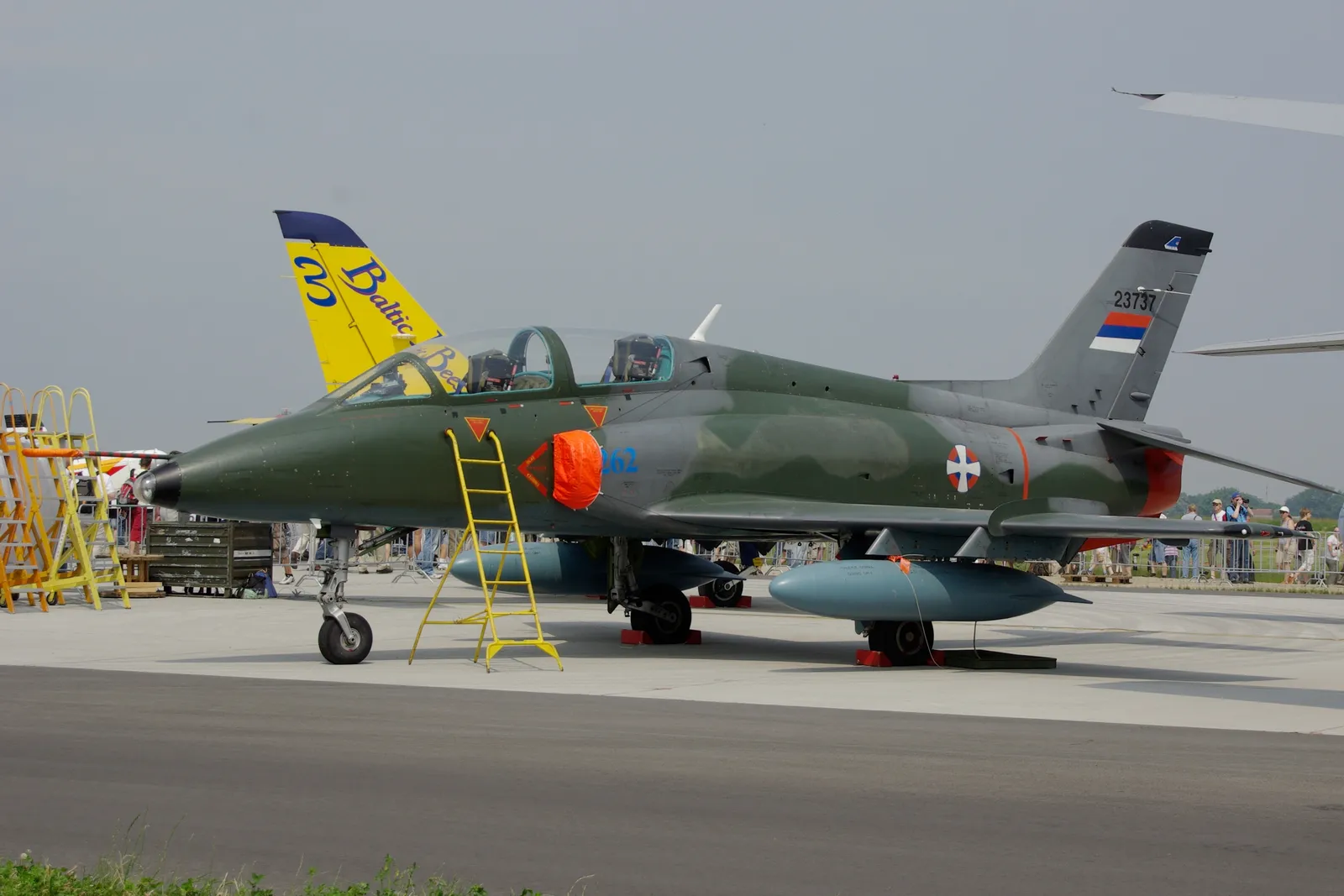
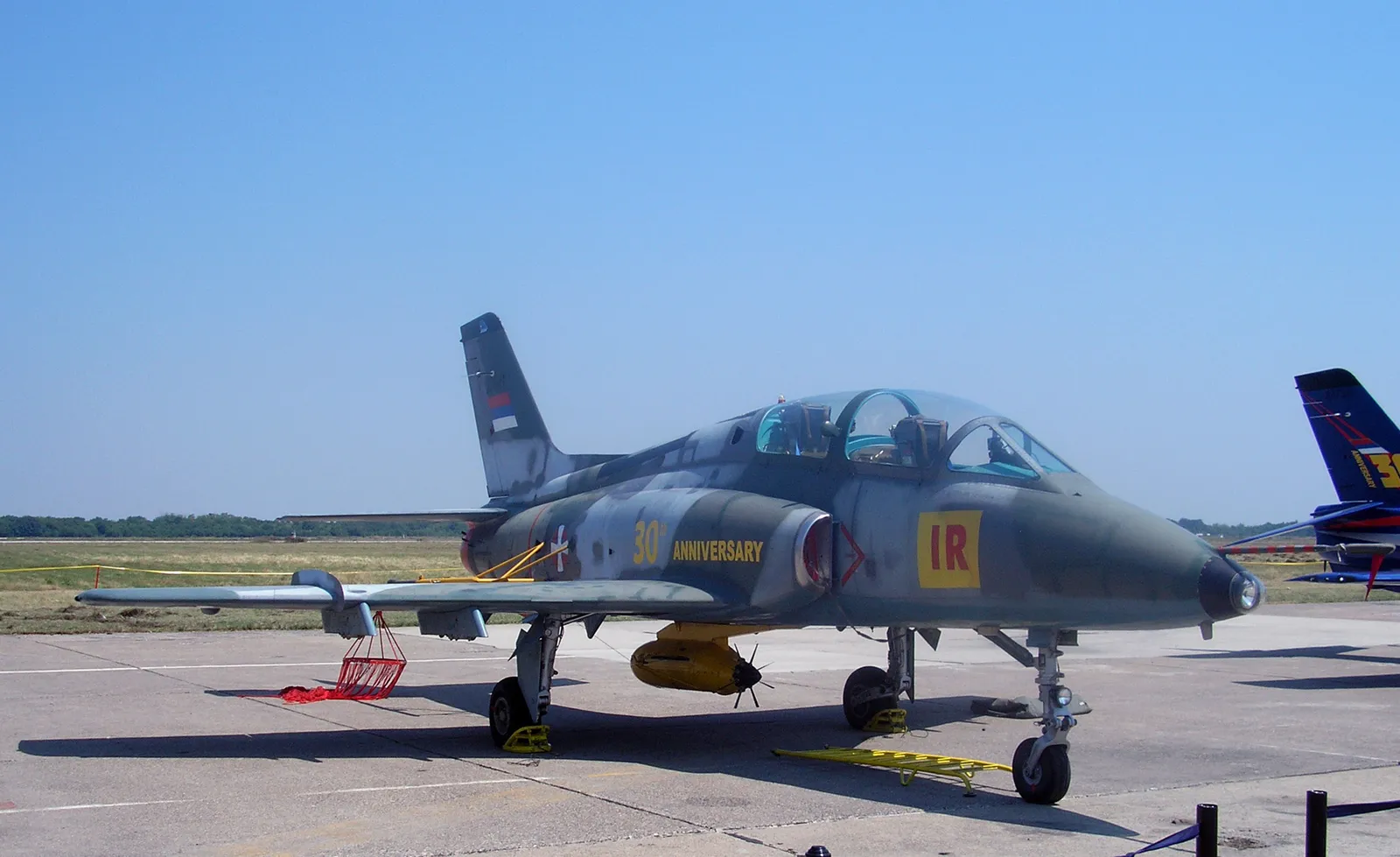
The SOKO G-4 Super Galeb is a Yugoslav single-engine advanced jet trainer and light attack aircraft built by SOKO in Mostar after development by the Aviation Technical Institute. Designed to move pilots from jet training into light strike tasks, it entered serial production in the early 1980s, remained in Serbian service after Yugoslavia's breakup, and is directly documented in Croatian, Bosnian, and Kosovo War combat or loss records.
The Belgrade Aeronautical Museum describes a JNA G-4 damaged by a man-portable air-defense missile during a combat flight near Licki Ribnik on 24 September 1991, after which the aircraft returned to Udbine.
Contemporary reporting during Operation Deny Flight identified Bosnian Serb aircraft bombing near Novi Travnik as Soko G-4 Super Galeb attack aircraft before NATO F-16s shot down Serb aircraft; later summaries disagree on the exact aircraft mix, so the row avoids a firm G-4 loss count.
Open Operation Allied Force summaries report Yugoslav G-4 Super Galeb strike aircraft flying low-level combat missions against KLA positions in Kosovo, and Aviation Safety Network records Super Galebs destroyed at Golubovci Air Base during the campaign.
The G-4 was designed as a school-combat jet rather than a pure trainer, giving Yugoslav and successor-state air arms a type that could move pilots into advanced training while retaining a light-attack role.
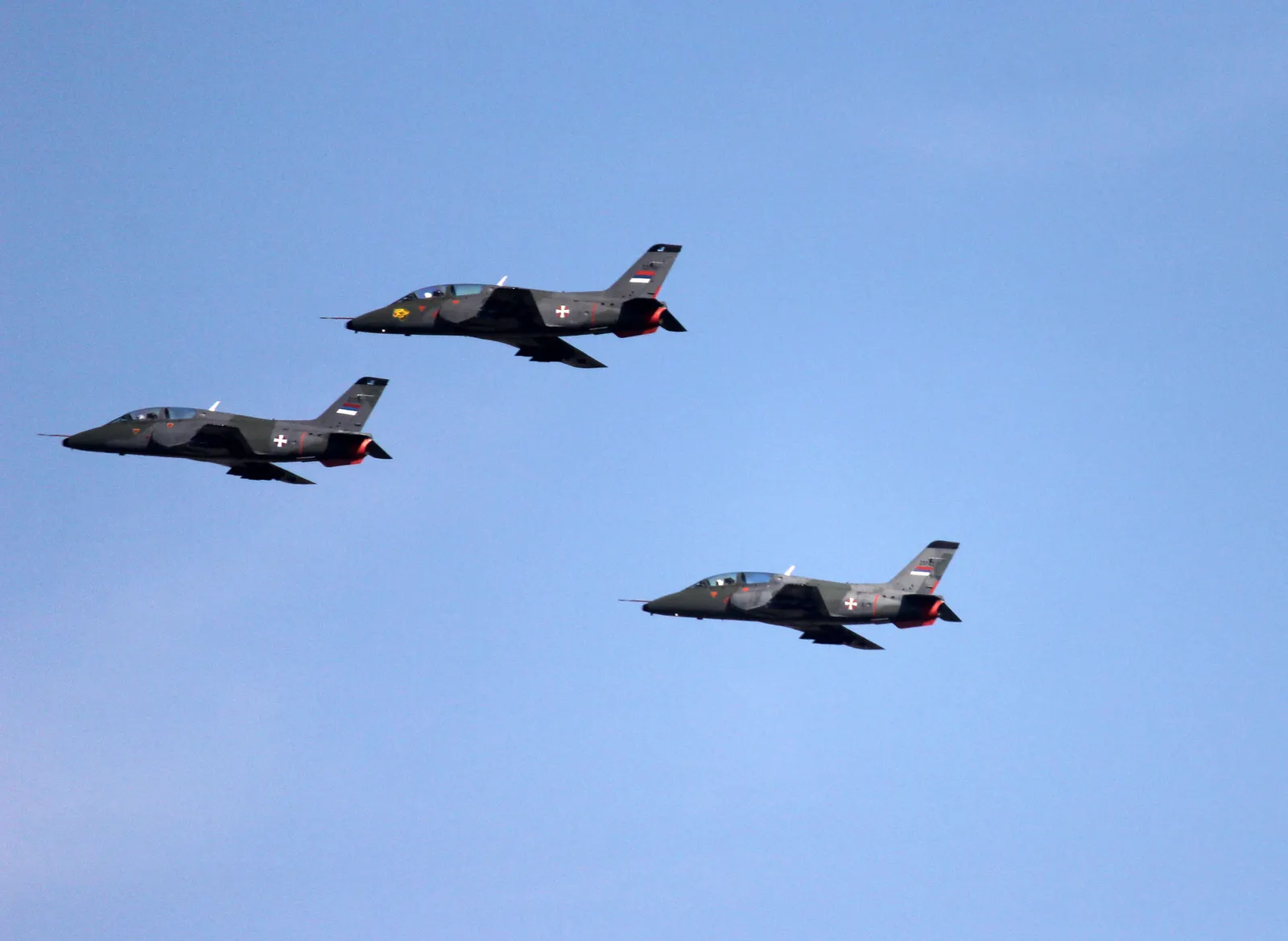
Serbian-service coverage describes G-4 flights at Batajnica as part of cadet training and current front-line trainer use.
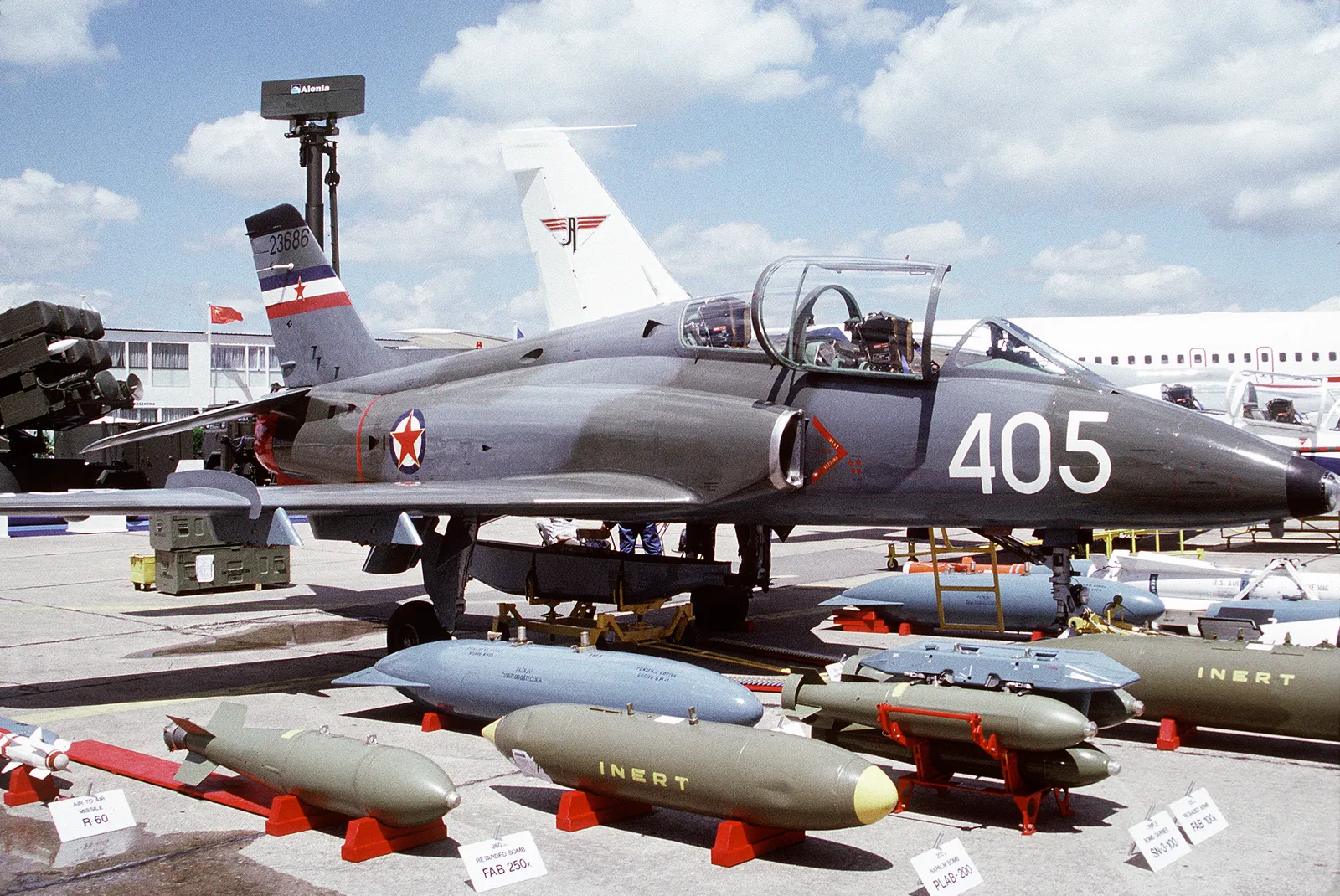
Serbian MoD material lists a 23 mm gun, unguided missiles, and aerial bombs, while the G-4M brochure adds broader air-to-air and air-to-surface missile integration.
Yugoimport presents the G-4M as an updated trainer/ground-attack version with increased payload capability, updated avionics, and an integrated navigation/attack system.
The G-4M brochure describes a rugged airframe and landing-gear package intended for semi-prepared and grass runway operation.
The G-4 family includes baseline trainer/light-attack aircraft, unarmed and target-tug adaptations, and modernization standards that added digital avionics or broader weapons compatibility.
| Variant | Configuration | Designation notes |
|---|---|---|
| G-4S | Unarmed trainer | Often written as G-4S or G-4Š in open references; listed here as the unarmed training adaptation. Sources: Soko G-4 Super Galeb - Wikipedia |
| G-4T | Target tug | Target-tug adaptation documented in open variant summaries and represented by the G-4T gallery image. Sources: Soko G-4 Super Galeb - Wikipedia, G-4T Super Galeb 23601 V i PVO VS, august 04, 2008.JPG |
| G-4M | Modernized trainer/ground-attack version | Yugoimport describes the G-4M as an updated trainer/ground-attack version with updated avionics, increased payload capability, an integrated navigation/attack system, and air-to-air and air-to-surface missile integration. Sources: SUPER GALEB G-4M - Yugoimport |
| G-4MD | Digital modernization program | Open Serbian-service coverage describes the G-4MD path as adding LCD displays, mission-computer and navigation upgrades, identification and communications equipment, and guided-weapons integration. Sources: Jet trainer and light attack aircraft – a close look at G-4 Super Galeb |
The Super Galeb's attack fit centers on a removable 23 mm gun pod and underwing stores for light strike missions.
| Carried item | Item type | Carriage evidence |
|---|---|---|
 | Aircraft cannon | Airforce Technology identifies the G-4's detachable two-barrel cannon as a 23 mm GSh-23L, while Serbian MoD service material describes the aircraft as armed with a 23 mm gun for training and close-support tasks. Sources: Soko G-4 Super Galeb Military Trainer and Ground Attack Aircraft, Fighter-Bomber Aviation Sub-Echelon |
The Aeronautical Museum in Belgrade records the first G-4 prototype flight on 18 July 1978.
Sources: Soko G-4 "Super Galeb" - Aeronautical Museum in Belgrade
The Aeronautical Museum records serial production beginning in 1983, while open aviation coverage places the G-4 in Yugoslav Air Force service from that year.
Sources: Soko G-4 "Super Galeb" - Aeronautical Museum in Belgrade, Jet trainer and light attack aircraft – a close look at G-4 Super Galeb
A JNA G-4 was hit by a man-portable air-defense missile during a combat flight near Licki Ribnik and returned to Udbine for repair.
Sources: Soko G-4 "Super Galeb" - Aeronautical Museum in Belgrade
Contemporary press accounts during Operation Deny Flight identified Bosnian Serb Soko G-4 Super Galeb attack aircraft in bombing activity near Novi Travnik, though later summaries differ on the exact aircraft types shot down.
Sources: U.S. Jets Gun Down 4 Serb Planes, U.S. Jets Down 4 Bosnian Serb Planes to Enforce 'No-Fly' Zone
NATO F-16s intercepted Serb aircraft after a bombing attack near Novi Travnik; contemporary reports identified the aircraft as G-4/Super Galeb types, while later aircraft-specific summaries often name J-21 and J-22 aircraft.
Sources: U.S. Jets Gun Down 4 Serb Planes, U.S. Jets Down 4 Bosnian Serb Planes to Enforce 'No-Fly' Zone
Operation Allied Force summaries report Yugoslav G-4 low-level strike missions against KLA positions, while Aviation Safety Network records Super Galeb losses at Golubovci Air Base during the campaign.
Sources: Operation Allied Force, Incident SOKO G-4 Super Galeb, 28 April 1999
Serbia received additional G-4 aircraft from Montenegro under an April 2010 resource-exchange agreement and planned to repair them for fighter-pilot training.
Sources: Two more G4 galeb air crafts from Montenegro land in Batajnica
The aircraft remained in front-line training use with the Serbian Air Force, which flew cadet training sorties at Batajnica.
Sources: Jet trainer and light attack aircraft – a close look at G-4 Super Galeb