

The Syrian Arab Air Force operated L-39 Albatros aircraft during the war, including reported use around Aleppo; Oryx later documented seven L-39 Albatros airframes captured during the 2024 rebel offensive.
Role detailsAircraft & UAVs
Aero L-39 Albatros
Also known as
- L-39
- L-39 Albatros
- L-39C
- L-39Z
- L-39ZO
- L-39ZA
- L-39ZA/ART
- L-39M1
- Albatros
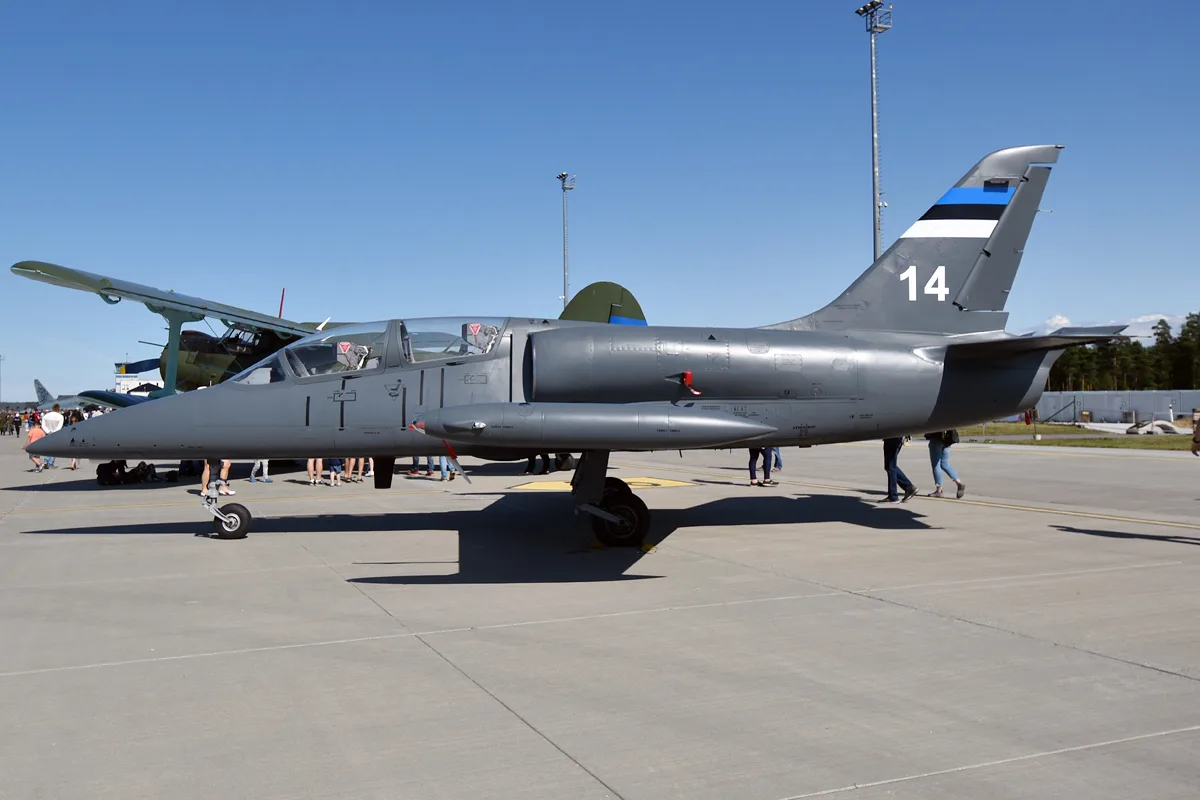
The Aero L-39 Albatros is a Czechoslovak two-seat subsonic jet trainer built by Aero Vodochody as the successor to the L-29 Delfin. The family became a Warsaw Pact and export training aircraft, while armed L-39ZO and L-39ZA variants added reinforced stores stations, cannon or missile options, and light-attack capability.
Role in Conflicts

Fielded by the Nigerian Air Force in the Operation LAFIYA DOLE theater, where L-39ZA jets were among the deployed air platforms supporting counter-insurgency operations against Boko Haram and ISWAP in northeast Nigeria.

Used by Government of National Accord-aligned air forces during the 2019 Tripoli campaign; GNA forces acknowledged losing contact with an L-39 on a combat mission south of Tripoli after LNA forces claimed shooting it down near Tarhuna.


Delivered to and fielded by the Malian armed forces during the 2012 Mali War as Russian-supplied L-39C light attack/trainer aircraft; later reporting described a Russian-operated Malian L-39 crashing while fighting Islamic State in the Gao region.

Fielded by Armenia as part of its operational air fleet at the start of the 2020 Nagorno-Karabakh war; the available source identifies seven L-39 trainers but does not document specific combat sorties.
- Side
- Ukraine

Ukraine retained L-39 and L-39M1 aircraft in combat aviation units during the Russia-Ukraine War; ArmyInform reported that some L-39M1 aircraft in combat brigades had already taken part in the war, Vsim described Dmytro Kolomiyets carrying out a 24 February 2022 mission in an L-39 before being shot down near Kryntsiliv, and SIPRI plus Lithuania's Ministry of National Defence document a Lithuanian second-hand L-39ZA-version aircraft handed over to Ukraine in 2024.
Role details- Side
- Libya
Chadian reporting to the UN listed eleven L-39 bombers captured and four L-39 bombers destroyed after the March 1987 battle for Ouadi Doum; contemporary reporting also described Chad capturing Czech-made L-39s from Libyan forces.
Profile / Specs
Profile
- Origin
- Czechoslovakia
- Built by
- Aero Vodochody
- Built in
- CzechoslovakiaCzech Republic
- Type
- Jet trainer and light attack aircraft
- Service note
- Cold War design, still in military and civil operation
- Designer
- Aero Vodochody
- Designed
- Designed during the 1960s; first flight on 4 November 1968
- Produced
- 1971-1995 for original L-39 production; Aero history also describes deliveries through 1999
- Number built
- Almost 3,000 L-39 aircraft; more than 2,900 delivered
- Developed from
- Aero L-29 Delfin
- Developed into
- Aero L-39MS/L-59 Super Albatros, Aero L-159 ALCA, and Aero L-39NG/Skyfox lineage
Specifications
- Crew
- 2
- Wingspan
- 9.46 m
- Length
- 12.13 m
- Engine
- Ivchenko AI-25TL turbofan, 16.87 kN thrust
- Maximum speed
- Up to 750 km/h at 5,000 m for L-39C; about 620-630 km/h for L-39ZO/ZA
- Range
- About 1,000 km for L-39C; about 1,200-1,260 km for L-39ZO/ZA
- Service ceiling
- 11,500 m for L-39C; 7,500 m for L-39ZO/ZA
- Maximum ramp weight
- 4,700 kg for L-39C; 5,616 kg for L-39ZO; 5,500 kg for L-39ZA
- Hardpoints
- L-39C has two 125 kg training hardpoints; L-39ZO/ZA have four stations rated at 500 kg inner and 250 kg outer
- Endurance
- 2 h 30 min for L-39C; 3 h 20 min for L-39ZO/ZA
- Armament
- L-39ZA supports cannon, missile, bomb, and unguided rocket armament; L-39ZO has four hardpoints
Export And Operator Footprint
Aero presents the L-39 as a Warsaw Pact jet trainer that became a long-lived export and civil or military operator platform after original production ended.
Military reach
Aero states that the L-39 served more than 40 military operators in varied climates.
Fleet persistence
Aero estimates that about 700 L-39 aircraft remain in civil and military operation.
Display use
Aero says the aircraft is still used by 20 acrobatic teams.
Sources: L-39 Albatros; Aero Vodochody History.
Variants
The Albatros family spans the baseline L-39C trainer and armed export variants, with L-39ZO adding heavier underwing stores, L-39ZA adding cannon and missile-capable light-attack features, and the Thai L-39ZA/ART adding a country-specific avionics fit.
| Variant | Configuration | Designation notes |
|---|---|---|
| L-39C | Basic and advanced trainer | Baseline training aircraft in serial production from 1971, with two 125 kg training hardpoints. Sources: L-39 Albatros |
| L-39ZO | Weapons trainer and light fighter | Improved from the L-39C for combat pilot training, with four hardpoints, reinforced wing, and reinforced landing gear. Sources: L-39 Albatros |
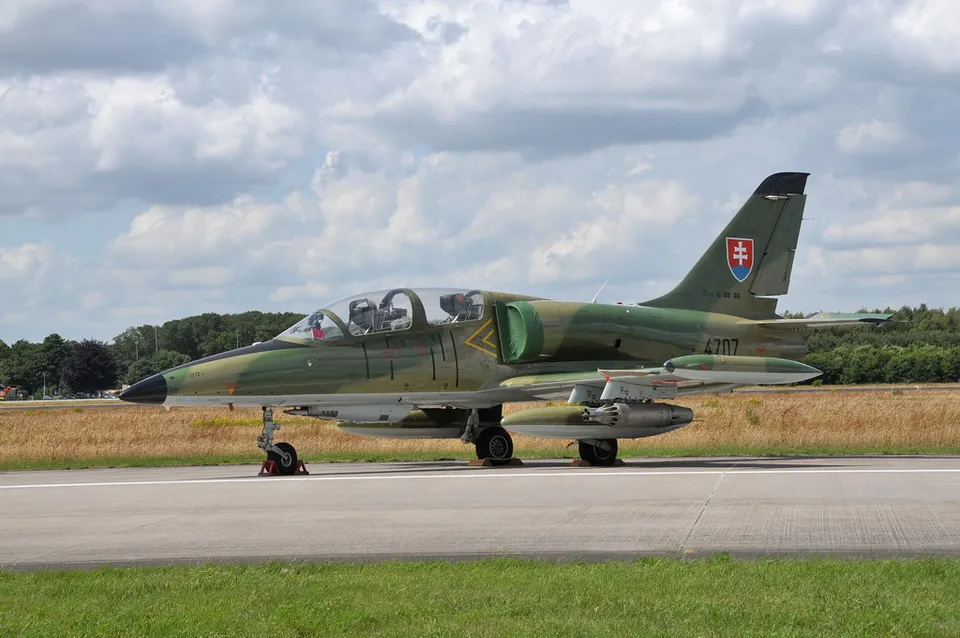
| L-39ZA | Light fighter and weapons trainer | Adds cannon armament structure and outer-hardpoint homing missile capability to the L-39ZO configuration. Sources: L-39 Albatros, American Airpower Museum L-39ZA Albatros |
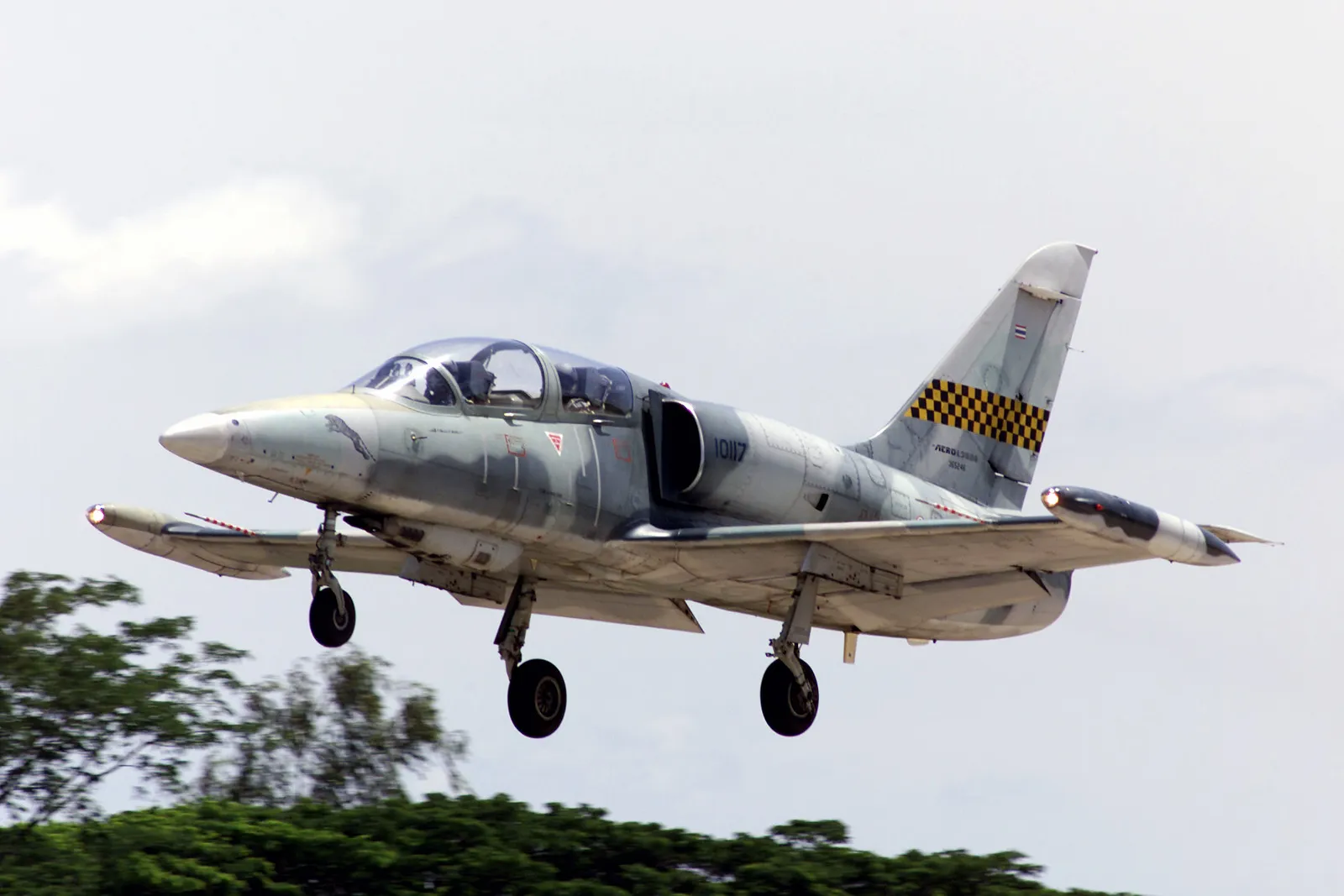
| L-39ZA/ART | Thai avionics variant | Royal Thai Air Force Wing 4 history identifies the Thai Albatros as L-39 ZA/ART and records initial deliveries in 1994, followed by four additional aircraft. |
| L-39M1 | Ukrainian upgraded trainer | Ukrainian L-39M1 upgrades added an AI-25TLSH engine and revised engine-control and flight-recorder equipment; ArmyInform reported that L-39M1 aircraft remained in Ukrainian combat brigades during the Russia-Ukraine War. Sources: ArmyInform Training Combat Aircraft |
 | Modernized successor line | Aero describes the L-39NG/Skyfox program as a new-production and upgraded continuation of the L-39 training-aircraft lineage. Sources: Aero Vodochody History |
Carried Stores
The L-39ZA's light-attack fit links the aircraft to cannon, rocket, and short-range missile stores rather than only pilot-training equipment.
| Carried item | Item type | Carriage evidence |
|---|---|---|
 | 16-round 57 mm rocket pod | DCS lists UB-16UM rocket pods with 16 S-5KO 57 mm HEAT/Frag rockets apiece among the L-39ZA's external stores. Sources: DCS L-39ZA Albatros |
 | 57 mm unguided rocket family | The DCS L-39ZA store list ties the UB-16UM pod fit to S-5KO rockets, connecting the aircraft's rocket armament to the S-5 family. Sources: DCS L-39ZA Albatros |
 | Twin-barrel 23 mm cannon | The American Airpower Museum describes the L-39ZA as fitted with a GSh-23 cannon mounted under the fuselage. |
 | Short-range air-to-air missile | The American Airpower Museum notes L-39ZA wiring for R-60 missiles on the outer weapons pylons. |
Timeline
Aero L-39 Albatros Key Events
L-39 prototype first flight
Aero identifies the X02 prototype's first flight at Vodochody with pilot Rudolf Duchon.
Sources: Aero Vodochody History
Serial production begins
Aero places the L-39C in serial production from 1971.
Sources: L-39 Albatros
L-39ZA first flight
The armed L-39ZA light-combat variant first flew in September 1976 and went into production the following year.
Sources: American Airpower Museum L-39ZA Albatros
L-39MS/L-59 development step
Aero describes the upgraded L-39MS, later renamed L-59, as a further development of the Albatros.
Sources: Aero Vodochody History
L-159 successor development begins
Aero states that L-159 ALCA development began in 1992 as the more modern successor line.
Sources: Aero Vodochody History
L-39NG development announced
Aero announced development of the L-39NG, later marketed as Skyfox.
Sources: Aero Vodochody History
Lithuania hands over L-39ZA to Ukraine
Lithuania's Ministry of National Defence reported that the Lithuanian Armed Forces turned over a disassembled L-39ZA Albatros light ground attack support aircraft to Ukraine.
Sources: SIPRI Arms Transfers Database, Lithuanian MoD L-39ZA Transfer to Ukraine
Media
Aero L-39 Albatros Videos
Aero L-39 Albatros Images
Related Weapon Systems


Sources
L-39 AlbatrosPublisher: Aero Vodochody | Note: Supports manufacturer background, variant descriptions, production context, and technical specifications. | Accessed: 2026-07-08Aero Vodochody HistoryPublisher: Aero Vodochody | Note: Supports L-29 predecessor context, the 4 November 1968 first flight, later L-39 variants, L-39MS/L-59 and L-159 lineage, and L-39NG/Skyfox development history. | Accessed: 2026-07-05Czech MoD L-39 AlbatrosPublisher: Ministry of Defence & Armed Forces of the Czech Republic | Note: Supports L-39 background, L-29 successor context, engine, range, ceiling, dimensions, and armament-capable variant context. | Accessed: 2026-07-05AviationsMilitaires.net L-39ZAPublisher: AviationsMilitaires.net | Note: Supports the L-39ZA bomb table listing 4 × JSC NPO Basalt FAB-250M-54 bombs. | Accessed: 2026-07-05RETEX - 44 days over Nagorno-KarabakhPublisher: Institut de recherche strategique de l'Ecole militaire | Note: Supports 2020 Nagorno-Karabakh Conflict direct fielding by Armenia: the report says Armenia's September 2020 operational fleet included seven L-39 trainers. | Accessed: 2026-07-05ArmyInform Training Combat AircraftPublisher: ArmyInform | Note: Supports 2014 Russia-Ukraine War direct use and Ukrainian L-39M1 variant context: says L-39 aircraft, including L-39M1 aircraft in combat brigades, had taken part in the Russia-Ukraine War. | Accessed: 2026-07-05Lithuanian MoD L-39ZA Transfer to UkrainePublisher: Ministry of National Defence of the Republic of Lithuania | Note: Supports 2014 Russia-Ukraine War direct transfer context: Lithuania reported that its armed forces turned over a disassembled L-39ZA Albatros light ground attack support aircraft to Ukraine on 20 April 2024. | Accessed: 2026-07-08SIPRI Arms Transfers DatabasePublisher: Stockholm International Peace Research Institute | Note: Supports 2014 Russia-Ukraine War direct transfer context: the public trade-register query generated on 2026-07-08 lists Ukraine receiving one second-hand L-39Z Albatros trainer/combat aircraft from Lithuania in 2024, with comments identifying aid and the L-39ZA version. | Accessed: 2026-07-08Vsim Dmytro Kolomiyets L-39 MissionPublisher: Vsim.ua | Note: Supports 2014 Russia-Ukraine War direct use: describes Dmytro Kolomiyets carrying out a mission on an L-39 on 24 February 2022 before being shot down near Kryntsiliv. | Accessed: 2026-07-05UN Chad White Paper S-19400Publisher: United Nations Digital Library | Note: Supports 1978 Chadian-Libyan Conflict direct captured-equipment context: Chadian reporting listed eleven Libyan L-39 bombers captured and four L-39 bombers destroyed at Ouadi Doum. | Accessed: 2026-07-05LA Times Chad Victory Over LibyansPublisher: Los Angeles Times | Note: Supports 1978 Chadian-Libyan Conflict direct captured-equipment context: reports Chad captured Czech-made L-39 bombers from Libyan forces after Ouadi Doum. | Accessed: 2026-07-05Responding to Assad's Use of Airpower in SyriaPublisher: The Washington Institute for Near East Policy | Note: Supports 2011 Syrian Civil War direct use: describes Syrian air force use of L-39 Albatros trainer aircraft around Aleppo during the war. | Accessed: 2026-07-05The Meaning of Syria's Attack on Turkish ForcesPublisher: War on the Rocks | Note: Supports 2011 Syrian Civil War direct fielding: describes the Syrian Arab Air Force operating L-39 Albatros aircraft from Kuweires Airbase. | Accessed: 2026-07-05Oryx 2024 Syrian Rebel Offensive Equipment LossesPublisher: Oryx | Note: Supports 2011 Syrian Civil War direct captured-equipment context: documents seven L-39 Albatros aircraft captured during the 2024 Syrian rebel offensive. | Accessed: 2026-07-05CAS Commends Air Task Force During Operation LAFIYA DOLE VisitPublisher: Nigerian Air Force | Note: Supports 2009 Boko Haram Insurgency direct use: L-39ZA jets were fielded by the Nigerian Air Force in the Operation LAFIYA DOLE theater during counter-insurgency operations against Boko Haram and ISWAP. | Accessed: 2026-07-05NAF Completes In-Country Reactivation of 2 Additional L-39ZA AircraftPublisher: Nigerian Air Force | Note: Supports 2009 Boko Haram Insurgency direct use: L-39ZA aircraft were fielded by the Nigerian Air Force for counter-insurgency operations, including support to operations in the northeast. | Accessed: 2026-07-05LNA Forces Claim Downing of Libya L-39 Albatross JetPublisher: The Defense Post | Note: Supports 2014 Second Libyan Civil War direct use: a Government of National Accord air force L-39 was used on a combat mission south of Tripoli before LNA forces claimed shooting it down near Tarhuna. | Accessed: 2026-07-05Mali Receives Military Aircraft from RussiaPublisher: Voice of America | Note: Supports 2012 Mali War transfer context: L-39 Albatros jets were delivered to Mali's military government from Russia while Mali was fighting Islamist militants. | Accessed: 2026-07-05Russian-Operated L-39 Attack Aircraft Crashes in MaliPublisher: AeroTime | Note: Supports 2012 Mali War direct use: a Russian-operated Malian L-39 was used by forces supporting the Malian government while fighting Islamic State in the Gao region. | Accessed: 2026-07-05American Airpower Museum L-39ZA AlbatrosPublisher: American Airpower Museum | Note: Supports the L-39ZA light combat variant being fitted with a single GSh-23 cannon mounted underneath the fuselage and wired to carry K-13 or R-60 missiles on the outer weapons pylons. | Accessed: 2026-07-05Royal Thai Air Force Wing 4 L-39ZA/ARTPublisher: Royal Thai Air Force Wing 4 | Note: Supports Thai L-39ZA/ART designation and delivery context for the Albatros variant list. | Accessed: 2026-07-08Estonian Air Force L-39C ImagePublisher: Wikimedia Commons | Note: Supports image provenance and licensing for the primary L-39C Albatros gallery image. | Accessed: 2026-07-05Slovak Air Force L-39ZA ImagePublisher: Wikimedia Commons | Note: Supports image provenance and licensing for an L-39ZA light-attack variant gallery image. | Accessed: 2026-07-05Royal Thai Air Force L-39ZA ImagePublisher: Wikimedia Commons | Note: Supports image provenance for a U.S. Department of Defense-origin L-39ZA gallery image. | Accessed: 2026-07-05DCS L-39ZA Albatros Guide PDFPublisher: Chuck's Guides | Note: Supports the L-39ZA air-to-ground weapons section listing FAB-250 bombs among the aircraft's carried stores. | Accessed: 2026-07-05DCS L-39ZA Albatros GuidePublisher: Chuck's Guides | Note: Supports the L-39ZA air-to-ground loadout listing that names UB-16UM rocket pods loaded with 16 S-5KO 57 mm rockets. | Accessed: 2026-07-05DCS L-39ZA AlbatrosPublisher: Digital Combat Simulator | Note: Supports the L-39ZA store list naming UB-16UM rocket pods with 16 S-5KO 57 mm HEAT/Frag rockets apiece. | Accessed: 2026-07-05