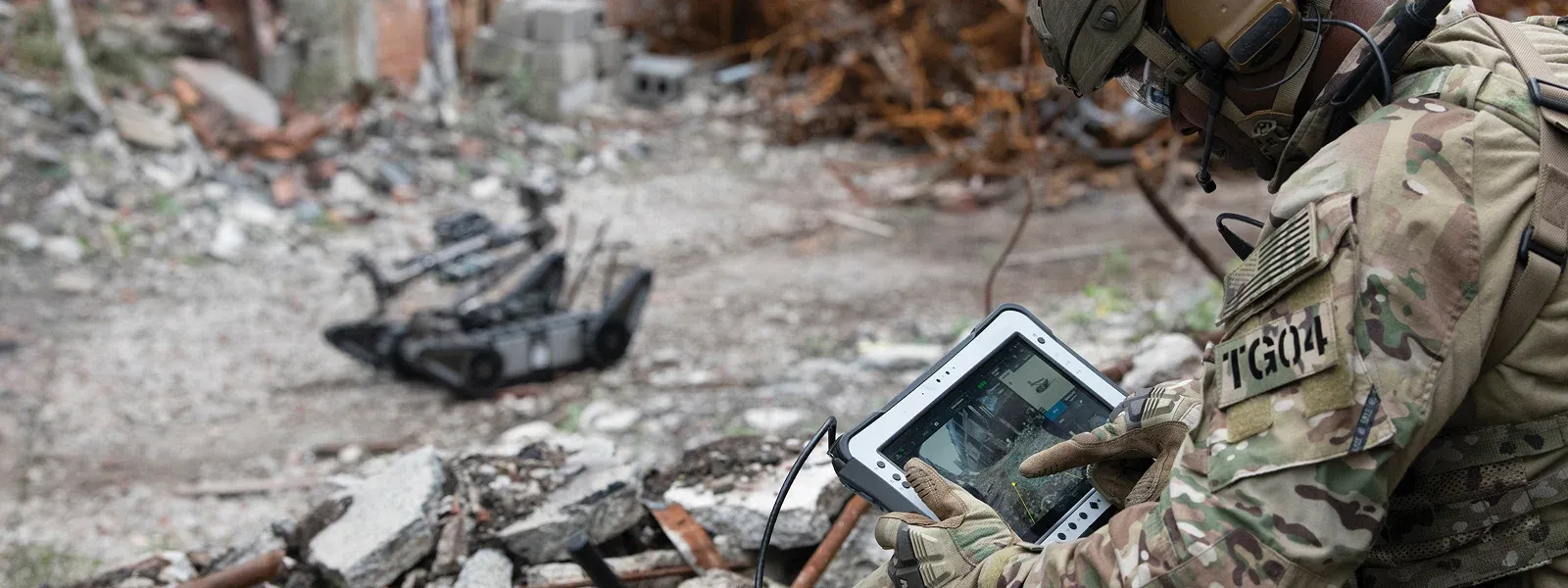

U.S. Army reporting placed PackBot 510 with FasTac Kit in Iraq training and theater use by Soldiers and Marines for explosive-hazard identification, surveillance/reconnaissance, route clearance, and bomb-identification missions.
Support Equipment
PackBot 510
Also known as
- PackBot
- PackBot 510 robot
- PackBot 510 UGV
- FLIR PackBot 510
- Endeavor Robotics PackBot
- iRobot 510 PackBot
- 510 PackBot
- iRobot 510 FasTac
- PackBot MTRS
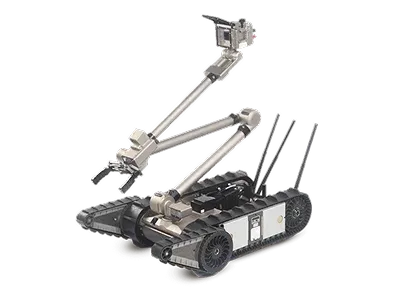
PackBot 510 is a U.S.-origin man-transportable tracked unmanned ground robot from the iRobot, Endeavor Robotics, and Teledyne FLIR Defense lineage. It is documented in Iraq and Afghanistan as a standoff tool for bomb-disposal, route-clearance, and reconnaissance tasks, while current manufacturer material presents the system as a multi-mission robot for EOD, surveillance, remote inspection, and CBRN/HazMat detection.
Role in Conflicts


iRobot stated in 2010 that the iRobot 510 PackBot was being used by warfighters in Afghanistan for dangerous standoff missions including IED-related work, reconnaissance, and route clearance; Defense One separately reported PackBot 510 with FasTac Kit use by soldiers and Marines in Iraq and Afghanistan.
Profile / Specs
Profile
- Origin
- United States
- Type
- Man-transportable tracked unmanned ground robot
- Service note
- 2000s-present tactical ground robotics
- Developed from
- iRobot Defense & Security PackBot family
Specifications
- Role
- Explosive ordnance disposal, surveillance, reconnaissance, remote inspection, route clearance, and CBRN/HazMat detection
- Weight
- 31.6 lb (14.3 kg) mobility platform without batteries; 21.1 lb (9.6 kg) manipulator
- Speed
- Up to 5.8 mph (9.3 km/h)
- Runtime
- Up to 4 hours with two BB-2590 batteries or up to 8 hours with four BB-2590 batteries
- Mobility
- Tracked robot that climbs stairs, rolls over rubble, navigates narrow passages, makes zero-radius turns, climbs 40-degree stairs, and ascends or descends slopes up to 43 degrees
- Deployment
- Deployable by one person in less than two minutes and stowable in a vehicle or car trunk
- Manipulator
- Manipulator lift capacity up to 44 lb (20 kg) close-in or 11 lb (5 kg) at full extension
- Sensors
- Four color cameras with zoom and illumination, with optional fifth camera thermal capability; Endeavor datasheet also lists two-way audio
- Payload architecture
- Six payload ports, 22 supported disruptors, 10 integrated HazMat/CBRNE sensors, and 40+ accessories in Endeavor datasheet; iRobot described a modular digital architecture for interchangeable payloads
- Control
- uPoint Multi-Robot Control touchscreen-based tablet controller; earlier 510 PackBot fleet upgrades used iRobot Aware 2 software
- Radio
- MPU5 radio operating on the Wave Relay MANET
Mission Architecture
PackBot 510 is best read as a modular standoff robot rather than a single-purpose explosive-disposal machine. iRobot described the 510 PackBot as adaptable through interchangeable payloads and Aware 2 software, while Teledyne FLIR's current product page emphasizes a common uPoint controller, Wave Relay MANET radio networking, multiple cameras, manipulator tools, and support for sensors and disruptor solutions.
Standoff task
The robot lets an operator inspect, manipulate, or disrupt hazards while remaining away from the suspected device, route, room, tunnel, or contaminated area.
Sources: iRobot NAVSEA PackBot order; Teledyne FLIR PackBot 510.
Payload approach
The 510 architecture supports interchangeable payloads and accessories, so EOD, CBRNE, route-clearance, and inspection fits can be tailored to the mission.
Sources: iRobot Army PackBot upgrade order; Army CBRNE PackBot fielding.
Control network
Current Teledyne FLIR material ties PackBot 510 to uPoint Multi-Robot Control and an MPU5 Wave Relay MANET radio for robot, operator, and observer networking.
Source: Teledyne FLIR PackBot 510.
Variants
PackBot 510 was introduced as the next-generation PackBot family model and appeared in EOD, FasTac, multi-mission, CBRNE/HazMat, and accessory-based configurations rather than a single fixed payload package.
| Variant | Configuration | Designation notes |
|---|---|---|
| PackBot 510 with EOD Kit | Explosive ordnance disposal configuration | iRobot described the EOD Kit as one of the two main PackBot 510 configurations, with an enhanced chassis, improved manipulator, simplified controller, and four cameras. Sources: iRobot FY2007 Form 10-K |
| PackBot 510 with FasTac Kit | Infantry and route-clearance configuration | iRobot described FasTac as a lighter-weight PackBot 510 configuration for suspicious objects, roadside bombs, IEDs, and unexploded ordnance; U.S. Army reporting placed it in Iraq training and theater use. Sources: iRobot FY2007 Form 10-K, Caveman teaches robotics to troops in Iraq |
| iRobot 510 FasTac | Earlier 510 fleet configuration | iRobot's 2010 Army order said existing 510 FasTac robots would be upgraded to the 510 PackBot multi-mission robot standard with Aware 2 software and spares. Sources: iRobot Army PackBot upgrade order |
| PackBot MTRS | Man Transportable Robotic System configuration | iRobot described the NAVSEA PackBot MTRS order as a configuration modeled after the iRobot 510 PackBot. Sources: iRobot NAVSEA PackBot order |
| PackBot 510 CBRNE sensor variant | Chemical, biological, radiological, nuclear, and explosives sensing configuration | The U.S. Army described a modified PackBot 510 with enhanced CBRNE sensor capability for remote first-look assessment in underground facilities. Sources: Army CBRNE PackBot fielding |
Timeline
PackBot 510 Key Events
510 base model introduced
iRobot's FY2007 Form 10-K described PackBot 510 as the next-generation PackBot model brought to market in 2007.
Sources: iRobot FY2007 Form 10-K
NAVSEA orders PackBot MTRS robots
iRobot announced a NAVSEA order for 125 PackBot MTRS robots and described that MTRS configuration as modeled after the iRobot 510 PackBot.
Sources: iRobot NAVSEA PackBot order
Army 510 FasTac upgrades
iRobot said a U.S. Army order would upgrade an existing iRobot 510 FasTac fleet to the iRobot 510 PackBot multi-mission robot with Aware 2 software and spares.
Sources: iRobot Army PackBot upgrade order
CBRNE sensor variant fielded in Korea
The U.S. Army described a REF-funded modification of existing PackBot 510 robots with enhanced CBRNE sensor capability for the 2nd Infantry Division's 23rd Chemical Battalion.
Sources: Army CBRNE PackBot fielding
PackBot line carried into Endeavor Robotics
Arlington Capital identified PackBot as one of the four robot classes in the former iRobot Defense & Security business that became Endeavor Robotics.
Sources: Arlington formation announcement
Endeavor portfolio added to FLIR
FLIR's Endeavor acquisition announcement described the company as a major tactical UGV provider and used PackBot imagery in the acquisition press material.
Sources: FLIR acquisition announcement
Media
PackBot 510 Videos
PackBot 510 Images
Related Weapon Systems


Sources
Teledyne FLIR PackBot 510Publisher: Teledyne FLIR Defense | Note: Supports PackBot 510 role, missions, delivery count, mobility, manipulator, controller, radio, sensor details, modular accessory context, and official product imagery. | Accessed: 2026-07-13iRobot NAVSEA PackBot orderPublisher: iRobot | Note: Supports direct 2003 Iraq War and 2001 War in Afghanistan use by stating the iRobot 510 PackBot was being used by warfighters in Iraq and Afghanistan for dangerous standoff missions, IED work, reconnaissance, and route clearance; also supports the PackBot MTRS relationship to the 510 PackBot. | Accessed: 2026-07-13Caveman teaches robotics to troops in IraqPublisher: U.S. Army | Note: Supports direct 2003 Iraq War use by placing PackBot 510 with FasTac Kit in Iraq training and theater use by Soldiers and Marines for explosive-hazard identification, surveillance/reconnaissance, route clearance, bomb identification, and IED-related protection. | Accessed: 2026-07-13Defense One robotics contract coveragePublisher: Defense One | Note: Supports direct 2003 Iraq War and 2001 War in Afghanistan use by reporting PackBot 510 with FasTac Kit use by soldiers and Marines in Iraq and Afghanistan, including suspicious-object investigation and dangerous-area first-look missions. | Accessed: 2026-07-13iRobot Army PackBot upgrade orderPublisher: iRobot | Note: Supports direct 2003 Iraq War and 2001 War in Afghanistan use by stating the iRobot 510 PackBot was being used by warfighters in Iraq and Afghanistan; also supports Aware 2 software, interchangeable payload architecture, 510 FasTac upgrade context, and Army fleet sustainment. | Accessed: 2026-07-13iRobot FY2007 Form 10-KPublisher: U.S. Securities and Exchange Commission | Note: Supports PackBot 510 introduction in 2007, EOD Kit and FasTac Kit configurations, controller concept, accessory count, PackBot family background, and iRobot manufacturer context. | Accessed: 2026-07-13Endeavor Robotics 510 PackBot Spec SheetPublisher: Endeavor Robotics | Note: Supports PackBot 510 weight, speed, runtime, slope, stair, manipulator, camera, audio, payload-port, disruptor, HazMat/CBRNE sensor, accessory, controller, delivery-count, and mission-set details. | Accessed: 2026-07-13Army CBRNE PackBot fieldingPublisher: U.S. Army | Note: Supports the enhanced CBRNE PackBot 510 variant, REF-funded modification of existing PackBot 510 robots, 2nd Infantry Division/23rd Chemical Battalion context, and remote first-look use in underground facilities. | Accessed: 2026-07-13New Yorker PackBot overviewPublisher: The New Yorker | Note: Supports PackBot development background, the 510 base-model release year, Afghanistan deployment context for the broader PackBot family, and public description of 510 manipulator and camera capabilities. | Accessed: 2026-07-13Arlington formation announcementPublisher: Arlington Capital Partners | Note: Supports the PackBot product-family link to the former iRobot Defense & Security business and Endeavor Robotics formation. | Accessed: 2026-07-13FLIR acquisition announcementPublisher: FLIR Systems | Note: Supports Endeavor Robotics manufacturer lineage, tactical UGV acquisition context, and PackBot press-image provenance. | Accessed: 2026-07-13