

U.S. Marines used Assault Breacher Vehicles from 2nd Combat Engineer Battalion during Operation Cobra's Anger at Now Zad in December 2009, firing line charges and leading routes against Taliban IED belts.
Support Equipment
M1150 Assault Breacher Vehicle
Also known as
- M1150 ABV
- Assault Breacher Vehicle
- ABV
- M1 ABV
- The Shredder
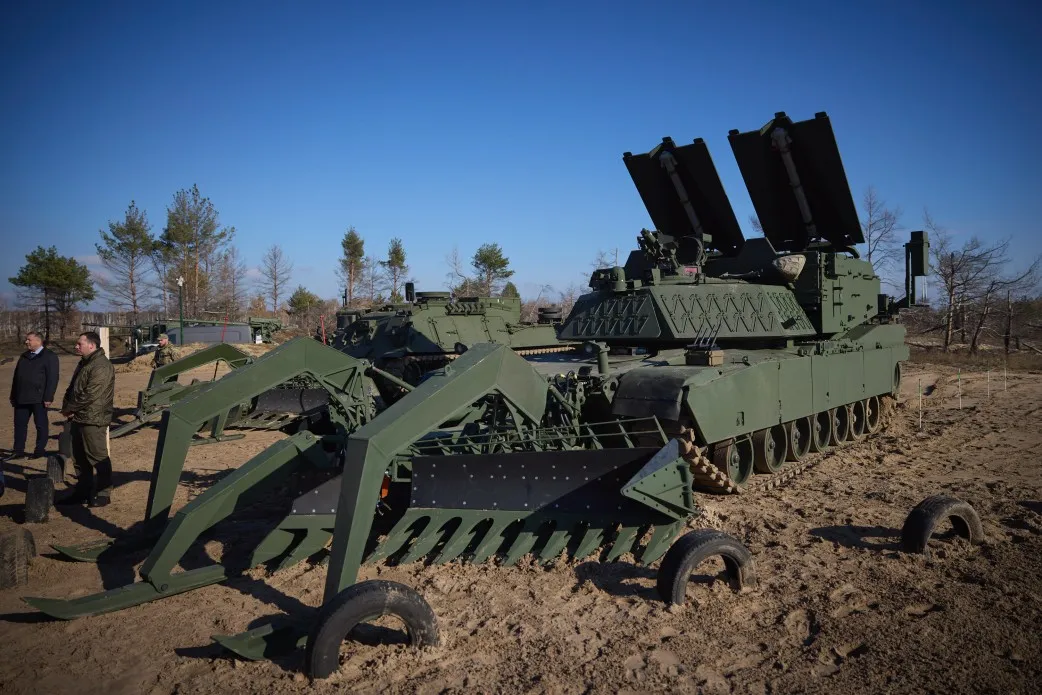
The M1150 Assault Breacher Vehicle is a U.S. armored combat-engineering vehicle built around an M1 Abrams-derived hull, two linear demolition-charge launchers, a lane-marking system, and interchangeable mine-plow or dozer-blade breaching gear. U.S. Marine Corps use in Afghanistan showed the vehicle clearing routes through IED and obstacle belts under armor, while Ukrainian service in the Russia-Ukraine War made the system part of the Western mine-clearing aid lane for armored maneuver.
Role in Conflicts
- Side
- Ukraine

An M1150 was photographed with Ukraine's armed forces at a November 3, 2023 engineering-troops ceremony; 2024 reporting later documented Ukrainian M1150 losses around Stepove and Berdychi during the Avdiivka fighting.
Role detailsProfile / Specs
Profile
- Origin
- United States
- Built by
- General Dynamics Land Systems
- Type
- Armored combat-engineering breaching vehicle
- Service note
- Entered U.S. service in the late 2000s; documented in Afghanistan and Ukraine
- Designer
- U.S. Marine Corps-led joint program using an M1-series tank chassis and breaching package
- Designed
- Early 2000s development; operational by 2009
- Unit cost
- About US$14 million per vehicle in Deagel's public profile
- Produced
- Late 2000s onward
Specifications
- Crew
- 2
- Chassis
- Modified M1A1 Abrams tank chassis
- Primary breaching equipment
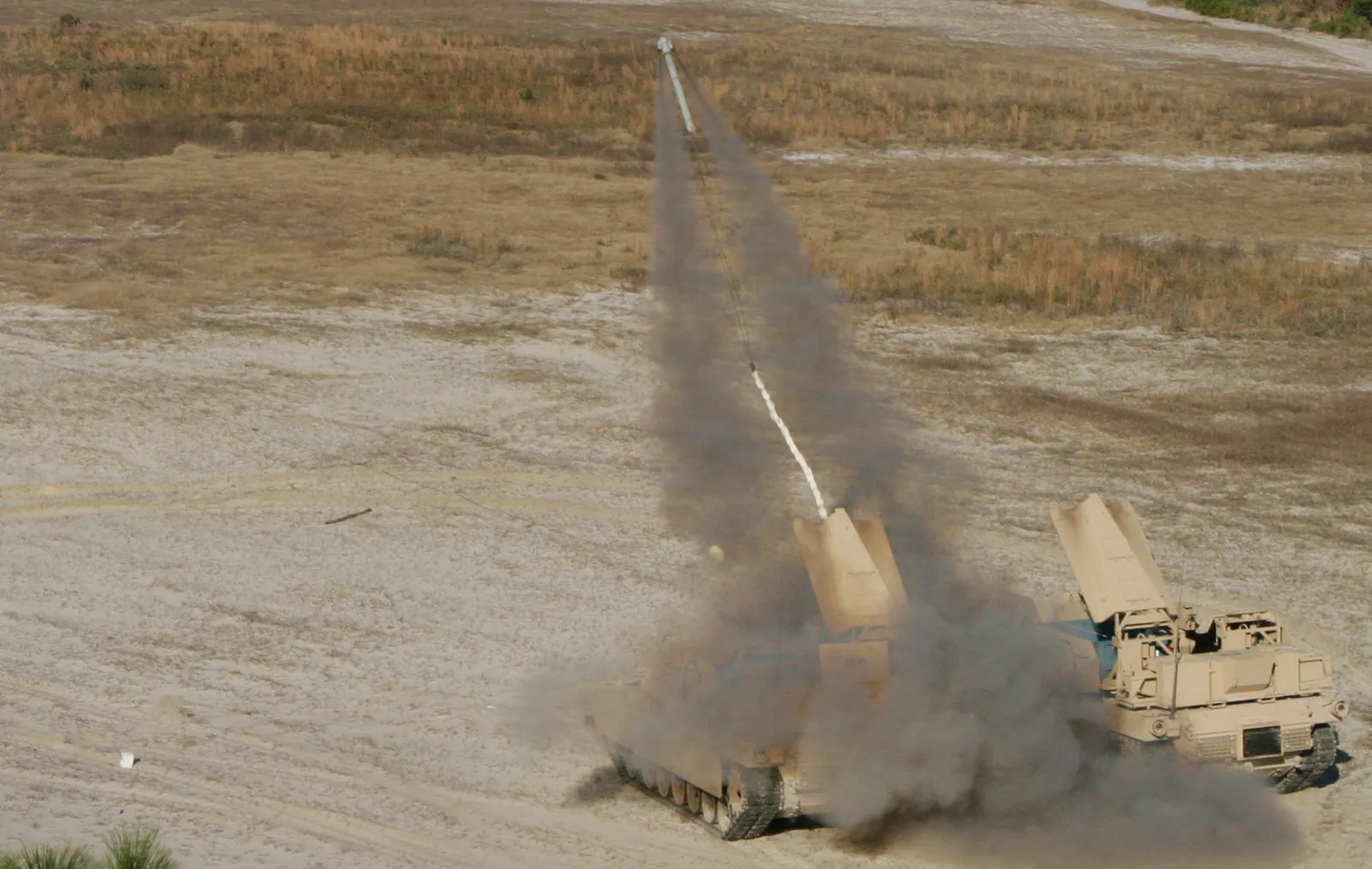
- Two Linear Demolition Charge Systems using Mine Clearing Line Charges, plus lane marking equipment
- Mechanical breach tools
- High-lift adapter for a Full Width Mine Plow or Combat Dozer Blade
- Lane effect
- DVIDS training footage describes a rocket-projected MICLIC as clearing about 8 meters wide by 100 meters long
- Secondary armament
- .50 caliber machine-gun mount for self-defense
- Mobility
- Abrams-derived tracked armored mobility intended to keep pace with maneuver forces
- Powerplant
- 1,500 hp Abrams-family gas-turbine powerpack in public profiles
- Combat weight
- About 72 tons in public profiles
Variants
Public sources treat M1150 ABV and M1 ABV as designations for the same Abrams-derived breaching vehicle; the main field differences are mission fittings rather than separate production variants.
| Variant | Configuration | Designation notes |
|---|---|---|
| Full Width Mine Plow configuration | Minefield breach configuration | The vehicle's high-lift adapter can mount a full-width mine plow for under-armor mechanical breaching. Sources: TWZ Ukraine M1150 appearance, GlobalSecurity M1150 ABV |
| Combat Dozer Blade configuration | Obstacle and earthmoving configuration | The same high-lift adapter is described with an interchangeable combat dozer blade for breaching and obstacle work. Sources: TWZ Ukraine M1150 appearance, GlobalSecurity M1150 ABV |
| Remote-control-capable ABV | Standoff breaching option | GlobalSecurity describes a remote-control system among the M1150's major components and notes a two-person crew with an option for remote operation. Sources: GlobalSecurity M1150 ABV |
Fired Breaching Charge
The M1150's distinctive breaching effect comes from combining an armored carrier with rocket-projected linear demolition charges and mechanical lane-clearing gear.
| Ammunition | Ammunition type | Firing evidence |
|---|---|---|
 | Linear demolition charge | Public M1150 descriptions identify two Linear Demolition Charge Systems using Mine Clearing Line Charges, while DVIDS footage describes a rocket-projected MICLIC clearing an approximately 8-meter by 100-meter lane. Sources: TWZ Ukraine M1150 appearance, DVIDS ABV 100-meter explosion video |
Abrams-Based Breaching Package
The M1150 is not a tank variant in the direct-fire role. It uses an Abrams-derived armored hull to keep combat engineers under armor while opening lanes for troops and vehicles.
Chassis lineage
Sources describe the ABV as based on a modified M1 Abrams or M1A1 tank chassis with the tank turret replaced by breaching equipment.
Sources: GlobalSecurity M1150 ABV; TWZ Ukraine M1150 appearance.
Route-clearing tools
The breaching package combines a full-width mine plow or combat dozer blade, lane marking, vision equipment, and two line-charge launch systems.
Sources: GlobalSecurity M1150 ABV; DVIDS ABV 100-meter explosion video.
Conflict evidence
Afghanistan sources document U.S. Marine ABVs firing line charges in combat; Ukraine sources document the vehicle in Ukrainian service but leave the exact aid-package route public-source limited.
Sources: DVIDS Now Zad ABV; Kyiv Independent Ukraine M1150; TWZ Ukraine M1150 appearance.
Timeline
M1150 Assault Breacher Vehicle Key Events
Milestone B authorized
Marine Corps Systems Command granted the Assault Breacher Vehicle Milestone B and prototype authorization in July 2003.
Sources: GlobalSecurity M1150 ABV
ABV and Joint Assault Bridge roll-out
A joint roll-out ceremony marked production of the Assault Breacher Vehicle and Joint Assault Bridge, with Anniston Army Depot acting as prime systems integrator.
Sources: GlobalSecurity M1150 ABV
First combat line charge at Now Zad
DVIDS reporting says Marine ABVs fired line charges during Operation Cobra's Anger in Now Zad, Afghanistan, against routes expected to contain roadside bombs.
Sources: DVIDS Now Zad ABV
Marine Corps divestment visible at Camp Pendleton
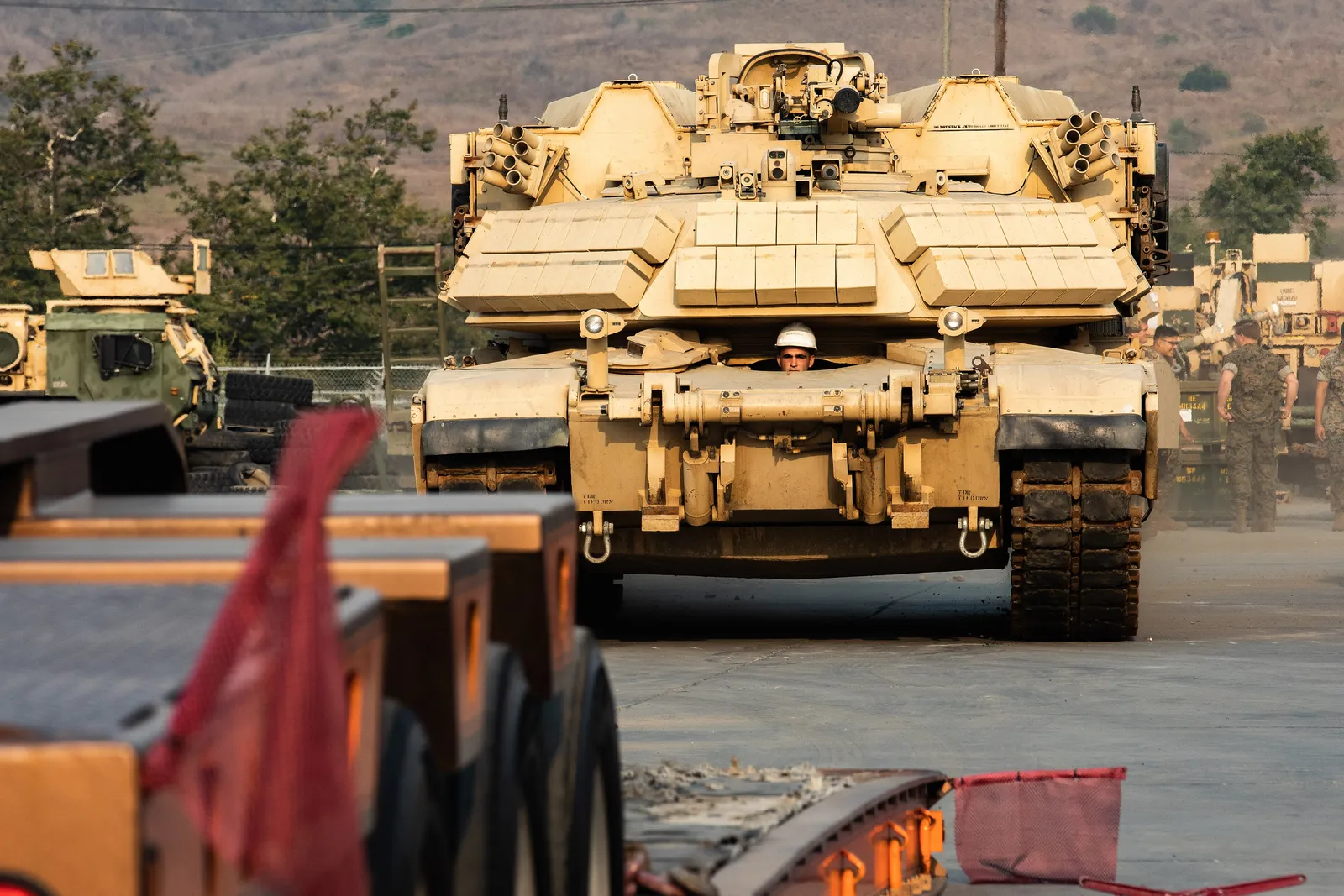
A Marine Corps image record documents 1st Combat Engineer Battalion loading M1150s for divestment under Force Design 2030.
Sources: Commons 1st CEB M1150 divestment image
Australia package includes ABVs
A Defense Security Cooperation Agency heavy armored combat systems notice listed 29 M1150 Assault Breacher Vehicles for Australia as a new Royal Australian Engineers under-armor breaching capability.
Sources: DSCA Australia Heavy Armored Combat Systems
M1150 appears in Ukrainian service
Photos from Ukraine's presidential office and subsequent reporting showed an M1150 with Ukraine's armed forces during an engineering-troops award ceremony.
Sources: President of Ukraine engineering troops awards, Kyiv Independent Ukraine M1150, TWZ Ukraine M1150 appearance
First Ukrainian combat loss reported
Army Recognition reported that a Ukrainian 47th Mechanized Brigade M1150 had been targeted near Stepove and described the incident as the first confirmed loss of the type in Ukrainian service.
Sources: Army Recognition first Ukrainian M1150 loss
Australian Army training publicly described
Australian Defence reporting described 3rd Combat Engineer Regiment sappers training on new M1150 assault breacher vehicles after U.S. and Australian conversion courses.
Sources: Australian Defence M1150 training
Media
M1150 Assault Breacher Vehicle Images
Related Weapon Systems


Sources
GlobalSecurity M1150 ABVPublisher: GlobalSecurity.org | Note: Supports M1150 background, M1-based chassis, breaching package components, remote-control option, crew, development milestones, Anniston integration, and general specifications. | Accessed: 2026-07-08ODIN M1150 American Assault Breacher VehiclePublisher: U.S. Army Training and Doctrine Command ODIN | Note: Supports general M1150 profile, Abrams basis, mine-clearing role, dimensions, weight, engine power, and armament context. | Accessed: 2026-07-08Deagel M1150 Assault Breacher VehiclePublisher: Deagel | Note: Supports public profile details including General Dynamics Land Systems contractor attribution, unit-cost estimate, IOC, and broad technical data. | Accessed: 2026-07-08DVIDS Now Zad ABVPublisher: DVIDS | Note: Supports 2001 War in Afghanistan direct conflict-use: U.S. Marines with 2nd Combat Engineer Battalion used Assault Breacher Vehicles during Operation Cobra's Anger at Now Zad, firing line charges and leading routes against Taliban roadside-bomb threats. | Accessed: 2026-07-08DVIDS ABV 100-meter explosion videoPublisher: DVIDS | Note: Supports M1150 MICLIC lane-clearing specification and public-domain video context for a National Training Center live-fire demonstration. | Accessed: 2026-07-08President of Ukraine engineering troops awardsPublisher: Official Website of the President of Ukraine | Note: Supports 2014 Russia-Ukraine War direct conflict-use context through the official image set from the November 3, 2023 Ukrainian missile, artillery, and engineering troops ceremony that showed an M1150 in Ukrainian service. | Accessed: 2026-07-08Kyiv Independent Ukraine M1150Publisher: The Kyiv Independent | Note: Supports 2014 Russia-Ukraine War direct conflict-use: reporting identified an M1150 Assault Breacher Vehicle spotted in the Armed Forces of Ukraine and notes the public uncertainty around the delivery route. | Accessed: 2026-07-08TWZ Ukraine M1150 appearancePublisher: The War Zone | Note: Supports 2014 Russia-Ukraine War direct conflict-use and background: reporting identifies the U.S.-made M1150 in Ukraine, summarizes U.S. Army configuration details, and notes its likely mine-clearing role against Russian obstacle belts. | Accessed: 2026-07-08Army Recognition first Ukrainian M1150 lossPublisher: Army Recognition | Note: Supports 2014 Russia-Ukraine War direct conflict-use: reporting said a Ukrainian 47th Mechanized Brigade M1150 was targeted near Stepove in February 2024 and described the event as the first confirmed Ukrainian loss of the vehicle type. | Accessed: 2026-07-08Army Recognition Berdychi M1150 capturePublisher: Army Recognition | Note: Supports 2014 Russia-Ukraine War direct conflict-use: reporting said Russian troops recovered a U.S.-made M1150 from the Berdychi area after it was lost by Ukraine's 47th Mechanized Brigade. | Accessed: 2026-07-08Commons Ukrainian M1150 imagePublisher: Wikimedia Commons | Note: Supports primary image provenance and license metadata for the Ukrainian M1150 image sourced from the President of Ukraine. | Accessed: 2026-07-08Commons M1 Assault Breacher Vehicle imagePublisher: Wikimedia Commons | Note: Supports gallery image provenance for a U.S. Marine Corps Assault Breacher Vehicle image. | Accessed: 2026-07-08Commons 1st CEB M1150 divestment imagePublisher: Wikimedia Commons | Note: Supports gallery image provenance and Marine Corps divestment timeline context for a 2020 Camp Pendleton M1150 image. | Accessed: 2026-07-08DSCA Australia Heavy Armored Combat SystemsPublisher: Defense Security Cooperation Agency | Note: Supports foreign-military-sales context: the Australia heavy armored combat systems notification listed 29 M1150 ABVs and described the under-armor breaching capability for Royal Australian Engineers. | Accessed: 2026-07-08Australian Defence M1150 trainingPublisher: Australian Department of Defence | Note: Supports Australian service and training context: Australian Defence described 3rd Combat Engineer Regiment sappers training on new M1150 assault breacher vehicles, including line charges, ploughing, dozer-blade use, and conversion training. | Accessed: 2026-07-08