- Side
- Soviet Union and Afghan government forces


Open references describe BMR-2 vehicles entering Soviet service and being delivered to Soviet units in Afghanistan, where the vehicle addressed mine threats to armored and transport movement.
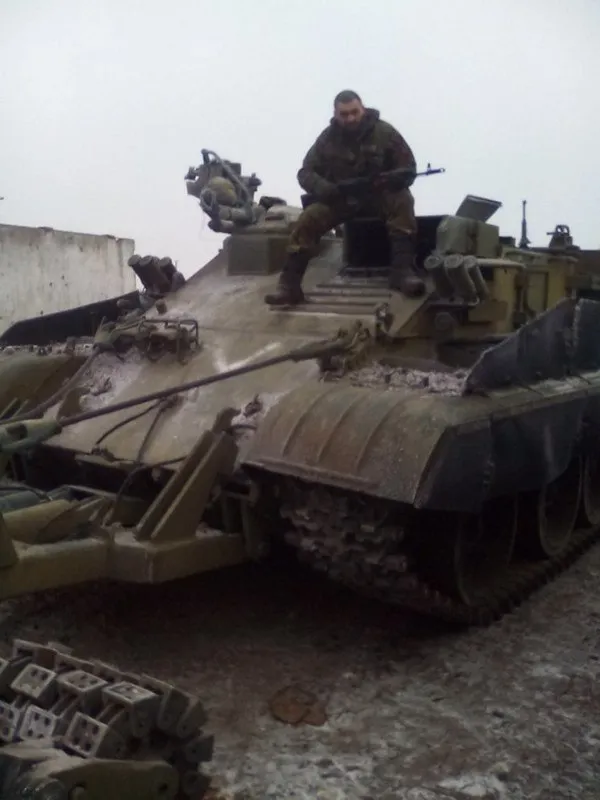
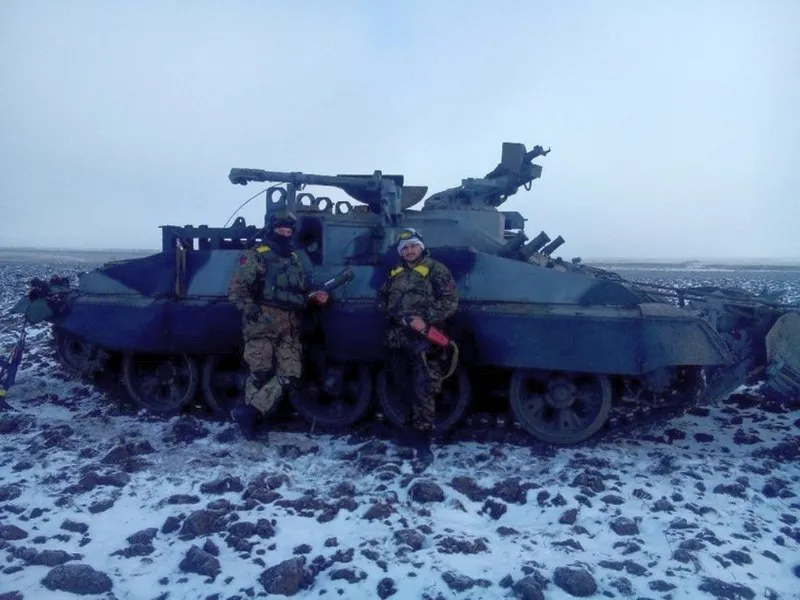
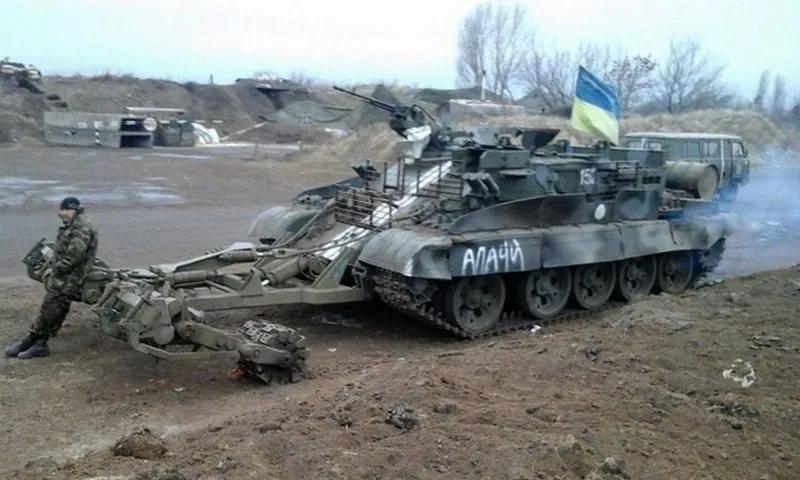
The BMR-2 is a Soviet armored mine-clearing vehicle developed after the Afghanistan experience showed the need for protected route-opening vehicles in armored and engineering units. It replaced the BMR-1's rarer SU-122-54 base with a T-54B/T-55-family tank chassis, carrying KMT-7 Parnas mine trawls, an electromagnetic attachment, a protected sapper compartment, and a closed 12.7 mm NSV self-defense station.
Open references describe BMR-2 vehicles entering Soviet service and being delivered to Soviet units in Afghanistan, where the vehicle addressed mine threats to armored and transport movement.
Visual-loss documentation lists Ukrainian BMR-2 mine-clearing tanks destroyed and abandoned during Russia's full-scale invasion, and TWZ reported a BMR-2 mine-clearing vehicle abandoned with other Ukrainian breaching vehicles near Mala Tokmachka in June 2023. Later Russian reporting described further Ukrainian BMR-2 use and a 2025 drone loss.
Role detailsThe BMR-2 kept the tank-derived mobility and protection needed to work ahead of heavier vehicles, but its mission equipment replaced the normal turret role. The central armored superstructure carried the commander and sappers, while the front-mounted KMT-7 equipment created cleared wheel or track lanes for following vehicles.
Sources identify the BMR-2 as a T-54B or T-54/T-55-family conversion, with the turret removed and replaced by a fixed armored superstructure.
The KMT-7 Parnas mine trawl is described as producing two safe tracks about 800 mm wide at trawling speeds up to 12 km/h.
The vehicle carried a driver and a protected superstructure crew that included the commander and sappers, reflecting its route-opening role rather than a tank-gun mission.
A closed 12.7 mm NSV machine-gun installation and smoke grenade launchers gave the vehicle limited local defense while it worked near mined routes.
The BMR-2 sits between the SU-122-54-based BMR-1 and later Russian BMR-3M/BMR-3MA mine-clearance vehicles. Sources treat these as BMR-family route-clearing vehicles rather than a separate combat tank branch.
| Variant | Configuration | Designation notes |
|---|---|---|
 | Earlier SU-122-54-based BMR vehicle | Army Recognition identifies the BMR-1 as the first version and the BMR-2 as the following T-54B-based vehicle developed after the Afghanistan mine-clearing requirement. Sources: Army Recognition BMR-2 |
 | Later tank-derived mine-clearing vehicle | Deagel identifies the BMR-3M Vepr as a Russian armored mine-clearance vehicle for heavy armored units and lists BMR-3MA/Prokhod-1 as a remotely operated development of the BMR-3M. Sources: Deagel BMR-3M |
The BMR-2 is best read as an armored engineering conversion tied to the T-54/T-55 tank family, not as a clean-sheet combat vehicle.
| Compatible item | Item type | Compatibility evidence |
|---|---|---|
 | Base tank family | Army Recognition identifies the BMR-2 as based on the T-54B tracked tank chassis and says its engine, transmission, and running gear came from the T-55 tank. Sources: Army Recognition BMR-2 |
Army Recognition says the first BMR-2 Product 048 prototypes were assembled in 1985 after Afghanistan highlighted the need for armored mine-clearing vehicles.
Sources: Army Recognition BMR-2
Army Recognition reports BMR-2 adoption in 1986 and deliveries to military units deployed in Afghanistan.
Sources: Army Recognition BMR-2
Oryx lists two Ukrainian BMR-2 mine-clearing tanks among visually documented equipment losses, one destroyed and one abandoned, while TWZ reported an abandoned BMR-2 in the same early counteroffensive breaching context.
Sources: Oryx Ukrainian Equipment Losses, TWZ Bradley Losses BMR-2
Russian-language reporting described a rare Ukrainian BMR-2 destroyed by a drone and linked earlier Ukrainian use of the type to minefield-breaching attempts during the 2023 counteroffensive.
Sources: Rossiyskaya Gazeta BMR-2 Ukraine