Tanks

T-54/T-55

Also known as
  • T-54
  • T-54A
  • T-54B
  • T-55
  • T-55A
  • T-55AM
  • T-55AM1
  • T-55AM2
  • T-55E
  • Object 137
  • Object 155
  • T54
  • T55

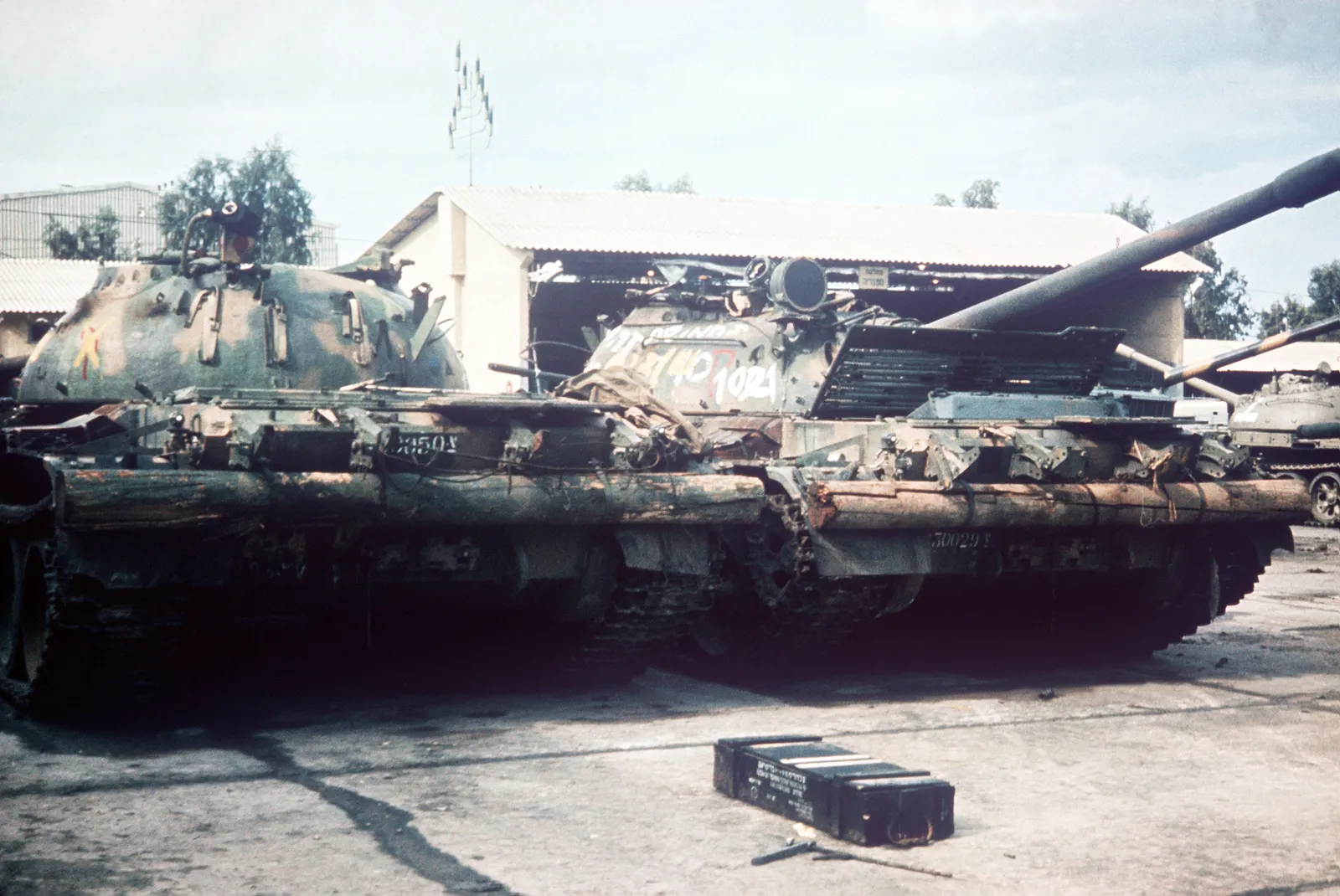
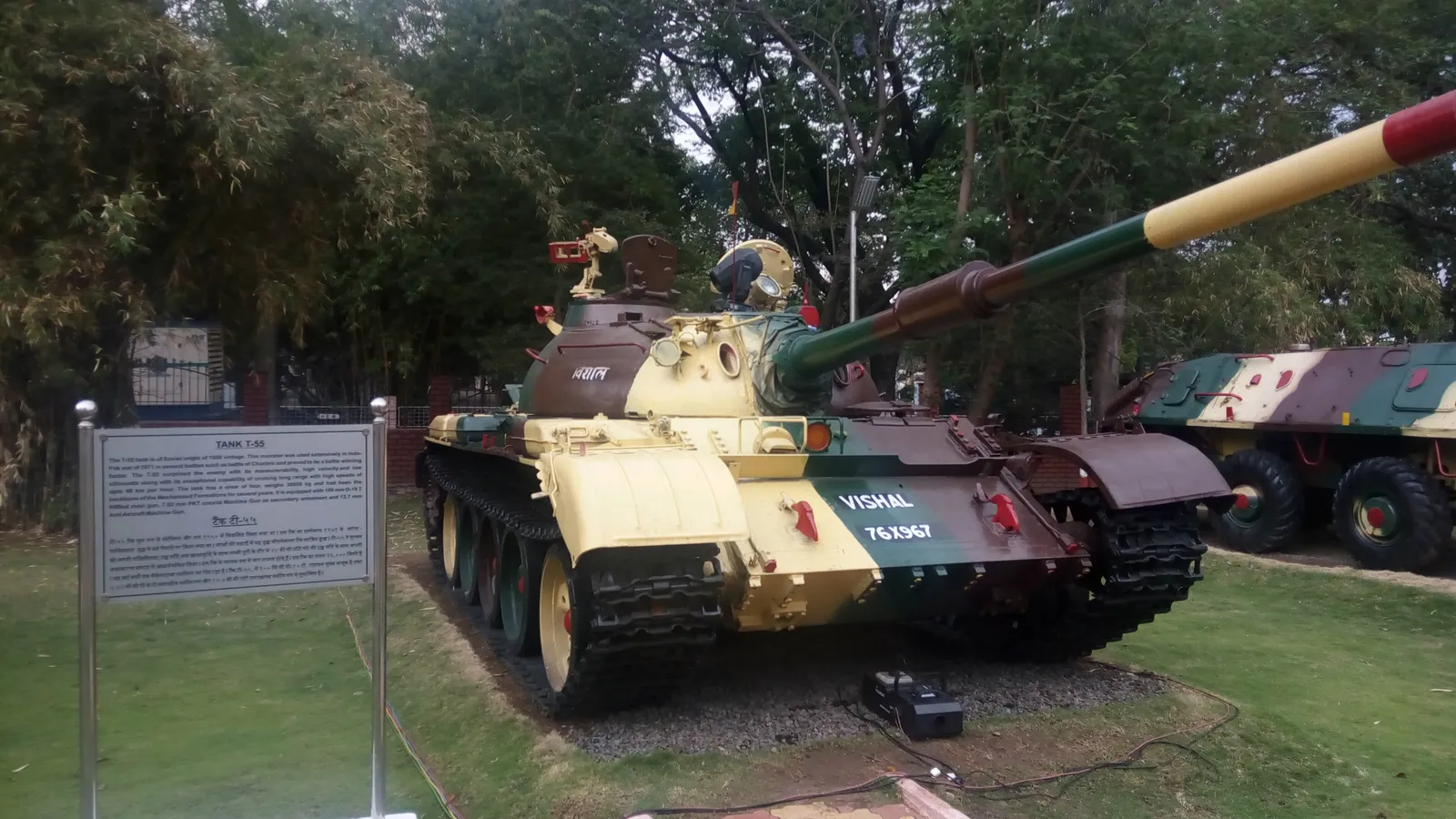
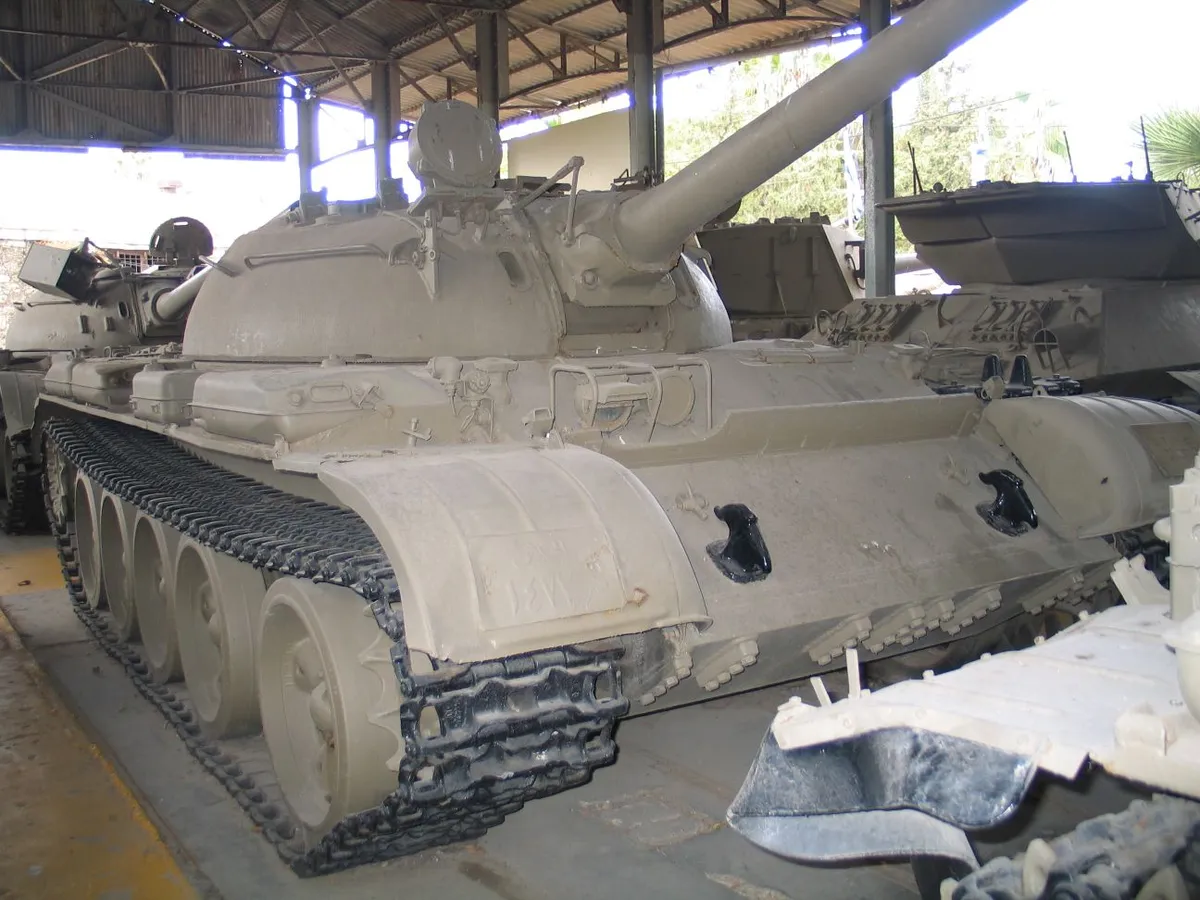
The T-54/T-55 is a Soviet tank family built around a low-profile tracked hull, four-person crew, and 100 mm D-10-series gun. It became one of the most widely produced tank families of the Cold War, with Soviet and licensed production spreading across Warsaw Pact and partner states. Direct conflict sourcing traces the family from North Vietnamese T-54 use in the 1975 fall of Saigon and Iraqi T-55s in the Gulf War to recent secondary fire-support, capture, and loss contexts in Ukraine, Yemen, Libya, Syria, Nagorno-Karabakh, Nigeria, and Sudan.

Role in Conflicts

Side
Russia

Russian forces were reported moving T-54/T-55-series tanks out of storage in March 2023, and a stock-condition T-54/T-55 was later reported with Russian forces in the Zaporizhzhia area; reporting assessed the tanks as more plausible for fire support, static positions, or other secondary roles than modern tank combat.

Role details
Role in conflict
Captured heavy armor and propaganda display

ISWAP displayed a T-55 tank among vehicles it said were captured from Nigerian soldiers after the April 2021 attack on 156 Battalion at Mainok in Borno State; the source documents capture and display, not confirmed sustained operation.

Role in conflict
Captured armored inventory

Government of National Accord-aligned forces captured T-55-series tanks from Libyan National Army positions in 2020, including one T-55 at al-Watiya airbase and dozens of T-55A/T-55E tanks around Tarhuna.

Role in conflict
Indirect fire support

Azerbaijani forces reportedly deployed at least a company of T-55 tanks near Aghdam during the 2020 Second Karabakh War, using the older tanks as improvised howitzers while newer T-72s handled direct assaults.

Side
North Vietnam and Viet Cong
Role in conflict
North Vietnamese armored breakthrough

Vietnam.vn reporting identifies Tank 843 as a T-54 that reached the side gate of Independence Palace during the 30 April 1975 fall of Saigon, documenting T-54-series use by North Vietnam and Viet Cong forces in the closing phase of the 1955 Vietnam War.

Role in conflict
Armored force losses

Open-source visual-loss documentation for the 2023 Sudan War lists T-55A tanks among Sudanese Armed Forces equipment destroyed during the war; the source supports use and losses, not a complete inventory count.

Profile / Specs

Profile

Origin
Soviet Union
Type
Main battle tank / medium tank family
Service note
Cold War design family; documented Russian reactivation during the 2022 full-scale 2014 Russia-Ukraine War
Designer
Kharkiv Morozov Design Bureau; OKB-520 at Uralvagonzavod
Designed
1945-1958
Unit cost
Not consistently reported across variants and export production
Produced
Soviet production from 1946 into the early 1980s, with licensed production abroad
Number built
Common estimates place T-54/T-55 family production around 96,500 to more than 100,000 tanks including licensed and related variants

Specifications

Crew
4
Main armament
100 mm D-10T-series rifled gun
Combat weight
About 36-40.5 tonnes depending on variant and modernization
Engine
V-54 or V-55 V-12 diesel family, commonly reported around 500-580 hp on base variants
Road speed
About 50 km/h
Operational range
About 325-500 km depending on variant, fuel configuration, and source assumptions
Protection
Cast turret and welded hull armor; T-55 introduced improved NBC protection compared with earlier T-54 variants
Production And Designation Notes

The T-54/T-55 page is best read as a family record: the same broad chassis lineage appears as Soviet production marks, licensed-production tanks, and national modernization packages.

TopicReader-facing detailSource labels
Production spreadSoviet production was followed by licensed or partner-state production in Poland and Czechoslovakia, which is why the family appears under many local inventories and modernization suffixes.T-54 Russian Main Battle Tank (MBT); T-54/55 - Main Battle Tank
T-54 to T-55 splitThe T-55 kept the general 100 mm gun tank layout but moved the family toward improved NBC-protection and revised mechanical details rather than a clean-sheet tank design.T-54/55 - Main Battle Tank
Modernization suffixesSuffixes such as AM1, AM2, and M-55S usually mark national upgrade packages or service-life extensions, so conflict records should name the exact variant only when the source does.T-55AM1; ST RAVNE M-55 S Main Battle Tank
Variants

The linked row points to a separate public record for a national T-55 modernization. Internal T-54/T-55 marks are covered in the designation notes section on this page.

VariantConfigurationDesignation notes
M-55S, Upgraded T-55 main battle tank, TanksM-55SSlovenian T-55 modernization

The Slovenian Armed Forces identify the M-55S as a T-55 upgrade with a 105 mm gun, explosive reactive armor, laser-warning equipment, and other modernization work.

Sources: ST RAVNE M-55 S Main Battle Tank

Timeline

T-54/T-55 Key Events

  1. Postwar T-54 design lineage begins

    ODIN traces the T-54/T-55 family to post-Second World War Soviet development around a 100 mm gun, low hull, and cast-turret layout.

    Sources: T-54 Russian Main Battle Tank (MBT)

  2. T-55 production model enters the family

    Reference sources distinguish the T-55 from earlier T-54 marks by its improved NBC-protection concept and related mechanical changes while retaining the same basic tank layout.

    Sources: T-54 Russian Main Battle Tank (MBT), T-54/55 - Main Battle Tank

  3. T-54 at Independence Palace

    Vietnam.vn reporting identifies Tank 843 as a T-54 in the armored column that reached Independence Palace during the fall of Saigon.

    Sources: The gunner on tank 390 recounts the moment he rammed through the gates of the Independence Palace

  4. Iraqi T-55s fought in the Gulf War

    Imperial War Museums collection text for a 16/5 Lancers object describes the regiment fighting T55s and MTLBs at Objective Lead during the 1991 ground campaign.

    Sources: Hat, Desert DPM camouflage: 16th The Queen's Royal Lancers

  5. Russian storage withdrawals reported

    The War Zone reported T-54/T-55-series tanks moving out of Russian storage toward the west, preceding later battlefield reporting from Ukraine.

    Sources: Signs Point To Russia Sending Ancient T-54 Series Of Tanks To Ukraine

Media
Related Weapon Systems
T-62, Main battle tank, TanksTanksT-62Main battle tankThe T-62 is a Soviet main battle tank built around a 115 mm U-5TS/2A20 smoothbore gun, a four-person crew, and a conventional tracked armor layout inherited from the T-54/T-55 design line. Produced in large numbers by Uralvagonzavod, it moved from Cold War export and Soviet service into long-tail combat use: Egyptian and Iraqi T-62s appear in 1970s and 1991 conflict records, while upgraded or inherited T-62M/T-62MV stocks reappeared in Syria, Libya, Ukraine, Tigray, and Yemen.
100 mm D-10 tank gun, 100 mm rifled tank and anti-tank gun, ArtilleryArtillery100 mm D-10 tank gun100 mm rifled tank and anti-tank gunThe 100 mm D-10 is a Soviet rifled gun family developed for armored-vehicle use at the end of the Second World War. Its D-10S form armed the SU-100 tank destroyer, while D-10T, D-10TG, and D-10T2S tank-gun variants became the main armament of T-54/T-55-family tanks and related foreign designs. This record is relationship-only because the available sources support platform installation and service history, not independent conflict-use rows for the gun separate from its carrier vehicles.
100 mm KS-19 anti-aircraft gun, Towed 100 mm anti-aircraft gun, Air DefenseAir Defense100 mm KS-19 anti-aircraft gunTowed 100 mm anti-aircraft gunThe KS-19 is a Soviet 100 mm towed anti-aircraft gun designed for high-altitude, radar-directed air defense with fixed ammunition, a powered carriage, and PUAZO/SON-9 fire-control support. U.S. studies tied the gun to North Vietnam's heavy AAA network and Iraqi inventories retained it into the 1990 Gulf War, while later conflict records show legacy KS-19s displayed in Houthi air-defense equipment and repurposed as long-range ground-fire weapons in Nagorno-Karabakh and Ukraine.

Sources