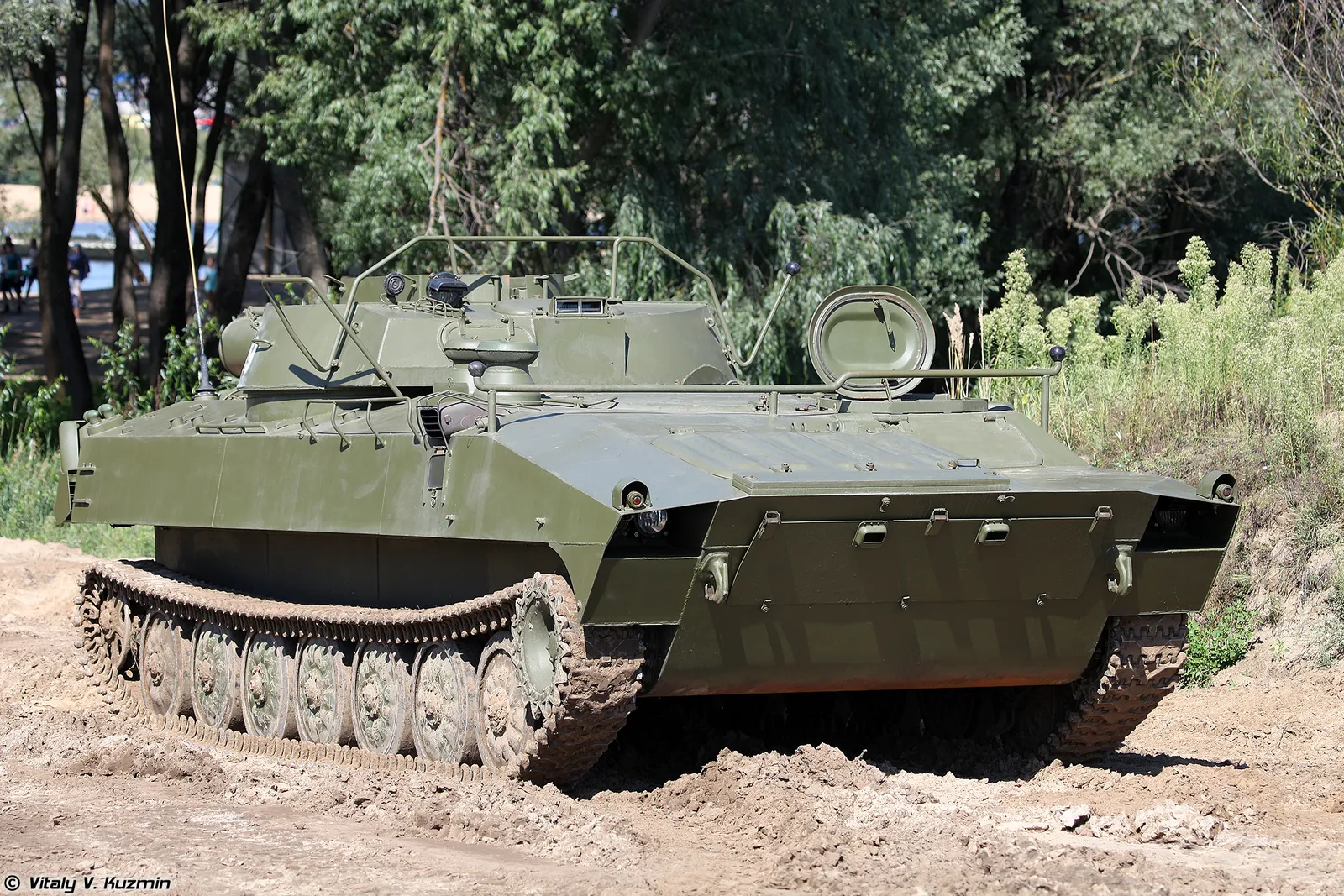


Oryx visually documents Russian UR-77 losses and captures and Ukrainian UR-77 losses, while TWZ describes Ukrainian forces destroying a Russian UR-77 and notes that both Russia and Ukraine have used the type in the current conflict.
Role detailsSupport Equipment
UR-77 Meteorit
Also known as
- UR-77
- Meteorit
- Meteorite
- Ustanovka Razminirovaniya-77
- Zmey Gorynych
- Zmei Gorynych
The UR-77 Meteorit is a Soviet tracked combat-engineering vehicle that fires rocket-propelled explosive line charges from a protected 2S1-derived chassis. Built to open lanes through minefields for mechanized forces, it has also appeared in urban fighting where the same line charge can be used as a short-range demolition weapon. Public conflict evidence places UR-77s with Russian and Ukrainian forces in the Russia-Ukraine War and with Syrian government-aligned forces in the Syrian Civil War.
Role in Conflicts

War Is Boring reported a UR-77 photographed moving toward Jobar near Damascus in October 2014 and described pro-regime video showing the vehicle engaged in fighting there.
Profile / Specs
Profile
- Origin
- Soviet Union
- Type
- Tracked mine-clearing line-charge vehicle
- Service note
- Late Cold War design with post-Soviet service
- Designer
- Soviet combat-engineering vehicle design based on the 2S1 Gvozdika chassis
- Designed
- 1970s; service entry reported in 1978
- Produced
- From 1977 or 1978
Specifications
- Crew
- 2 (driver and operator)
- Combat weight
- About 15.5 tonnes
- Line-charge payload
- Two rocket-propelled mine-clearing line charges
- Cleared lane
- About 90 m long by 6 m wide per charge
- Chassis
- Tracked 2S1 Gvozdika-derived chassis, itself linked to the MT-LB family
- Engine
- YaMZ-238N V8 diesel, about 300 hp
- Road speed
- About 62 km/h
- Range
- About 500 km
- Amphibious mobility
- Reported afloat speed about 5 km/h
- Protection
- Steel armor against small-arms fire and shell splinters; not a mine-protected vehicle
Line-Charge Effect
The UR-77's central feature is a rocket-propelled explosive line charge, not a direct-fire gun. The launcher can carry two charges and fire them across a minefield or obstacle belt before remote detonation.
Lane width
About 6 m per charge.
Army Recognition and WeaponSystems.net give the same 6 m lane width.
Lane length
Up to about 90 m per UZP-77-type charge.
TWZ notes UZ-67 and UZP-77 charge lengths in the 75-90 m range.
Combat implication
The blast can clear or disrupt mines, but the same effect has also made the vehicle useful for urban demolition and assaults.
Conflict-use rows distinguish documented battlefield use from the vehicle's intended engineering role.
Sources: Army Recognition UR-77; WeaponSystems.net UR-77 Meteorit; TWZ UR-77 Fireball.
Variants
Public sources usually treat the UR-77 as the production replacement for the older UR-67, with later Russian remote mine-clearance concepts such as UR-07M and UR-15 described as follow-on developments rather than confirmed UR-77 production variants.
| Variant | Configuration | Designation notes |
|---|---|---|
| UR-67 | Predecessor mine-clearing vehicle | WeaponSystems.net identifies the UR-67 as the earlier BTR-50PK-based system that the UR-77 supplemented and replaced. Sources: WeaponSystems.net UR-77 Meteorit |
| UR-15 Meteorit | Later remote mine-clearance development | Russian reference material describes UR-15 as a later remote mine-clearance development using multiple elongated charges, not as the same baseline UR-77 vehicle. Sources: Russian Wikipedia UR-77 |
Chassis Lineage
The UR-77 is not a howitzer, but its mobility and hull lineage are tied to existing Soviet tracked platforms.
| Compatible item | Item type | Compatibility evidence |
|---|---|---|
 | Chassis source | Army Recognition, TWZ, and WeaponSystems.net describe the UR-77 as using a 2S1 Gvozdika-derived tracked chassis. Sources: Army Recognition UR-77, TWZ UR-77 Fireball, WeaponSystems.net UR-77 Meteorit |
 | Underlying tracked vehicle family | WeaponSystems.net traces the 2S1 chassis used by the UR-77 back to the MT-LB multipurpose tracked carrier family. Sources: WeaponSystems.net UR-77 Meteorit |
Timeline
UR-77 Meteorit Key Events
UR-77 enters service
Reference sources place the UR-77's entry into service around 1978 after development in the 1970s.
Sources: WeaponSystems.net UR-77 Meteorit, Army Recognition UR-77
UR-77 reported in Jobar fighting
War Is Boring reported pro-regime video showing a UR-77 engaged in fighting in the Jobar district of Damascus.
Sources: War Is Boring Syria UR-77
UR-77 losses enter Ukraine open-source record
Oryx's Russia-Ukraine War loss lists later recorded Russian and Ukrainian UR-77 losses, captures, and abandoned vehicles with photo or video evidence.
Sources: Oryx Russian Equipment Losses, Oryx Ukrainian Equipment Losses
Drone attack triggers UR-77 secondary explosion
TWZ analyzed footage of Ukrainian forces destroying a Russian UR-77 and explained that remaining line-charge explosives likely caused the large secondary detonation.
Sources: TWZ UR-77 Fireball
Media
UR-77 Meteorit Images
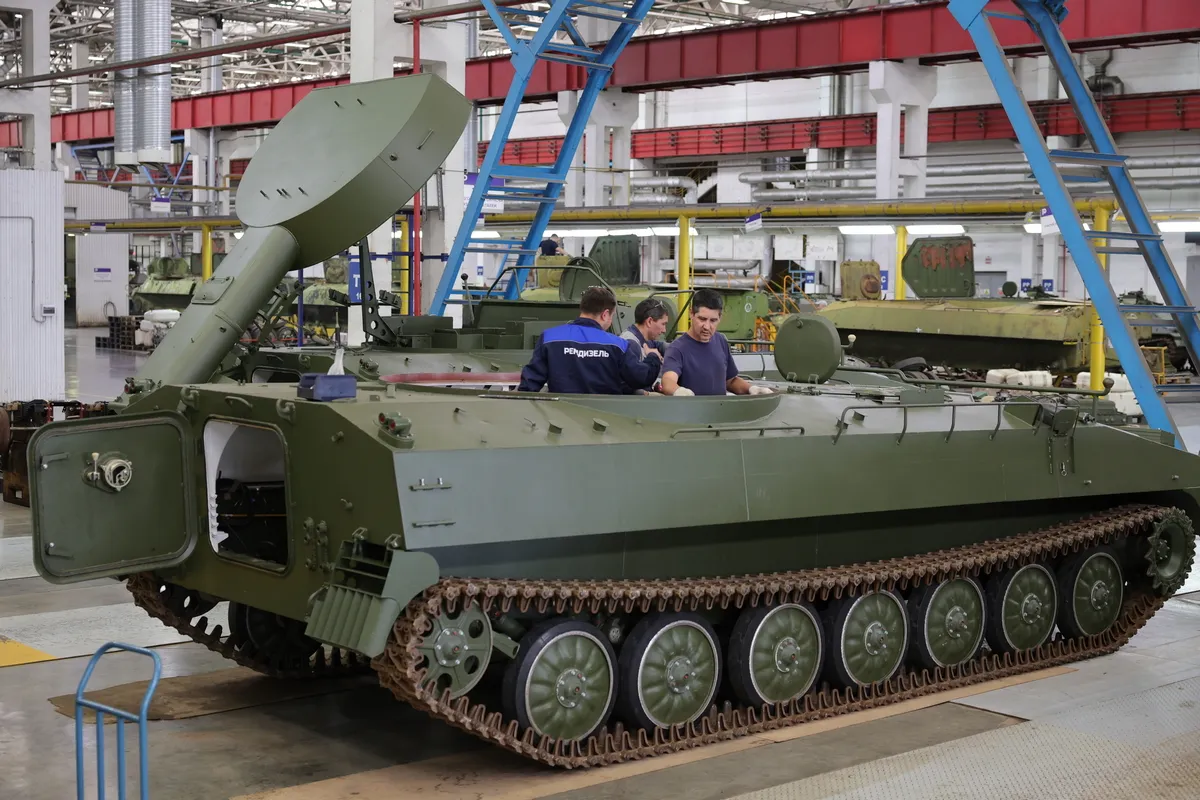
Related Weapon Systems


Sources
WeaponSystems.net UR-77 MeteoritPublisher: WeaponSystems.net | Note: Supports UR-77 identity, Soviet origin, 1970s development, 1978 service entry, 2S1/MT-LB chassis lineage, two-charge launcher, crew, weight, dimensions, speed, range, amphibious mobility, armor, and UR-67 predecessor context. | Accessed: 2026-07-06Army Recognition UR-77Publisher: Army Recognition | Note: Supports mine-clearing role, MDK-3 line-charge description, two-line-charge launcher, 90 m by 6 m corridor, 2S1-like chassis, crew, weight, dimensions, speed, range, protection, and listed user countries. | Accessed: 2026-07-06TWZ UR-77 FireballPublisher: The War Zone | Note: Supports 2014 Russia-Ukraine War direct conflict-use context: Ukrainian forces destroyed a Russian UR-77, both Russian and Ukrainian forces used UR-77s in the conflict, Ukraine captured UR-77s from Russian forces, and the vehicle can be used for minefield breaching or direct urban demolition. | Accessed: 2026-07-06Oryx Russian Equipment LossesPublisher: Oryx | Note: Supports 2014 Russia-Ukraine War direct conflict-use context by listing visually documented Russian UR-77 Meteorit destroyed, abandoned, and captured losses during the Russian invasion of Ukraine. | Accessed: 2026-07-06Oryx Ukrainian Equipment LossesPublisher: Oryx | Note: Supports 2014 Russia-Ukraine War direct conflict-use context by listing visually documented Ukrainian UR-77 Meteorit losses during the Russian invasion of Ukraine. | Accessed: 2026-07-06War Is Boring Syria UR-77Publisher: War Is Boring / Medium | Note: Supports 2011 Syrian Civil War direct conflict-use context: a UR-77 was reported near Damascus' Jobar district and pro-regime video showed it engaged in fighting there. | Accessed: 2026-07-06Wikimedia Commons Openwater2016 UR-77 ImagePublisher: Wikimedia Commons | Note: Supports image provenance and reuse for the primary UR-77 Meteorit image, credited to Vitaly V. Kuzmin with stated reuse permission on Commons. | Accessed: 2026-07-06Wikimedia Commons Tatarstan UR-77 ImagePublisher: Wikimedia Commons | Note: Supports gallery image provenance and CC BY 4.0 reuse terms for a Russian Ministry of Defence photograph of a UR-77 at a Tatarstan military-industrial complex in July 2023. | Accessed: 2026-07-06Russian Wikipedia UR-77Publisher: Wikipedia | Note: Baseline reference for Russian-language terminology, Zmey Gorynych alias, production-start context, charge-type names, and later UR-07/UR-15 development leads; used only for low-risk terminology and variant-lead context. | Accessed: 2026-07-06