Infantry Weapons

RPO-A Shmel

Also known as
  • RPO-A Bumblebee
  • RPO-A Schmel
  • RPO Shmel
  • RPO-A rocket-propelled flame-thrower
  • Шмель

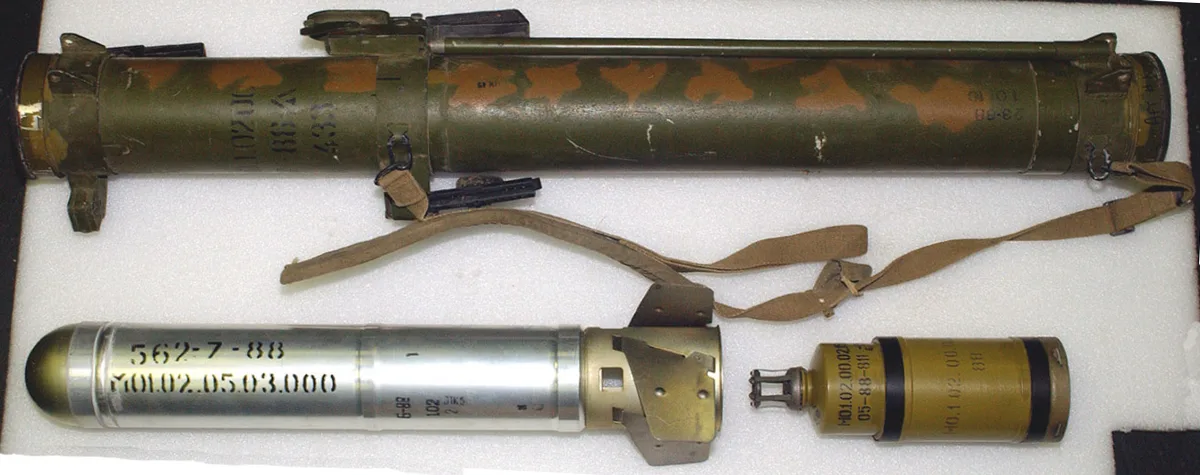
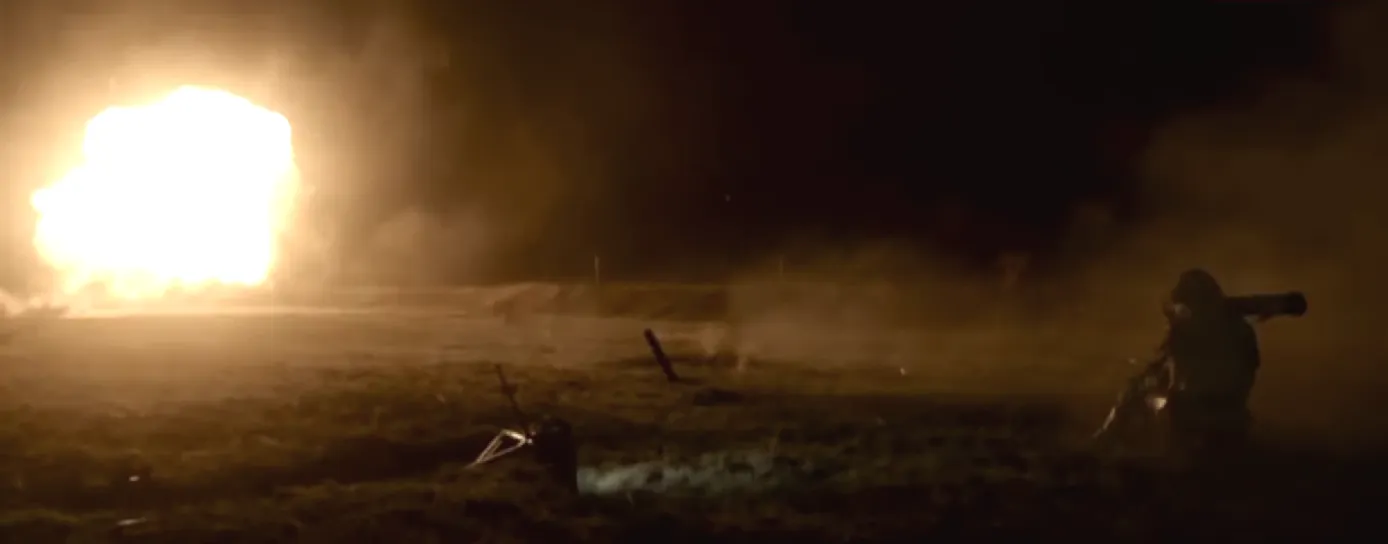
The RPO-A Shmel is a Soviet-designed, Russian-produced 93 mm disposable rocket flamethrower built around a thermobaric fuel-air explosive round. Adopted in 1988 after mid-1980s development, it became a close-assault weapon for caves, bunkers, buildings, and fortified urban positions, with documented appearances from Afghanistan and Chechnya through Syria, Ukraine, and Gaza.

Role in Conflicts

Side
Soviet Union and Afghan government forces
Role in conflict
Cave and bunker assault weapon

The Australian Army Research Centre describes the RPO-A Shmel as first employed by Soviet forces in Afghanistan against cave complexes and bunkers during the late Soviet-Afghan War.

Side
Russia
Role in conflict
Urban assault and bunker-clearing weapon

RAND and Australian Army analyses describe Russian use of RPO-A Shmel weapons during the fighting for Grozny, where the thermobaric launcher was treated as short-range firepower for buildings, bunkers, and fortified urban positions.

Side
Russia
Role in conflict
Urban assault thermobaric weapon

RAND's 1994-2000 Grozny study states that thermobaric weapons including the RPO-A Shmel were used in the second battle for Grozny, with Russian forces relying on them as close-range urban assault weapons.

Variant Family

The RPO-A is the thermobaric member of an original 1988 three-warhead family, with later Russian launchers using similar rocket-flamethrower terminology for compact or enhanced-range systems.

DesignationWarhead or roleReader note
RPO-AThermobaric / FAEMain thermobaric version covered by this record.
RPO-ZIncendiaryOriginal family variant listed by Modern Firearms.
RPO-DSmokeOriginal family variant listed by Modern Firearms.
RPO-M / RPO PDM-AEnhanced-range thermobaricLater successor in the same Russian rocket-flamethrower lineage.
MRO-ACompact thermobaricSmaller related launcher documented separately by ARES in Ukraine and Syria.
Profile / Specs

Profile

Origin
Soviet Union / Russia
Built in
Russia
Type
Disposable shoulder-fired thermobaric rocket launcher
Service note
Late Cold War to present
Designer
KBP Instrument Design Bureau
Designed
1984
Produced
1988-present

Specifications

Caliber
93 mm
Launch configuration
Single-shot disposable recoilless launch tube
Warhead
Thermobaric fuel-air explosive rocket with about 2.2 kg FAE fill
Weight
About 11-12 kg complete
Length
About 920 mm
Maximum range
About 1,000 m
Effective range
About 200 m against point targets; sighting range often cited around 600 m
Variants

The original RPO family used suffixes for warhead function; later compact or enhanced-range launchers kept the Soviet/Russian rocket-flamethrower lineage but are distinct adjacent systems.

VariantConfigurationDesignation notes
RPO-ZIncendiary variant

Modern Firearms lists RPO-Z as the incendiary version adopted alongside the RPO-A and RPO-D in 1988.

Sources: RPO-A "Schmel" Rocket-Propelled Flame-Thrower

RPO-DSmoke variant

Modern Firearms lists RPO-D as the smoke-producing version in the original RPO family.

Sources: RPO-A "Schmel" Rocket-Propelled Flame-Thrower

RPO-M / RPO PDM-A Shmel-MEnhanced-range thermobaric successor

Modern Firearms treats the RPO-M, also known as RPO PDM-A or Shmel-M, as a later enhanced-range and enhanced-lethality successor rather than the original RPO-A round.

Sources: RPO-A "Schmel" Rocket-Propelled Flame-Thrower

MRO-ACompact thermobaric rocket launcher

ARES identifies MRO-A launchers as a smaller, related Russian thermobaric system documented separately from full-size RPO-A weapons in Ukraine and Syria.

Sources: Russian MRO-A Rocket Launchers in Ukraine, Russian MRO-A Thermobaric Rocket Launchers in Syria

Timeline

RPO-A Shmel Key Events

  1. RPO development begins

    Modern Firearms says development of the RPO family began in 1984 as a single-shot disposable launcher for the Soviet Army.

    Sources: RPO-A "Schmel" Rocket-Propelled Flame-Thrower

  2. Soviet adoption

    The Soviet Army adopted the RPO family in 1988 in thermobaric, incendiary, and smoke versions.

    Sources: RPO-A "Schmel" Rocket-Propelled Flame-Thrower

  3. Afghanistan combat use

    Australian Army Research Centre analysis describes RPO-A Shmel use against caves and bunkers in Afghanistan.

    Sources: RPO-A Shmel: The Devil's Tube

  4. Grozny urban fighting

    RAND and Australian Army analysis describe RPO-A use in the First Chechen War's urban fighting around Grozny.

    Sources: Russia's Chechen Wars 1994-2000, RPO-A Shmel: The Devil's Tube

  5. RPO-A captured in Syria

    Armament Research Services documented an RPO-A Shmel captured by Ajnad al-Sham from Syrian government positions in Hama.

    Sources: Russian MRO-A Thermobaric Rocket Launchers in Syria

  6. Russian use reported near Kupyansk

    Army Recognition published a report describing Russian RPO-A use against Ukrainian positions near Kupyansk.

    Sources: Russian Forces Use RPO-A Shmel Destructive Man-Portable Weapons Against Ukrainian Positions

Combat Employment Pattern

Across the cited conflicts, the RPO-A appears less as a general anti-armor rocket and more as short-range assault firepower for enclosed or fortified positions.

SettingDocumented useSource context
Caves and bunkersSoviet forces used the launcher against cave complexes and bunkers in Afghanistan.Australian Army Research Centre.
Dense urban fightingRussian forces used RPO-A thermobaric effects in Grozny against buildings and fortified urban positions.RAND and Australian Army analysis.
Frontline materiel evidenceARES documented RPO-family launchers in Syria and Ukraine, including an RPO-A captured from Syrian government positions.Armament Research Services.
Media
Related Weapon Systems
TOS-1A Solntsepyok, 220 mm thermobaric multiple rocket launcher, ArtilleryArtilleryTOS-1A Solntsepyok220 mm thermobaric multiple rocket launcherThe TOS-1A Solntsepyok is a Russian tracked heavy flamethrower system that functions as a short-range thermobaric multiple rocket launcher. Built around a BM-1 launcher on a tank chassis with transporter-loaders, it fires unguided 220 mm rockets to support infantry and armor against fortified positions, vehicles, and troops in cover. In the 2014 Russia-Ukraine War it has been documented in Russian service near the front line, where its short range creates both destructive local effects and high vulnerability to Ukrainian targeting.
BMO-T, Heavy flamethrower-squad armored personnel carrier, Armored VehiclesArmored VehiclesBMO-THeavy flamethrower-squad armored personnel carrierThe BMO-T is a rare Russian T-72-based heavy armored carrier built for flamethrower squads armed with RPO-series disposable thermobaric launchers. Omsktransmash is listed as the manufacturer, and reference sources describe a two-person crew, seven carried troops, tank-level frontal protection, a 12.7 mm machine gun, and internal stowage for roughly 30 to 32 RPO launchers. In Ukraine, public evidence mainly documents Russian losses and one captured vehicle used by Ukrainian troops for recovery work rather than confirmed Russian flamethrower-squad employment.
R-17 Scud-B ballistic missile, Short-range ballistic missile, MunitionsMunitionsR-17 Scud-B ballistic missileShort-range ballistic missileThe R-17 Elbrus, known to NATO as the SS-1C Scud-B, is a Soviet road-mobile, liquid-fueled short-range ballistic missile built for deep strikes with conventional, chemical, or nuclear payloads. Its combat record spans Egyptian launches in 1973, Iranian and Iraqi city strikes in the 1980-1988 war, Libyan missile attempts in 1986 and 2011, South Yemeni strikes in 1994, Armenian strikes on Ganja in 2020, and Houthi-aligned use of inherited Yemeni stocks, illustrating the lasting political and civilian risk of older inaccurate ballistic missiles.
RPG-29, Reusable shoulder-fired anti-tank rocket launcher, Infantry WeaponsInfantry WeaponsRPG-29Reusable shoulder-fired anti-tank rocket launcherThe RPG-29 Vampir is a Soviet-designed, reusable 105 mm anti-tank rocket launcher built by Bazalt for tandem HEAT and thermobaric rockets. Rosoboronexport describes it as a multiple-shot launcher with a 500 m sighting range and a 300-round lifespan, while reference sources place it in Soviet-era development and 1989 service entry. Its conflict record is strongest in close-range anti-armor and fortification attack reporting, including Hezbollah use in Lebanon, insurgent attacks on coalition armor in Iraq, Free Syrian Army imagery in Syria, Hamas anti-armor forces in Gaza, Houthi fielding in Yemen, and documented appearances in Ukraine.
TOS-2 Tosochka, Wheeled 220 mm thermobaric multiple rocket launcher, ArtilleryArtilleryTOS-2 TosochkaWheeled 220 mm thermobaric multiple rocket launcherThe TOS-2 Tosochka is Russia's wheeled successor to the tracked TOS-1A heavy flamethrower system, using 220 mm thermobaric and incendiary rockets from an 18-tube launcher on a Ural 6x6 truck. Public Russian and U.S. Army reporting emphasizes the integrated crane, automated fire-control equipment, and wheeled chassis as the main mobility and reload changes, while conflict reporting has documented Russian TOS-2 employment and later Ukrainian strikes against the rare system during the 2014 Russia-Ukraine War.
AKM, 7.62x39mm assault rifle, Infantry WeaponsInfantry WeaponsAKM7.62x39mm assault rifleThe AKM is the stamped-receiver modernization of the Soviet Kalashnikov assault rifle, chambered for 7.62x39mm and built around a long-stroke gas piston and rotating bolt. Adopted in 1959, it reduced production burden compared with earlier milled-receiver AK rifles and became a widely licensed baseline for later 7.62mm Kalashnikov-pattern weapons. CAR and ARES field documentation continues to place AKM and AKM-pattern rifles in modern conflict stocks, from Islamic State recoveries in Iraq and Syria to Taliban captures in Afghanistan.

Sources