Artillery

TOS-2 Tosochka

Also known as
  • TOS-2
  • Tosochka
  • TOS-2 heavy flamethrower system
  • TOS-2 Tosochka heavy flamethrower system

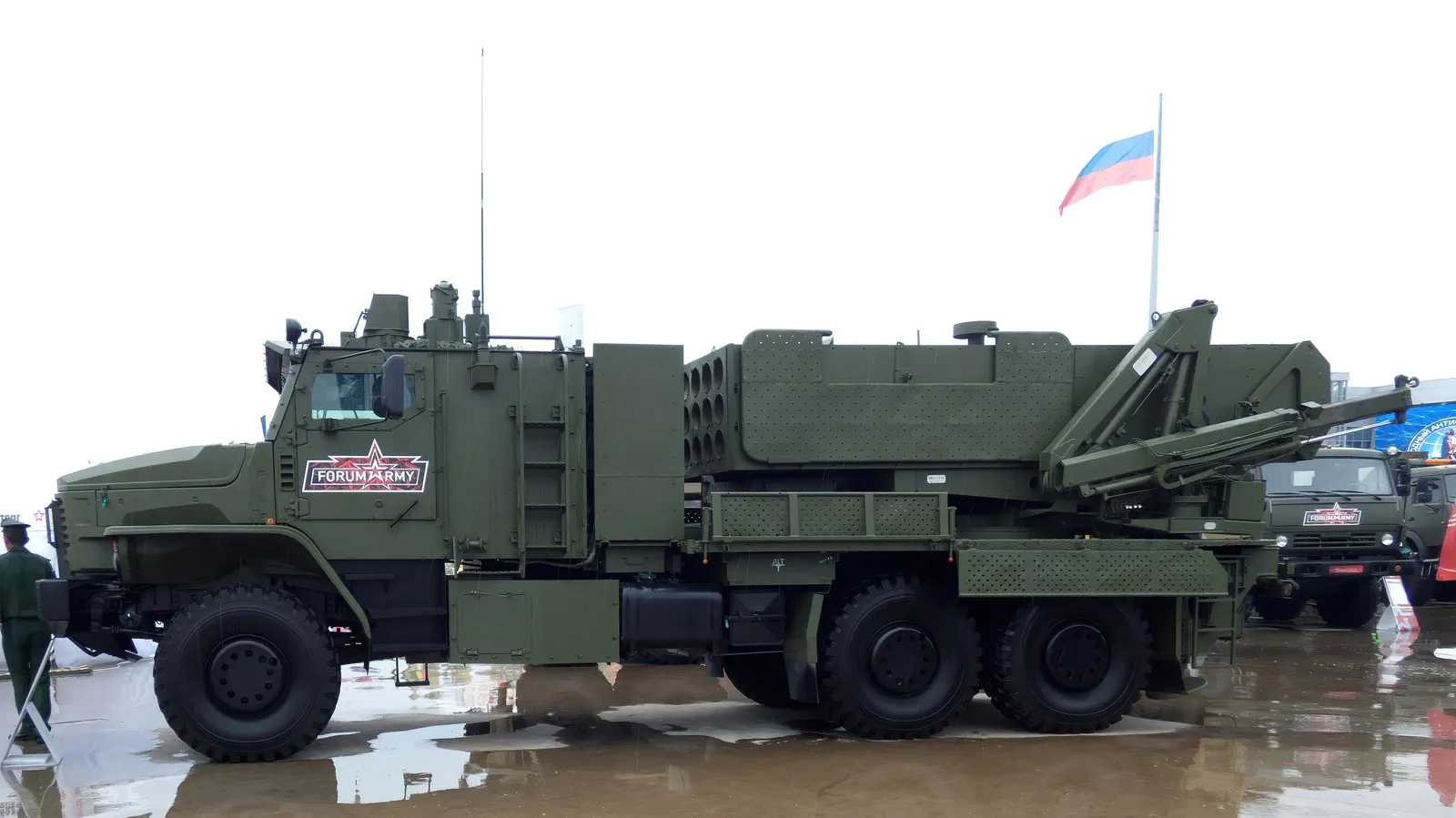
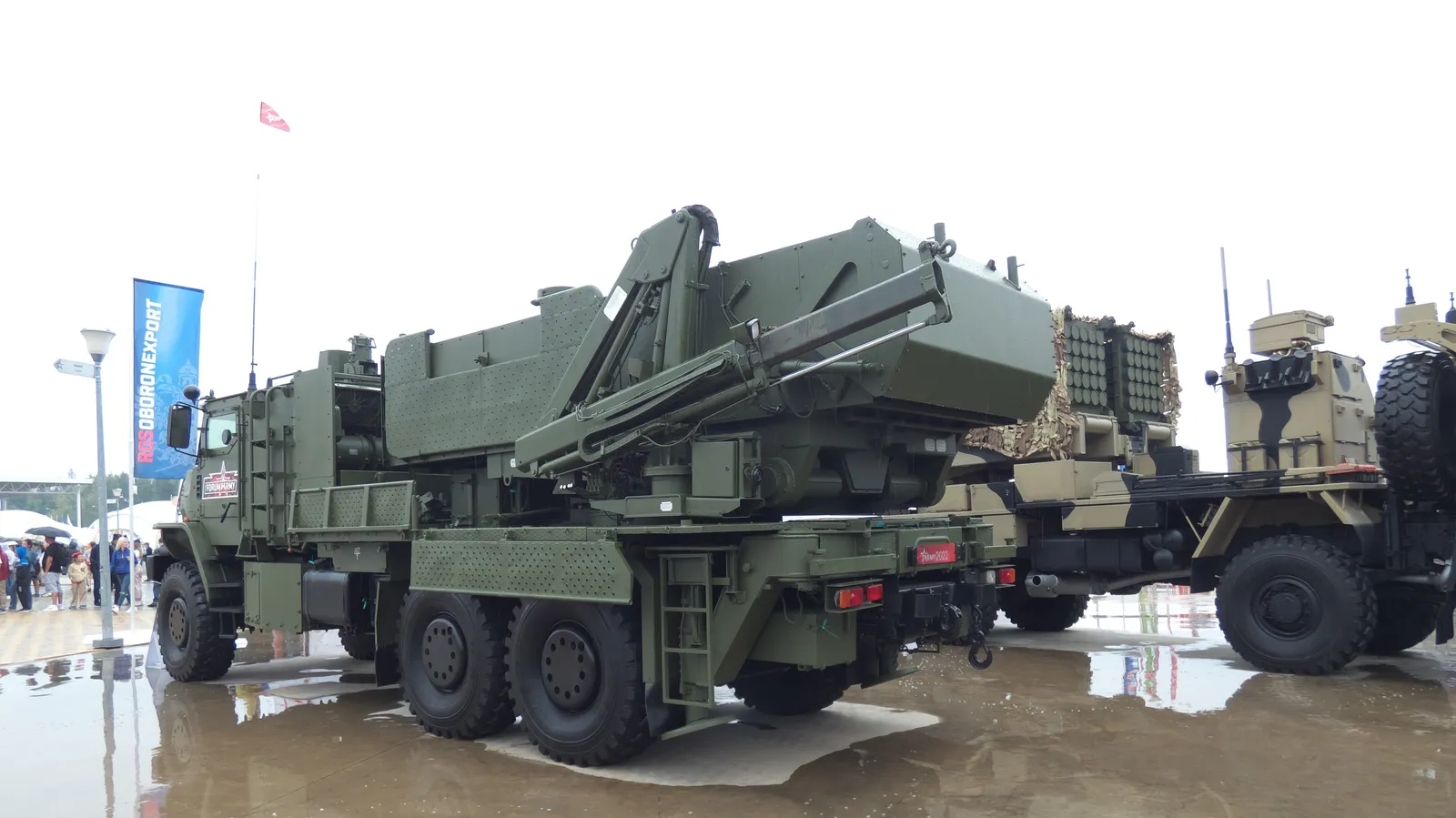
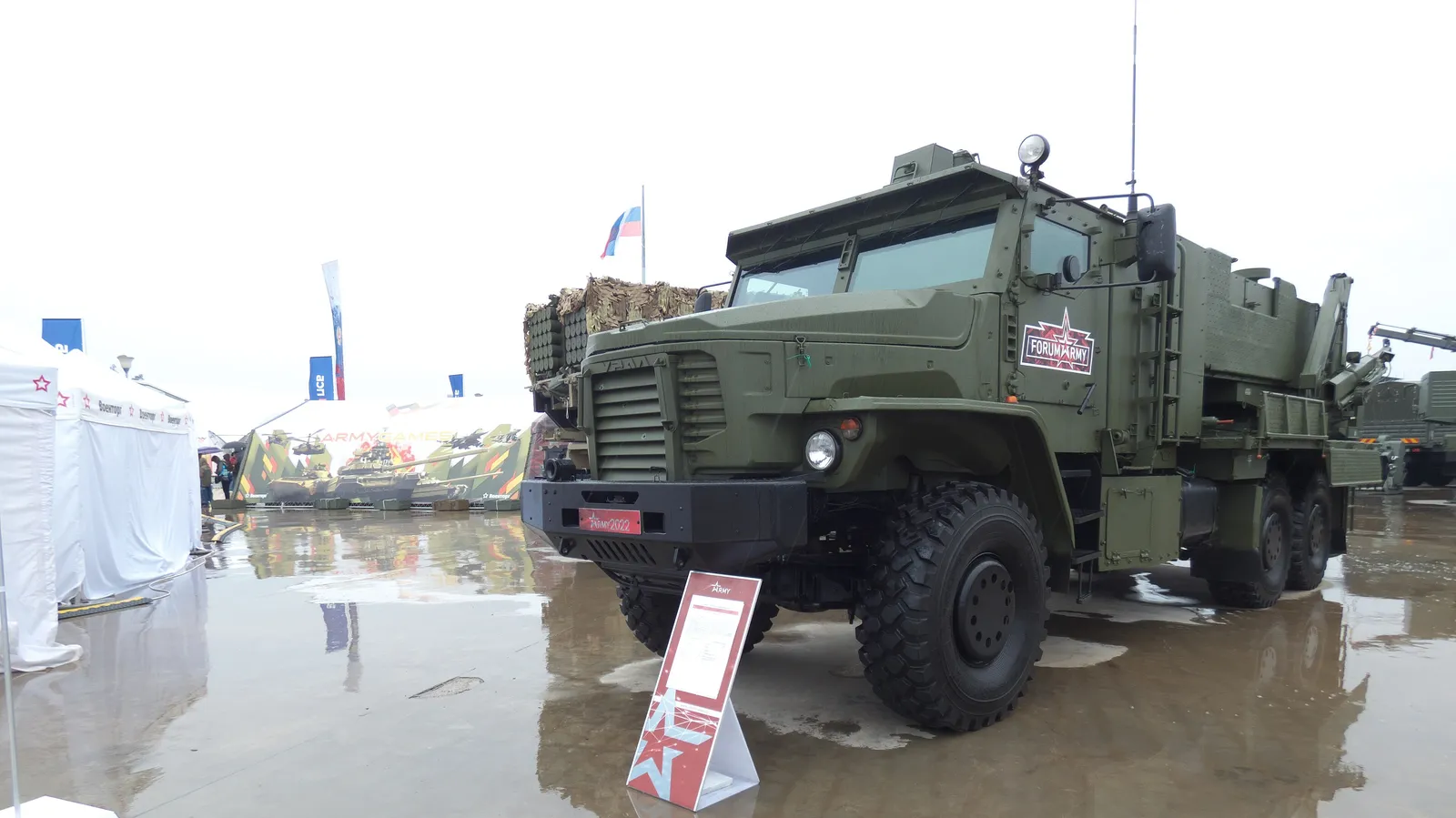
The TOS-2 Tosochka is Russia's wheeled successor to the tracked TOS-1A heavy flamethrower system, using 220 mm thermobaric and incendiary rockets from an 18-tube launcher on a Ural 6x6 truck. Public Russian and U.S. Army reporting emphasizes the integrated crane, automated fire-control equipment, and wheeled chassis as the main mobility and reload changes, while conflict reporting has documented Russian TOS-2 employment and later Ukrainian strikes against the rare system during the 2014 Russia-Ukraine War.

Role in Conflicts

Side
Russia

Russian forces fielded the TOS-2 in Ukraine for thermobaric rocket fire; reporting based on a Russian Ministry of Defense confirmation describes NRBC-unit employment against Ukrainian fortifications with extended-range projectiles, and Ukrainian reporting later described FPV-drone strikes against a Russian TOS-2.

Role details
Profile / Specs

Profile

Origin
Russia
Built by
NPO Splav
Type
Wheeled 220 mm thermobaric multiple rocket launcher
Service note
Entered Russian service in the early 2020s
Designer
NPO Splav
Designed
2010s
Produced
2021-present
Developed from
TOS-1A Solntsepyok

Specifications

Caliber
220 mm rockets
Launcher
18 launch tubes in three rows of six
Chassis
Ural-63706-0120 6x6 wheeled military truck
Ammunition
Thermobaric, fuel-air explosive, smoke, and incendiary unguided rockets
Firing range
Reported 3.5-10 km with earlier thermobaric rockets; up to 15 km cited for extended-range ammunition in Ukraine reporting
Crew
Five
Reloading
Integrated lifting crane removes the need for a separate transport-loading vehicle
Fire control
Automated aiming, navigation, laser rangefinder, satellite navigation, Doppler speed meter, and inertial measurement equipment
Variants

The TOS-2 record sits in the Russian heavy-flamethrower family: TOS-1A is the tracked predecessor, while TOS-2 moves the launcher to a wheeled truck chassis with an integrated crane and updated fire-control equipment.

VariantConfigurationDesignation notes
TOS-1A Solntsepyok, 220 mm thermobaric multiple rocket launcher, ArtilleryTOS-1A SolntsepyokTracked predecessor in the heavy-flamethrower family

TASS and U.S. Army OE reporting describe TOS-2 as a further development or successor to the earlier TOS-1A, replacing the tank chassis with a wheeled truck and adding an integrated loading crane.

Sources: Russian military use newest TOS-2 heavy flamethrower for the first time, Russian NBC Defense Troops Increase Thermobaric Munition Capabilities

TOS Family Context

TOS-2 keeps the 220 mm heavy-flamethrower mission associated with TOS-1A but changes the launcher architecture. The key public distinction is not a new general artillery role; it is the move from a tracked launcher and separate transporter-loader pattern toward a wheeled truck with its own loading crane and updated fire-control equipment.

Family memberMobility and loadingPage context
TOS-1A Solntsepyok, 220 mm thermobaric multiple rocket launcher, ArtilleryTOS-1A SolntsepyokTracked BM-1 launcher with separate transporter-loader vehicles in the established TOS family.Predecessor heavy-flamethrower system with its own conflict-use record.
TOS-2 TosochkaUral 6x6 wheeled launcher with an integrated crane, automated aiming, navigation, and rangefinding equipment.Current record; documented in Russian service during the 2014 Russia-Ukraine War.
Timeline

TOS-2 Tosochka Key Events

  1. Public firing debut during Kavkaz-2020

    TASS reported that Russian NBC Defense Troops used the new TOS-2 for the first time during the Kavkaz-2020 strategic command-staff exercise.

    Sources: Russian military use newest TOS-2 heavy flamethrower for the first time

  2. Deployment in Ukraine confirmed in open reporting

    Army Recognition reported a Russian Ministry of Defense confirmation that TOS-2 systems had been deployed in Ukraine by Russian radiation, chemical, and biological defense troops.

    Sources: Russia confirms TOS-2 thermobaric rocket launcher deployment in Ukraine

  3. Ukrainian strike reporting against a TOS-2

    United24 Media, citing Ukrainian drone-unit footage, reported FPV-drone strikes against a Russian TOS-2 Tosochka in the 2014 Russia-Ukraine War.

    Sources: Ukrainian FPV Drones Strike Rare Russian TOS-2 Flamethrower System
Media
Related Weapon Systems
TOS-1A Solntsepyok, 220 mm thermobaric multiple rocket launcher, ArtilleryArtilleryTOS-1A Solntsepyok220 mm thermobaric multiple rocket launcherThe TOS-1A Solntsepyok is a Russian tracked heavy flamethrower system that functions as a short-range thermobaric multiple rocket launcher. Built around a BM-1 launcher on a tank chassis with transporter-loaders, it fires unguided 220 mm rockets to support infantry and armor against fortified positions, vehicles, and troops in cover. In the 2014 Russia-Ukraine War it has been documented in Russian service near the front line, where its short range creates both destructive local effects and high vulnerability to Ukrainian targeting.
BMO-T, Heavy flamethrower-squad armored personnel carrier, Armored VehiclesArmored VehiclesBMO-THeavy flamethrower-squad armored personnel carrierThe BMO-T is a rare Russian T-72-based heavy armored carrier built for flamethrower squads armed with RPO-series disposable thermobaric launchers. Omsktransmash is listed as the manufacturer, and reference sources describe a two-person crew, seven carried troops, tank-level frontal protection, a 12.7 mm machine gun, and internal stowage for roughly 30 to 32 RPO launchers. In Ukraine, public evidence mainly documents Russian losses and one captured vehicle used by Ukrainian troops for recovery work rather than confirmed Russian flamethrower-squad employment.
Tochka-U, Road-mobile tactical ballistic missile system, ArtilleryArtilleryTochka-URoad-mobile tactical ballistic missile systemTochka-U is the upgraded 9K79-1/OTR-21 short-range tactical ballistic missile system, carried on a wheeled transporter-erector-launcher and designed for battlefield strikes with high-explosive or cluster warheads. Its public combat record spans post-Soviet, Middle Eastern, and South Caucasus wars, from Russian use in Chechnya and Georgia to Houthi launches in Yemen and documented Russian and Ukrainian Tochka-U use in the 2014 Russia-Ukraine War.
2S35 Koalitsiya-SV, 152 mm tracked self-propelled howitzer, ArtilleryArtillery2S35 Koalitsiya-SV152 mm tracked self-propelled howitzerThe 2S35 Koalitsiya-SV is a Russian 152 mm tracked self-propelled howitzer developed as a highly automated successor to the 2S19 Msta-S, pairing a 2A88 gun, automated loading, digital fire-control features, and a T-90-derived chassis for long-range tube-artillery missions. Russian and specialist reporting placed small numbers near the 2014 Russia-Ukraine War front from late 2023, but the direct conflict record remains source-limited and centered on counter-battery claims rather than verified large-scale fielding.
2S40 Floks, 120 mm wheeled self-propelled howitzer/mortar, ArtilleryArtillery2S40 Floks120 mm wheeled self-propelled howitzer/mortarThe 2S40 Floks is a Russian 120 mm wheeled self-propelled gun-mortar developed by Burevestnik under the Nabrosok artillery program and mounted on an armored Ural-4320 6x6 chassis. Open reporting ties it to Russian battlefield use in Ukraine from October 2023, where Ukrainian drone units documented strikes against newly fielded systems while Rostec and defense references describe the platform's combined mortar, howitzer-style indirect-fire, and direct-fire roles.
BM-27 Uragan, 220 mm self-propelled multiple launch rocket system, ArtilleryArtilleryBM-27 Uragan220 mm self-propelled multiple launch rocket systemThe BM-27 Uragan is the Soviet 9K57 220 mm multiple launch rocket system, built around the 16-tube 9P140 launcher and 9T452 transporter-loader on ZIL-135LM-family wheeled chassis. Its rocket family gives heavier payloads than BM-21 Grad-class systems, including high-explosive fragmentation, cluster, incendiary, fuel-air explosive, and mine-scattering rounds. Documented use spans Russia-Ukraine, Syria, Yemen, Nagorno-Karabakh, and the 2008 Russo-Georgian War, with the system still relevant through Ukrainian overhaul work and Bureviy modernization.

Sources