Munitions

200 mm MD-20 Shtorm-1

Also known as
  • MD-20 Shtorm-1
  • MD-20-F
  • MD-20F
  • 53-F-951
  • 200 mm MD-20-F
  • 200 mm MD-20F
  • Shtorm-1 rocket
  • Шторм-1
  • МД-20-Ф
  • 53-Ф-951

The 200 mm MD-20 Shtorm-1 was the Soviet unguided high-explosive rocket fired by the BMD-20/8U33 multiple rocket launcher. It combined a 194 kg spin-stabilized projectile, a roughly 30 kg TNT explosive charge, and a maximum range of about 18.75 km, making it a large area-fire munition rather than a precision rocket.

Launcher Compatibility

The MD-20-F rocket was built for the BMD-20/8U33 launcher rather than for a broad family of interchangeable launch platforms. Missilery describes the MD-20 system as consisting of the BMD-20 combat vehicle and the MD-20-F unguided rocket projectile, while WeaponSystems.net states that Shtorm-1 was used only with the BMD-20 multiple rocket launcher.

Launcher

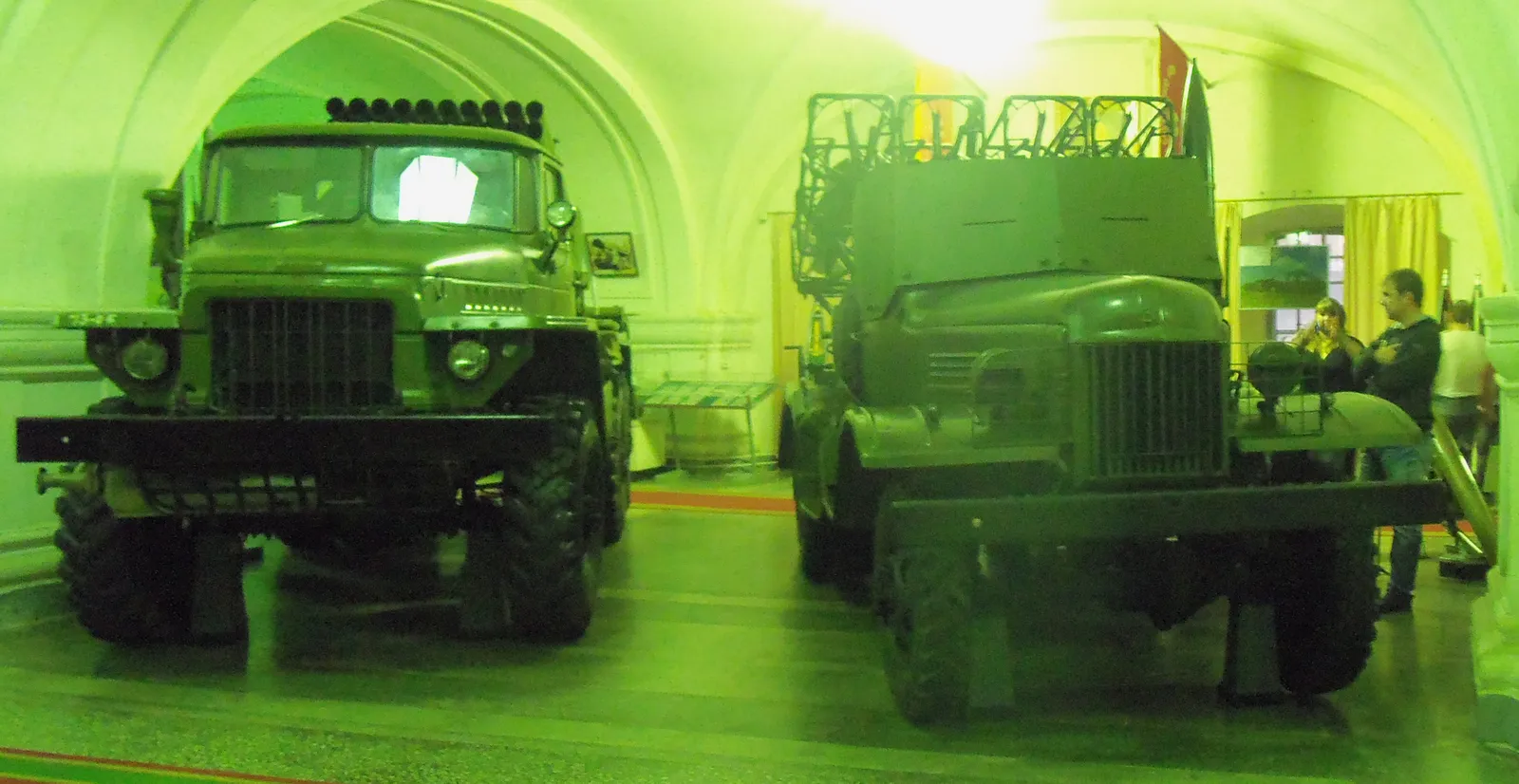
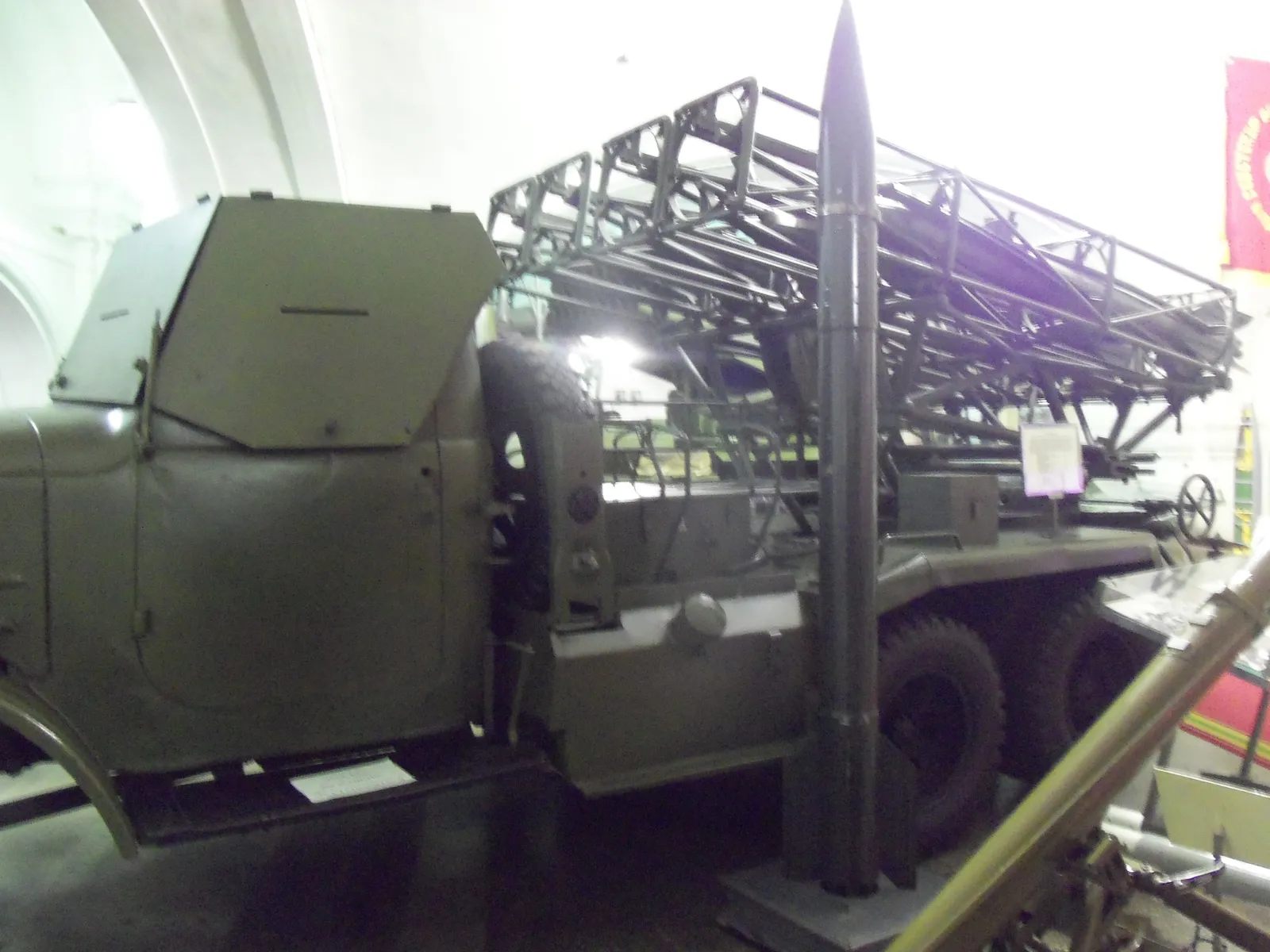
BMD-20 / 8U33 truck-mounted four-rail multiple rocket launcher.

Round

200 mm MD-20-F high-explosive rocket, GRAU index 53-F-951.

Catalog status

No direct conflict-use source was found for this rocket, so the munition is recorded as relationship-only rather than as a conflict-used weapon page.

Profile / Specs

Profile

Origin
Soviet Union
Type
200 mm unguided high-explosive artillery rocket
Service note
Early Cold War Soviet rocket-artillery munition
Designer
SCB MOS under V. P. Barmin, with Soviet research institutes assigned to propellant and fuse work
Designed
Development began in 1945; troop-test projectiles were supplied in 1951
Produced
Adopted with the BMD-20 system in 1952; production dates after adoption are not publicly bounded in the checked sources
Developed from
Postwar Soviet long-range multiple-rocket artillery development

Specifications

Caliber
200 mm
Designation
MD-20-F / 53-F-951
Rocket type
Unguided, fin- and spin-stabilized artillery rocket
Projectile weight
194 kg
Length
3,040-3,049 mm with fuse
Warhead
High-explosive fragmentation
Explosive charge
About 30.08-30.1 kg TNT explosive charge
Fuse
VD-20 impact fuse with instant, low-delay, and high-delay settings
Propulsion
Single-stage solid-propellant rocket motor
Motor burn time
About 5.6 seconds under normal listed conditions
Maximum range
18,750 m under normal conditions
Velocity
About 535-590 m/s at end of powered flight, depending on charge temperature
Launcher
BMD-20 / 8U33 four-rail multiple rocket launcher
Nozzle layout
Six angled peripheral nozzles plus one central nozzle
Crater effect
About 5.5-6.0 m diameter and 2.9-3.1 m deep in medium-density ground with delayed fuse
Projectile Design

Missilery's cutaway description places the explosive charge in a streamlined forward body and the solid-propellant motor in the rear rocket section. The rear nozzle block used six angled peripheral nozzles and one central nozzle, while a drive pin engaged the launcher's spiral guide to impart rotation as the rocket left the rail.

  • The VD-20 impact fuse is described with instant, low-delay, and high-delay settings.
  • The listed propellant charge was a single-channel cylindrical powder grain weighing about 52.1 kg.
  • The reference range under normal conditions is 18,750 m, with listed end-of-burn velocity varying by charge temperature.
Launch Platform

The public sources checked here treat the MD-20-F / Shtorm-1 rocket as the munition component of the BMD-20 launcher system rather than as a round shared across multiple launchers.

LauncherLauncher typeLaunch evidence
BMD-20, 200 mm self-propelled multiple rocket launcher, ArtilleryBMD-20200 mm multiple rocket launcher

Missilery describes the MD-20 system as the BMD-20 combat vehicle plus the MD-20-F rocket projectile, and WeaponSystems.net states that MD-20 Shtorm-1 was used only with the BMD-20 multiple rocket launcher.

Sources: BMD-20 combat vehicle - Missilery.info, WeaponSystems.net 200mm MD-20 Shtorm-1

Timeline

200 mm MD-20 Shtorm-1 Key Events

  1. Long-range rocket work begins

    Soviet work on the long-range Shtorm-1 rocket-artillery system began in the immediate postwar period, with later tactical requirements setting a roughly 20-25 km range goal for a large high-explosive rocket.

    Sources: BMD-20 combat vehicle - Missilery.info, BMD-20 - Russian Wikipedia

  2. Early projectile trials

    Trials in 1947 compared alternative rocket-projectile layouts before the design was revised toward the production 200 mm MD-20-F round.

    Sources: BMD-20 combat vehicle - Missilery.info, BMD-20 - Russian Wikipedia

  3. Troop-test projectile batch

    Russian-language reference material says 600 projectiles were supplied for troop trials in October 1951 before final corrections and service adoption.

    Sources: BMD-20 - Russian Wikipedia

  4. MD-20 system adopted

    Missilery identifies a Soviet Council of Ministers decree dated November 22, 1952 adopting the MD-20 system with the BMD-20 combat vehicle and MD-20-F projectile.

    Sources: BMD-20 combat vehicle - Missilery.info

  5. North Korean parade display

    Missilery reports at least four BMD-20 vehicles displayed in Pyongyang during Kim Jong-il's 70th anniversary parade, while noting that the status of projectiles and operational service was not publicly clear.

    Sources: BMD-20 combat vehicle - Missilery.info

Media

200 mm MD-20 Shtorm-1 Images

Related Weapon Systems
140 mm M-14 rocket, 140 mm unguided artillery rocket, MunitionsMunitions140 mm M-14 rocket140 mm unguided artillery rocketThe 140 mm M-14 is a Soviet spin-stabilized artillery rocket family developed for BM-14 and RPU-14 multiple rocket launchers. Open references identify high-explosive fragmentation, smoke/incendiary, and chemical-warhead branches; conflict documentation places an M-14 rocket motor in the 2013 Western Ghouta attack during the Syrian Civil War, with attribution and payload evidence handled narrowly because public imagery and UN reporting identify the motor and attack context more clearly than a recovered intact M-14 warhead.
Type 63 107 mm rocket, Unguided 107 mm artillery rocket, MunitionsMunitionsType 63 107 mm rocketUnguided 107 mm artillery rocketThe Type 63 107 mm rocket is a Chinese-origin, electrically initiated, spin-stabilized unguided artillery rocket built for Type 63-family light launchers and related single-tube, truck-mounted, or improvised launch arrangements. FAS describes the projectile as a one-piece rocket with its warhead attached to the motor and canted nozzles for spin stabilization, while Army Guide lists Type 63-2 and incendiary ammunition for the launcher family. Its roughly 8.5 km standard range and simple firing circuit made the family useful for light area fire, improvised insurgent attacks, and captured-materiel inventories from Iraq and Afghanistan to the Lake Chad basin.
BM-30 Smerch, 300 mm heavy multiple launch rocket system, ArtilleryArtilleryBM-30 Smerch300 mm heavy multiple launch rocket systemThe BM-30 Smerch, also designated 9K58, is a Soviet-designed heavy multiple launch rocket system built around 300 mm rockets and a 12-tube launcher on an 8x8 wheeled chassis. Its ammunition family includes high-explosive, cargo, mine-laying, sensor-fuzed, and thermobaric rounds, making Smerch a deep-fire artillery system rather than a front-line direct-fire weapon. In Ukraine, Syria, and Nagorno-Karabakh, documented Smerch-family remnants and firing reports tie the launcher to long-range area fires, including cluster-munition attacks.

Sources