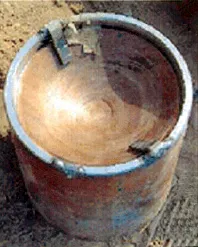


Used by Iraqi insurgent and militia forces in the 2003 Iraq War; DSIAC says EFPs entered the Iraqi theater in 2004 and were often chosen against coalition vehicles, and DVIDS documented a 2007 Iraq cache with 124 fully assembled EFPs.
Role detailsMunitions
Explosively formed penetrator improvised explosive device
Also known as
- EFP
- explosively formed projectile
- explosively formed projectile IED
- explosively formed penetrator IED
- Shawaz
- Shawaz charge
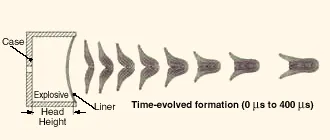
An explosively formed penetrator IED is an improvised shaped-charge roadside or ambush munition that uses a concave metal liner to form a high-velocity penetrator. Documented examples in Iraq, Yemen, and Gaza show the same anti-armor concept adapted from crude copper-liner devices to disguised roadside arrays and Hamas Shawaz charges.
Role in Conflicts

Used by Houthi-aligned forces in the 2014 Yemen Civil War as anti-armor roadside bombs; Washington Institute reporting described rock-disguised EFP arrays on Yemeni fronts, and AP/Defense News reporting on CAR findings said Yemen roadside bombs included explosively formed projectile varieties.
Role details
Used by Hamas in the 2023 Israel-Hamas War; IDF seizures in Gaza showed Shawaz cone- and disk-shaped EFPs, and reporting said the devices were used against armored fighting vehicles and to breach Israeli shelters and safe rooms.
Role detailsProfile / Specs
Profile
- Origin
- Local or clandestine fabrication in multiple conflict theaters
- Built by
- ImprovisedAl-Qassam Brigades
- Built in
- Multiple countries
- Type
- Improvised explosive device
- Service note
- 2004-present
- Designer
- Local fabricators; Izz ad-Din al-Qassam Brigades for documented Shawaz charges
- Designed
- By 2004 in the Iraqi theater; Shawaz examples documented by 2023
- Unit cost
- Unknown
- Produced
- 2004-present in documented improvised and clandestine forms
- Number built
- Unknown; DVIDS documented 124 fully assembled EFPs in one Iraq cache, and FDD reported a large Hamas Shawaz cache in Gaza
Specifications
- Liner
- Concave copper plate or disk that forms the penetrator
- Fill
- Explosive charge behind the liner; DSIAC's recovered sample used C-4
- Observed sample
- DSIAC characterized improvised copper EFPs recovered from the field at about 4 inches in diameter
- Documented cache
- DVIDS reported a 2007 Iraq cache containing 124 fully assembled EFPs and 159 copper disks used in EFP manufacture
- Effect
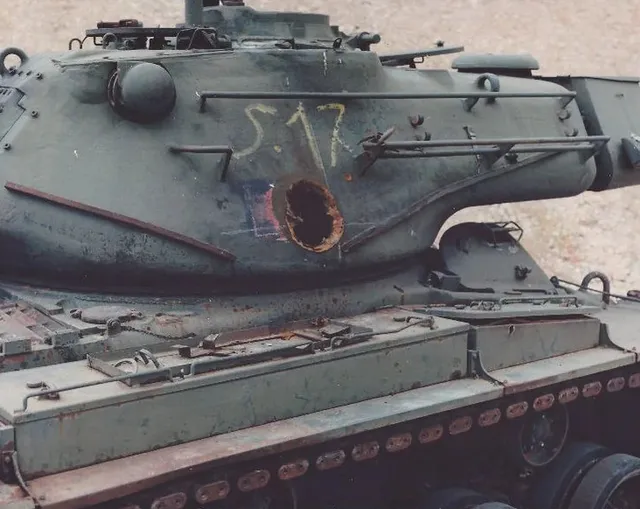
- Designed to punch through armored vehicles and other thin-skinned targets at short range
- Concealment
- Yemen examples were reported as rock-disguised roadside arrays; Gaza Shawaz examples included cone and disk shapes
Variants
EFP IEDs share the same shaped-charge principle but differ by liner geometry, concealment, triggering, and local designation.
| Variant | Configuration | Designation notes |
|---|---|---|
| Improvised copper EFP | Iraq-era field-made configuration | DSIAC characterized recovered improvised copper EFPs of about 4 inches diameter and tied the device family to insurgent use against coalition vehicles in Iraq. Sources: Computational and Experimental Characterization of an Improvised, Explosively Formed Penetrator |
| Rock-disguised EFP array | Yemen roadside configuration | Washington Institute reporting on CAR findings described Houthi EFP arrays in Yemen disguised as rocks, with one to three warheads and remote arming or sensor-triggered firing. |
| Cone- and disk-shaped Shawaz EFPs | Hamas / Qassam EFP designation | FDD's Long War Journal identified Shawaz cone-shaped and disk-shaped EFPs in IDF-seized Hamas material from Gaza. Sources: IDF seizes EFPs, RPGs, and other weapons from Hamas |
Broader IED Family
This entry belongs to the improvised explosive device family, but the shaped-charge liner gives it a distinct anti-armor role.
| Compatible item | Item type | Compatibility evidence |
|---|---|---|
 | Broader improvised explosive device family | DSIAC describes explosively formed penetrators as improvised explosive devices with a metal liner that forms the penetrator, so this page is a shaped-charge subtype of the broader IED family. Sources: Computational and Experimental Characterization of an Improvised, Explosively Formed Penetrator |
Timeline
Explosively formed penetrator improvised explosive device Key Events
EFPs enter the Iraqi theater
DSIAC's characterization article says EFPs entered the Iraqi theater in 2004 and were often chosen by insurgents against coalition vehicles.
Sources: Computational and Experimental Characterization of an Improvised, Explosively Formed Penetrator
Large Iraq EFP cache found
DVIDS reported that coalition forces found 124 fully assembled EFPs, 159 copper disks, C-4, rockets, mortar rounds, and other explosive material in a Sa'ada village cache.
Sources: CLC tip leads to massive EFP, explosives cache
Yemen reporting ties roadside bombs to EFPs
Defense News and AP reporting on CAR findings said Yemen's roadside bombs included explosively formed projectiles disguised as rocks.
Sources: Bombs disguised as rocks in Yemen reportedly show Iran aid
IDF seizes Shawaz EFPs in Gaza
FDD's Long War Journal reported the IDF seized cone- and disk-shaped Shawaz EFPs and other weapons from Hamas in Gaza.
Sources: IDF seizes EFPs, RPGs, and other weapons from Hamas
IDF displays the devices to international press
The Jerusalem Post reported that the IDF showed Shawaz anti-tank explosive devices to the international press and said Hamas used them against armored vehicles and shelters.
Sources: Hamas's tools of terror put on display for international press
Design Notes
The improvised nature of the weapon is only part of the story. EFP effectiveness depends on liner shape, explosive loading, standoff, triggering, and concealment, which is why field examples range from crude copper liners to disguised roadside arrays.
| Feature | Documented detail |
|---|---|
| Liner | Concave copper plate or disk that forms the penetrator. |
| Field sample | DSIAC characterized recovered improvised copper EFPs at about 4 inches in diameter. |
| Fill | The recovered sample modeled by DSIAC used C-4 behind the liner. |
| Iraq cache evidence | DVIDS reported a Sa'ada village cache with assembled EFPs, copper disks, C-4, rockets, mortars, and other explosive material. |
| Yemen concealment | Washington Institute reporting described Houthi EFP arrays disguised as rocks. |
| Effect | Built to defeat armored vehicles and other thin-skinned targets at short range. |
Media
Explosively formed penetrator improvised explosive device Videos
Explosively formed penetrator improvised explosive device Images
Related Weapon Systems


Sources
Computational and Experimental Characterization of an Improvised, Explosively Formed PenetratorPublisher: DSIAC | Note: Supports background, specs, and 2003 Iraq War direct conflict-use: EFPs entered the Iraqi theater in 2004 and were often chosen by insurgents against coalition vehicles. | Accessed: 2026-07-01CLC tip leads to massive EFP, explosives cachePublisher: DVIDS | Note: Supports 2003 Iraq War direct conflict-use: coalition forces in Iraq found a large EFP cache in Sa'ada village with 124 fully assembled EFPs, copper disks, C-4, and other weapons material. | Accessed: 2026-07-01IDF seizes EFPs, RPGs, and other weapons from HamasPublisher: FDD's Long War Journal | Note: Supports 2023 Israel-Hamas War direct conflict-use: used by Hamas in the 2023 Israel-Hamas War; the IDF displayed seized Shawaz cone- and disk-shaped EFPs in Gaza, and the article says Hamas was producing a large number of the devices. | Accessed: 2026-07-01Hamas's tools of terror put on display for international pressPublisher: The Jerusalem Post | Note: Supports 2023 Israel-Hamas War direct conflict-use: the IDF said the Shawaz anti-tank explosive was used by Hamas in the 2023 Israel-Hamas War to break into Israeli civilians' protected shelters and safe rooms. | Accessed: 2026-06-20Defeating Iran's Roadside Bombs in YemenPublisher: The Washington Institute for Near East Policy | Note: Supports 2014 Yemen Civil War direct conflict-use: used by Houthi forces in the 2014 Yemen Civil War as increasingly common EFP roadside bombs against advancing coalition-backed forces. | Accessed: 2026-07-01Bombs disguised as rocks in Yemen reportedly show Iran aidPublisher: Defense News / Associated Press | Note: Supports 2014 Yemen Civil War direct conflict-use: used by Houthi forces in the 2014 Yemen Civil War, where CAR said Yemen roadside bombs included explosively formed projectiles. | Accessed: 2026-06-20Improvised explosive device explosively formed penetrator Iraq.jpgPublisher: Wikimedia Commons | Note: Image provenance page for a public-domain EFP IED photo from Iraq used as the entry's primary image. | Accessed: 2026-06-20Explosively formed penetrator.gifPublisher: Wikimedia Commons | Note: Image provenance page for a public-domain U.S. Air Force EFP-formation animation used in the gallery. | Accessed: 2026-06-20M47 hit by an explosively formed penetrator.jpgPublisher: Wikimedia Commons | Note: Image provenance page for a CC0 EFP-effects image used in the gallery. | Accessed: 2026-06-20