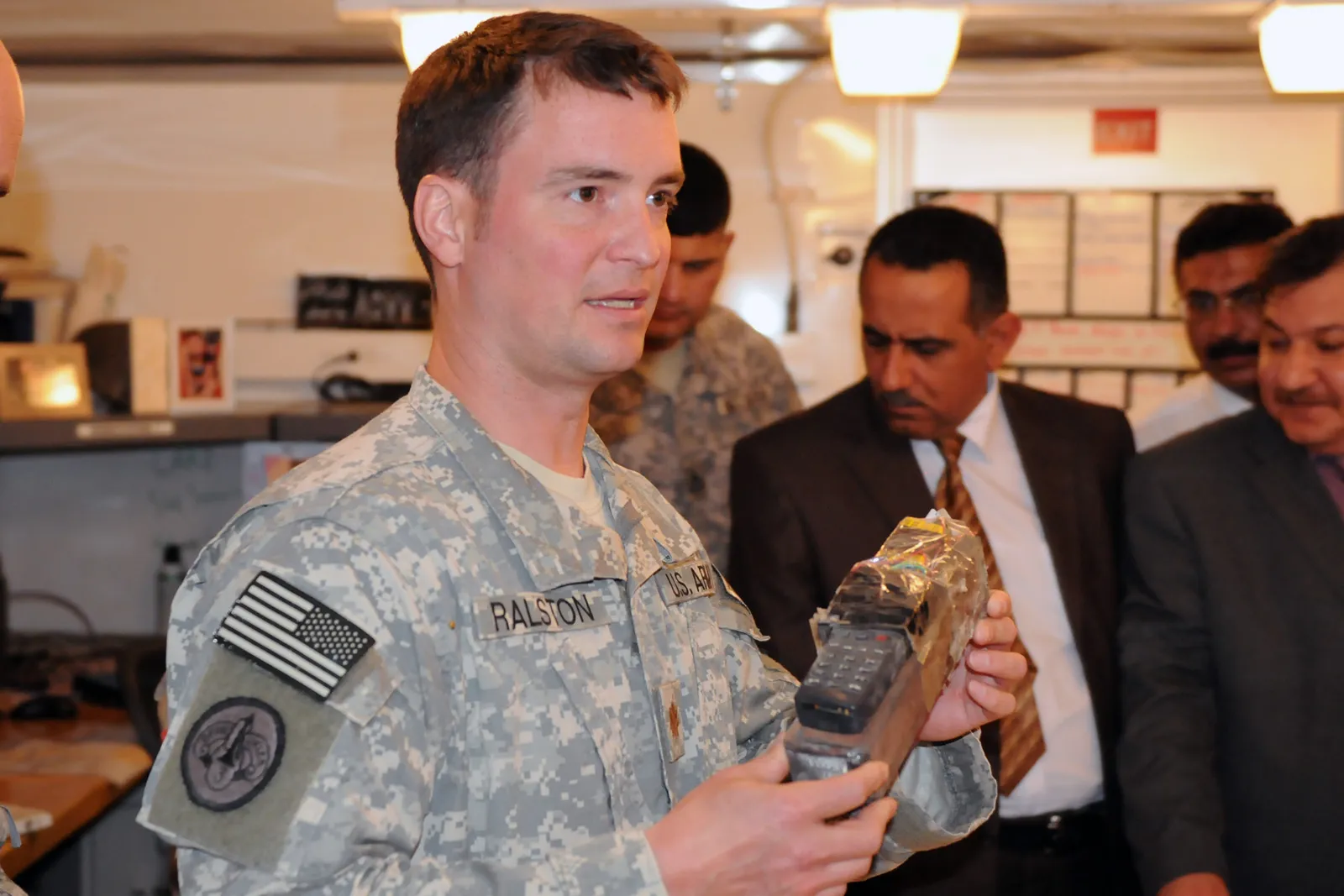


During the 2003 Iraq War, Iraqi and U.S. officials reported insurgents using magnetic or glue-attached sticky IEDs against Iraqi government, army, police, judicial, media, and local leadership vehicles.
Role detailsInfantry Weapons
Magnetic or sticky anti-vehicle bomb
Also known as
- Sticky bomb
- Sticky IED
- Magnetic IED
- Magnetic bomb
- Under-vehicle magnetic IED
- No. 74 sticky bomb
- S.T. grenade
Magnetic or sticky anti-vehicle bombs are close-placement explosive devices fixed to a vehicle with magnets, adhesive, or direct manual placement so the blast occurs against the hull, chassis, or wheel area. The modern conflict record is strongest for improvised sticky IEDs used against vehicles in Iraq, Afghanistan, and Gaza, while the older British No. 74 sticky bomb shows the same attachment concept in a purpose-built anti-tank grenade.
Role in Conflicts

In Kabul during the 2001 War in Afghanistan, AP reported a campaign of sticky bombs slapped onto cars, typically built around a small explosive box, magnet, and mobile-phone detonator.
Role details
In the 2023 Israel-Hamas War, reporting described Hamas fighters using close-placed or attached explosive devices against Israeli armored vehicles in Khan Yunis, including a 2025 Puma armored personnel carrier blast and an earlier sticky-bomb attack on a tank.
Role detailsAttachment And Employment Patterns
The sources describe a method more than a single standardized weapon: the charge is brought to the vehicle rather than fired from a distance, and the attachment mechanism shapes both target choice and attacker risk.
| Pattern | Attachment | Documented use |
|---|---|---|
| No. 74 sticky bomb | Adhesive-coated grenade body exposed after the protective casing is removed | Purpose-built British anti-tank grenade issued during the Second World War period. |
| Under-vehicle sticky IED | Magnets or glue fixed to a car chassis or underside | Used in Iraq against officials and security-linked targets, often with timer or remote initiation. |
| Kabul sticky bomb | Small explosive box with a magnet and mobile-phone trigger | Attached to cars in traffic or repair settings during late-war violence in Afghanistan. |
| Gaza hand-placed charge | Manual placement on an armored vehicle at very close range | Reported in Khan Yunis attacks against Israeli armored vehicles during the 2023 Israel-Hamas War. |
Profile / Specs
Profile
- Origin
- Field-improvised; historical adhesive anti-tank grenade lineage in the United Kingdom
- Built by
- ImprovisedLocally Fabricated
- Built in
- Varies by user
- Type
- Improvised explosive device
- Service note
- World War II to present
- Designer
- Field-improvised by militant cells; British No. 74 lineage associated with wartime British anti-tank development
- Designed
- Varies by device; British No. 74 issued in 1941
- Unit cost
- Varies by construction; AP reported simple Kabul sticky bombs could be made for very little money
- Produced
- World War II to present
- Number built
- Not publicly known
Specifications
- Attachment method
- Magnetic, adhesive, or direct manual placement against the target vehicle
- Target
- Cars, armored vehicles, troop carriers, tanks, and other vehicles accessible at close range
- Employment
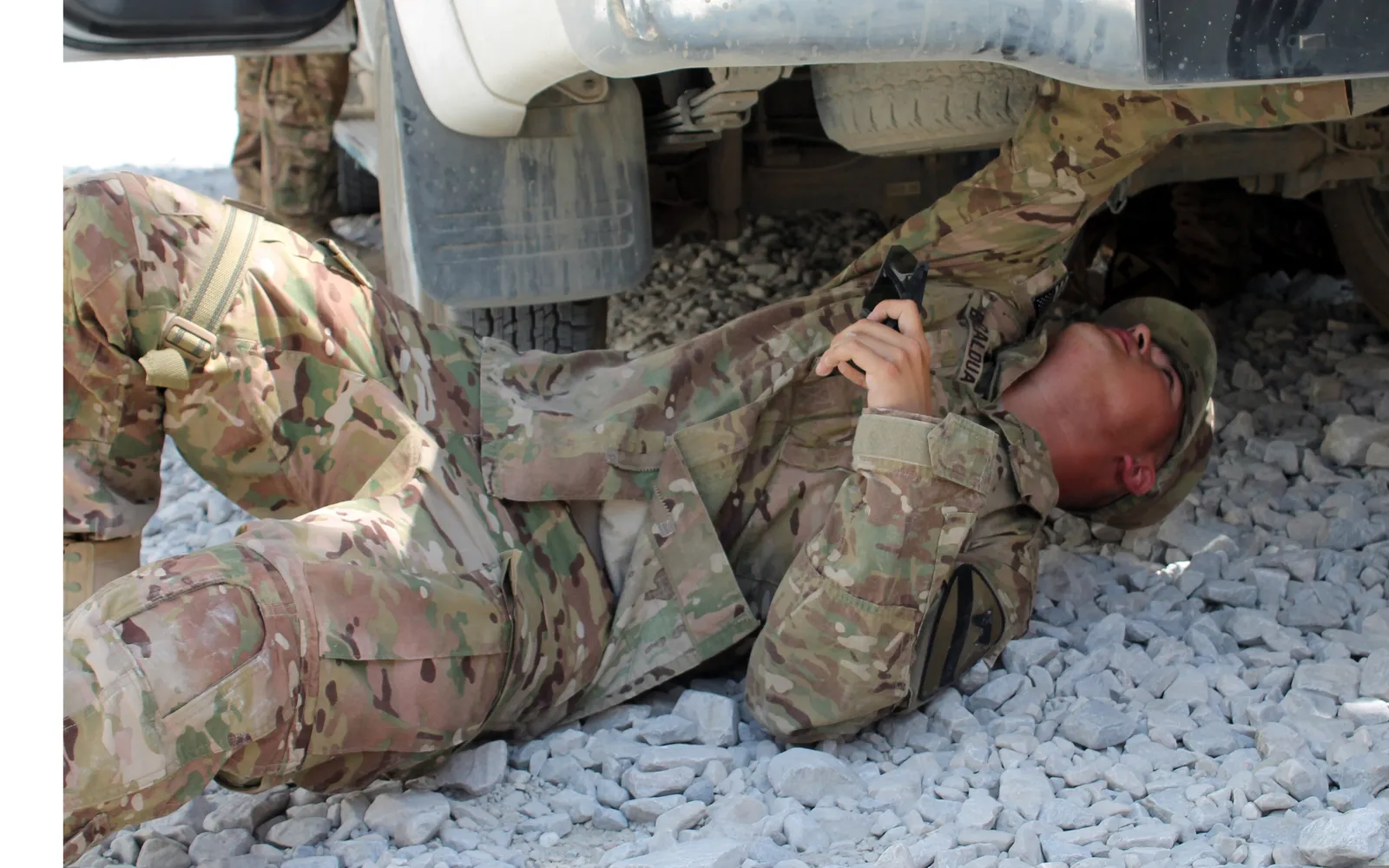
- Covert under-vehicle placement, traffic-side attachment, workshop placement, or close-range battlefield emplacement
- Initiation
- Varies by device; documented examples include timers, remote control, mobile-phone triggering, and grenade-delay mechanisms
- Effect
- Localized blast, fire, fragmentation, or vehicle kill against the chassis, wheel area, hull, engine deck, or troop compartment
- Construction
- Varies from purpose-built adhesive grenades to improvised explosive boxes with magnets, glue, phones, wiring, or salvaged explosives
Variants
The record covers a weapon method rather than a single factory model: adhesive grenades, magnetic under-vehicle IEDs, and hand-placed armor-attack charges share the same close-contact attachment logic.
| Variant | Configuration | Designation notes |
|---|---|---|
| No. 74 Mk I sticky bomb | Purpose-built British adhesive anti-tank grenade | Imperial War Museums identifies the No. 74 Mk I as a Second World War British anti-tank hand grenade with a glass explosive flask, birdlime-derived adhesive surface, protective casing, and five-second delay. |
| Magnetic under-vehicle IED | Covert vehicle-attack device | 2003 Iraq War reporting described bombs rigged with magnets to adhere to the undersides of automobiles and detonate by remote control or timer. Sources: Use of 'sticky IEDs' rising in Iraq |
| Mobile-phone sticky bomb | Urban vehicle-attack device | AP described Kabul sticky bombs as small explosive boxes with a magnet and mobile phone used to trigger the blast near or on the target vehicle. Sources: Sticky bombs latest weapon in Afghanistan's arsenal of war |
| Hand-placed armored-vehicle charge | Close-range anti-armor ambush device | Gaza reporting described Hamas fighters manually attaching improvised explosive devices to Israeli armored vehicles at close range. Sources: Seven IDF soldiers killed in Khan Yunis blast, terrorist attached IED to vehicle, Hamas Is Losing Every Battle in Gaza. It Still Thinks It Could Win the War. |
Timeline
Magnetic or sticky anti-vehicle bomb Key Events
British No. 74 issued
Imperial War Museums records the No. 74 Mk I sticky bomb as issued to the British Home Guard and Army in 1941 before later obsolescence.
Iraq sticky IED reporting
NBC News carried Washington Post reporting that Iraqi and U.S. officials saw rising use of magnetically attached sticky IEDs in Iraq.
Kabul sticky-bomb campaign reported
AP described sticky bombs attached to cars in Kabul during escalating late-war violence in Afghanistan.
Khan Yunis Puma APC blast
The Jerusalem Post reported that a Hamas fighter attached an IED to an Israeli Puma-style troop transport vehicle in Khan Yunis.
Media
Magnetic or sticky anti-vehicle bomb Images

Related Weapon Systems


Sources
United Nations Improvised Explosive Device Disposal StandardsPublisher: United Nations Mine Action Service | Note: Supports the general definition of improvised explosive devices and common disposal terminology relevant to magnetic or adhesive IEDs. | Accessed: 2026-06-29IED LexiconPublisher: United Nations Mine Action Service | Note: Supports the improvised explosive device terminology and the non-standard component basis for sticky bombs. | Accessed: 2026-06-29Use of 'sticky IEDs' rising in IraqPublisher: NBC News | Note: Supports 2003 Iraq War direct conflict-use: the report says Iraqi insurgents used magnetically attached sticky IEDs against Iraqi official, army, police, judicial, media, and local-leader vehicles. | Accessed: 2026-06-29Sticky bombs latest weapon in Afghanistan's arsenal of warPublisher: Associated Press | Note: Supports 2001 War in Afghanistan direct conflict-use: the report describes sticky bombs slapped onto cars in Kabul and explains the magnet, explosive box, and mobile-phone trigger pattern. | Accessed: 2026-06-29Seven IDF soldiers killed in Khan Yunis blast, terrorist attached IED to vehiclePublisher: The Jerusalem Post | Note: Supports 2023 Israel-Hamas War direct conflict-use: the report says a Hamas fighter attached an improvised explosive device to an Israeli Puma-style troop transport vehicle in Khan Yunis. | Accessed: 2026-06-29Hamas Is Losing Every Battle in Gaza. It Still Thinks It Could Win the War.Publisher: The Wall Street Journal | Note: Supports 2023 Israel-Hamas War direct conflict-use: the report says a Hamas fighter used a sticky bomb by attaching it to an Israeli tank in Khan Younis. | Accessed: 2026-06-29Grenade, Anti-tank, No 74 Mk I ('Sticky Bomb')Publisher: Imperial War Museums | Note: Supports the No. 74 Mk I sticky bomb background, dimensions, adhesive construction, five-second delay, 1941 issue, and Second World War period context. | Accessed: 2026-06-29Rusafa leaders visit forensics lab DVIDS301827.jpgPublisher: Wikimedia Commons | Note: Image provenance and licensing page for a U.S. Army public-domain photo showing a magnetic improvised explosive device, commonly known as a sticky bomb. | Accessed: 2026-06-29Vehicle search training session led by Combined Joint Task Force PaladinPublisher: Wikimedia Commons | Note: Image provenance and licensing page for a U.S. Department of Defense public-domain photo showing a simulated magnetic improvised explosive device found inside a truck. | Accessed: 2026-06-29Sticky Bomb production of the No 74 Grenade in Britain, 1943 D14771.jpgPublisher: Wikimedia Commons | Note: Image provenance and public-domain licensing page for a 1943 British Ministry of Information photograph showing No. 74 sticky bombs being fitted into protective casings. | Accessed: 2026-06-29