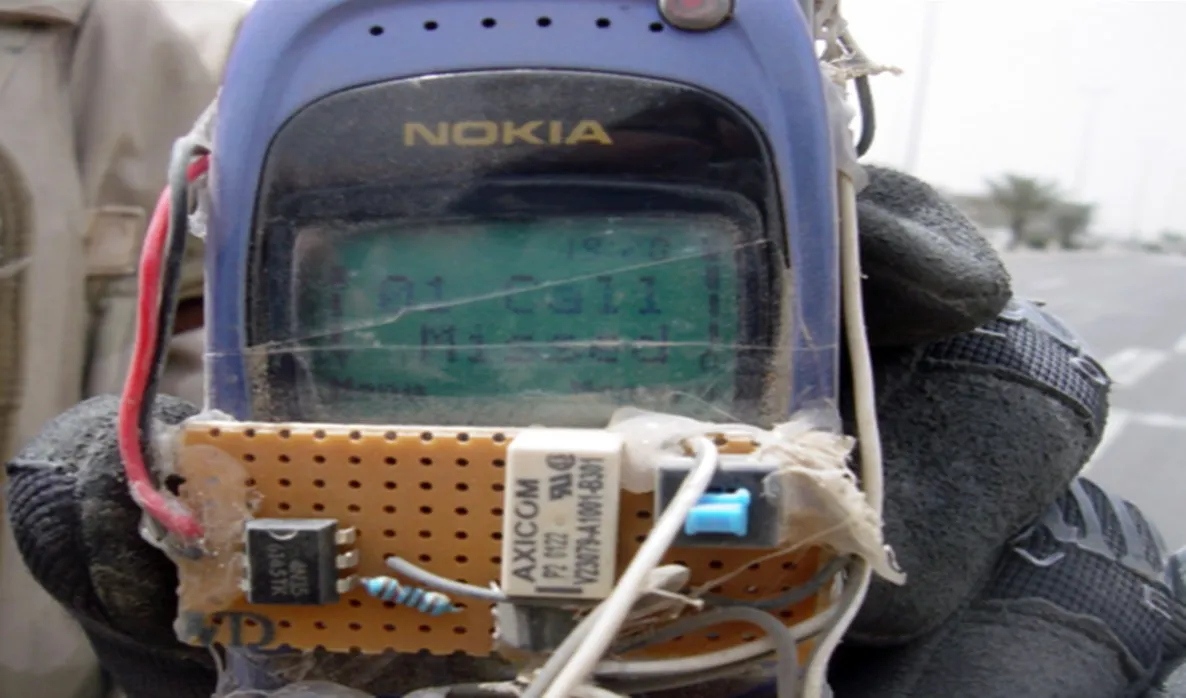


Used by Iraqi insurgent and militia forces as a remote-command roadside-bomb threat during the 2003 Iraq War; U.S. Army and CRS reporting describe insurgent use of cell phones, cordless telephones, key fobs, and radio-spectrum triggers for IED attacks in Iraq.
Role detailsInfantry Weapons
Radio-controlled improvised explosive device
Also known as
- RCIED
- radio-controlled IED
- remote-controlled IED
- radio command IED
A radio-controlled improvised explosive device is an improvised bomb initiated by a radio or similar remote command link rather than direct victim contact. The type appears across insurgent roadside-bomb campaigns, with documented U.S. Army counter-RCIED responses in Iraq and Afghanistan and CAR reporting on Houthi-aligned RCIEDs recovered in Yemen.
Role in Conflicts

Used as part of the 2001 War in Afghanistan's roadside-bomb threat; U.S. Army budget material for Khowst Province identified remote-controlled IEDs as the primary IED type on a heavily used coalition route, and Army reporting from Kandahar described cell phones used to detonate remote-controlled IEDs.
Role details
Used by Houthi-aligned forces in the 2014 Yemen Civil War; CAR documents radio-controlled improvised explosive devices used in Yemen and describes domestically produced devices recovered in the conflict.
Role detailsProfile / Specs
Profile
- Origin
- Local or non-state fabrication
- Built in
- Various
- Type
- Improvised explosive device
- Service note
- 2000s-present
- Designer
- Unknown / improvised
- Designed
- By 2006 in 2003 Iraq War reporting
- Unit cost
- Unknown; improvised and low-cost
- Produced
- 2000s-present
- Number built
- Unknown
Specifications
- Triggering method
- Radio-frequency or similar remote command link with a transmitter and receiver
- Construction
- Improvised from commercial, homemade, or military components
- Power source
- Battery-powered firing circuit
- Function
- Detonated from a distance rather than by victim contact
- Countermeasure context
- Counter-RCIED electronic-warfare systems are designed to disrupt radio command links before detonation
Variants
RCIED entries are usually distinguished by the command link or the sensor that initiates the firing circuit rather than by a formal factory designation.
- Cell-phone command-detonated RCIED
- Passive-infrared initiated RCIED
Broader IED Family
This page covers a command-initiation subtype within the wider improvised explosive device family.
| Compatible item | Item type | Compatibility evidence |
|---|---|---|
 | Improvised explosive device family | UNMAS treats radio command as one IED initiation method, making an RCIED a remotely initiated subtype of the broader improvised explosive device family. Sources: IED Lexicon |
Initiation Method
RCIED evidence is usually described by the initiation method rather than a standardized model name. The defining feature is a command signal that starts the firing circuit from a distance.
| Aspect | Documented detail | Source |
|---|---|---|
| Command link | UNMAS and JHU/APL describe RCIEDs as devices initiated by radio command links rather than victim contact. | IED Lexicon; Systems Engineering in Counter Radio-Controlled Improvised Explosive Device Electronic Warfare |
| Common components | Catalog-level sources describe improvised construction from commercial, homemade, or military components, with battery-powered firing circuits. | IED Lexicon; Systems Engineering in Counter Radio-Controlled Improvised Explosive Device Electronic Warfare |
| Countermeasure context | U.S. Army reporting links counter-RCIED electronic warfare to jamming or disrupting the signal used to initiate the device. | Army Electronic Warfare Career Field; National Guard Duke System Training |
Timeline
Radio-controlled improvised explosive device Key Events
Iraq electronic-warfare response expands
U.S. Army reporting said Multi-National Corps-Iraq placed electronic-warfare officers with ground combat units to counter emerging remote-controlled IED threats.
Sources: Army Electronic Warfare Career Field
Khowst route documents remote-controlled IEDs
Army FY2008 budget material identified remote-controlled IEDs as the primary IED type on MSR Alaska in Khowst Province, Afghanistan.
Sources: Army FY2008 Global War on Terrorism Amendment
CAR documents Yemen RCIEDs
Conflict Armament Research documented radio-controlled and passive-infrared initiated IEDs recovered in Yemen and described domestic production patterns.
Sources: Radio-Controlled, Passive Infrared-Initiated IEDs
Media
Radio-controlled improvised explosive device Images
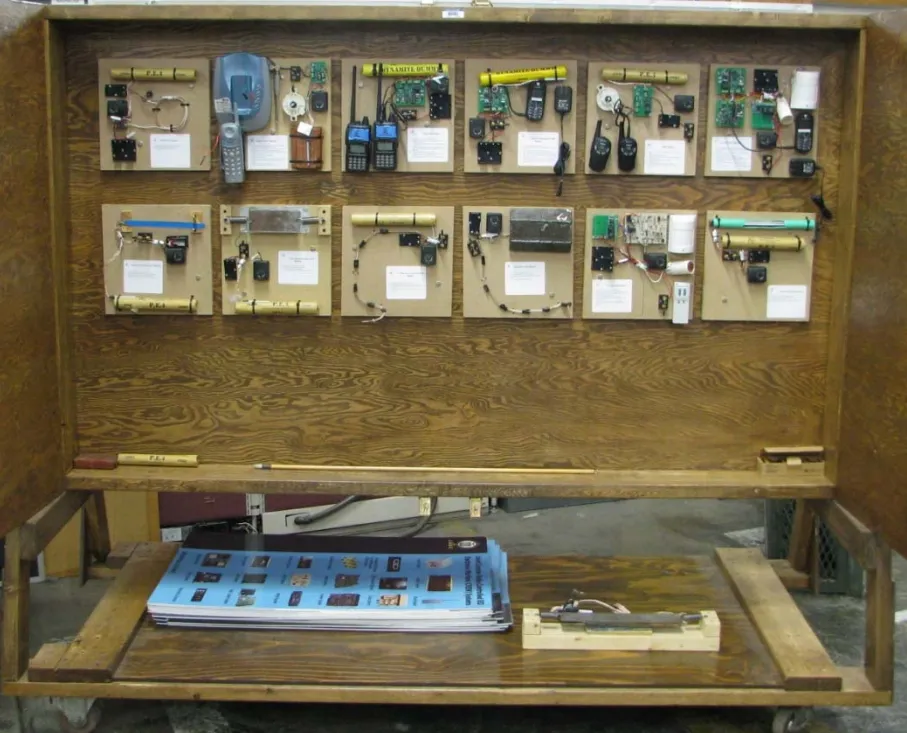
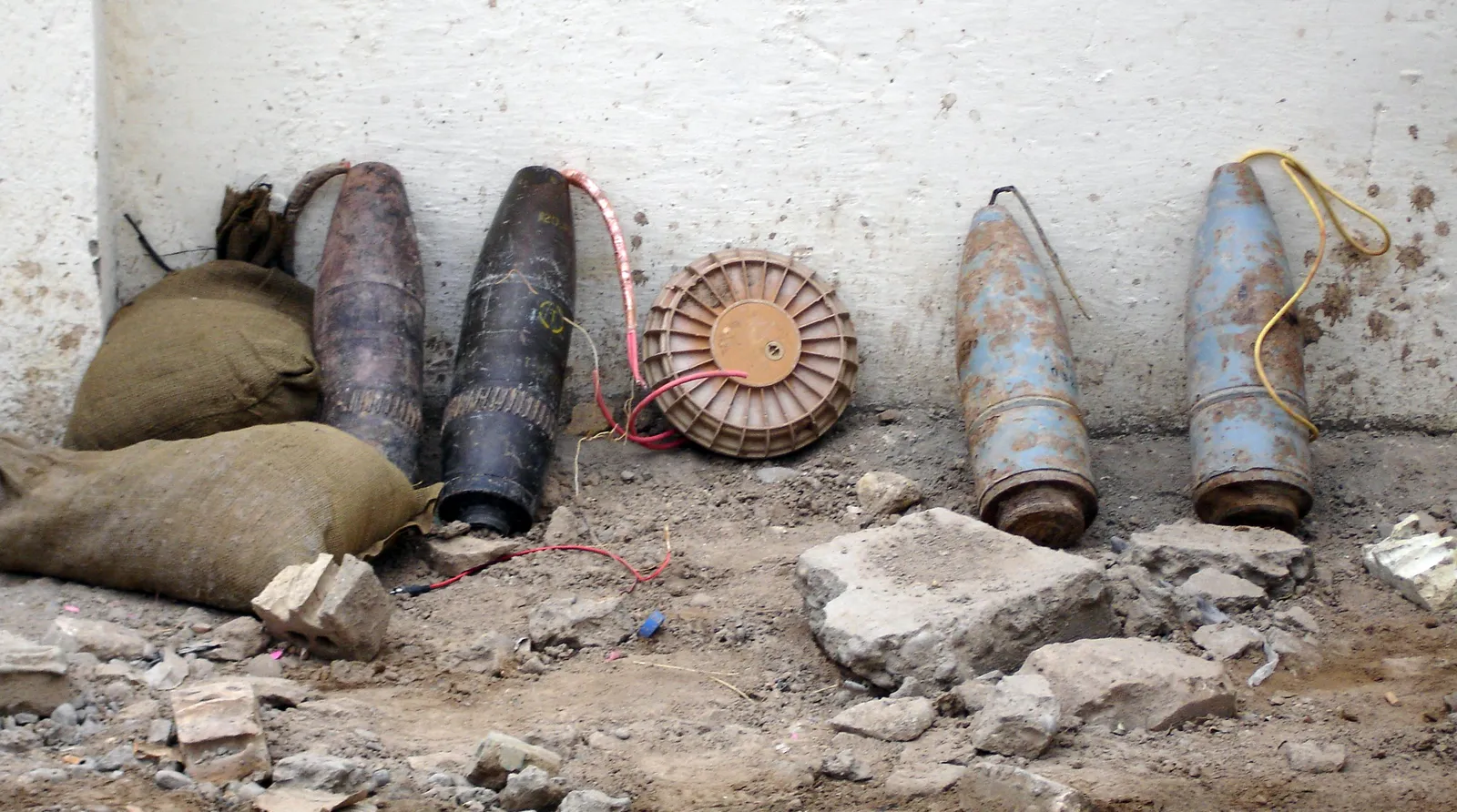
Related Weapon Systems


Sources
IED LexiconPublisher: UNMAS | Note: Supports the general improvised explosive device definition and the non-military-component basis for radio-controlled IEDs. | Accessed: 2026-06-29Systems Engineering in Counter Radio-Controlled Improvised Explosive Device Electronic WarfarePublisher: Johns Hopkins Applied Physics Laboratory | Note: Supports RCIED background and technical details of the radio-frequency command link, battery-powered circuitry, and the broader counter-RCIED context. | Accessed: 2026-06-29Army Electronic Warfare Career FieldPublisher: U.S. Army | Note: Supports 2003 Iraq War direct conflict-use context: U.S. Army reporting tied the 2006 Multi-National Corps-Iraq electronic-warfare response to emerging remote-controlled IED threats. Also supports image provenance for the U.S. Army photo of a cell-phone IED detonator recovered after counter-RCIED jamming. | Accessed: 2026-06-29Rethinking IED StrategiesPublisher: U.S. Army | Note: Supports 2003 Iraq War direct conflict-use context: U.S. Army analysis describes insurgents in Iraq using commercially available long-range cordless telephones and electronic key fobs to arm or fire IEDs. | Accessed: 2026-07-06CRS IEDs in Iraq and AfghanistanPublisher: Congressional Research Service | Note: Supports 2003 Iraq War direct conflict-use context: CRS reported that U.S. forces disrupted radio spectrum used by insurgents to trigger IEDs in Iraq and Afghanistan and described radio-controlled explosive detonators such as cell phones and long-range cordless telephones. | Accessed: 2026-07-06Army FY2008 Global War on Terrorism AmendmentPublisher: U.S. Army | Note: Supports 2001 War in Afghanistan direct conflict-use context: FY2008 Army budget material identified remote-controlled IEDs as the primary IED type on MSR Alaska in Khowst Province. | Accessed: 2026-06-29US convoy ambushed, battles insurgents for 9 hoursPublisher: U.S. Army | Note: Supports 2001 War in Afghanistan direct conflict-use context: Army reporting from Kandahar described cell phones used to detonate remote-controlled IEDs and a convoy attack involving roadside bombs. | Accessed: 2026-06-29National Guard Duke System TrainingPublisher: U.S. Army | Note: Supports background and specifications for counter-RCIED electronic warfare: the Duke system is described as jamming frequencies used to detonate remote-controlled IEDs, a common form of attack in Iraq and Afghanistan. | Accessed: 2026-06-29Radio-Controlled, Passive Infrared-Initiated IEDsPublisher: Conflict Armament Research | Note: Supports 2014 Yemen Civil War direct conflict-use: used by Houthi-aligned forces in the 2014 Yemen Civil War; CAR documents radio-controlled improvised explosive devices used in Yemen and describes domestically produced devices recovered in the conflict. | Accessed: 2026-06-29Improvized Explosive Devices Demonstration Board.jpgPublisher: Wikimedia Commons | Note: Image provenance page for a public-domain U.S. Army training board that includes remote-controlled IEDs; used in the gallery. | Accessed: 2026-06-29IED Baghdad from munitions.jpgPublisher: Wikimedia Commons | Note: Image provenance page for a public-domain U.S. military photo of an improvised explosive device assembled from munitions; used in the gallery as a generic IED reference image. | Accessed: 2026-06-29