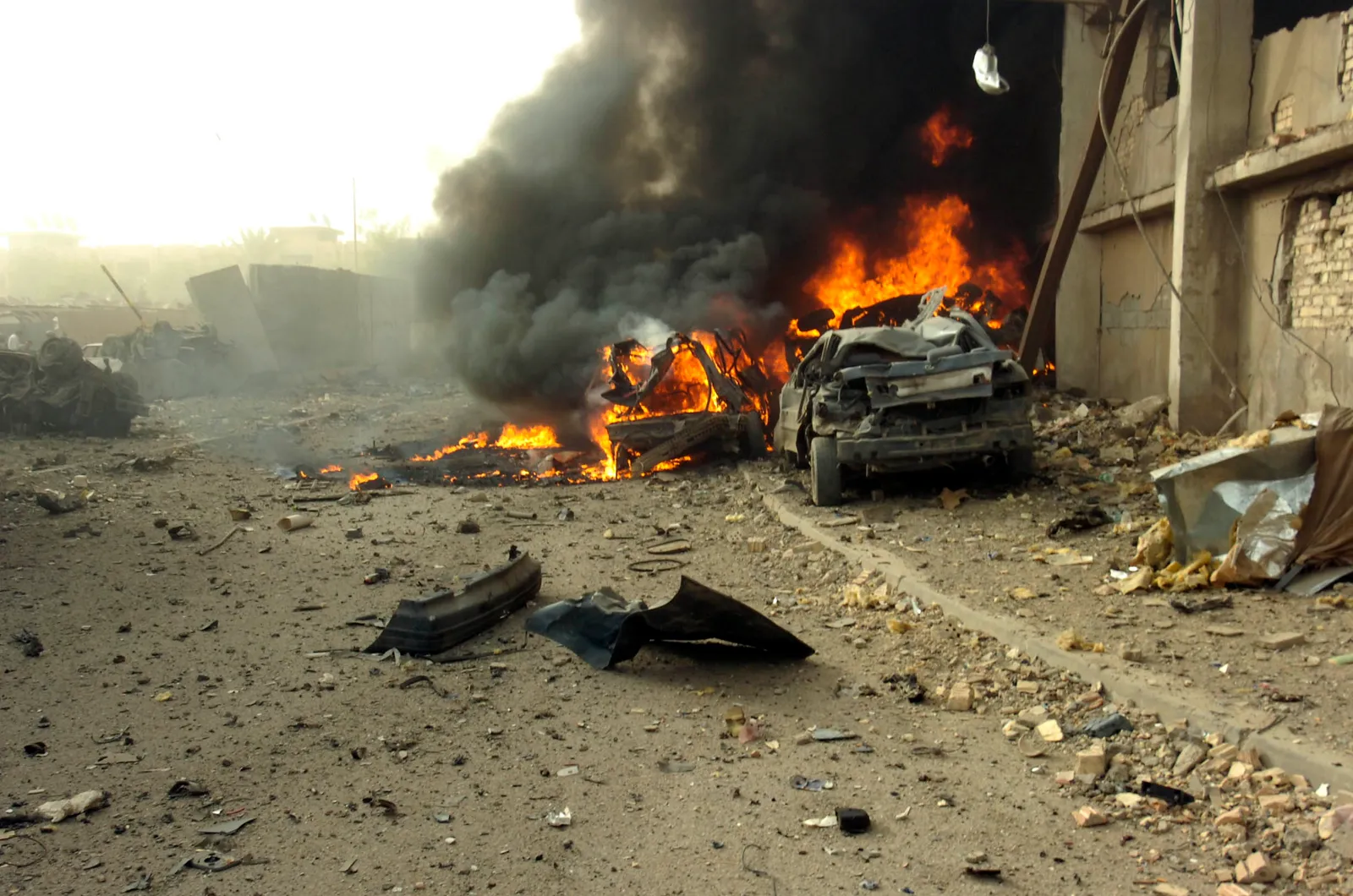

Used by Boko Haram and ISWAP fighters as vehicle-delivered explosive weapons in attacks on Nigerian and regional force positions, including documented 2021 Mallam Fatori fighting and a 2025 New Marte attack where troops recovered an explosive-rigged SUV.
Munitions
Vehicle-borne improvised explosive device (VBIED)
Also known as
- VBIED
- Car bomb
- Truck bomb
- Suicide vehicle-borne improvised explosive device
- SVBIED
- Up-armored SVBIED
A vehicle-borne improvised explosive device, or VBIED, is a car, truck, SUV, trailer, or other ground vehicle adapted to carry and deliver an explosive charge. The record covers car bombs, truck bombs, SVBIEDs, and up-armored assault vehicles documented across insurgent and jihadist conflicts from Iraq, Syria, Afghanistan, Somalia, Yemen, Nigeria, and the Second Intifada.
Role in Conflicts
- Side
- Islamic State
Islamic State forces used VBIEDs and VBIED facilities in the Iraq-Syria campaign; CENTCOM documented coalition strikes on an ISIL VBIED near Kobani, a VBIED facility in Fallujah, and more than 60 vehicle bombs destroyed during the Mosul operation.

Iraqi insurgent forces used VBIEDs during the post-invasion insurgency, with U.S. Army history documenting growth from suicide car-bomb attacks in 2003 to 133 VBIED attacks in 2004.
Role details- Side
- Islamic State
Islamic State forces used VBIEDs against Iraqi security forces and civilians; CJTF-OIR described a Makhmur-area VBIED facility as helping produce numerous VBIEDs for use across Iraq.
ISIL used VBIEDs and SVBIEDs during Syrian Civil War fighting, including BMP and gate-breach assault vehicles described in U.S. Army threat reporting and an OIR strike on a Daesh VBIED factory near Abu Kamal, Syria.
Role details
Taliban and Islamic State-linked armed groups used vehicle-delivered bombs in Kabul, including truck, car, and ambulance attacks documented by Human Rights Watch during the war.
Role detailsAl-Shabaab used VBIEDs in Somalia, including a January 2017 perimeter breach at a Kenya Defence Forces camp at Kulbiyow and a two-VBIED attack near Mogadishu's airport complex.
AQAP used vehicle-borne IEDs during the Yemen conflict, with U.S. State Department reporting vehicle-borne IEDs among AQAP attack methods in Yemen.
Role detailsPalestinian Islamic Jihad used VBIEDs against Israeli bus targets during the Second Intifada, including the 2002 Karkur Junction Line 841 bus attack.
Profile / Specs
Profile
- Origin
- Improvised; adapted vehicles and explosive charges assembled by operators
- Built by
- Operator-builtImprovised
- Built in
- Varies
- Type
- Vehicle-borne improvised explosive device
- Service note
- Modern asymmetric warfare and terrorist attacks
- Designer
- Improvised by operators
- Designed
- Varies by device and attack cell
- Unit cost
- Not standardized
- Produced
- Ad hoc construction before individual attacks
- Number built
- Unknown
Specifications
- Designation
- Improvised explosive device delivered by or concealed in a ground-based vehicle
- Delivery platform
- Ground vehicles including cars, SUVs, vans, trailers, trucks, large goods vehicles, motorcycles, or captured military vehicles
- Construction standard
- Not standardized; device layout varies by operator, available vehicle, available explosive material, concealment needs, and intended target
- Explosive payload
- Variable; limited by vehicle capacity, available explosive material, and tactical purpose
- Initiation
- May use attacker-controlled, suicide, time, or other IED switch categories depending on device design
- Primary effects
- Blast, fragmentation, fire, structural damage, and secondary fragmentation from surrounding materials
- Tactical employment
- Parked or concealed attack, moving/suicide assault, gate or perimeter breach, convoy attack, or first stage of a complex attack
- Detection challenge
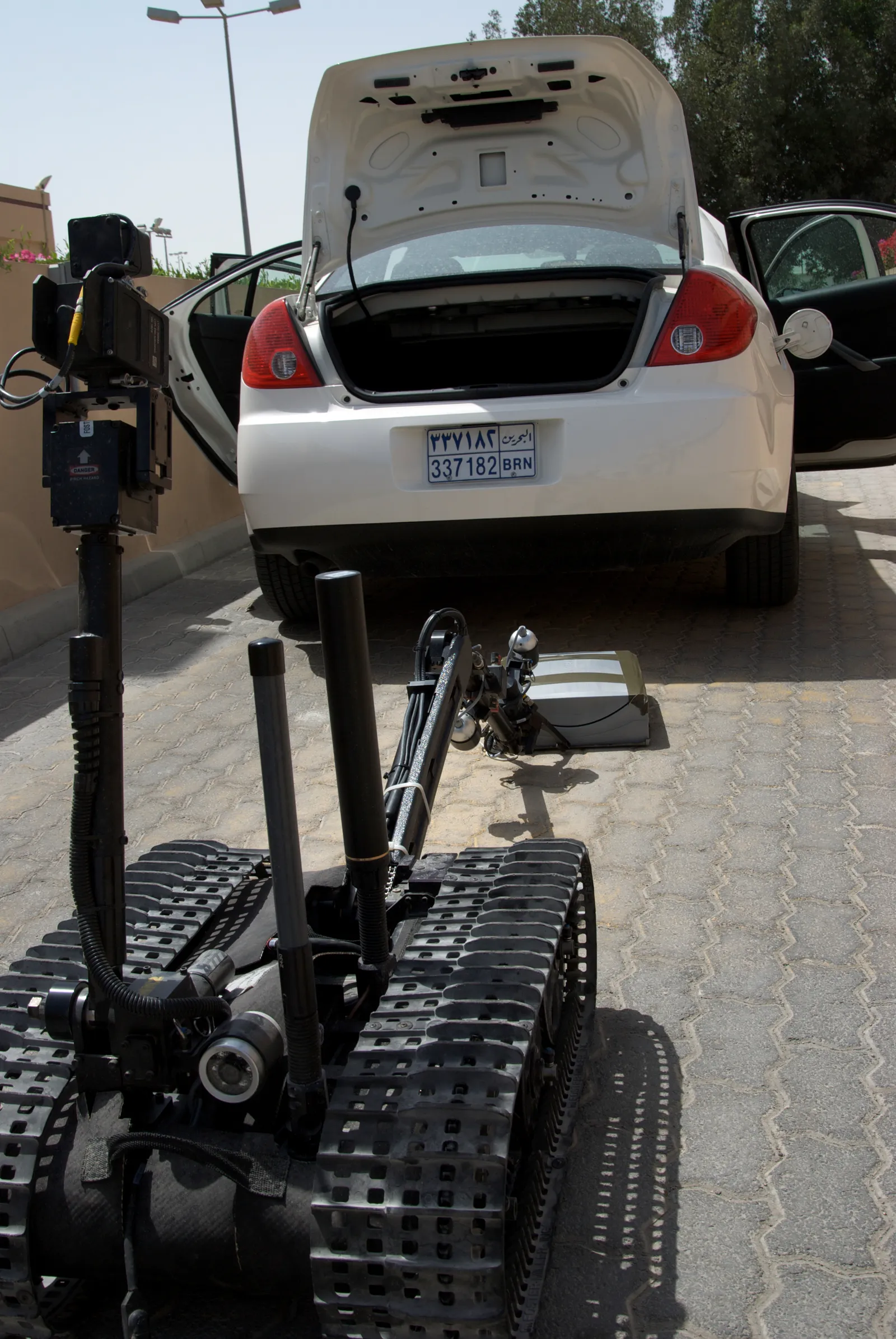
- Common local vehicles can blend into traffic or parking areas; suspicious indicators include abnormal loading, altered interiors, concealed cargo, or unusual parking and driving behavior
Threat Characteristics
A VBIED is best read as a delivery method rather than a fixed weapon model. The same designation can describe a parked car bomb, a large truck bomb, a suicide assault vehicle, or an up-armored breach vehicle. What links them is the use of a ground vehicle to move or conceal an improvised explosive charge close to the target.
Concealment
Civilian vehicles can blend into routine traffic, parking areas, access roads, or service entrances until they are searched, blocked, abandoned, or detonated.
Assault Use
SVBIEDs trade concealment for shock effect, using speed, armor, or supporting fires to reach gates, checkpoints, troop positions, and other hard targets.
Payload Limits
Payload is not a catalog constant. Vehicle size, explosive availability, concealment, and intended effect determine how large or visible the device can be.
Variants
VBIED is an umbrella designation for improvised explosive devices delivered by or concealed in ground vehicles. The useful distinctions are employment method, payload capacity, and whether the vehicle is protected for a frontal assault.
| Variant | Configuration | Designation notes |
|---|---|---|
| Car bomb | Concealed or parked VBIED | Passenger cars and similar civilian vehicles are used when concealment in normal traffic or parking areas is central to the attack. Sources: Attack methodology: Vehicle bombs, Vehicle Borne Improvised Explosive Device (VBIED): Preparedness, Recognition, and Response |
| Truck bomb | High-capacity VBIED | Cargo vehicles, large goods vehicles, and trailers allow heavier explosive loads or different access profiles than passenger-car attacks. Sources: Attack methodology: Vehicle bombs, Vehicle Borne Improvised Explosive Device (VBIED): Preparedness, Recognition, and Response |
| Suicide vehicle-borne IED (SVBIED) | Driver-initiated assault or breach vehicle | A driver-initiated VBIED used as an assault component against gates, fortified positions, convoys, or troop concentrations. Sources: Vehicle Borne Improvised Explosive Device (VBIED): Preparedness, Recognition, and Response, Threat Tactics Report: ISIL |
| Up-armored suicide vehicle-borne IED | Protected assault VBIED | An SVBIED with improvised armor intended to survive defensive fire long enough to reach the target area. Sources: Defeat by Annihilation: Mobility and Attrition in the Islamic State's Defense of Mosul, Up-Armored SVBIEDs Make Their Way to Nigeria |
| Armored fighting vehicle VBIED | Captured military vehicle conversion | Captured armored vehicles such as BMP-type platforms have been converted into explosive assault vehicles. Sources: Threat Tactics Report: ISIL |
Timeline
Vehicle-borne improvised explosive device (VBIED) Key Events
Beirut Suicide Truck Bombs
Two suicide truck bombs struck U.S. and French multinational force buildings in Beirut, showing the destructive potential of large vehicle-delivered charges against fixed facilities.
Sources: Beirut Barracks Memorial
Oklahoma City Truck Bomb
A rented truck carrying a fertilizer-based bomb destroyed part of the Alfred P. Murrah Federal Building, becoming a major domestic reference point for VBIED damage potential.
Sources: Oklahoma City Bombing
Canal Hotel Attack In Baghdad
A suicide bomber detonated a truck full of explosives outside the UN headquarters at Baghdad's Canal Hotel, shaping later security planning for international and humanitarian facilities.
Sources: 20 years since the Canal Hotel bombing
Boko Haram Vehicle Bomb In Abuja
NCTC records Boko Haram's August 2011 vehicle-bomb attack on the UN headquarters in Abuja after the group's first VBIED use in June 2011.
Sources: Boko Haram
SVBIEDs As Breach Weapons
U.S. Army threat reporting described ISIL use of SVBIEDs as assault components intended to weaken fortified positions and open entry points.
Sources: Threat Tactics Report: ISIL
Up-Armored SVBIEDs At Mosul
CTC analysis of the Mosul battle described repeated Islamic State use of up-armored truck bombs, visual camouflage, and route reconnaissance.
Sources: Defeat by Annihilation: Mobility and Attrition in the Islamic State's Defense of Mosul
Up-Armored SVBIEDs Reported In Nigeria
CFR reported ISWAP use of up-armored SVBIEDs in Nigeria and distinguished them from clandestine urban car bombs by their frontal battlefield role.
Sources: Up-Armored SVBIEDs Make Their Way to Nigeria
Media
Vehicle-borne improvised explosive device (VBIED) Videos
Vehicle-borne improvised explosive device (VBIED) Images
Related Weapon Systems


Sources
Attack methodology: Vehicle bombsPublisher: ProtectUK / Counter Terrorism Policing | Note: Supports general VBIED background and high-level specifications for vehicle delivery platforms, target effects, and concealment characteristics. | Accessed: 2026-07-01Vehicle Borne Improvised Explosive Device (VBIED): Preparedness, Recognition, and ResponsePublisher: National Counterterrorism Center, FBI, and DHS | Note: Supports VBIED background as an improvised vehicle-delivered explosive threat and broad preparedness context. | Accessed: 2026-07-01Boko HaramPublisher: National Counterterrorism Center | Note: Supports 2009 Boko Haram Insurgency direct-use context: vehicle-borne IEDs were used by Boko Haram as part of its attack repertoire. | Accessed: 2026-07-01Six Soldiers Killed As MNJTF Neutralize 22 Boko Haram Terrorists, Destroy BunkersPublisher: Channels Television | Note: Supports 2009 Boko Haram Insurgency direct-use claim: Vehicle Borne Improvised Explosive Devices were used by Boko Haram/ISWAP fighters during 2021 fighting near Mallam Fatori. | Accessed: 2026-07-01Two Soldiers Dead As Army Foils Boko Haram Attack, Recovers ExplosivesPublisher: Channels Television | Note: Supports 2009 Boko Haram Insurgency direct-use claim: a Vehicle-Borne Improvised Explosive Device was used by Boko Haram/ISWAP attackers and recovered by Operation Hadin Kai troops at New Marte in 2025. | Accessed: 2026-07-01Up-Armored SVBIEDs Make Their Way to NigeriaPublisher: Council on Foreign Relations | Note: Supports 2009 Boko Haram Insurgency direct-use context: ISWAP used up-armored suicide vehicle-borne IEDs in Nigeria against Nigerian troops during battles, distinct from clandestine urban car bombs. | Accessed: 2026-07-01UNMAS IED LexiconPublisher: United Nations Mine Action Service | Note: Supports VBIED terminology as an IED delivered by or concealed in a ground-based vehicle and related IED classification language. | Accessed: 2026-07-01Threat Tactics Report: ISILPublisher: U.S. Army TRADOC G-2 / TRISA-CTID | Note: Supports ISIL VBIED/SVBIED background, armored fighting vehicle VBIED examples, and 2011 Syrian Civil War direct-use context for ISIL assault and breach use in Syria. | Accessed: 2026-07-01Defeat by Annihilation: Mobility and Attrition in the Islamic State's Defense of MosulPublisher: Combating Terrorism Center at West Point | Note: Supports background on Islamic State up-armored SVBIED use, camouflage, and route tactics during the Mosul battle; also supports 2013 War in Iraq direct-use context. | Accessed: 2026-07-01Beirut Barracks MemorialPublisher: Arlington National Cemetery | Note: Supports background timeline context for the October 23, 1983 Beirut suicide truck bomb attacks. | Accessed: 2026-07-01Oklahoma City BombingPublisher: Federal Bureau of Investigation | Note: Supports background timeline context for the April 19, 1995 Oklahoma City truck bombing. | Accessed: 2026-07-0120 years since the Canal Hotel bombingPublisher: United Nations Department of Safety and Security | Note: Supports background timeline context for the August 19, 2003 truck bomb attack on the UN headquarters at the Canal Hotel in Baghdad. | Accessed: 2026-07-01ON POINT II: Transition to the New CampaignPublisher: U.S. Army Combat Studies Institute Press | Note: Supports 2003 Iraq War direct-use context: U.S. Army history documents Iraqi insurgent suicide car-bomb and VBIED attack growth during the post-invasion insurgency. | Accessed: 2026-07-01Coalition airstrikes destroy Daesh VBIED facilityPublisher: Combined Joint Task Force - Operation Inherent Resolve | Note: Supports 2014 War Against the Islamic State direct conflict use under Operation Inherent Resolve: Supports 2013 War in Iraq and 2014 Operation Inherent Resolve direct-use context: coalition airstrikes destroyed a Daesh VBIED facility near Makhmur, Iraq, described as helping produce VBIEDs used against Iraqi security forces and civilians. | Accessed: 2026-07-01Coalition air strike destroys VBIED factoryPublisher: DVIDS / Combined Joint Task Force - Operation Inherent Resolve | Note: Supports 2014 War Against the Islamic State direct conflict use under Operation Inherent Resolve: Supports 2011 Syrian Civil War and 2014 Operation Inherent Resolve direct-use context: coalition forces struck a Daesh VBIED factory near Abu Kamal, Syria, as part of Operation Inherent Resolve. | Accessed: 2026-07-01No Safe Place: Insurgent Attacks on Civilians in AfghanistanPublisher: Human Rights Watch | Note: Supports 2001 War in Afghanistan direct-use context: HRW documents insurgent truck, car, and ambulance bomb attacks in Kabul during the war. | Accessed: 2026-07-01Report on Somalia of the Monitoring Group on Somalia and EritreaPublisher: United Nations Security Council | Note: Supports 1991 Somali Civil War post-2006 al-Shabaab phase direct-use context: UN monitoring documents al-Shabaab VBIED attacks at Kulbiyow and near Mogadishu's airport complex. | Accessed: 2026-07-01Country Reports on Terrorism 2023: YemenPublisher: U.S. Department of State | Note: Supports 2014 Yemen Civil War direct-use context: State Department reporting lists vehicle-borne IEDs among AQAP attack methods in Yemen. | Accessed: 2026-07-01Case Studies of Attacks Against the Israeli Public Bus SystemPublisher: Mineta Transportation Institute | Note: Supports Second Intifada direct-use context: the report documents Palestinian Islamic Jihad VBIED attacks against Israeli bus targets, including Karkur Junction in 2002. | Accessed: 2026-07-01CENTCOM Fallujah ISIL VBIED facility strikePublisher: U.S. Central Command | Note: Supports 2014 War Against the Islamic State direct conflict use under Operation Inherent Resolve: Supports 2014 Operation Inherent Resolve direct-use context: coalition airstrikes destroyed an ISIL-run VBIED facility in Fallujah, Iraq. | Accessed: 2026-07-01CENTCOM airstrike on ISIL VBIED near KobaniPublisher: U.S. Central Command | Note: Supports 2014 War Against the Islamic State direct conflict use under Operation Inherent Resolve: Supports 2014 Operation Inherent Resolve direct-use context: a U.S. airstrike destroyed an ISIL vehicle-borne improvised explosive device near Kobani, Syria. | Accessed: 2026-07-01CENTCOM Mosul vehicle bombs reportPublisher: U.S. Central Command | Note: Supports 2014 War Against the Islamic State direct conflict use under Operation Inherent Resolve: Supports 2014 Operation Inherent Resolve direct-use context: U.S.-led coalition reporting said more than 60 vehicle bombs had been destroyed since Iraqi and Kurdish forces began the Mosul operation. | Accessed: 2026-07-01WaziriyaAutobombeIrak.jpgPublisher: Wikimedia Commons | Note: Image provenance and public-domain licensing page for a U.S. Navy photograph of VBIED aftermath. | Accessed: 2026-07-01Talon robot approaches suspect vehicle during VBIED drillPublisher: Wikimedia Commons | Note: Image provenance and public-domain licensing page for a U.S. Navy VBIED drill photograph. | Accessed: 2026-07-01Iraqi Army Division led raid on Mosul neighborhood finds car bomb factory DVIDS83284Publisher: Wikimedia Commons | Note: Image provenance and public-domain licensing page for a U.S. Army photograph of car-bomb factory materials. | Accessed: 2026-07-01