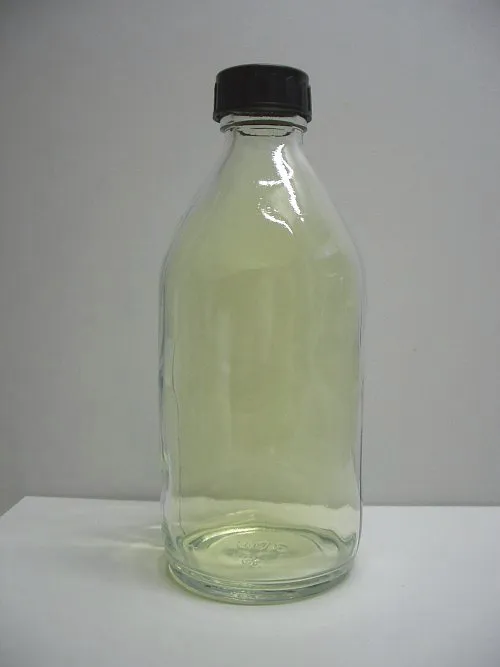

OPCW investigators found that Syrian Arab Air Force Mi-8/17 helicopters dropped two yellow chlorine cylinders on Douma on 7 April 2018; that chemical attack formed the stated trigger for the 14 April 2018 U.S.-led missile strikes.
Role detailsMunitions
Chlorine gas cylinders
Also known as
- Douma chlorine cylinders
- chlorine-filled cylinders
- yellow chlorine cylinders
- industrial chlorine cylinders
- chlorine barrel bombs
Chlorine gas cylinders are industrial pressure vessels that become improvised chemical munitions when adapted or delivered to release toxic chlorine intentionally. In the April 2018 U.S., UK, and French strikes in the 2011 Syrian Civil War archive, the relevant use is the Douma attack: OPCW investigators found that Syrian Arab Air Force helicopters dropped two yellow chlorine-filled cylinders on residential buildings, providing the chemical-weapons trigger cited by the United States, United Kingdom, and France for the 14 April 2018 missile strikes.
Role in Conflicts
Improvised Munition Evidence
The Douma evidence treats the cylinders as industrial pressure vessels converted by use into chemical munitions. OPCW reporting separates the munition body, toxic fill, delivery platform, and release effects, which is why this record covers the cylinder payload rather than the Mi-8/17 helicopter that carried it.
Munition body
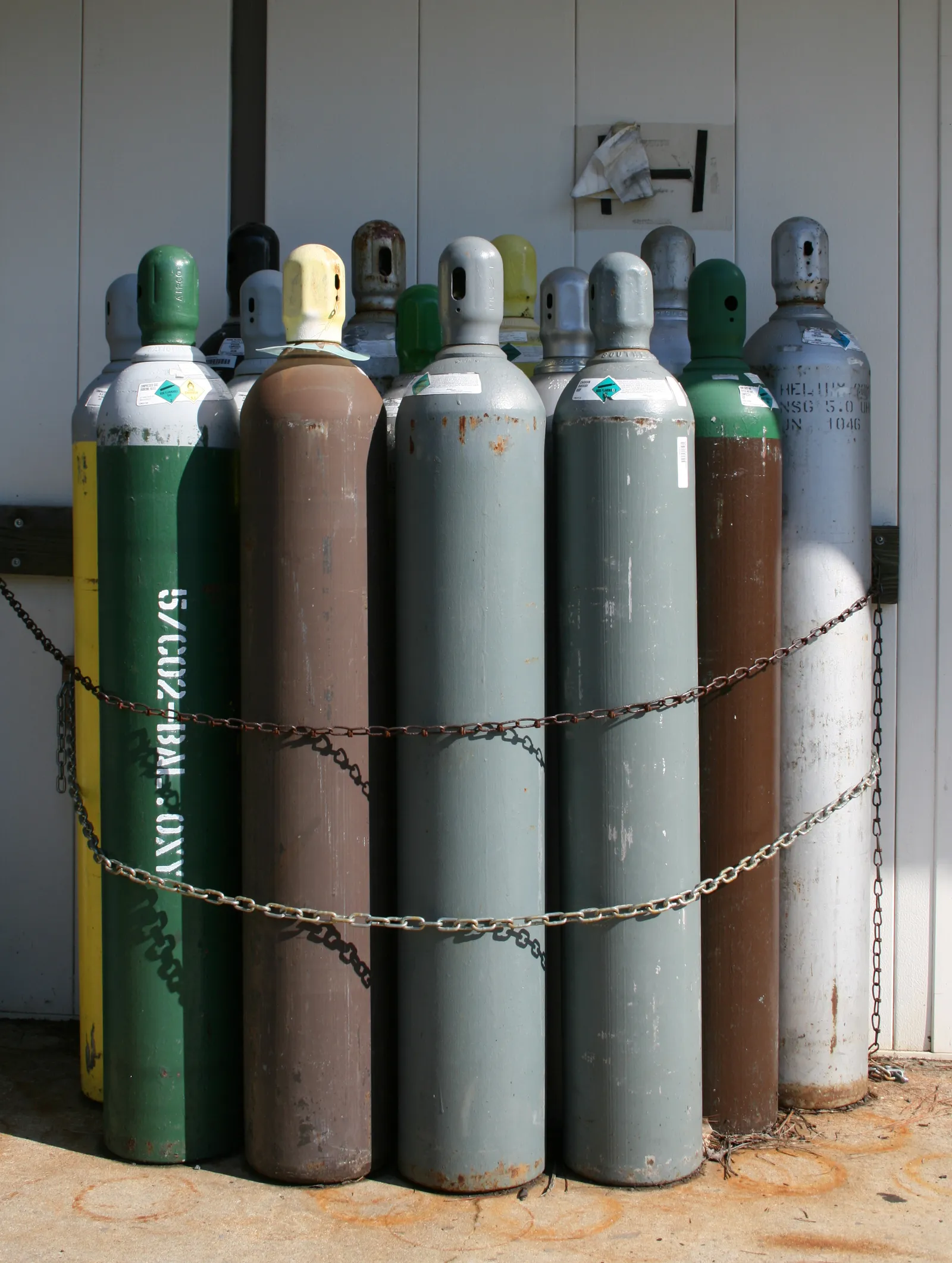
Two yellow industrial gas cylinders were documented at residential Locations 2 and 4 in Douma.
Sources: Third Report by the OPCW Investigation and Identification Team, Douma; OPCW Douma FFM Final Report PDF.
Toxic fill
The FFM found reasonable grounds that the toxic chemical contained reactive chlorine and was likely molecular chlorine.
Source: OPCW Douma FFM Final Report PDF.
Delivery platform
The IIT attributed the drops to at least one Syrian Arab Air Force Mi-8/17 helicopter operating from Dumayr airbase.
Source: Third Report by the OPCW Investigation and Identification Team, Douma.
Profile / Specs
Profile
- Origin
- Syria, using industrial chlorine cylinders modified as improvised chemical munitions
- Built by
- Unknown
- Type
- Improvised chlorine chemical munition
- Service note
- Documented in the April 2018 Douma chemical attack and the subsequent strike-crisis context
- Designer
- Not publicly identified
- Designed
- Industrial cylinder design adapted as an improvised munition before April 2018
- Unit cost
- Not publicly reported
- Produced
- Industrial production; modified weapon configuration not publicly reported
- Number built
- Two yellow chlorine cylinders documented by OPCW for the Douma incident
Specifications
- Chemical agent
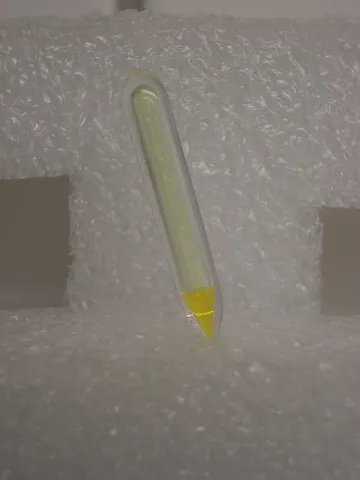
- Chlorine gas (Cl2), a toxic industrial chemical and choking agent
- Container
- Pressurized industrial gas cylinder, documented by OPCW as two yellow cylinders in the Douma incident
- Delivery method
- Dropped from at least one Syrian Arab Air Force Mi-8/17 helicopter, according to OPCW IIT findings
- Documented effects
- At Location 2 in Douma, OPCW reported rapid high-concentration chlorine release inside a residential building, killing 43 named people and affecting dozens more
- Hazard characteristics
- Chlorine is heavier than air and can collect in enclosed or low-lying spaces; NIOSH lists a 10 ppm immediately dangerous to life or health value
Variants
The public evidence describes an improvised munition form rather than a standardized model family.
| Variant | Configuration | Designation notes |
|---|---|---|
| Yellow chlorine-filled industrial cylinder | Improvised air-delivered chemical munition | OPCW reports describe two yellow industrial cylinders found at Douma, one on a rooftop at Location 2 and one in a bedroom at Location 4, with the IIT attributing their delivery to Syrian Arab Air Force Mi-8/17 helicopters. Sources: Third Report by the OPCW Investigation and Identification Team, Douma, OPCW Douma FFM Final Report PDF |
Carrier Helicopters
| Carrier | Carrier type | Carriage evidence |
|---|---|---|
 | Medium twin-turbine utility transport helicopter | OPCW concluded that at least one Syrian Arab Air Force Mi-8/17 helicopter operating in the Douma attack dropped two yellow chlorine cylinders on 7 April 2018. Sources: Third Report by the OPCW Investigation and Identification Team, Douma |
Timeline
Chlorine gas cylinders Key Events
Two cylinders dropped in Douma
The OPCW IIT later concluded that at least one Syrian Arab Air Force Mi-8/17 helicopter from Dumayr airbase dropped two yellow chlorine cylinders that hit residential buildings in Douma.
Sources: Third Report by the OPCW Investigation and Identification Team, Douma
Coalition strikes follow Douma attack
The United States, United Kingdom, and France conducted missile strikes against Syrian government chemical-weapons-related targets after citing the Douma chemical attack.
Sources: OPCW IIT Douma Report Release
OPCW FFM reports reactive chlorine finding
The OPCW Fact-Finding Mission reported reasonable grounds that a toxic chemical was used as a weapon in Douma and that the toxic chemical contained reactive chlorine, likely molecular chlorine.
Sources: OPCW Douma FFM Final Report PDF
OPCW IIT attributes cylinder attack
The OPCW Investigation and Identification Team attributed the Douma chlorine-cylinder attack to the Syrian Arab Air Force and described the two-cylinder delivery sequence in detail.
Sources: OPCW IIT Douma Report Release, Third Report by the OPCW Investigation and Identification Team, Douma
Media
Chlorine gas cylinders Images
Related Weapon Systems


Sources
OPCW IIT Douma Report ReleasePublisher: Organisation for the Prohibition of Chemical Weapons | Note: Supports April 2018 U.S., UK, and French strikes in the 2011 Syrian Civil War context: chlorine gas cylinders were used by the Syrian Arab Air Force in the 7 April 2018 Douma chemical attack that triggered the later coalition missile strikes. | Accessed: 2026-07-04Third Report by the OPCW Investigation and Identification Team, DoumaPublisher: Organisation for the Prohibition of Chemical Weapons | Note: Supports specifications and April 2018 U.S., UK, and French strikes in the 2011 Syrian Civil War context: two yellow chlorine cylinders were used by Syrian Arab Air Force helicopters in Douma, including delivery method, cylinder behavior, and chlorine release effects. | Accessed: 2026-07-04OPCW Douma FFM Final Report PDFPublisher: Organisation for the Prohibition of Chemical Weapons | Note: Supports Douma background and specifications: the FFM described the two yellow industrial cylinders, reported reasonable grounds that a toxic chemical was used as a weapon, and assessed the chemical as reactive chlorine likely involving molecular chlorine. | Accessed: 2026-07-04What is a Chemical Weapon?Publisher: Organisation for the Prohibition of Chemical Weapons | Note: Supports background on how toxic chemicals and delivery devices fall under the chemical-weapon definition when used for prohibited purposes. | Accessed: 2026-07-04Chlorine IDLHPublisher: National Institute for Occupational Safety and Health | Note: Supports chlorine hazard specifications, including immediately dangerous to life or health exposure context. | Accessed: 2026-07-04Chlorine Medical Management GuidelinesPublisher: Agency for Toxic Substances and Disease Registry | Note: Supports chlorine physical and hazard background, including heavier-than-air behavior in enclosed or low-lying areas. | Accessed: 2026-07-04Industrial Chemicals as Weapons: ChlorinePublisher: Nuclear Threat Initiative | Note: Supports background on industrial chlorine, legitimate uses, toxicity, and historical weaponization in cylinders or improvised releases. | Accessed: 2026-07-04Wikimedia Commons Chlorine in Bottle ImagePublisher: Wikimedia Commons | Note: Supports image provenance for the primary chlorine gas image; the file page identifies W. Oelen as author and CC BY-SA 3.0 licensing. | Accessed: 2026-07-04Wikimedia Commons Compressed Gas Bottles ImagePublisher: Wikimedia Commons | Note: Supports image provenance for the compressed-gas-cylinder gallery image; the file page identifies Ildar Sagdejev as author and free-license terms. | Accessed: 2026-07-04Wikimedia Commons Chlorine Liquid and Gas ImagePublisher: Wikimedia Commons | Note: Supports image provenance for the chlorine liquid-and-gas gallery image; the file page identifies W. Oelen as author and CC BY-SA 3.0 licensing. | Accessed: 2026-07-04