Munitions

K-51 gas grenade

Also known as
  • K-51
  • K51
  • K-51 aerosol grenade
  • K-51 CS grenade
  • K-51 gas hand grenade

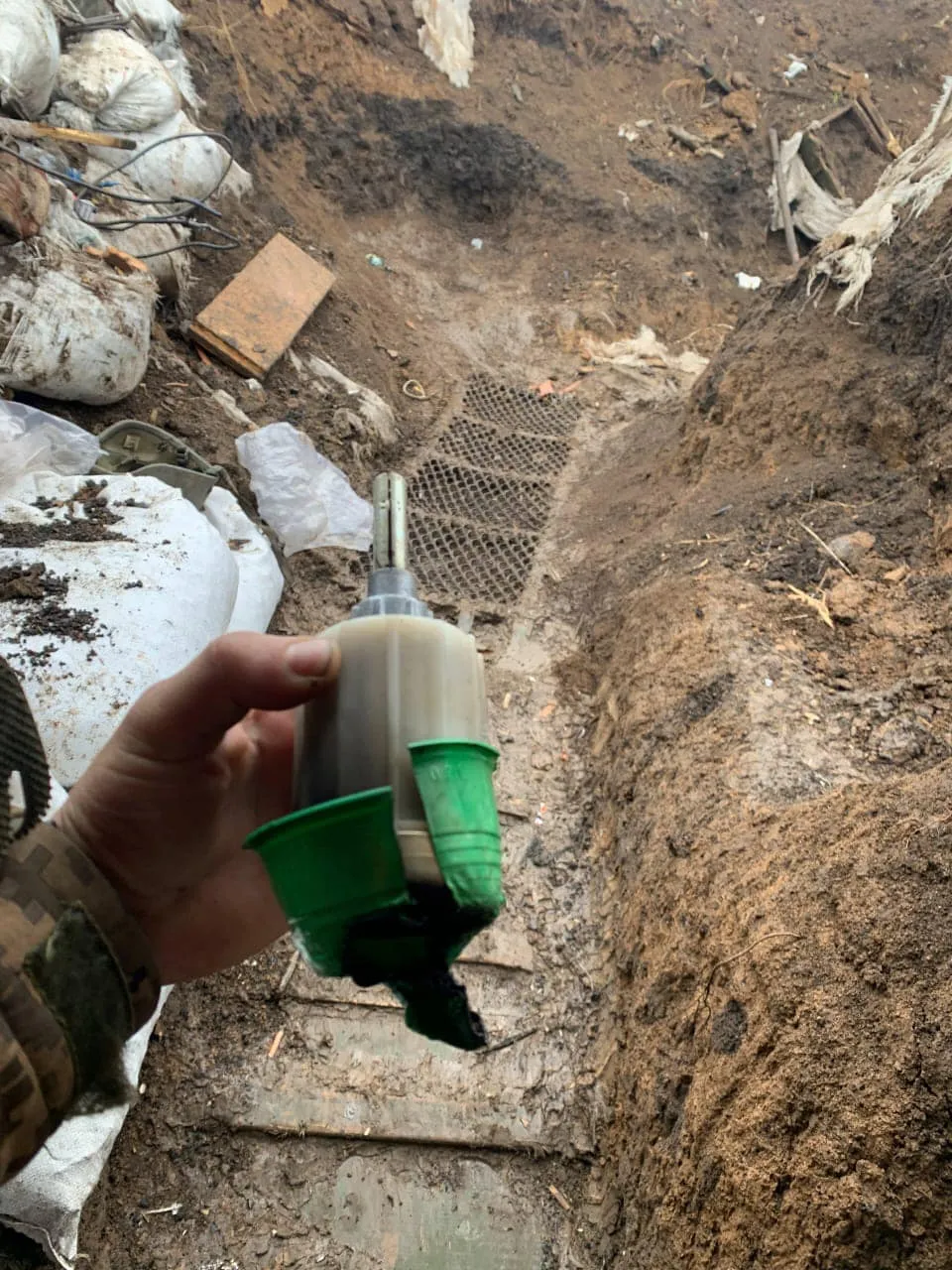
The K-51 gas grenade is a Soviet-era CS riot-control agent munition documented in 2014 Russia-Ukraine War reporting as a drone-dropped battlefield chemical munition. Specialist references describe it as a base-emission hand grenade with a K-510 fuze and CS irritant filling, while Ukrainian national statements posted by the OPCW identify K-51 grenades among Russian-used delivery systems for chemical agents in Ukraine.

Role in Conflicts

Documented Wartime Use

The open sources distinguish between specific K-51 incidents and broader Ukrainian counts of chemical-agent munition use. The strongest public evidence ties K-51 grenades to Russian UAV drops and front-line chemical-agent incidents rather than to conventional explosive effects.

Evidence laneWhat it documentsSource labels
Named incidentsUkrainian statements posted by the OPCW list K-51 use near Marinka, Spirne, Avdiivka, and other Donetsk-sector positions, including UAV delivery and injuries in several cases.Ukraine CSP-29 National Statement on Russian Chemical Weapons Use; Ukraine EC-109 National Statement on Russian Chemical Weapons Use
Russian unit reportingBusiness Insider and Army Recognition reported that Russia's 810th Naval Infantry Brigade described dropping K-51 grenades from drones near Krynky in December 2023.Russia Admits to Using Tear Gas Chemical Weapons on Ukrainian Troops; Russian Forces Use Chemical K-51 Gas Grenades Dropped by Drones in Ukraine
Visual and carrier evidenceThe Commons-hosted State Border Guard Service image shows a K-51 dropped by Russian drone in Donetsk Oblast, and Gagadget reported a captured DJI Mavic-series drone prepared to carry a K-51 grenade.File:K-51 grenade dropped by Russian drone in Donetsk Oblast.jpg; Ukrainian border guards seize Russian DJI Mavic 3 quadcopter with K-51 gas grenade for the first time
Profile / Specs

Specifications

Body diameter
58 mm
Overall height
145 mm
Empty weight
136 g
Fuze
K-510 fly-off lever igniter
Filling
CS irritant
Function
Base-emission hand grenade
Carrier UAV

Open-source reporting links the grenade to a DJI Mavic-series drone prepared for a planned drop.

CarrierCarrier typeCarriage evidence
DJI Mavic series, Commercial quadcopter UAV, Aircraft & UAVsDJI Mavic seriesCommercial quadcopter UAV

Gagadget reports that a DJI Mavic-series drone, judged from photos to be a Mavic 3, was carrying a K-51 gas grenade for a planned drop.

Sources: Ukrainian border guards seize Russian DJI Mavic 3 quadcopter with K-51 gas grenade for the first time

Timeline

K-51 gas grenade Key Events

  1. K-51 cited in Soviet-era riot-control context

    Ukraine's 2024 OPCW statement says Soviet investigation documents referred to K-51 or CS products during the April 1989 Tbilisi crackdown.

    Sources: Ukraine - Statement by the Delegation of Ukraine to the OPCW at the 105th Session of the Executive Council under Agenda Item 7(e)

  2. Drone-dropped K-51 photographed in Donetsk Oblast

    A State Border Guard Service of Ukraine image hosted on Wikimedia Commons identifies a K-51 aerosol grenade dropped from a Russian drone on Ukrainian border guards in Donetsk Oblast.

    Sources: File:K-51 grenade dropped by Russian drone in Donetsk Oblast.jpg

  3. Russian brigade reports K-51 drone drops at Krynky

    Reporting on the Russian 810th Naval Infantry Brigade described drone drops of K-51 grenades against Ukrainian positions near Krynky, Kherson Oblast.

    Sources: Russia Admits to Using Tear Gas Chemical Weapons on Ukrainian Troops

  4. Ukrainian National Guard reports repeated K-51 UAV delivery

    A Ukrainian national statement posted by the OPCW said the National Guard of Ukraine recorded 1,329 cases involving riot-control-agent weapons through October 29, 2024, with K-51 gas hand grenades listed among the primary UAV-delivered munitions.

    Sources: Ukraine CSP-29 National Statement on Russian Chemical Weapons Use

  5. Ukraine reports continuing K-51 documentation to OPCW

    Ukraine's EC-109 statement said K-51 and RG-VO gas grenades remained well-known delivery systems in its reporting on Russian chemical-agent munition use.

    Sources: Ukraine EC-109 National Statement on Russian Chemical Weapons Use

Related Weapon Systems
Chlorine gas cylinders, Improvised chlorine chemical munition, MunitionsMunitionsChlorine gas cylindersImprovised chlorine chemical munitionChlorine gas cylinders are industrial pressure vessels that become improvised chemical munitions when adapted or delivered to release toxic chlorine intentionally. In the April 2018 U.S., UK, and French strikes in the 2011 Syrian Civil War archive, the relevant use is the Douma attack: OPCW investigators found that Syrian Arab Air Force helicopters dropped two yellow chlorine-filled cylinders on residential buildings, providing the chemical-weapons trigger cited by the United States, United Kingdom, and France for the 14 April 2018 missile strikes.
Smoke hand grenade, Hand-thrown smoke grenade, Infantry WeaponsInfantry WeaponsSmoke hand grenadeHand-thrown smoke grenadeThe smoke hand grenade record centers on the U.S. M18 colored smoke grenade and related M83 TA smoke hand grenade, hand-thrown pyrotechnic munitions used for signaling, landing-zone or target marking, and short-duration screening. Army data lists green, yellow, red, and violet M18 variants, 50-to-90-second smoke duration, and a 30-meter throw range; DoD aid reporting also documents M18 smoke hand grenades among Presidential Drawdown Authority assistance for Ukraine.
Rifle grenades, Rifle-launched grenade family, Infantry WeaponsInfantry WeaponsRifle grenadesRifle-launched grenade familyRifle grenades are a broad family of grenades projected from service rifles by rod, cup, spigot, muzzle-device, bullet-trap, or shoot-through launch methods. World War I examples extended infantry grenade reach with explosive, smoke, signal, message, and emerging anti-tank payloads, while postwar HEAT designs such as the British No. 94 Energa and U.S. M31 used shaped charges for short-range anti-armor fire. The cataloged conflict record spans rifle-launched use, recovered ammunition, and modern reuse of rifle-grenade munitions as drone payloads in Myanmar and Ukraine.

Sources