Infantry Weapons

Rifle grenades

Also known as
  • Rifle grenade
  • Rifle-launched grenade
  • Cup-discharge rifle grenade
  • Spigot rifle grenade
  • 22 mm rifle grenade
  • Bullet-trap rifle grenade
  • Shoot-through rifle grenade
  • ENERGA rifle grenade
  • No. 94 Energa
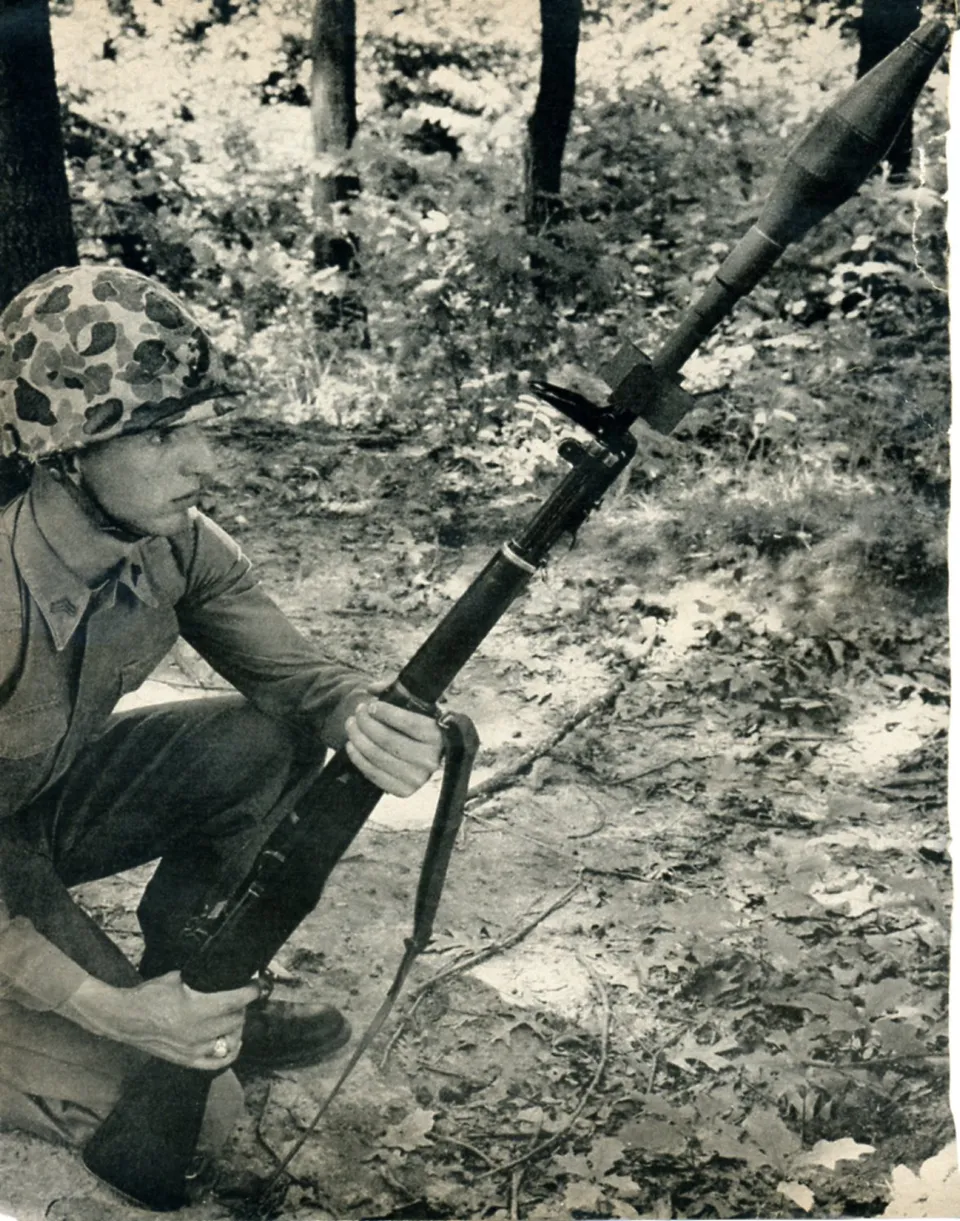
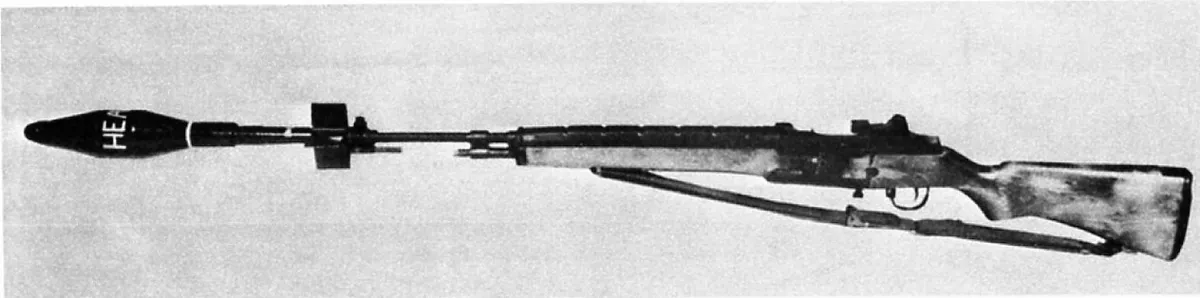
  • M31 HEAT rifle grenade

Rifle grenades are a broad family of grenades projected from service rifles by rod, cup, spigot, muzzle-device, bullet-trap, or shoot-through launch methods. World War I examples extended infantry grenade reach with explosive, smoke, signal, message, and emerging anti-tank payloads, while postwar HEAT designs such as the British No. 94 Energa and U.S. M31 used shaped charges for short-range anti-armor fire. The cataloged conflict record spans rifle-launched use, recovered ammunition, and modern reuse of rifle-grenade munitions as drone payloads in Myanmar and Ukraine.

Role in Conflicts

Side
North Vietnam and Viet Cong

A U.S. Marine Corps history reproduces the Medal of Honor citation for Corporal Larry Smedley, describing Viet Cong and North Vietnamese Army troops near Happy Valley in December 1967 and an enemy rifle grenade exploding nearby during the action.

Side
Philippine government forcesIS-aligned militants

Philippine Joint Task Force marines, army, and police tactical units were described using rifle-grenade fire with mortars and small arms while advancing through Marawi's built-up districts; a Philippine News Agency report separately documented recovered rifle grenades in the main battle area believed to have come from Maute-group materiel.

Side
People's Defense Forces and ethnic armed organizations

Myanmar reporting and regional analysis described local defence or People's Defense Force units dropping M9 rifle grenades from commercial drones onto junta troops or checkpoints in 2022, using the rifle-grenade munition as an aerial payload rather than a rifle-launched round.

Profile / Specs

Profile

Origin
Multiple countries
Type
Rifle-launched grenade family
Service note
World War I to present, with modern bullet-trap and spigot-launched variants still in limited service
Designer
Multiple designers
Designed
Early 20th century, with later postwar and modern designs
Unit cost
Varies by munition type and manufacturer
Produced
World War I to present for different designs
Number built
Not centrally reported across all rifle-grenade families

Specifications

Launch interfaces
Early rifle grenades used rods inserted into the barrel or cup dischargers; postwar and modern examples include dedicated projectors, spigot launchers, and standard 22 mm muzzle interfaces.
Propulsion methods
Older systems commonly required special blank or ballistite rifle-grenade cartridges, while shoot-through and bullet-trap designs allow selected grenades to be launched with ball ammunition.
Typical payload roles
High explosive, fragmentation, smoke, signal/message, illumination, incendiary, and HEAT anti-armor payloads depending on the specific grenade model.
Modern bullet-trap example
Instalaza's FTV is a 36 mm rifle grenade for 5.56 mm rifles with a standard 22 mm muzzle, bullet-trap launch, 150 m point-target effective range, and 300 m maximum range.
Crew
One rifleman when rifle-launched; modern conflict evidence also includes rifle-grenade munitions repurposed as drone payloads.
Launch Method Families

Rifle grenades are grouped less by one manufacturer than by how the rifle launches them and what cartridge the firer must use.

Blank cartridge

Rodded, cup, and many postwar projector systems used special blank or ballistite cartridges, including the British No. 94 Energa.

Cup or spigot

Cup dischargers and spigot-style projectors let the grenade sit outside the bore, reducing the barrel wear associated with early rodded grenades.

Bullet trap

Modern bullet-trap grenades such as the Instalaza FTV are designed for standard ball ammunition and 22 mm muzzle interfaces.

Sources: Grenades; Grenade, hand and rifle, No 36 M Mk 1 (Sectioned); The Anti-Tank Grenade No. 94 (Energa); FTV rifle grenade.
Variants

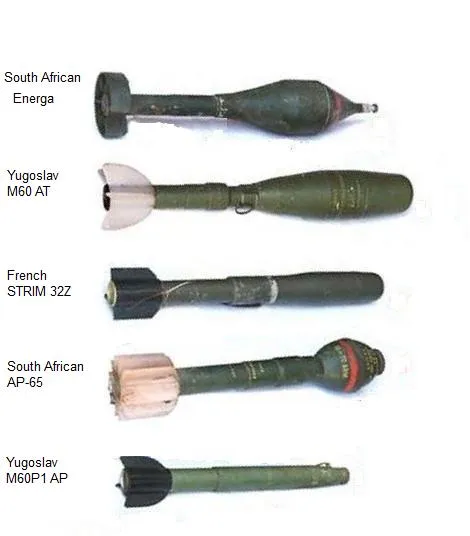
Rifle grenades are best treated as a design family rather than a single model: the useful distinctions are launch interface, cartridge requirement, and payload role.

VariantConfigurationDesignation notes
Rodded rifle grenadesEarly barrel-insert launch format

World War I examples inserted a rod down the rifle barrel and used a special blank cartridge; later cup systems reduced rifle wear problems associated with rodded firing.

Sources: Grenades, Grenade, hand and rifle, No 36 M Mk 1 (Sectioned)

Cup-discharge rifle grenadesCup launcher fitted to rifle muzzle

British World War I gas-check Mills grenade adaptations illustrate cup-launched hand/rifle grenade use.

Sources: Grenade, hand and rifle, No 36 M Mk 1 (Sectioned)

No. 94 EnergaPostwar HEAT rifle grenade

British training material identifies the Energa as the Anti-Tank Grenade No. 94, fired from a No. 4 rifle projector with a special .303-inch rifle-grenade cartridge.

Sources: The Anti-Tank Grenade No. 94 (Energa)

M31 HEATU.S. postwar HEAT rifle grenade

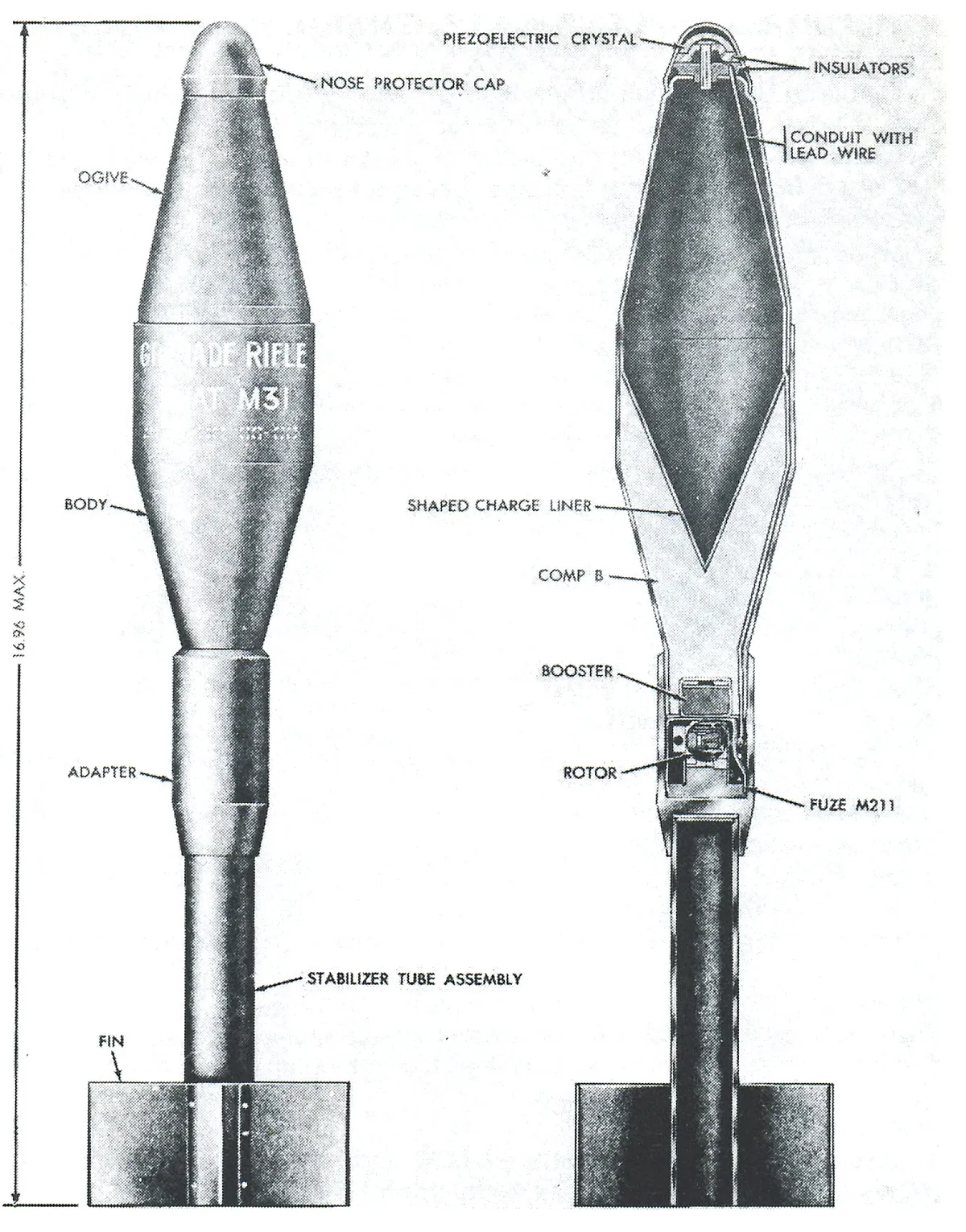
U.S. Army ammunition data describes the M31 as a point-initiated, base-detonated HEAT rifle grenade with a shaped charge, Comp B fill, M211 fuze, and M3 rifle-grenade cartridges in packaging.

Sources: TM 43-0001-29 Army Ammunition Data Sheets for Grenades

M9 rifle grenade, HEAT anti-tank rifle grenade, MunitionsM9 rifle grenadeLinked U.S. HEAT rifle-grenade record

The catalog has a separate M9 record for the U.S. World War II anti-tank rifle grenade family, including later Myanmar drone-drop reporting.

Sources: Drone drops M9 grenade on junta checkpoint in Sagaing's Monywa Town, Commentary: Drones are changing the state of play for Myanmar resistance forces

Bullet-trap 22 mm rifle grenadesModern ball-ammunition launch format

Instalaza's FTV illustrates a current 22 mm muzzle, 5.56 mm, bullet-trap rifle grenade with anti-armor and fragmentation effects.

Sources: FTV rifle grenade

Timeline

Rifle grenades Key Events

  1. Rifle grenades become a World War I infantry tool

    National WWI Museum material describes wartime rifle grenades carrying high explosive, smoke, signals, messages, and late-war anti-tank payloads.

    Sources: Grenades

  2. British cup-launched Mills adaptation replaces rodded wear problem

    Imperial War Museums notes that a spring 1918 No. 36 Mills grenade adaptation used a gas-check disc in a discharger cup and replaced rodded grenades that caused excessive rifle wear.

    Sources: Grenade, hand and rifle, No 36 M Mk 1 (Sectioned)

  3. British No. 94 Energa training manual issued

    War Office training material identified the Energa as an infantry section anti-tank weapon fired from a No. 4 rifle projector with a dedicated rifle-grenade cartridge.

    Sources: The Anti-Tank Grenade No. 94 (Energa)

  4. Enemy rifle grenade documented in Vietnam action

    A Marine Corps history reproduces a Medal of Honor citation describing a rifle grenade exploding near Corporal Larry Smedley during a fight with Viet Cong and North Vietnamese Army troops near Happy Valley.

    Sources: U.S. Marines in Vietnam: Fighting the North Vietnamese, 1967

  5. M9 rifle grenade dropped from drone in Myanmar

    Mizzima reported local defence forces dropping an M9 rifle grenade from a drone onto a junta checkpoint in Sagaing Region.

    Sources: Drone drops M9 grenade on junta checkpoint in Sagaing's Monywa Town

  6. Polish rifle grenades reported with Ukrainian Marines

    The Armourer's Bench documented a July 2024 Ukrainian Marines consignment that included Polish PGN-60 and KGN rifle grenades, with some later prepared as FPV-drone payloads.

    Sources: Polish Rifle Grenades for Ukrainian Drones

Media
Related Weapon Systems
Mortar bombs, 60mm, 60 mm mortar ammunition, MunitionsMunitionsMortar bombs, 60mm60 mm mortar ammunition60 mm mortar bombs are fin-stabilized light mortar rounds made in high-explosive, smoke, illumination, infrared-illumination, and training variants for portable 60 mm mortar tubes. This entry treats the caliber as a family rather than a single national model: Boko Haram/ISWAP evidence is based on recovered rounds and IED adaptation, Myanmar evidence includes both fired and air-dropped mortar rounds, and Ukrainian evidence covers 60 mm mortar shells integrated into FPV strike drones.
Mortar bombs, 81mm, 81 mm mortar bomb, MunitionsMunitionsMortar bombs, 81mm81 mm mortar bomb81 mm mortar bombs are fin-stabilized ammunition families made by many arsenals and defense manufacturers for medium mortars, with high-explosive, smoke, illumination, infrared-illumination, and training variants. Documented conflict use in this catalog includes Boko Haram improvised explosive devices made from captured mortar bombs, U.S. transfers of 81 mm mortar rounds to Ukraine, and Myanmar Civil War reporting of both SAC mortar fire and resistance drone drops.
PG-7VM rocket-propelled grenade, RPG-7 HEAT rocket-propelled grenade round, MunitionsMunitionsPG-7VM rocket-propelled grenadeRPG-7 HEAT rocket-propelled grenade roundThe PG-7VM is an RPG-7-compatible high-explosive anti-tank round built around the smaller PG-7M-class shaped-charge grenade. VMZ Sopot and STV Group publish closely aligned data for a roughly 1.97 kg round with a 300 m direct-fire range, 500 m sighting range, and about 300 mm armor penetration; conflict evidence documents the round in PKK, Islamic State, and Iraqi insurgent stocks, usually as seized or photographed ammunition rather than a named firing incident.

Sources