

AOAV reports that Boko Haram used 60 mm and 81 mm mortar bombs as captured military ammunition to devise IEDs, linking such improvised munitions to attacks in Cameroon in October 2015 and near Maiduguri in February 2016.
Munitions
Mortar bombs, 81mm
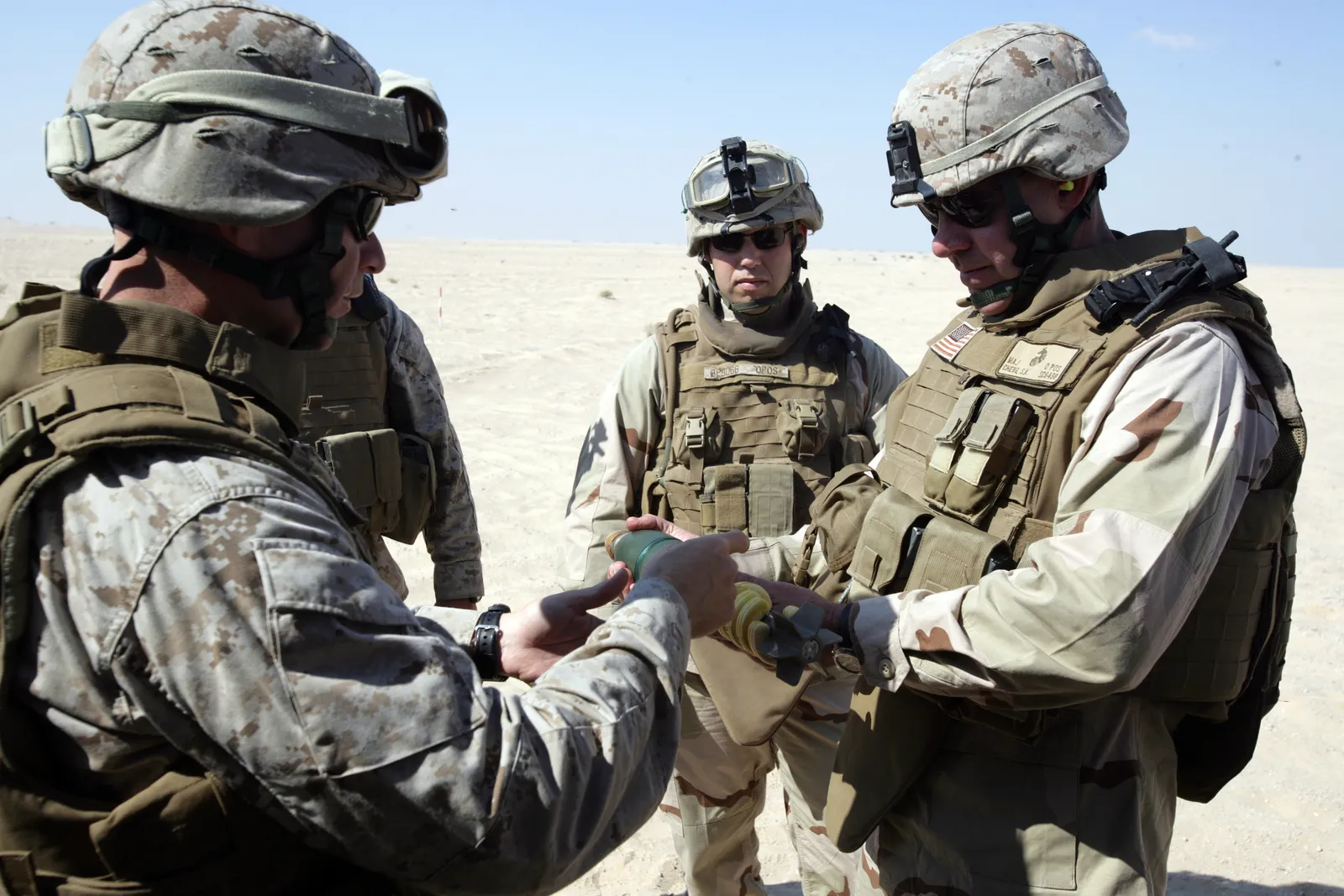
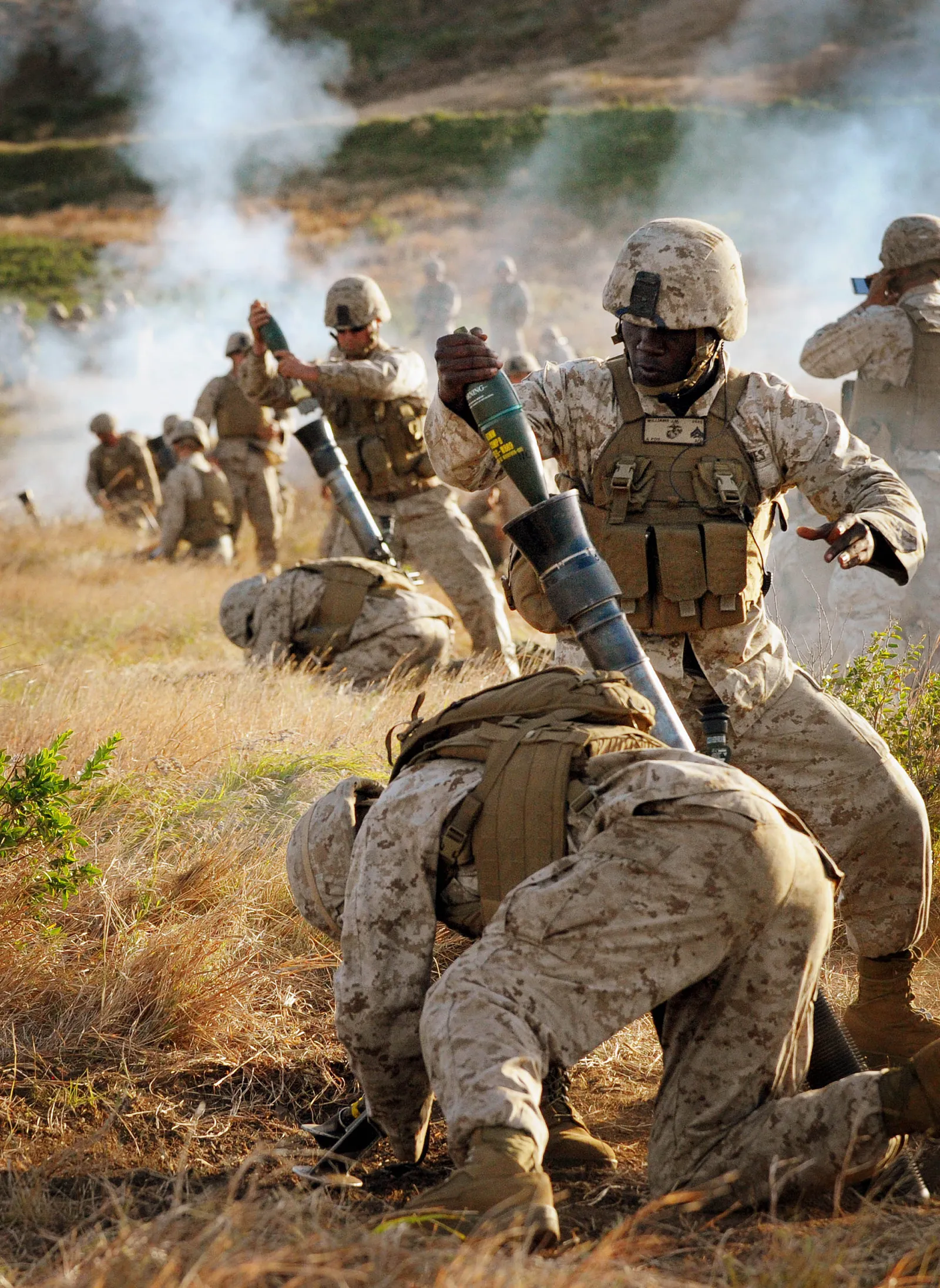
81 mm mortar bombs are fin-stabilized ammunition families made by many arsenals and defense manufacturers for medium mortars, with high-explosive, smoke, illumination, infrared-illumination, and training variants. Documented conflict use in this catalog includes Boko Haram improvised explosive devices made from captured mortar bombs, U.S. transfers of 81 mm mortar rounds to Ukraine, and Myanmar Civil War reporting of both SAC mortar fire and resistance drone drops.
Role in Conflicts
- Side
- Ukraine

Official U.S., Norwegian, and Canadian records document 81 mm mortar rounds or smoke rounds supplied to Ukraine; the sources support transfer and fielding in the war, not a specific public firing incident.
Role details- Side
- State Administration Council and allied forcesPeople's Defense Forces and ethnic armed organizations

KHRG reported SAC shelling with 81 mm mortar rounds in Mu Traw District, while Red Six reported Karenni resistance forces dropping 81 mm mortar rounds from a heavy-lift multirotor UAV in September 2024.
Profile / Specs
Profile
- Origin
- Multiple countries
- Built by
- Various manufacturers
- Type
- 81 mm mortar bomb
- Service note
- 20th century-present
- Designer
- Various
- Designed
- 20th century
- Produced
- 20th century-present
- Number built
- Not publicly stated
Specifications
- Caliber
- 81 mm
- Munition type
- Fin-stabilized mortar bomb or cartridge for 81 mm smooth-bore mortars
- Common roles
- High explosive, smoke, visible illumination, infrared illumination, and training
- Representative HE weight
- 4.14-4.2 kg in documented M821/M889, Atlas HE, and BAE L41 examples
- Representative HE explosive content
- 0.75 kg explosive charge in the Atlas HE example; 0.9 kg net explosive content in the BAE L41 example
- Representative HE length
- About 482-490 mm depending on HE model
- Representative smoke filling
- Red phosphorus in documented U.S. 81 mm smoke ammunition and BAE RO 04-04
- Representative illumination performance
- BAE L54: one-million-candela visible light for 35 seconds; BAE L58: 120-second IR illumination
- Fuzing
- Model-dependent; documented examples include point-detonating, multi-option, and standard NATO fuze-cavity designs
- Propelling charges
- Primary cartridge with increment or secondary charges; the DDP HE bomb describes one primary and eight secondary cartridges
Representative 81 mm Round Types
Documented 81 mm mortar bombs vary by national design and role, so representative values should be tied to named examples rather than presented as universal specifications.
| Round type | Example | Technical note |
|---|---|---|
| High explosive | BAE L41 / M821-M889 / DDP HE | HE rounds use fragmentation bodies and model-dependent fuzes; documented weights cluster around 4.14-4.2 kg, but explosive content differs by design. |
| Visible illumination | BAE L54 / U.S. M853A1 | BAE's L54 is an air-burst split-body illuminating round rated at one million candela for 35 seconds. |
| Infrared illumination | BAE L58 / U.S. M816 | BAE describes L58 as IR illumination for night-vision use, with a 120-second burn time in the brochure. |
| Smoke | BAE RO 04-04 / U.S. M819 | Documented 81 mm smoke examples use red phosphorus; BAE's RO 04-04 uses 36 pellets and is listed with a 5,300 m maximum range. |
| Training | U.S. M879 | The U.S. Army lists M879 as an 81 mm training round; training rounds are described as lower-cost rounds for realistic handling and operation. |
Variants
81 mm mortar-bomb families are role and cartridge families rather than one single factory design; sources document high-explosive, smoke, visible-illumination, infrared-illumination, and training rounds with model-specific dimensions, fuzes, and fillings.
| Variant | Configuration | Designation notes |
|---|---|---|
| High-explosive 81 mm bombs | Fragmentation HE | Representative HE examples include BAE's L41, U.S. M821/M889-series cartridges, India's 81 mm HE bomb, and commercial cast-iron HE bombs; weights and explosive fills vary by design. Sources: 81mm Mortar Ammunition, 81mm Mortar Ammunition brochure, M821/M889 81mm HE Mortar Cartridges, Bomb 81mm Mortar HE, 81mm Mortar Bomb HE |
| L54 illuminating mortar | Visible-light illumination | BAE describes L54 as an air-burst, split-body illuminating 81 mm round with a one-million-candela light and 35-second burn time. Sources: 81mm Mortar Ammunition, 81mm Mortar Ammunition brochure |
| L58 infrared illuminating mortar | IR illumination | BAE identifies L58 as an infrared illuminating 81 mm mortar round for use with night-vision equipment and states it is in British Army service. Sources: 81mm Mortar Ammunition, 81mm Mortar Ammunition brochure |
| RO 04-04 red-phosphorus smoke mortar | Smoke screening | BAE describes RO 04-04 as a red-phosphorus smoke round using 36 pellets, with a representative 604 mm length, 4.4 kg total weight, and 5,300 m maximum range. Sources: 81mm Mortar Ammunition, 81mm Mortar Ammunition brochure |
| M879 | Training cartridge | The U.S. Army lists M879 as an 81 mm training mortar ammunition product. Sources: Mortar Ammunition |
Firing Weapons
This 81 mm mortar-bomb family is documented as ammunition designed for use with the M252 81 mm mortar system.
| Firing weapon | Weapon type | Firing evidence |
|---|---|---|
 | 81 mm crew-served medium mortar | The British Army identifies the 81 mm mortar as firing high explosive, smoke, and illuminating rounds, and U.S. Army ammunition references identify the M821 and M889 81 mm cartridges as designed for the M252 81 mm mortar system; this relationship refers to the 81 mm branch of the 81/82 mm mortar family page. Sources: 81mm Mortar, M821/M889 81mm HE Mortar Cartridges, Mortar Ammunition |
Reported Aerial Drop Platform
Myanmar reporting describes 81 mm mortar rounds being dropped from Y-12 aircraft as improvised aerial attack payloads, not as designed aircraft stores.
| Carrier | Carrier type | Carriage evidence |
|---|---|---|
 | Transport aircraft used for improvised aerial drops | Mizzima reports Y-12 aircraft were observed dropping 81 mm mortar rounds during aerial attacks in Myanmar. Sources: Mizzima: Myanmar junta deploys Y-12 aircraft for aerial bombing campaigns |
Timeline
Mortar bombs, 81mm Key Events
M821A1 and M889A1 type classified
FAS records July 1991 type classification for the U.S. M821A1 and M889A1 81 mm HE mortar cartridges.
Sources: M821/M889 81mm HE Mortar Cartridges
M821A2 type classified
FAS records May 1996 type classification for the M821A2 81 mm HE mortar cartridge.
Sources: M821/M889 81mm HE Mortar Cartridges
BAE brochure documents current 81 mm family
BAE's 2023 brochure describes L41 HE, L54 visible illumination, L58 IR illumination, and RO 04-04 red-phosphorus smoke rounds with representative specifications.
Sources: 81mm Mortar Ammunition brochure
Media
Mortar bombs, 81mm Videos
Related Weapon Systems


Sources
81mm MortarPublisher: British Army | Note: Supports 81 mm mortar firing capability and representative ammunition types for the 81 mm mortar family. | Accessed: 2026-07-04Known perpetrators of IED incidents in the past five years: Boko HaramPublisher: Action on Armed Violence | Note: In the 2009 Boko Haram Insurgency, AOAV reports 60 mm and 81 mm mortar bombs used by Boko Haram to devise IEDs and links these improvised munitions to 2015-2016 attacks. | Accessed: 2026-07-0481mm Mortar AmmunitionPublisher: BAE Systems | Note: Supports current manufacturer background for 81 mm mortar ammunition families, including L41 HE, L58 IR illuminating, L54 illuminating, and RO 04-04 red-phosphorus smoke rounds. | Accessed: 2026-07-0481mm Mortar Ammunition brochurePublisher: BAE Systems | Note: Supports representative BAE round specifications for L41 HE, L54 visible illuminating, L58 IR illuminating, and RO 04-04 red-phosphorus smoke rounds. | Accessed: 2026-07-04M821/M889 81mm HE Mortar CartridgesPublisher: Federation of American Scientists | Note: Supports representative M821/M889 HE cartridge design, fuze differences, M252 compatibility, range charge table, cartridge weight, and type-classification dates. | Accessed: 2026-07-04Mortar AmmunitionPublisher: U.S. Army | Note: Supports U.S. 81 mm mortar ammunition classes and representative HE, illumination, smoke, and training product designations. | Accessed: 2026-07-04Bomb 81mm Mortar HEPublisher: Department of Defence Production, Ministry of Defence, Government of India | Note: Supports official 81 mm HE bomb construction details: fin stabilization, forward fuze, rear tail unit, steel body, primary and secondary cartridges, and 0-8 charges. | Accessed: 2026-07-0481mm Mortar Bomb HEPublisher: Atlas Internazionale Ltd | Note: Supports representative HE mortar-bomb specifications such as caliber, body material, length, weight, explosive charge, fragmentation role, and compatible 81 mm mortars. | Accessed: 2026-07-04Biden Administration Announces Additional Security Assistance for UkrainePublisher: U.S. Department of Defense | Note: In the 2014 Russia-Ukraine War, supports U.S. transfer of 81 mm mortar rounds to Ukraine through a September 2023 security-assistance package. | Accessed: 2026-07-04Norway donates mortar ammunition to UkrainePublisher: Government of Norway | Note: In the 2014 Russia-Ukraine War, supports Norway's donation of 81 mm mortar ammunition to Ukraine and states that it could be used in existing Ukrainian weapons. | Accessed: 2026-07-14Canadian military support to UkrainePublisher: Government of Canada | Note: In the 2014 Russia-Ukraine War, supports Canada's donation and September 2024 delivery of over 2,000 rounds of 81 mm mortar smoke to Ukraine. | Accessed: 2026-07-14Mu Traw District Situation Update: SAC air strikes, arrest of villagers, and indiscriminate shelling causing casualties, and landmine explosionPublisher: Karen Human Rights Group | Note: In the 2021 Myanmar Civil War, supports SAC use of 81 mm mortar rounds in shelling incidents in Mu Traw District. | Accessed: 2026-07-04Red Six Monthly Roll Up #MR071Publisher: Red Six Solutions | Note: In the 2021 Myanmar Civil War, supports Karenni resistance forces dropping 81 mm mortar rounds from a heavy-lift multirotor UAV in September 2024. | Accessed: 2026-07-04Weapon Supplies Fuelling Terrorism in the Lake Chad CrisisPublisher: Conflict Armament Research | Note: Supports Boko Haram and ISWAP weapons-supply background in the Lake Chad basin, including CAR field documentation of weapons and ammunition seized from terrorist groups in Niger's Diffa region. | Accessed: 2026-07-0481mm mortar rounds.pngPublisher: Wikimedia Commons | Note: Supports image provenance and public-domain U.S. Army status for the primary 81 mm mortar-round diagram. | Accessed: 2026-07-04Lt. Col. Andrew Kostic shows an 81mm roundPublisher: Wikimedia Commons | Note: Supports image provenance and public-domain U.S. Marine Corps status for a photo showing an 81 mm mortar round. | Accessed: 2026-07-04USMC 81 mm Mortar Platoon at Townshend IslandPublisher: Wikimedia Commons | Note: Supports image provenance and CC BY 2.0 licensing for a photo of an 81 mm mortar round being loaded. | Accessed: 2026-06-21FM 23-90 W CH 1 MORTARSPublisher: U.S. Marine Corps | Note: Supports 81 mm mortar ammunition being fired by the 81 mm mortar family and lists authorized 81 mm cartridges. | Accessed: 2026-07-04U.S. Central Command Video Gallery | Official VideosPublisher: U.S. Central Command | Note: Supports 81 mm mortar ammunition being used with the 81 mm mortar family in official video material. | Accessed: 2026-07-0481mm M252A1Publisher: Capability Program Executive Ammunition & Energetics | Note: Supports representative 81 mm mortar-system specifications and compatibility with 81 mm ammunition. | Accessed: 2026-07-04Mizzima: Myanmar junta deploys Y-12 aircraft for aerial bombing campaignsPublisher: Mizzima | Note: In the 2021 Myanmar Civil War, supports 81 mm mortar rounds used by Myanmar junta forces as improvised aerial-drop munitions from Y-12 aircraft during aerial attacks. | Accessed: 2026-07-04