Munitions

M9 rifle grenade

Also known as
  • M9 HEAT rifle grenade
  • M9A1 rifle grenade
  • M9A1 HEAT rifle grenade
  • Grenade, AT, M9
  • Grenade, AT, M9A1
  • Anti-Tank Grenade M9A1
  • M9-derived Inaga bomb

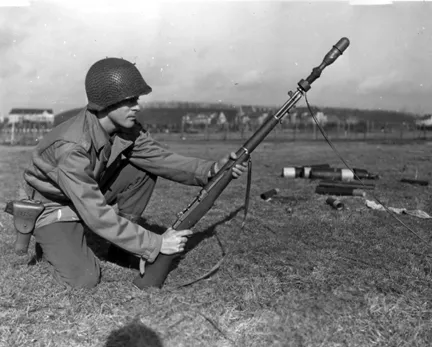
The M9 rifle grenade is a U.S. World War II HEAT anti-tank rifle-grenade family designed for launch from rifle or carbine grenade launchers with special blank cartridges. Its catalog relevance now also comes from Myanmar reporting: resistance forces in the 2021 Myanmar Civil War have been reported dropping M9 rifle grenades, primed M9s, and M9-derived Inaga munitions from commercial UAVs against junta positions.

Role in Conflicts

Profile / Specs

Profile

Origin
United States
Type
HEAT anti-tank rifle grenade
Service note
World War II U.S. rifle-grenade family later documented as an improvised drone-dropped munition in Myanmar
Designer
U.S. Army Ordnance Department
Designed
1942
Unit cost
About 250,000 kyats per grenade in one 2022 Myanmar resistance-force account
Produced
World War II-era U.S. production; exact span not stated in the cited ordnance manuals
Number built
Not precisely stated in the cited ordnance manuals

Specifications

Warhead role
High-explosive anti-tank hollow-charge rifle grenade
M9A1 length
11.21 in
M9A1 diameter
2.25 in
M9A1 weight
1.23 lb in OP 1664; FM 23-30 training text lists 1.31 lb
Filling
4 oz / 0.25 lb 50/50 pentolite shaped charge in OP 1720; OP 1664 also lists 4 oz filling
Launch method
Spigot-type rifle or carbine grenade launcher with special grenade cartridge
Representative launchers
M1, M2, M7, and M8 U.S. rifle/carbine grenade launchers
Launcher And Payload Context

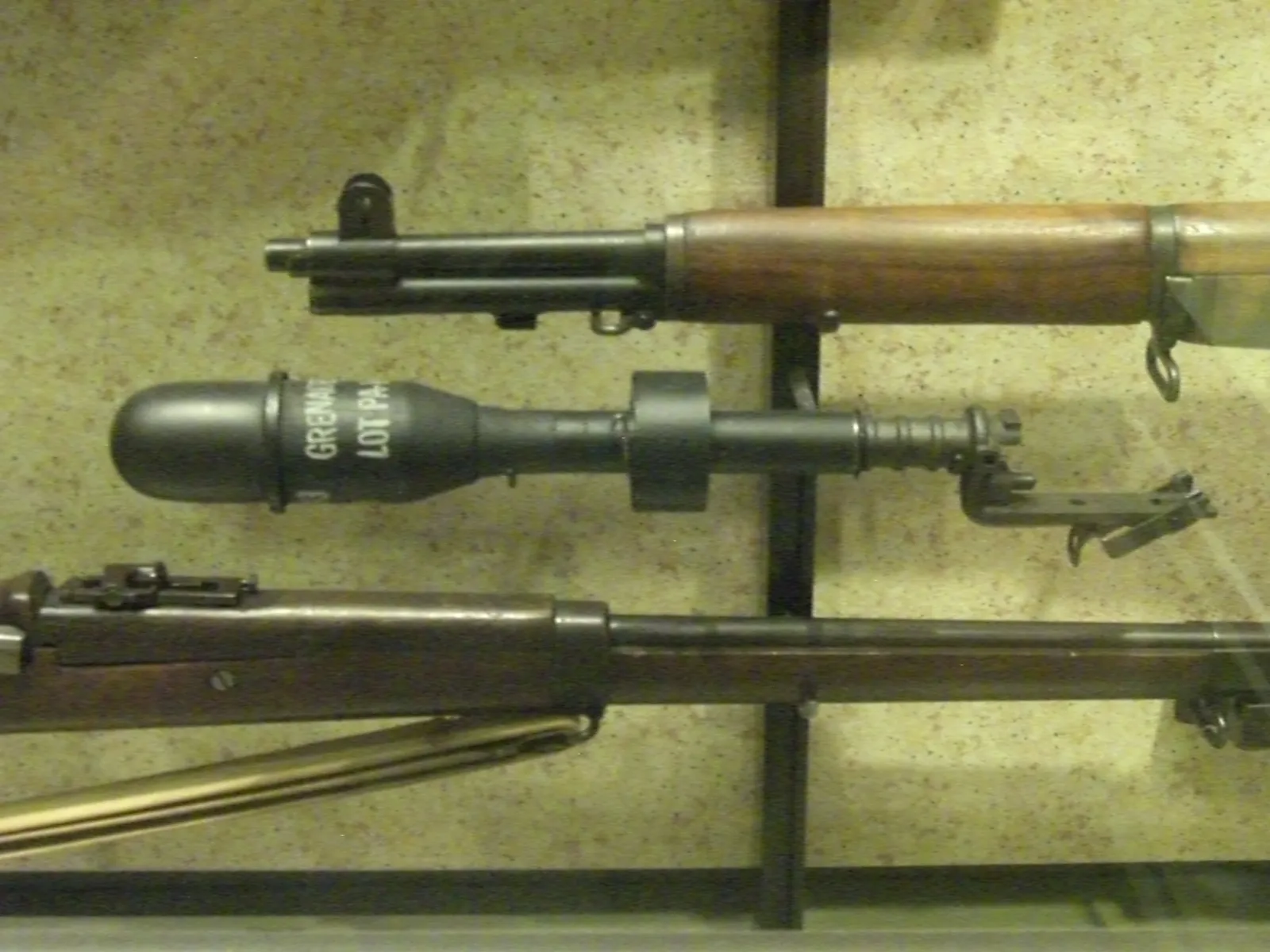
U.S. manuals describe the M9 family as a spigot-launched rifle grenade: the grenade's hollow stabilizer tube fits over a muzzle launcher, and a special grenade cartridge supplies the propellant gases. That wartime launch method is separate from the Myanmar drone-drop reports, where resistance forces adapted surviving or sourced M9 bodies as aerial payloads.

Rifle-launch system

OP 1664 lists M1, M2, M7, and M8 U.S. launchers and describes rifle-grenade launchers as barrel extensions over which the stabilizer assembly fits.

Sources: OP 1664 U.S. Explosive Ordnance; TM 9-1985 Grenades, Hand and Rifle.

M9A1 construction

The M9A1 uses a cylindrical body, hollow stabilizer tube, fin assembly, and impact fuze. OP 1664 gives an 11.21 in length, 2.25 in diameter, 1.23 lb weight, and 4 oz filling; OP 1720 identifies the shaped-charge explosive as 50/50 pentolite.

Sources: OP 1664 U.S. Explosive Ordnance; OP 1720 Shaped Charge Ammunition.

Myanmar adaptation

Mizzima and Fulcrum reporting identifies M9 rifle grenades, primed M9s, or M9-derived Inaga bombs as UAV-dropped resistance munitions rather than rifle-launched rounds in those attacks.

Sources: Drone drops M9 grenade on junta checkpoint in Sagaing's Monywa Town; Myanmar women's drone force bombs junta forces in Sagaing's Chaung-U; Resistance Forces in Myanmar: Changing the State of Play with Weaponised Drones.
Variants

The entry covers the original M9 and the improved M9A1 anti-tank rifle grenades, plus practice rounds and Myanmar improvised drone munitions that sources describe as made from M9 rifle grenades.

VariantConfigurationDesignation notes
M9Earlier anti-tank rifle grenade

War Department TM 9-1985 describes the M9 as the earlier model with the same tail assembly as the M9A1, an acorn-shaped head, a point fuze, and lower sensitivity on graze or soft-ground impact.

Sources: TM 9-1985 Grenades, Hand and Rifle

M9A1Improved anti-tank rifle grenade

OP 1664 and TM 9-1985 describe the M9A1 as a hollow-charge anti-tank rifle grenade with a cylindrical body, hollow stabilizer tube, fin assembly, and impact fuze integrated with the stabilizer; OP 1720 says it improved the earlier M9's functioning and penetration.

Sources: OP 1664 U.S. Explosive Ordnance, TM 9-1985 Grenades, Hand and Rifle, OP 1720 Shaped Charge Ammunition

M11 and M11A1 practice grenadesInert training counterparts

FM 23-30 identifies the M11 and M11A1 as inert practice grenades similar in shape and weight to the M9 and M9A1 respectively.

Sources: FM 23-30 Grenades

M9-derived Inaga bombImprovised drone munition reported in Myanmar

Mizzima reported a TGR Women's Drone Force attack using an Inaga bomb or primed M9 rifle grenade and said the group sought support to make more handmade Inaga bombs from M9 rifle grenades.

Sources: Myanmar women's drone force bombs junta forces in Sagaing's Chaung-U

Carrier UAVs

Myanmar reporting ties the M9 rifle grenade to improvised carriage by commercial multirotor UAVs.

CarrierCarrier typeCarriage evidence
Chinese commercial UAVs, Commercial multirotor UAV family, Aircraft & UAVsChinese commercial UAVsCommercial quadcopter UAV family

Mizzima reported local defence forces dropping an M9 rifle grenade from a drone onto a junta checkpoint, while Fulcrum later described footage showing four primed M9 rifle grenades dropped on junta troops.

Sources: Drone drops M9 grenade on junta checkpoint in Sagaing's Monywa Town, Resistance Forces in Myanmar: Changing the State of Play with Weaponised Drones

Firing Rifles

U.S. ordnance references place the M9 and M9A1 in a rifle-grenade system using muzzle launchers and special grenade cartridges.

Firing weaponWeapon typeFiring evidence
M1 Garand, Semi-automatic battle rifle, Infantry WeaponsM1 GarandSemi-automatic service rifle with M7 grenade launcher

OP 1664 identifies the M7 launcher for the caliber .30 M1 rifle and lists the M9 and M9A1 anti-tank rifle grenades among the ammunition used with U.S. rifle and carbine grenade launchers.

Sources: OP 1664 U.S. Explosive Ordnance

Timeline

M9 rifle grenade Key Events

  1. M9 and M9A1 listed as standard rifle grenades

    War Department TM 9-1900 Change No. 1 listed the M9 and M9A1 as present standard anti-tank rifle grenades fired from rifle muzzle launchers with M3 grenade cartridges.

    Sources: TM 9-1900 Ammunition, General Change No. 1

  2. OP 1720 summarizes M9A1 shaped-charge history

    Navy Bureau of Ordnance pamphlet OP 1720 described the M9 as the first U.S. shaped-charge item placed in service and the M9A1 as an Army Ordnance Department improvement with more consistent detonation.

    Sources: OP 1720 Shaped Charge Ammunition

  3. OP 1664 describes the M9A1 standard form

    Navy Bureau of Ordnance pamphlet OP 1664 listed the M9 and M9A1 anti-tank rifle grenades and summarized the M9A1's dimensions, weight, launcher interface, hollow-charge role, and impact-fuze operation.

    Sources: OP 1664 U.S. Explosive Ordnance

  4. Drone drop near Monywa Town Gate

    Mizzima reported that Black Dragon Defensive Force dropped an M9 rifle grenade from a drone onto a junta checkpoint near Monywa Town Gate in Sagaing Region.

    Sources: Drone drops M9 grenade on junta checkpoint in Sagaing's Monywa Town

  5. Chaung-U drone attacks reported

    Mizzima reported that TGR Women's Drone Force dropped an Inaga bomb or primed M9 rifle grenade on a Military Council camp in Chaung-U Township and described handmade Inaga bombs as made from M9 rifle grenades.

    Sources: Myanmar women's drone force bombs junta forces in Sagaing's Chaung-U

  6. Natogyi PDF M9 drops described

    Fulcrum later described footage from a Natogyi People's Defense Force drone strike as showing four primed M9 rifle grenades dropping on junta troops.

    Sources: Resistance Forces in Myanmar: Changing the State of Play with Weaponised Drones

Media
Related Weapon Systems
Rifle grenades, Rifle-launched grenade family, Infantry WeaponsInfantry WeaponsRifle grenadesRifle-launched grenade familyRifle grenades are a broad family of grenades projected from service rifles by rod, cup, spigot, muzzle-device, bullet-trap, or shoot-through launch methods. World War I examples extended infantry grenade reach with explosive, smoke, signal, message, and emerging anti-tank payloads, while postwar HEAT designs such as the British No. 94 Energa and U.S. M31 used shaped charges for short-range anti-armor fire. The cataloged conflict record spans rifle-launched use, recovered ammunition, and modern reuse of rifle-grenade munitions as drone payloads in Myanmar and Ukraine.
Chinese commercial UAVs, Commercial multirotor UAV family, Aircraft & UAVsAircraft & UAVsChinese commercial UAVsCommercial multirotor UAV familyChinese commercial UAVs are civilian quadcopter, hexacopter, and agricultural-drone families from Chinese manufacturers such as DJI and Autel that have been adapted for wartime reconnaissance and improvised strike missions. In the 2021 Myanmar Civil War, Reuters, ACLED, Fulcrum, and other reporting document resistance forces and later junta units using Chinese-made commercial drones for observation, target spotting, and grenade or bomb drops.
Improvised drones, Improvised military drone class, Aircraft & UAVsAircraft & UAVsImprovised dronesImprovised military drone classImprovised drones are locally modified or field-assembled uncrewed aerial systems built from commercial quadcopters, FPV airframes, agricultural-drone parts, and workshop-made payload fittings. The record tracks a distributed weapon class rather than one factory model: Islamic State, Ukrainian and Russian forces, Hamas, Israeli units in Gaza, and Myanmar armed actors all adapted small UAVs for reconnaissance, bomb drops, assault support, and low-cost strike roles.
Smoke hand grenade, Hand-thrown smoke grenade, Infantry WeaponsInfantry WeaponsSmoke hand grenadeHand-thrown smoke grenadeThe smoke hand grenade record centers on the U.S. M18 colored smoke grenade and related M83 TA smoke hand grenade, hand-thrown pyrotechnic munitions used for signaling, landing-zone or target marking, and short-duration screening. Army data lists green, yellow, red, and violet M18 variants, 50-to-90-second smoke duration, and a 30-meter throw range; DoD aid reporting also documents M18 smoke hand grenades among Presidential Drawdown Authority assistance for Ukraine.

Sources