Profile
- Type
- Scatterable anti-vehicle mine
- Origin
- Soviet Union / Russia
- Service note
- Late Cold War design documented in the Russia-Ukraine War
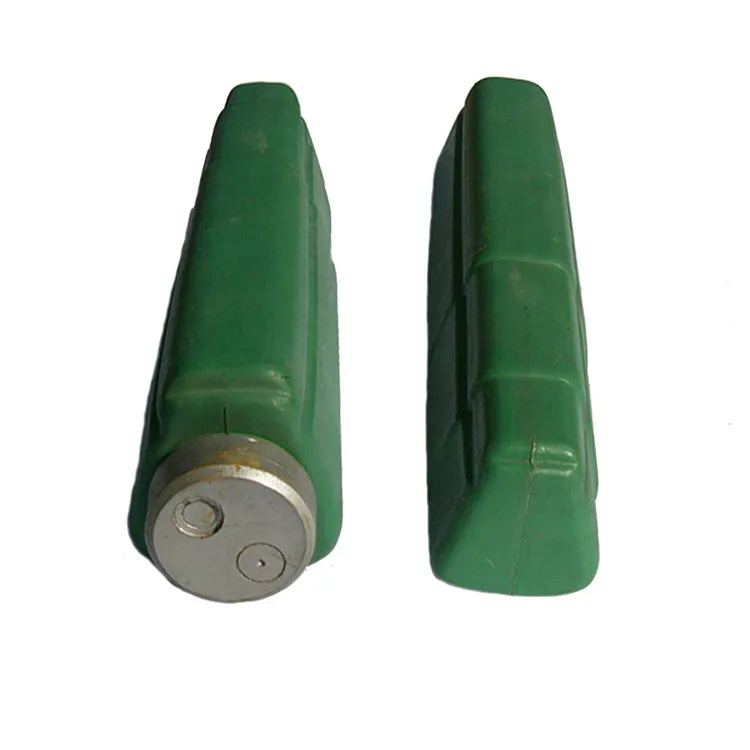
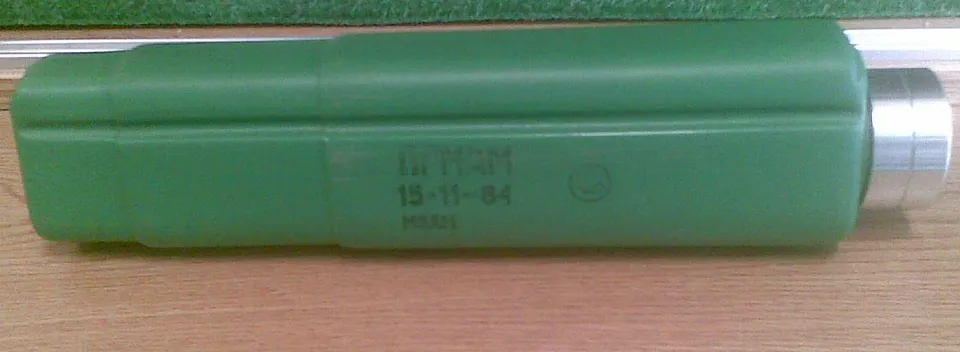
The PTM-1 is a Soviet/Russian plastic-bodied scatterable anti-vehicle blast mine intended for remote delivery by rocket artillery, helicopter, or aircraft dispensers rather than manual emplacement. In the Russia-Ukraine War it appears in documented anti-vehicle mine use, with Human Rights Watch listing PTM-1/PTM-1G mines among types stockpiled by both Russia and Ukraine.
Human Rights Watch identified PTM-1/PTM-1G anti-vehicle mines among landmine types used since Russia's 2022 full-scale invasion, noting that both Russia and Ukraine stockpile this remotely delivered Soviet/Russian mine.
PTM-4MScatterable magnetic-influence anti-vehicle mineThe PTM-4M is a Russian scatterable anti-vehicle mine from the PTM-4 family, using a shaped-charge warhead and magnetic-influence fuzing for remote minefield emplacement. Human Rights Watch documented a PTM-4M-marked delivery canister in Kharkiv Oblast in May 2022, and mine-monitoring sources list the type among Russian antivehicle mines used during the Russia-Ukraine War.
PFM-1Scatterable anti-personnel blast mineThe PFM-1 is a Soviet scatterable anti-personnel blast mine with a plastic winged body and a small liquid-explosive charge, designed for remote delivery rather than hand emplacement. In the Russia-Ukraine War it has been documented in PFM-series rocket-scattered mine contamination around Izium, where Human Rights Watch linked the mines to 220 mm Uragan mine-laying rockets and civilian casualties.
POM-2Scatterable antipersonnel fragmentation mineThe POM-2 is a Soviet/Russian scatterable antipersonnel fragmentation mine that deploys tripwire sensors after delivery by rockets, helicopters, aircraft, vehicles, or specialized dispensers. In Ukraine, it appears as part of Russia's remotely delivered mine threat, including documented POM-2 mines and KPOM-2 canisters recovered in areas cleared by Ukrainian emergency services.
TM-72Shaped-charge anti-tank mineThe TM-72 is a Soviet metal-cased anti-tank mine built around a shaped-charge effect and magnetic-influence fuzing, rather than a simple pressure blast. In Ukraine it is documented less often than common TM-62-series mines, but open reporting in 2026 described both limited battlefield use and Russian efforts to employ TM-72 mines in contested urban approaches.
9K111 FagotMan-portable anti-tank guided missile systemThe 9K111 Fagot, known to NATO as the AT-4 Spigot, is a Soviet man-portable SACLOS wire-guided anti-tank missile system built around the 9P135 tripod launcher and 9M111 missile family. Its compact launcher, vehicle-mount compatibility, and 2 to 2.5 km range kept it relevant for legacy users, including Russian anti-tank teams documented in the Russia-Ukraine War.
9K114 ShturmRadio-command anti-tank guided missile systemThe 9K114 Shturm is a Soviet radio-command anti-tank guided missile system built around the 9M114 Kokon missile and known to NATO as AT-6 Spiral. Designed by KBM Kolomna for attack helicopters and the MT-LB-based 9P149 Shturm-S carrier, it combines SACLOS guidance, a fast missile, and a roughly 5 km baseline range. In the Russia-Ukraine War, Russian 9P149 vehicles have been captured or displayed as battlefield trophies, while Ukrainian units have shown Shturm-S use and modernization efforts to keep the system relevant for anti-armor missions.