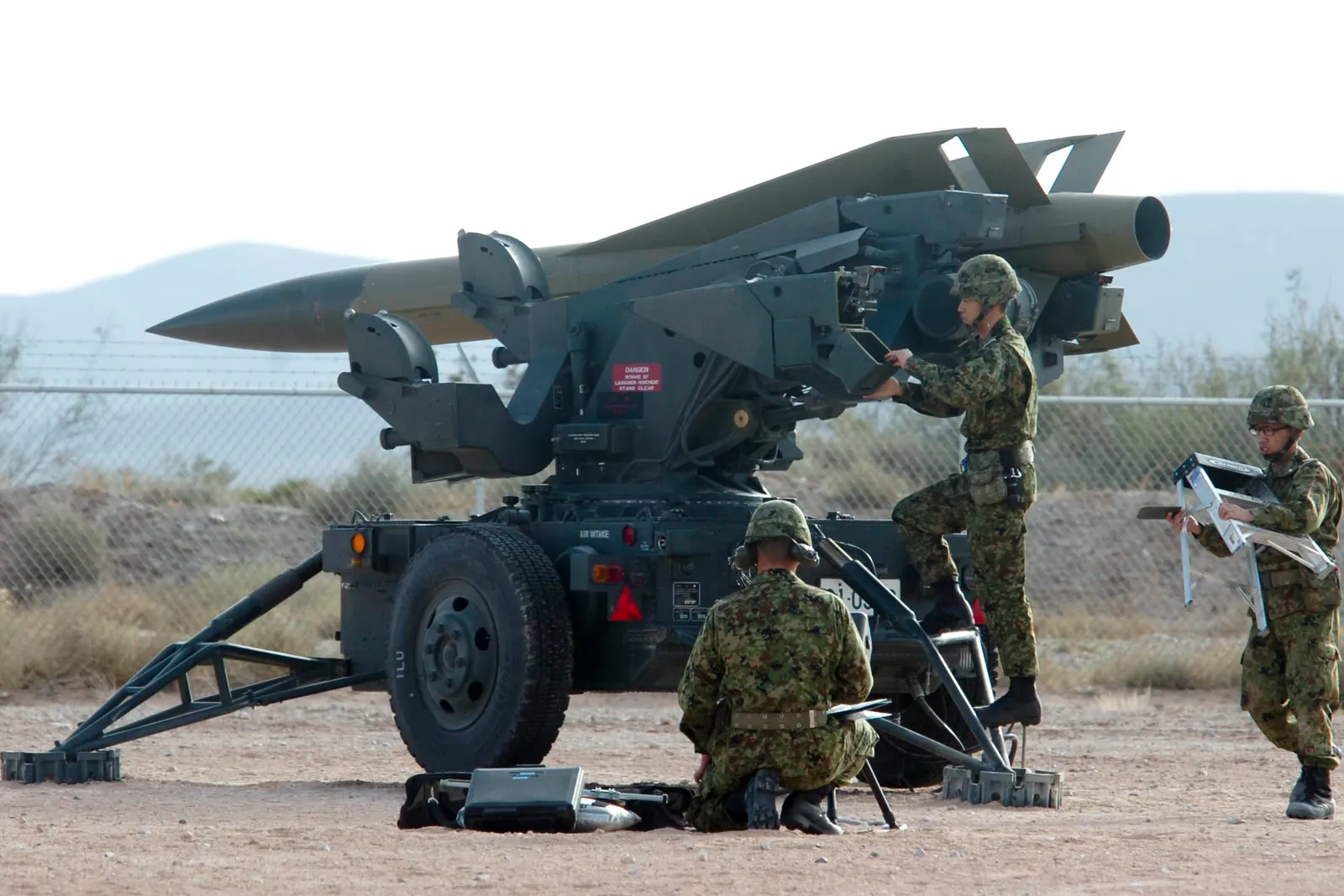
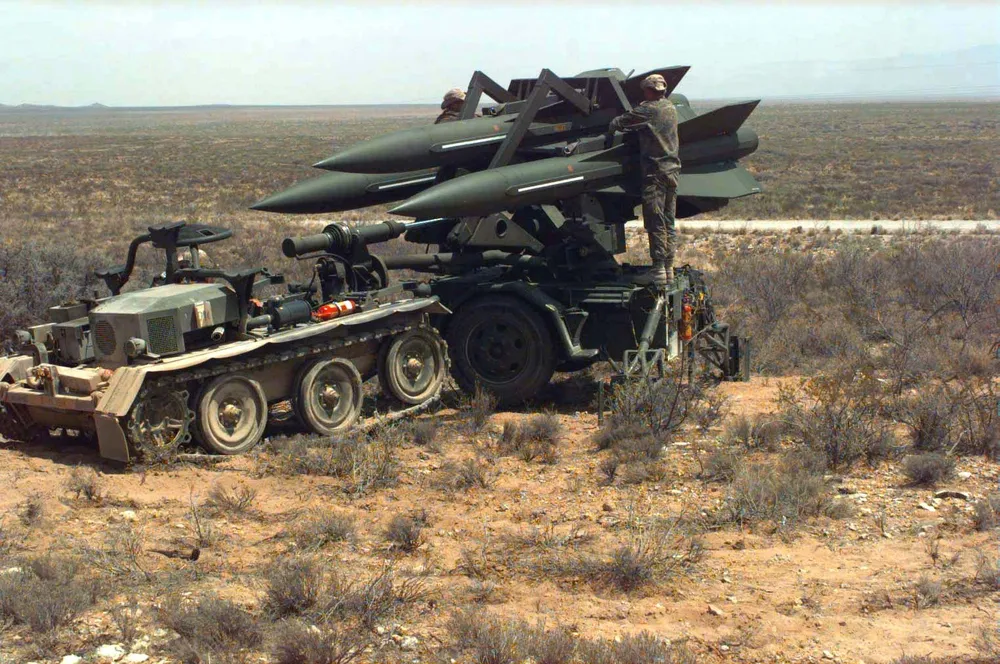
Ukraine operates donated I-HAWK/HAWK air-defense equipment in its layered defense against Russian missile and drone attacks, with Spanish launchers, U.S. and Spanish MIM-23B/I-HAWK missile transfers, Phase III sustainment support, and 2026 Spanish training reporting that Ukrainian HAWK operators and maintainers exchanged experience from actual use in the current conflict.
Role detailsMIM-23 HAWK
- HAWK
- MIM-23 Hawk
- MIM-23
- SAM-A-18
- M3
- I-HAWK
- Improved HAWK
- HAWK Phase III
- MIM-23A
- MIM-23B
- MIM-23B I-Hawk
- MIM-23B Improved HAWK
The MIM-23 HAWK is a U.S.-origin medium-range surface-to-air missile system built around acquisition radars, target illumination, and semi-active radar-homing missiles. Developed for mobile low- to medium-altitude air defense and repeatedly upgraded after its 1960 fielding, HAWK has a documented combat record from Israeli and Kuwaiti use to Turkish deployments and donated Ukrainian air-defense fire units.
Role in Conflicts
Turkish forces deployed U.S.-made MIM-23 HAWK missiles in Syria's Idlib area in 2020, with reporting tying the deployment to protection against Syrian government air attacks.
Role detailsTurkey deployed MIM-23 HAWK surface-to-air missiles with other air-defense systems around GNA-held Mitiga and Misrata in January 2020, and later placed HAWK systems at al-Watiya air base before unidentified aircraft targeted them in July 2020.
Royal Saudi Air Defense Forces MIM-23B Improved-HAWK batteries are documented in the Saudi air-defense inventory during the Yemen missile war, though open reporting does not confirm their readiness or specific engagement history.
Role detailsIsraeli forces fired HAWK missiles during the Six-Day War, which the U.S. Army historical account identifies as the system's first combat use.
Kuwaiti air-defense units equipped with U.S. HAWK missiles engaged Iraqi aircraft during the August 1990 invasion, before captured HAWK stocks became a coalition concern.
Role detailsProfile / Specs
Profile
- Origin
- United States
- Built by
- Raytheon
- Type
- Medium-range surface-to-air missile system
- Service note
- Cold War design, upgraded through Improved HAWK and Phase III configurations
- Designer
- Raytheon Company for the missile; Northrop for launcher, radar, and fire-control elements
- Designed
- 1950s
- Unit cost
- About $250,000 per missile in Redstone Arsenal historical data
- Produced
- Initial U.S. fielding from 1959-1960; Improved HAWK conversions and production in the 1970s; later Phase III and foreign sustainment/upgrade programs
- Number built
- More than 40,000 MIM-23 HAWK missiles of all versions, including foreign production
Specifications
- Guidance
- Semi-active radar homing with ground-based acquisition and illumination radars
- Launcher
- M192 towed triple-missile launcher
- Missile weight
- About 584 kg for MIM-23A; about 635-638 kg for MIM-23B and later variants
- Missile length
- About 5.08 m for MIM-23A; about 5.03 m for MIM-23B and later variants
- Missile diameter
- About 0.37 m
- Finspan
- About 1.19 m
- Speed
- About Mach 2.5
- Propulsion
- Dual-thrust solid-fuel rocket motor; Aerojet M22E8 on MIM-23A and M112 on MIM-23B
- Engagement range
- MIM-23B envelope reported at roughly 1.5-40 km at high altitude
- Engagement altitude
- MIM-23B reported from about 60 m to 20 km
- Warhead
- Blast-fragmentation warhead; about 54 kg on MIM-23A and about 74-75 kg on MIM-23B
- Radar chain
- Basic and Improved HAWK used PAR, CWAR, HPI/HIPIR, and ROR radars; Phase III replaced or updated CWAR and HPI and dropped ROR from Phase III units
Radar Chain And Product Improvements
HAWK is best read as a fire unit rather than a standalone missile: acquisition radars find targets, an illuminator tracks and lights the engagement, and M192 launchers fire three ready missiles. I-HAWK and later Product Improvement Plan phases changed both the missile and the radar/control chain.
| Element | Function | Why it matters |
|---|---|---|
| Basic / Improved HAWK | PAR, CWAR, HPI/HIPIR, and ROR radar chain | Improved HAWK added the MIM-23B missile and upgraded radar/control equipment while retaining the fire-unit structure. |
| PIP Phase I | CWAR and PAR update | The upgrade introduced AN/MPQ-55 ICWAR and digital moving-target indication for the PAR. |
| PIP Phase II | Illuminator and optical tracking | AN/MPQ-46 HPI was upgraded to AN/MPQ-57, with OD-179/TVY added for optical tracking in difficult electronic environments. |
| PIP Phase III | Computer, CWAR, and HPI update | Phase III added AN/MPQ-62 CWAR, AN/MPQ-61 HPI with LASHE, and removed ROR from Phase III units. |
| M192 triple launcher | Three ready missiles | The towed launcher defines the visible firing element used with HAWK batteries and donated launcher/missile packages. |
Sources: HAWK Missile System; Raytheon SAM-A-18/M3/MIM-23 Hawk; $400 Million Security Package Headed to Ukraine.
Variants
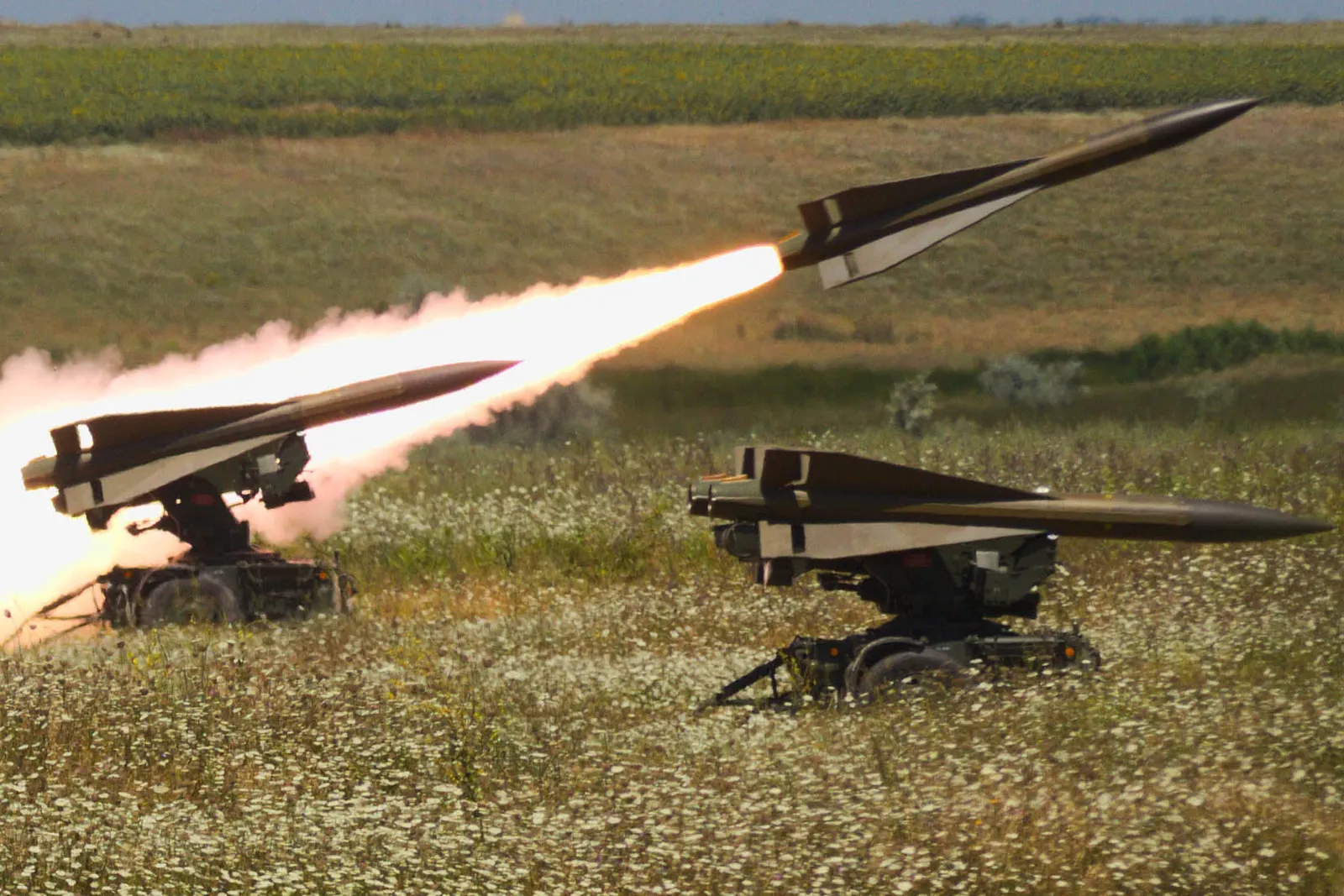
HAWK designations cover the original MIM-23A missile, the MIM-23B I-HAWK/Improved HAWK missile and system standard, later missile subvariants, and Product Improvement Plan ground-equipment phases.
| Variant | Configuration | Designation notes |
|---|---|---|
| MIM-23A Basic HAWK | Original production missile | M3 was redesignated MIM-23A in 1963; Basic HAWK used the original radar chain and M192 triple launcher. Sources: Raytheon SAM-A-18/M3/MIM-23 Hawk, HAWK Missile System |
| MIM-23B I-HAWK | Improved missile and system standard | I-HAWK added the MIM-23B missile with larger warhead, improved guidance package, M112 motor, and upgraded radar/control equipment. Sources: Raytheon SAM-A-18/M3/MIM-23 Hawk, ODIN MIM-23B I-Hawk |
| PIP Phase I | Ground-equipment upgrade | Replaced CWAR with AN/MPQ-55 ICWAR and upgraded AN/MPQ-50 PAR with digital moving-target indication. Sources: Raytheon SAM-A-18/M3/MIM-23 Hawk |
| PIP Phase II | Illuminator and optical-tracking upgrade | Upgraded AN/MPQ-46 HPI to AN/MPQ-57 and added the OD-179/TVY Tracking Adjunct System. Sources: Raytheon SAM-A-18/M3/MIM-23 Hawk |
| PIP Phase III | Computer, CWAR, and low-altitude engagement upgrade | Added AN/MPQ-62 CWAR, AN/MPQ-61 HPI with LASHE, single-scan target detection, and removed ROR from Phase III units. Sources: Raytheon SAM-A-18/M3/MIM-23 Hawk, HAWK Missile System |
| MIM-23C/D, E/F, G/H, J/K, L/M | Later Improved HAWK missile subvariants | Grouped later missile changes covered ECCM, low-level and multi-jamming guidance, new body sections, and anti-TBM warhead/fuzing or fuzing-only changes. Sources: Raytheon SAM-A-18/M3/MIM-23 Hawk |
Timeline
MIM-23 HAWK Key Events
SAM-A-18 HAWK studies begin
The U.S. Army began studies for a semi-active radar-homing medium-range surface-to-air missile under the SAM-A-18 HAWK designation.
Sources: Raytheon SAM-A-18/M3/MIM-23 Hawk
Raytheon and Northrop development contracts awarded
Raytheon received the missile development contract, while Northrop received launcher, radar, and fire-control work.
Sources: Raytheon SAM-A-18/M3/MIM-23 Hawk
Basic HAWK enters field service
The U.S. Army historical account describes Basic HAWK as a 1950s development that was initially fielded in 1960 for mobile all-weather air defense.
Sources: HAWK Missile System
First documented combat use
Redstone Arsenal's HAWK history identifies Israeli firing during the Six-Day War as the first combat use of the system.
Sources: HAWK Missile System
Improved HAWK standardized
Improved HAWK was type classified Standard A after the MIM-23B I-HAWK missile and upgraded ground equipment moved the system beyond the Basic HAWK configuration.
Sources: HAWK Missile System, Raytheon SAM-A-18/M3/MIM-23 Hawk
PIP Phase I fielding begins
Phase I introduced AN/MPQ-55 ICWAR and Improved PAR changes as part of the product-improvement path that followed I-HAWK.
Sources: Raytheon SAM-A-18/M3/MIM-23 Hawk
PIP Phase II fielding window begins
Phase II fielding from 1983 to 1986 upgraded HPI equipment and added the OD-179/TVY Tracking Adjunct System.
Sources: Raytheon SAM-A-18/M3/MIM-23 Hawk
Phase III fielding begins
The 2d Battalion, 1st Air Defense Artillery at Fort Bliss became the first unit equipped with the HAWK Phase III product-improvement package.
Sources: HAWK Missile System
U.S. HAWK missiles pledged for Ukraine
The United States announced HAWK missiles for Ukraine, with refurbishment planned before pairing them with Spanish-provided HAWK launchers.
Sources: $400 Million Security Package Headed to Ukraine
Ukrainian HAWK firing footage becomes public
FDD's Long War Journal reported that Ukraine's Air Force commander shared public footage of MIM-23 HAWK missiles firing in Ukraine, providing open-source evidence beyond transfer announcements.
Sources: Ukraine Shows HAWK Air Defense System in Action
Emergency HAWK Phase III sustainment approved
DSCA announced an emergency HAWK Phase III sustainment sale for Ukraine covering overhaul, missile recertification, spare parts, training, and support to keep the system available against Russian missile and aerial attacks.
Sources: Ukraine - HAWK Phase III Missile System Sustainment
Phase III sustainment sale approved for Ukraine
DSCA announced a possible HAWK Phase III sustainment package covering fire-unit overhaul, spare parts, support equipment, missile repair, documentation, training, and technical assistance.
Sources: Ukraine - HAWK Phase III Missile System and Sustainment
Spanish HAWK training cites Ukrainian combat-use experience
Spain reported that Ukrainian HAWK operators and maintainers completed advanced maintenance training and exchanged experience with Spanish instructors regarding actual use of HAWK in the current conflict.
Sources: Specialised training on the Hawk weapon system
Related Weapon Systems